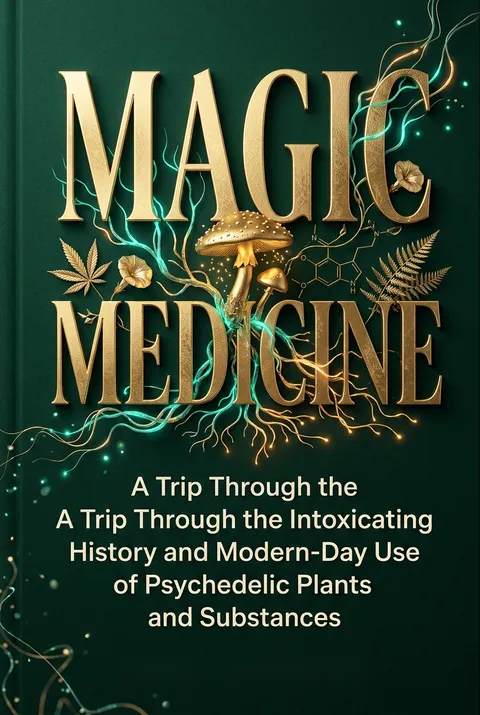

Key Takeaways
1. Psychedelics are Undergoing a Medical and Cultural Renaissance.
After decades on the front lines of advocacy and research, MAPS is on the cusp of pushing the very first psychedelic into the realm of accepted medicine.
A new era. Once demonized and driven underground, psychedelics are experiencing a dramatic resurgence in scientific and medical interest. Organizations like MAPS (Multidisciplinary Association for Psychedelic Studies) are spearheading research, aiming for FDA approval of MDMA therapy by 2021, signaling a shift from countercultural taboo to mainstream medicine. This "psychedelic renaissance" is fueled by mounting scientific evidence supporting therapeutic uses for substances like psilocybin, LSD, and ayahuasca.
Beyond MDMA. While MDMA is poised to be the first, it's merely the initial domino. The scientific community is increasingly exploring other psychedelics for a remarkable array of mental conditions. This includes:
- Psilocybin for depression, end-of-life anxiety, and addiction.
- LSD for anxiety in terminal patients and cluster headaches.
- Ketamine for severe depression and substance addiction.
This growing body of evidence validates ancient indigenous claims about these substances' healing powers.
Shifting perceptions. The narrative around psychedelics is transforming from one of reckless hedonism to compassionate guidance for mental, emotional, and spiritual development. Special clinics offering psychedelic-assisted therapy are becoming less a dream and more an inevitability. This shift promises a future where these powerful tools are integrated into accepted medical practice, offering new hope for conditions resistant to traditional treatments.
2. Defining "Psychedelic" Encompasses Diverse Mind-Manifesting Substances.
Today, just about everyone, from psychologists and chemists to artists and musicians, understands “psychedelic” to mean those trippy molecules that turn our perception of the world—and of ourselves—on its head.
Mind manifesting. The term "psychedelic," coined by Humphry Osmond from Greek roots meaning "mind manifesting," accurately describes substances that unlock bizarre, dimension-bending, and profoundly emotional worlds. These compounds don't just amplify familiar consciousness but produce unique states utterly alien to the sober mind, dissolving boundaries within and between human beings.
Broad categories. The definition of "psychedelic" can be expanded beyond the classical serotonin-oriented compounds (LSD, psilocybin, mescaline) to include several distinct classes:
- Dissociatives: Like ketamine and salvia, producing detachment from one's body.
- Empathogens: Such as MDMA, amplifying emotions and insights.
- Unique substances: Including cannabinoids (THC) and others that defy easy categorization.
Deliriants, though hallucinogenic, are typically excluded due to their unpleasant effects.
A shared quality. Regardless of their chemical structure or specific effects, all substances categorized as psychedelic share the ability to fundamentally perturb consciousness. They bridge seemingly irreconcilable gaps, bringing together science and religion, art and philosophy, and modern medicine with ancient shamanism, touching nearly every aspect of the human experience.
3. Historical Prohibition Amplified Risks and Stifled Crucial Research.
The dark irony of our culture’s stance toward these “dangerous” chemicals is that by prohibiting them, we have only amplified their dangers.
Counterproductive policies. Modern Western culture's dismissive, prohibitive, and fearful attitude towards psychedelics stands in stark contrast to traditional cultures that revered them as sacraments and medicines. The "War on Drugs" has inadvertently maximized risks by forcing substances onto an unregulated black market, where users lack information on dosage, purity, and potential interactions.
Unintended consequences. When substances like "Ecstasy" or "Molly" are bought illicitly, users often don't know what they're truly consuming, leading to unpredictable and dangerous outcomes. Furthermore, fear of legal repercussions often prevents individuals in medical crisis from seeking help. This prohibitive approach has created a cycle of misinformation and harm, rather than reducing it.
Lost decades of science. The Controlled Substances Act of 1970 effectively halted scientific research into psychedelics for decades, despite early promising results. This bureaucratic roadblock meant that potential therapeutic breakthroughs were ignored, and the understanding of these compounds remained stagnant. A swift about-face in public policy, focusing on regulation and education, is needed to truly address the risks and unlock the benefits.
4. Classical Psychedelics Offer Profound, Often Spiritual, Experiences.
Those who’ve had the honor of dissolving into these boundless depths often rank it as the pinnacle of life itself.
Serotonin system activators. Classical psychedelics, including LSD, psilocybin mushrooms, peyote, and DMT, primarily exert their effects by interacting with the brain's serotonin system. These substances are renowned for eliciting intense, often ineffable, experiences characterized by profound shifts in perception, emotion, and cognition.
Diverse manifestations:
- LSD: Famous for kaleidoscopic visuals, ego dissolution, and a sense of oneness, lasting 8-12 hours.
- Psilocybin: Induces animated visual patterns, deep personal insights, and mystical experiences, often described as connecting to cosmic unity.
- DMT: Known for its rapid "blastoff" into alien dimensions, populated by "machine elves" or other entities, lasting only 15 minutes when vaporized.
- Peyote/Mescaline: Revered by indigenous cultures for millennia, offering vivid imagery, enhanced empathy, and spiritual communion over 8-12 hours.
Beyond recreation. While often associated with recreational use, these substances have deep roots in shamanic and spiritual traditions, where they are revered as "teacher plants" or "divine messengers." The experiences they provide are often described as life-changing, offering new perspectives on mortality, self, and the universe, and are increasingly being studied for their potential in treating anxiety, depression, and addiction.
5. MDMA Leads the Way in Psychedelic-Assisted Therapy for Trauma.
In a pilot study, more than 80 percent of subjects no longer met the criteria for PTSD after their sessions—an incredible recovery rate for such a challenging and intractable condition.
The "love drug" reborn. MDMA, commonly known as Ecstasy or Molly, is an empathogen that fosters feelings of closeness, openness, and trust. Originally synthesized in 1912, its unique "heart-opening" qualities were discovered in the 1970s by therapists who found it an impressive catalyst for emotional openness, allowing patients to make more progress in a single session than in years of traditional therapy.
Therapeutic mechanism. MDMA's appeal in therapy lies in its ability to temporarily smooth over doubt and despair, creating a sense of serenity and self-acceptance. It induces the brain to release serotonin, dopamine, and norepinephrine, along with oxytocin (social bonding) and cortisol (fear unlearning). This allows patients to revisit painful memories and traumas without feeling threatened or overwhelmed, facilitating profound healing and insight.
PTSD breakthrough. MAPS is pioneering research into MDMA-assisted therapy for post-traumatic stress disorder (PTSD), with astonishing results. The high recovery rates in pilot studies suggest MDMA offers an altogether new healing modality, where patients, guided by trained therapists, can process traumatic memories rather than merely numbing them. This groundbreaking approach could revolutionize treatment for veterans, sexual assault victims, and others suffering from severe trauma.
6. Dissociatives Like Ketamine Show Remarkable Promise for Depression.
Of ketamine’s many promising new uses, the most notable is for depression. A host of studies reveal that a single low dose of ketamine reduces depression within hours, even in those who have not responded well to talk therapy, antidepressants, or other medications.
Beyond anesthesia. Ketamine, originally developed as an anesthetic, is a dissociative that creates a sense of detachment from one's body and surroundings. While known for its recreational use in club culture, its unique pharmacological profile has revealed unexpected therapeutic potential, particularly for severe mental illnesses.
Rapid antidepressant effects. Unlike traditional antidepressants that take weeks to work, a single low dose of ketamine can reduce depression symptoms within hours, with effects lasting up to a week. This rapid action, even in treatment-resistant cases, is a significant breakthrough. Researchers are still unraveling how ketamine achieves such long-lived benefits, given its short half-life in the body.
Broader applications. Beyond depression, ketamine shows promise in treating a range of other challenging conditions:
- Alcoholism and opioid addiction: Studies show significantly higher abstinence rates when combined with ketamine psychedelic therapy (KPT).
- Chronic pain: Effective for neuropathic pain, including phantom limb pain, and can reduce reliance on opioids.
- OCD and social anxiety: Preliminary studies suggest relief from symptoms for weeks after a single dose.
Ketamine's ability to induce profound out-of-body experiences, or "K-holes," also offers a unique introspective journey for some psychonauts.
7. "Set and Setting" are Paramount for Safe and Beneficial Psychedelic Journeys.
The psychic risks depend very much on the user’s preparedness, a fact confirmed in scientific research by the remarkably few “freak-out” incidents when psychedelics are taken with clear intentions in the company of a trusted therapist.
Mind and environment. Timothy Leary's concept of "set and setting" highlights the critical importance of a user's mindset ("set") and environment ("setting") in shaping the psychedelic experience. This wisdom, long recognized by indigenous cultures, emphasizes that the journey's outcome is heavily influenced by internal and external factors.
Optimizing the experience:
- Set: A positive mindset, clear intentions, and a general sense of well-being are crucial. Tripping while depressed, anxious, or sleep-deprived significantly increases the risk of a difficult journey.
- Setting: A comfortable, safe, and supportive physical environment, along with the presence of trusted companions or therapists, is essential. This minimizes external stressors and provides a secure base for exploration.
Scientific validation. Modern psychedelic research rigorously controls for set and setting, demonstrating remarkably few "bad trips" or adverse reactions under supervised conditions. This contrasts sharply with uncontrolled recreational use, where unpredictable environments and unprepared mindsets can lead to anxiety, paranoia, or psychological distress. The emphasis on preparation and integration is key to transforming potentially challenging experiences into profoundly healing ones.
8. Nature's Pharmacy Extends to Unique and Unexpected Psychoactive Sources.
What molecular treasure might lie in the murky depths of the sea?
Beyond plants and fungi. While most natural psychedelics are plant- or fungus-based, nature's pharmacy is far more diverse, offering unique psychoactive compounds from unexpected sources. These "misfits" highlight the vast, unexplored biochemical ingenuity across different kingdoms of life.
Examples of unique psychedelics:
- Amanita Muscaria (Fly Agaric): An iconic red-and-white mushroom, revered by Siberian shamans for millennia. Its active compounds (muscimol, ibotenic acid) produce a "waking dream" state, characterized by stillness, delusions, and detachment, distinct from classical psychedelics.
- Fish and Sea Sponges: Certain "dream fish" (e.g., Sarpa salpa) cause hallucinogenic intoxication, while sea sponges contain 5-Bromo-DMT, a likely psychedelic. These marine sources represent a largely unexplored frontier of psychoactive chemistry.
- Mad Honey: Produced from rhododendron nectar in Turkey and Nepal, this honey contains grayanotoxins, causing dizziness, tingling, and hallucinations. Historically used as a weapon and intoxicant, it demands moderation.
- Iboga: A West African shrub whose root bark contains ibogaine, a complex alkaloid used in the Bwiti religion for spiritual connection and, controversially, as an addiction treatment. It induces vivid waking dreams and a profound "life review."
- DiPT: A synthetic auditory hallucinogen, discovered by Alexander Shulgin, that uniquely distorts sound perception, making voices deepen and music dissonant, with minimal visual effects.
Uncharted territories. These substances underscore that our understanding of psychoactive compounds is still in its infancy. Many more chemical clues likely await discovery in the darkness of the ocean's depths or among obscure terrestrial species, promising new insights into consciousness and potential medicines.
9. Pioneering Scientists and Psychonauts Shaped Our Understanding of Psychedelics.
Sasha prized the special experience of first contact. Like world explorers centuries before him, Shulgin voyaged far from home and planted the first flags on many new geographies of consciousness—the epitome of the term “psychonaut,” or consciousness explorer.
Visionaries and explorers. The history of psychedelics is rich with colorful characters who dared to explore the frontiers of mind and matter. These scientists, writers, and countercultural figures not only discovered and synthesized new compounds but also articulated their profound effects, laying the groundwork for modern understanding.
Key figures and their contributions:
- Albert Hofmann: Swiss chemist who serendipitously discovered LSD in 1943, marking a "first contact" with a novel molecule that would change history.
- Alexander "Sasha" Shulgin: The "godfather of psychedelic chemistry," who synthesized hundreds of new compounds (like 2C-B and the DOx family) and popularized MDMA, sharing his findings in influential "cookbooks" like PiHKAL and TiHKAL.
- Timothy Leary: Harvard professor-turned-countercultural guru, who championed psilocybin and LSD, coining "Turn on, tune in, drop out," and conducting influential (though flawed) studies like the Concord Prison and Good Friday Experiments.
- Terence McKenna: A supreme storyteller and consciousness explorer who popularized DMT "hyperspace" and advocated psychedelics as tools to "see through cultural programming."
- Rick Strassman: Psychiatrist who conducted the first major DMT study in decades, coining "The Spirit Molecule" to reflect its mystical effects and documenting encounters with "DMT entities."
- John C. Lilly: Neuroscientist and eccentric psychonaut who explored LSD and ketamine, often in isolation tanks, documenting his experiences with dolphins and alternate realities.
Legacy of exploration. These pioneers, whether in labs or through self-experimentation, pushed the boundaries of human knowledge, often facing controversy and legal challenges. Their adventurous spirit and detailed accounts continue to inspire new generations of researchers and psychonauts, deepening our collective understanding of consciousness.
10. The Future Points Towards Regulation, Education, and Mainstream Integration.
As fascinating as the history of these plants and substances may be, the future promises to be even brighter.
A new paradigm. After decades of prohibition, psychedelic research is officially back, driven by soft-talking therapists and white-coated neuroscientists. The goal is to move beyond punitive measures and embrace regulation and education, recognizing psychedelics as powerful healing agents rather than dangerous illicit drugs.
Government and public acceptance. Government agencies, like the FDA, are beginning to warm to these once-forbidden fruits, collaborating with organizations like MAPS to investigate MDMA for prescription use. This shift is also reflected in changing public opinion, with increasing support for legalization and decriminalization of substances like cannabis, which is rapidly moving into the mainstream.
Integration and innovation. The future envisions a world where psychedelics are integrated into mainstream medicine, offering novel treatments for mental health conditions, addiction, and end-of-life anxiety. This includes:
- Microdosing: Sub-perceptual doses for improved mood, creativity, and well-being.
- New therapeutic modalities: Psychedelic-assisted psychotherapy, emphasizing "inner healing intelligence" and lasting benefits from just a few sessions.
- Neuroscience breakthroughs: Brain imaging studies revealing how psychedelics alter brain activity, offering insights into consciousness itself.
The ongoing "psychedelic renaissance" promises a brighter future where these ancient medicines are understood, respected, and utilized for the betterment of humankind.
Review Summary
Magic Medicine receives mostly positive reviews (4.13/5) for its comprehensive exploration of psychedelics throughout history and modern medical applications. Readers appreciate Johnson's accessible writing style, thorough research, and coverage of therapeutic potential for conditions like PTSD, depression, and anxiety. The book is organized into four categories: classical psychedelics, empathogens, dissociatives, and unique substances. Some criticisms include small print size, occasional padding, and lack of depth in certain areas. Most reviewers found it educational and valuable as a reference guide, though some desired more detailed information or found it dry in places.
People Also Read






Download PDF
Download EPUB
.epub digital book format is ideal for reading ebooks on phones, tablets, and e-readers.








































