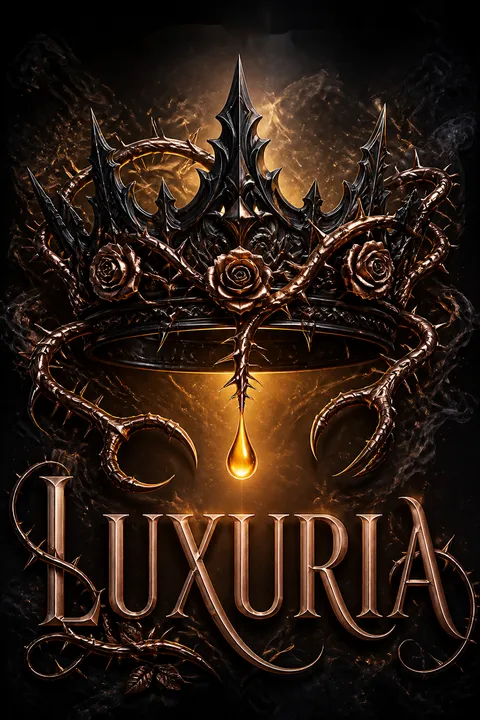

Plot Summary
After-Work Drinks and Secrets
Ophelia, the youngest in her tech company, navigates a world that's both mundane and shadowed by menace. At a rowdy company happy hour, casual banter veils deeper truths about monsters lurking in the dark, the oppression of the Hunters Council, and Ophelia's secret exile from her birthright—a monster hunter, cast aside for being "irregular." When her estranged sister Astrid calls, urgency replaces mundane concerns. The Council's sudden demand for Ophelia's compliance—marrying a monster king for a political treaty—forces her to choose between two impossible worlds: a grey existence in the human realm or the unknown dangers and potential of crossing into the very darkness she was trained to destroy.
Council's Impossible Proposal
Ophelia, burdened by debt and isolation, is presented as a "last resort" wife for the King of the Shades. The Council's motives are veiled in bureaucracy and familial coldness. Ophelia realizes she's a bargaining chip, not a hero, yet she accepts: her marriage will cement an uneasy truce between monsters and monsters-slayers, her future traded for her people's hope and her own escape from invisibility. Acceptance comes with a bittersweet longing—hopes for belonging war with dread. The Council's cold transaction sets in motion an alliance destined to challenge generations of distrust, blood, and fear.
Shadow Realm Wedding
Ophelia's arrival in the shadow realm is full of dissonance—the colorless world, monstrous guests, and the king's surreal, intimidating presence. Allerick, King of the Shades, radiates both raw power and sarcastic disdain, his suspicion sharpened by centuries of enmity toward humans. The wedding is a tense spectacle: claws, fangs, and ancient rites laid before courtly onlookers. Yet, as vows echo in the crumbling temple, fear wafts in the air—Allerick is drawn to its scent, mistaking Ophelia's true feelings. Both king and bride are actors in a drama neither controls, fate-bound by politics and ancient hunger.
The Fear-Tinged Feast
The wedding feast reveals the strangeness of Ophelia's new world: monotone food, predatory etiquette, and wary stares. Ophelia's outsider status is obvious; she's a curiosity and a threat. Allerick's brooding presence hints at primal attraction, but suspicion and wounded pride block connection. Between the king's proprietary warnings, court rivalries, and veiled threats from jealous Meridia, Ophelia's status as both queen and hostage is clear. Her attempts at likability and humor are met with suspicion or lustful curiosity, her body's reactions misunderstood as fear, adding tension to both palace politics and private longing.
Consummation's Unspoken Pact
Neither Ophelia nor Allerick are prepared for the strange intimacy of their forced union. Each sees the other as a puzzle: Allerick mistakes Ophelia's arousal for fear, Ophelia wonders if the king truly hates—or wants—her. Miscommunications create a dance of longing and frustration, as consummation, the act that would solidify the treaty, remains an unspoken barrier. Both are haunted by pride, loneliness, and expectations, dancing on the knife's edge between their duties and the volcano of unresolved desire that threatens to overturn the delicate truce.
Between Prey and Predator
As Ophelia adjusts to palace life, she struggles with purposelessness and the coldness of her marriage. Small acts—cooking her own meals, befriending the enigmatic guard Levana and grumpy Calix—offer delicate threads of belonging. Court politics swirl: jealousy, suspicion, and the ever-present threat of Meridia. Friendship blossoms in unexpected places, hinting at a new family. Ophelia's honest vulnerability begins melting some hearts, yet the fear that she'll never be more than a pawn, never truly wanted, stalks her like a shadow, even as forbidden attraction simmers with the king.
Learning to Be Queen
Ophelia's attempts to carve out a role become acts of subtle rebellion: she explores the castle, finds solace in art, and navigates the complex social hierarchy. Affra, her attendant, becomes both confidant and mentor. Ophelia learns the power of small kindnesses and courage in facing everyday humiliations, finding pieces of her true self in the monotone world. Her humanity, humor, and creativity transform suspicion into curiosity, and she glimpses, for the first time, the possibility of being more than a placeholder for peace. Yet, her longing for love and acceptance remains unmet.
Shade Politics and Dissent
Factions among the Shades resist peace, seeing the treaty as weakness. Allerick juggles political pressure, family loyalty, and the unpredictable passions of his brother Damen and Captain Soren. A web of intrigue grows, Meridia's jealousy festers, and loyalists whisper rebellion. Tensions escalate as a Shade's attempt to poison Ophelia exposes the fragility of the truce. The king faces impossible choices—justice for his people versus the safety of his queen, and, in private, that gnawing realization that he cannot protect himself from longing for the human woman fate has forced upon him.
Drawing Monsters, Drawing Desire
In isolation, Ophelia draws—monsters, desire, and the forbidden. Allerick's discovery of her explicit sketches shatters the misconception that she fears him. The truth breaks open: her scent, intoxicating to the king, is desire, not terror. The misunderstanding gives way to furious, electrifying passion. Consummation bursts forth, fueled by artistic fantasy and real hunger. Their union becomes physical and emotional—transformative, volcanic, and strange—proof that love might grow in the unlikeliest soil, if only truth is allowed to bloom.
Lust as Power, Love as Anchor
The couple's sexual connection is more than pleasure; it empowers Allerick, unlocking ancient magics and radiant, addictive strength. Their union revives the colorless world, infusing golden hues into the palatial gloom. But more than magic, a bond is formed—a supernatural tether, a bite marking Ophelia as his mate. Power and vulnerability are shared, and love, just emerging, proves stronger than politics. Yet, with new strength come new risks; the bond is a target for those who would manipulate or sever it and a radical force capable of remaking generations of prejudice and pain.
Bite, Bond, and Belonging
The bite transforms Ophelia from hostage to true consort: the physical mark anchors her, and the psychic bond connects them across worlds. Allerick opens to feelings he never thought he'd claim—love, tenderness, joy—as Ophelia's humanity and resilience begin to heal ancient wounds in both their souls. Together, they unearth the buried history of their species: once, humans and Shades lived in symbiosis, only for violence and misunderstanding to rip them apart. Their love—improbable, flawed, audacious—offers not just personal healing, but the fragile hope of reconciliation for two fractured worlds.
Treachery, Trial, and Treaty Broken
The fragile peace is sabotaged—a Shade, under Hunter manipulation, breaks the treaty, rekindling war. Ophelia, now both queen and outsider, faces abandonment and betrayal as the Hunters recall her "home." Her belonging falls apart in moments, the palace she made her own turning cold and foreign. Allerick, furious and guilt-ridden, fixates on maintaining peace, losing sight of love. Both are exiled to grief and longing, the bond that tied them stretched across realms. The cost of political failure becomes deeply personal, and the kindest revolution is learning to fight for love when power alone is insufficient.
Love Lost, Power Gained
Banished from the only true home she's known, Ophelia stands before the Hunters Council—once her family, now her jailers. She is gaslit, manipulated for political leverage, and forced to reckon with her own agency. From abject despair, Ophelia finds clarity: she will not be a pawn. Meanwhile, Allerick is tormented by loss, his power hollow without his queen. Both reflect on their journey: strength is not dominance but the courage to be vulnerable, to love, and to claim one's place in the world—no matter the cost.
Return to the Human World
In the Council's cage, Ophelia plots her next move. Astrid, her fierce sister, becomes an unexpected ally, and banished Hunters step out of the darkness—offering a coalition of empathy and resistance against tyranny. The plan forms: not just to reclaim personal happiness, but to rewrite the rules of an unjust world. Allies are forged through difference and rejection; justice is born from those left behind by the systems they once trusted. Hope appears in the unlikeliest places, even as old wounds threaten to bleed anew.
Allies, Outcasts, and a Plan
The conspiracy to subjugate the Shades is exposed, and Astrid leads a band of misfit Hunters and sympathetic Shades to Ophelia's rescue. Amid blackout and chaos, new alliances form—Hunters and monsters, united by what they have lost and what they can save. The revolution is less battle than reclamation: of dignity, of kindness, of the right to choose love over fear. Ophelia, refusing the seduction of bitterness, steps into her true power: a queen not by bloodline, but by the courage to heal and bridge worlds.
Reunion in Darkness
Allerick risks everything, using their bond to pierce the veil between realms and bring Ophelia home. Words left unspoken become confessions of love, regret, and the desire to build something lasting together. The mistakes of the past—pride, mistrust, silence—are woven into vows of honesty and partnership. The queen returns, not as an exile or hostage, but as a leader who claims her own place, her own narrative. The reunion is fierce, tender, and transformative, rekindling the magic and hope their love first sparked.
The Revolution of Kindness
Ophelia and Allerick anchor a movement of compassion: the outcast Hunters offered sanctuary, the hungry Shades learn to find strength in gentleness, and the world slowly reawakens to color and beauty. The first of many public acts—the trial and exile of Meridia, the healing of ancient rifts—signal a future where darkness and light exist in balance. Power is redefined as the ability to protect, cherish, and unite, rather than to dominate or destroy. The personal lesson becomes political reality: to change the world, one must dare to love first.
The True Queen Crowned
Ophelia's coronation is a celebration of what was once impossible: a human, loved and honored by monsters, crowned not as hostage, but as queen and equal. The world she brought to life—literally painted with color—proves love's magic. The former exiles dance; the king, once alone, finds wholeness in his queen. The monarchy stands not just as a symbol of peace, but as the living, beating heart of a realm transformed by vulnerability, acceptance, and courage. Their story closes with a promise: the past can wound, but love, empathy, and chosen family can remake worlds.
Analysis
Modern monster romance as fable of empathy and transformationLuxuria leverages its genre trappings to explore profound, timely questions of identity, otherness, and systemic violence. By placing a "failed" ex-Huntress and a brooding "monster king" at the heart of its tale, the novel subverts not only romantic and erotic conventions but also the logic of tribalism—asking what happens when love is allowed to cross ancient boundaries. Through misunderstandings, the weaponization and healing of fear, and the forging of bonds meant to be unbreakable, the story sketches a world where agency is slowly reclaimed from systems of cruelty. The lesson is explicit: empathy, humor, and chosen family—the revolution of kindness—are more world-changing than dominance or vengeance. Monsters become lovers, prey becomes queen, and together they heal not just each other, but the poisoned legacy between their peoples. At its core, Luxuria insists that even the most wounded, exiled, or monstrous among us are worthy of a love that makes the world—literally—shine with new color.
Review Summary
Luxuria receives generally positive reviews, averaging 3.97/5 stars. Readers praise the hilarious heroine Ophelia, whose enthusiastic attraction to monsters subverts typical genre expectations, and the tension-filled arranged marriage dynamic with the brooding Shade King, Allerick. Highlights include witty dialogue, creative world-building, and steamy scenes. Common criticisms center on poor communication between leads, a rushed ending, and underdeveloped emotional connection. The audiobook receives particular praise. Many readers eagerly continue the series despite its flaws.
Characters
Ophelia
A failed Huntress, Ophelia begins the story exiled from both supernatural and human communities for her nonconformity and inner fire—betrayed by the Hunters Council for her 'monstrous' appetites and kink. Torn by loneliness, she finds an uneasy place of agency in her forced marriage to Allerick, choosing hope and kindness in impossible situations. Psychoanalytically, Ophelia is marked by trauma, creative longing, and a deep need to belong without sacrificing her self. Her development charts her journey from pawn to sovereign—using empathy, humor, and honesty as her greatest weapons. The healing of her own shame becomes the first healing of the world itself.
Allerick
As King of the Shades, Allerick embodies predator and provider, bearing the scars of centuries of war with humans. Initially cynical, proud, and fiercely guarded, he is both repelled and fascinated by his strange human bride—misreading her longing for fear, and his own longing for weakness. Psychoanalysis reveals his fear of vulnerability, but also an unspoken hunger for acceptance and tenderness. Ophelia's patient courage awakens dormant gentleness; their bond cracks open the possibility of love, healing, and the remaking of society. His arc is the transformation of power through trust and the humility of choosing love.
Astrid
Astrid, the 'golden child,' is everything Ophelia was not allowed to be—a successful Huntress, driven and ruthless. Yet, beneath her façade lies a fierce loyalty to her sister and a simmering dissatisfaction with the Council's inhumanity. Astrid's development moves from enforcer of the old order to co-conspirator in revolution, embodying both the dangers and possibilities of breaking from one's prescribed role. She balances protectiveness and self-interest, but ultimately, love for Ophelia transforms her into a true ally, able to challenge corrupt systems and forge new possibilities.
Damen
Allerick's younger brother, Damen is mischievous, irreverent, and loyal almost to a fault. His quick wit masks a restless, observant intelligence and a longing to matter outside his brother's shadow. Damen frequently pushes boundaries both for trouble and growth, and in his support for Ophelia (and later, the Hunters), he emerges as the conscience and connector who keeps the court from calcifying. His development runs parallel but more playful—showing how friendship, humor, and humility can mend what power alone cannot.
Soren
Soren, head of the guard and Meridia's brother, embodies duty and internal conflict. Loyal to Allerick and terrified for his sister, Soren is caught between family and principle, tradition and evolution. Deeply suspicious of Ophelia, he gradually becomes her staunchest protector, and his budding, awkward connection with Astrid hints at reconciliation between warring tribes. Soren's struggle is a classic story of learning that loyalty sometimes means choosing justice over blood, and that true strength lies in protecting those unlike oneself.
Meridia
Meridia is both alluring and volatile, initially jealous of Ophelia's sudden ascendance. Her personal ambition—unrequited lust for Allerick and seething resentment of human-Hunters—drives her to sabotage the peace, manipulating both Shade and Hunter factions. Psychologically, Meridia is fear-driven, desperate for power and validation. Ultimately, her actions expose the dangers of holding on to old wounds, and her downfall acts as the final test for the new world the protagonists are building.
Levana
Initially wary of Ophelia, Levana gradually comes to see her as more than a political pawn—becoming the first Shades attendant to claim her as a friend. Levana's arc is subtle, tracing the gradual shift from suspicion to true loyalty, and highlighting how small acts of trust and openness can change the tide of entire systems.
Affra
Affra is Ophelia's kindly, older attendant, offering not just service but wisdom and scholarly knowledge of the old world. Her translations and advice become turning points in the plot, and she functions as a healing presence—a mother figure capable of quietly subverting old prejudice and supporting the birth of a new, kinder culture. Affra's history as a translator parallels the broader theme of blending two worlds that have been kept apart.
Calix
Calix, the chef, grounds the narrative with his practical focus and blunt honesty. He treats Ophelia like a peer, not a queen or curiosity, modeling the progress of acceptance possible in everyday relationships. Calix's evolving approval of Ophelia signals the shifting stance of the realm at large, and his flirtatious tension with Levana injects subtle warmth and comic relief.
The Hunters Council
This faceless, cold bureaucracy manipulates Ophelia and Astrid, viewing individuals as tools for political maneuvering. Their actions—banishing outcasts, weaponizing peace, sabotaging treaties—personify systemic fears, tribalism, and the suffocating demands of tradition. Their defeat marks the rise of a new world defined by individuals, not dogma.
Plot Devices
Arranged Marriage as Political Hostage
The central narrative is structured around the forced wedding: two historical enemies bound for the sake of peace. The trope of marriage-as-political-hostage sets up an exploration of agency, consent, and cross-cultural intimacy. The slow-burn from suspicion to passion, then love, subverts the narrative not just of romance, but of systemic enmity.
Misunderstood Scent/Miscommunication
A smart plot device: Shades "smell" emotion, taking Ophelia's arousal for fear—driving misunderstanding, tension, and ultimately revelation. This becomes a metaphor for the way prejudice, trauma, and longing are misread between enemies and even within oneself.
Art as Revelation and Agency
Ophelia's artwork is both literal and symbolic: a means to assert agency, express hidden longing, and finally reveal her true desires—and misunderstandings. The discovery of her explicit drawings catalyzes a new phase of openness and emotional intimacy.
Ancient Magic/Bonding Bite
The transformation from fear to symbiosis is embodied in the bite—an explicitly erotic act that forges an unbreakable bond, echoes ancient customs, and unlocks forgotten powers. This plot device literalizes the theme of making one's mark, and the way vulnerability can become world-altering strength.
Political Intrigue and Rebellion
The narrative tension is shaped by serial threats—external (traitorous Hunters, sabotage of the peace) and internal (Meridia's jealousy, Shade political dissent). Sympathetic "villains" and ambiguous allies weave a web in which safety, love, and power are perpetually at risk, demanding constant negotiation and growth from the protagonists.
Found Family & Chosen Community
The subplot of banished Hunters and outcast Shades coming together provides a model for healing: those rejected by rigid systems build alliances rooted in shared rejection, found kinship, and the decision to remake broken worlds together.
Color as Renewal
As Ophelia and Allerick's relationship deepens, color seeps back into the Shadow Realm—a poetic manifestation of healing and transformation. This sly magical realism links the personal and the political, suggesting that new beauty can emerge from even the most ashen places when horror is transmuted into hope.
Alternating Perspectives
Chapters swapping between Ophelia's and Allerick's points of view allow the reader to inhabit and understand both sides. This structure blurs the monster/human binary, undermines prejudice, and lets the story's emotional heart be seen from all angles—inviting empathy.
Download PDF
Download EPUB
.epub digital book format is ideal for reading ebooks on phones, tablets, and e-readers.








































