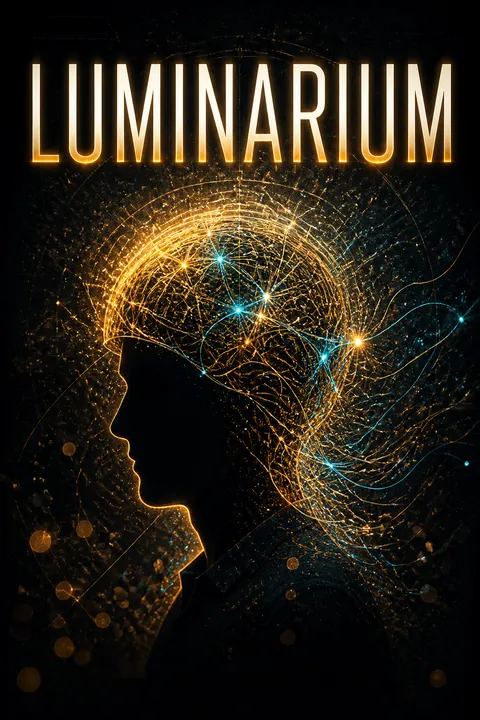

Plot Summary
Helmet of Hope
Fred Brounian, reeling from his twin brother George's coma and the collapse of his personal and professional life, volunteers for a neural science study at NYU. The study promises to induce "spiritual awakenings" through electromagnetic stimulation, offering hope to those lost in grief or existential crisis. Fred's first session with the enigmatic Mira Egghart is both clinical and intimate, as she wires him up and explains the science behind the helmet. The experience is unexpectedly profound, blurring the boundaries between self and world, and igniting a longing for transcendence. Fred's desperation for meaning and connection is palpable, setting the stage for his journey through grief, science, and the search for faith.
Twin Signals
Ten days before the study, Fred receives a cryptic email from George's account, despite George being in a coma. The message's subject, "Help, Avatara," is both a technical and mystical reference, hinting at George's fascination with avatars and spiritual descent. Fred's investigation leads him to consider the possibility of alternate realities, the persistence of consciousness, and the uncanny ways technology mediates grief. The email becomes a symbol of unresolved connection, guilt, and the hope that George's consciousness might still be reaching out, even as Fred's rational mind resists such magical thinking.
The Spiritual Experiment
Fred's sessions with Mira become a crucible for his skepticism and longing. The helmet's electromagnetic pulses induce sensations of expansion, oneness, and even out-of-body experiences. Mira insists on the importance of understanding the neurological basis for these phenomena, advocating for a "faith without ignorance." Fred is both comforted and unsettled by the idea that spiritual experiences can be manufactured, and that the line between delusion and revelation is razor-thin. The sessions force Fred to confront his grief, his relationship with George, and the possibility that meaning is something we create, not discover.
Merging Boundaries
The helmet's effects linger beyond the lab, causing Fred to experience moments of merging with strangers, objects, and even memories. He is haunted by the sense that his boundaries are porous, that he is both himself and others—especially George. Childhood memories of twinhood, shared jokes, and diverging paths resurface, highlighting the pain of separation and the longing for reunion. Fred's encounters with his family, ex-fiancée, and George's ex-wife are colored by this sense of blurred identity, as he struggles to find his place in a world that feels both intimately connected and hopelessly fragmented.
Ghosts in the Machine
Fred's professional life is entwined with Urth, the virtual world he co-founded with George and their brother Sam. As the company is subsumed by a military contractor, Fred is sidelined, and Sam becomes the reluctant steward of their legacy. The virtual world, once a utopian dream, is now a tool for war and disaster simulation. Fred is haunted by digital messages, avatars, and the persistent sense that George's spirit is manipulating events from beyond. The boundaries between the virtual and the real, the living and the dead, become increasingly unstable, as Fred searches for signs, sabotage, and meaning in the code.
Childhood Magic
Flashbacks to the Brounian family's magic act reveal the roots of Fred and George's bond, their rivalry, and their divergent approaches to reality and illusion. Their father, Vartan, is a struggling actor who finds solace in performing with his sons, even as the act becomes a symbol of lost innocence and the inevitable disillusionment of adulthood. The magic shows, both past and present, serve as metaphors for the stories we tell ourselves to survive, the tricks we play to keep hope alive, and the pain of realizing that the world is not, in fact, magical.
Utopian Dreams
George's vision for Urth was a virtual world where players could transcend material needs and evolve spiritually. The company's early days are filled with idealism, camaraderie, and the belief that technology can change the world for the better. But the pressures of business, the lure of military contracts, and the realities of post-9/11 America transform Urth into a tool for training and war. The brothers' relationships fracture under the strain, and the dream of a better world gives way to compromise, regret, and the haunting question of what might have been.
The Company Divided
As Armation takes control, Fred is pushed out, Sam adapts to the new order, and George withdraws, both physically and emotionally. The brothers' differing responses to crisis—Fred's guilt-driven heroism, Sam's pragmatic adaptation, George's idealistic withdrawal—mirror their childhood roles and foreshadow their adult fates. The company's transformation from utopian project to cog in the Military-Entertainment Complex becomes a microcosm of the post-9/11 world, where dreams are commodified, and survival often means complicity.
The Military-Entertainment Complex
Urth's evolution into a military training platform is both lucrative and soul-crushing. Fred is disturbed by the increasing realism of violence, the blurring of play and war, and the ethical ambiguities of their work. The company's move to Florida, the rise of "serious games," and the encroachment of security culture reflect broader societal shifts. Fred's sense of alienation deepens, as he grapples with the moral costs of adaptation, the erosion of community, and the persistent longing for meaning in a world that rewards cynicism.
Sabotage and Saboteurs
A series of mysterious emails, instant messages, and virtual hauntings suggest that someone—perhaps George himself—has sabotaged Urth from beyond the grave. Fred and Sam investigate, uncovering clues that point to George's involvement, his desire for revenge, and his ultimate act of loyalty: ensuring that Sam, not Armation, inherits the company's legacy. The sabotage is both a final magic trick and a message about the limits of control, the persistence of love, and the impossibility of closure. Fred is forced to confront his own complicity, his need for forgiveness, and the reality that some mysteries remain unsolved.
The Presence and the Void
Fred's final helmet sessions push him to the brink of dissolution, as he experiences the "Presence"—a sense of divine love and connection—and the "Void"—a terrifying emptiness beyond self and meaning. These experiences are both neurological and spiritual, manufactured and real, and they force Fred to confront the paradoxes at the heart of existence. The boundaries between self and other, faith and doubt, reality and illusion, are revealed as both necessary and illusory. Fred emerges from the void changed, if not healed, with a new appreciation for the beauty and pain of being alive.
The Last Experiment
As George's condition worsens, the family prepares for his death. Fred, desperate to give his brother one last gift, modifies a helmet to induce a final vision of transcendence. The act is both a gesture of love and a surrender to the limits of science, faith, and control. George's passing is marked by ambiguity, unresolved questions, and the persistent hope that something endures beyond loss. Fred's journey through grief, science, and spirituality culminates in a hard-won acceptance of uncertainty, impermanence, and the necessity of letting go.
The End of George
George's death is both an ending and a beginning. The family grieves, each in their own way, and Fred is left to navigate the aftermath: legal troubles, financial ruin, and the slow process of rebuilding a life. The city, too, is in mourning, marked by memorials, arguments, and the ongoing struggle to find meaning in tragedy. Fred's encounters with Mira, his family, and the ghosts of his past are suffused with both sorrow and a tentative hope for renewal.
Faith Without Ignorance
Fred's journey leads him to a "faith without ignorance"—a belief that is informed by science, tempered by doubt, and open to mystery. His relationship with Mira, herself a widow of 9/11, becomes a space for healing, vulnerability, and the possibility of love after loss. The helmet study, the magic shows, and the virtual worlds are revealed as different forms of storytelling, each offering a way to make sense of the senseless. Fred learns that meaning is not given, but made, and that faith is not the absence of doubt, but its companion.
The City Remade
The novel's final movement is a meditation on the city—its wounds, its beauty, its capacity for renewal. Fred, Mira, and the supporting cast gather at Ground Zero, among mourners, tourists, and protestors, each seeking their own form of closure. The city is both a site of trauma and a testament to the persistence of life, a place where grief and hope coexist. Fred's journey is mirrored in the city's, as both learn to live with loss, embrace uncertainty, and find meaning in the act of moving forward.
The Final Magic Trick
In the end, Fred's story is about awakening—not just from grief, but from the illusions of control, certainty, and separateness. The final image is one of return: to the city, to love, to the possibility of connection. Fred's journey through science, faith, and loss is both deeply personal and universally resonant, a testament to the human capacity for resilience, creativity, and hope. The magic trick is not in escaping reality, but in learning to see it anew, to find wonder in the ordinary, and to awaken the twin within us all.
Analysis
A meditation on grief, technology, and the search for meaning in a post-9/11 worldLuminarium is a novel that grapples with the deepest questions of existence: What does it mean to be alive in an age of simulation, loss, and uncertainty? Through the story of Fred Brounian and his fractured family, Alex Shakar explores the intersections of science and faith, the persistence of grief, and the human longing for connection and transcendence. The novel is both a critique and a celebration of our attempts to make sense of the senseless—through technology, storytelling, ritual, and love. Its central lesson is that meaning is not something we find, but something we create, moment by moment, in the face of impermanence and ambiguity. The "faith without ignorance" that Fred and Mira seek is not the absence of doubt, but the willingness to live with it, to embrace uncertainty as the ground of possibility. In the end, Luminarium is a testament to resilience, creativity, and the enduring power of hope—a reminder that, even in the darkest times, we can remake the city, the self, and the world anew.
Review Summary
Reviews of Luminarium are mixed, averaging 3.47/5. Admirers praise its ambitious blend of neuroscience, spirituality, quantum physics, virtual reality, and post-9/11 themes, with many lauding its philosophical depth, quirky characters, and emotional resonance. Critics frequently cite overwriting, excessive stream-of-consciousness passages, unfocused plotlines, and heavy-handed symbolism as weaknesses. Many readers appreciate the inventive premise involving brain stimulation experiments and a comatose twin sending mysterious messages, but feel the novel tries to cover too much ground, resulting in an uneven, occasionally tedious read despite its intellectual ambition.
People Also Read




Characters
Fred Brounian
Fred is the novel's protagonist, an intelligent but emotionally adrift man whose life has unraveled following his twin brother George's coma. Fred is defined by his skepticism, longing for meaning, and deep sense of guilt—over George's illness, the loss of their company, and his own perceived failures. Psychoanalytically, Fred is caught between the desire for connection and the fear of dissolution, oscillating between rationality and magical thinking. His journey is one of reluctant transformation, as he moves from denial and despair to a tentative embrace of faith, love, and the acceptance of uncertainty. Fred's relationships—with George, Sam, Mira, and his parents—are marked by ambivalence, longing, and the persistent hope that something can be salvaged from loss.
George Brounian
George, Fred's identical twin, is both a literal and symbolic ghost throughout the novel. Once the driving force behind Urth and the family's magic act, George is characterized by his idealism, creativity, and spiritual yearning. His illness and subsequent coma render him both absent and omnipresent, haunting Fred through memories, digital messages, and the persistent sense that he is orchestrating events from beyond. George's psychological complexity lies in his simultaneous embrace of transcendence and withdrawal, his desire to change the world and his inability to save himself. His final acts—sabotage, messages, and the ultimate letting go—are both revenge and gift, forcing those left behind to confront their own illusions and possibilities.
Sam Brounian
Sam, the younger Brounian brother, is the embodiment of adaptation and compromise. Less visionary than George and less tormented than Fred, Sam survives by aligning himself with power, embracing the new order, and suppressing his own doubts. His relationship with his brothers is fraught with resentment, loyalty, and the longing for approval. Psychologically, Sam is both the scapegoat and the inheritor, burdened by guilt and the pressure to succeed where others have failed. His eventual breakdown and confession reveal the costs of survival, the pain of exclusion, and the possibility of redemption through vulnerability.
Mira Egghart
Mira is both Fred's experimenter and love interest, a neuropsychology doctoral student whose own life is marked by loss—her husband died on 9/11. Mira is fiercely intelligent, skeptical, and driven by the desire to reconcile science and spirituality. Her relationship with Fred is a dance of intimacy and distance, as both struggle to trust, to heal, and to find meaning after trauma. Mira's psychological depth lies in her ambivalence toward faith, her need for control, and her vulnerability beneath the surface. She is both a guide and a fellow traveler, embodying the novel's central tension between knowledge and mystery.
Vartan Brounian
Vartan, the Brounian patriarch, is a former actor whose career has faded into children's magic shows. He is both comic and tragic, a man who copes with disappointment through performance, humor, and a stubborn refusal to give up. Vartan's relationship with his sons is marked by pride, regret, and the longing for connection. Psychologically, he represents the persistence of hope in the face of failure, the necessity of illusion, and the pain of watching one's children suffer. His arc is one of gradual acceptance, as he learns to let go and support his family through grief.
Holly Brounian
Holly, Fred's mother, turns to Reiki and alternative healing as a way to cope with George's illness and her own sense of helplessness. She is both nurturing and lost, seeking meaning in the face of overwhelming loss. Holly's faith is both a comfort and a source of tension, as Fred struggles to reconcile her beliefs with his own skepticism. Psychologically, she embodies the human need for hope, ritual, and the belief that love can heal. Her journey is one of resilience, adaptation, and the gradual acceptance of impermanence.
Manfred "Manny" Kent
Manny is a family friend and former actor whose eccentricity and irreverence provide comic relief and unexpected wisdom. A self-declared Buddhist and filmmaker, Manny is both a mentor and a provocateur, challenging Fred to question his assumptions and embrace uncertainty. Psychologically, Manny represents the possibility of transformation through humor, paradox, and the willingness to let go of fixed identities. His presence in the novel is a reminder that enlightenment is often found in the most unlikely places.
Guy
Guy is a Reiki practitioner and neighbor who introduces Holly to alternative healing and serves as a catalyst for the novel's exploration of faith, energy, and community. He is both sincere and self-mocking, embodying the contradictions of New Age spirituality. Psychologically, Guy is a mirror for Fred's skepticism and longing, challenging him to consider the possibility of unseen connections and the limits of rationality.
Dot
Dot, Guy's partner, is a calming influence in the Reiki group and a source of comfort for Holly and Fred. She represents the healing power of community, empathy, and the small acts of kindness that sustain us through crisis. Psychologically, Dot is less conflicted than other characters, embodying acceptance, patience, and the quiet strength of those who support from the margins.
The Presence / The Void
The Presence and the Void are not characters in the traditional sense, but recurring motifs that represent the novel's central spiritual and psychological dilemmas. The Presence is experienced as divine love, connection, and meaning; the Void as emptiness, dissolution, and the terror of nonexistence. Together, they embody the paradoxes of faith and doubt, the longing for transcendence and the necessity of letting go. Psychologically, they are projections of Fred's inner life, the oscillation between hope and despair, and the ultimate realization that meaning is both constructed and elusive.
Plot Devices
The God Helmet
The helmet is both a literal device and a metaphor for the novel's exploration of the boundaries between science and spirituality. It induces mystical experiences through electromagnetic stimulation, blurring the line between manufactured and authentic revelation. The helmet sessions structure the narrative, marking Fred's progression from skepticism to openness, and serving as a catalyst for his psychological and spiritual transformation. The device also raises questions about the nature of consciousness, the reliability of perception, and the possibility of faith without ignorance.
Twinship and Doubling
The motif of twins—Fred and George—serves as a central plot device, symbolizing the tension between self and other, unity and separation. Their relationship is a microcosm of the novel's larger themes: the longing for connection, the pain of individuation, and the persistence of the past. Doubling recurs throughout the narrative—in avatars, virtual worlds, and the blurring of boundaries between characters—highlighting the instability of identity and the difficulty of letting go.
Virtual Reality and Simulation
Urth, the virtual world co-created by the brothers, is both a setting and a metaphor for the constructed nature of reality. The evolution of Urth from utopian dream to military tool mirrors the characters' own journeys from innocence to compromise. The virtual hauntings, sabotage, and digital messages serve as plot devices to explore grief, memory, and the persistence of the past. The simulation motif raises questions about authenticity, agency, and the possibility of transcendence in a world mediated by technology.
Sabotage and Mystery
The mysterious emails, instant messages, and virtual hauntings drive the plot, creating suspense and forcing the characters to confront their own complicity, guilt, and longing for closure. The revelation that George orchestrated the sabotage from beyond the grave is both a final magic trick and a meditation on the limits of control, the persistence of love, and the impossibility of closure. The mystery structure allows for the gradual unfolding of character motivations, the layering of meaning, and the ultimate acceptance of ambiguity.
Magic and Performance
The family's magic act, both past and present, serves as a recurring plot device and metaphor for the stories we tell to survive. Magic is both a source of comfort and a reminder of disillusionment, highlighting the tension between hope and reality. The final magic trick—Fred's attempt to give George a vision of transcendence—embodies the novel's central question: can we create meaning, or must we surrender to the void?
Faith Without Ignorance
The novel's structure is built around the tension between faith and skepticism, science and spirituality, presence and absence. The characters' journeys are marked by moments of revelation and dissolution, the oscillation between hope and despair, and the gradual acceptance that meaning is both constructed and elusive. The plot is driven by the search for a "faith without ignorance"—a belief that is informed, provisional, and open to mystery.
Download PDF
Download EPUB
.epub digital book format is ideal for reading ebooks on phones, tablets, and e-readers.








































