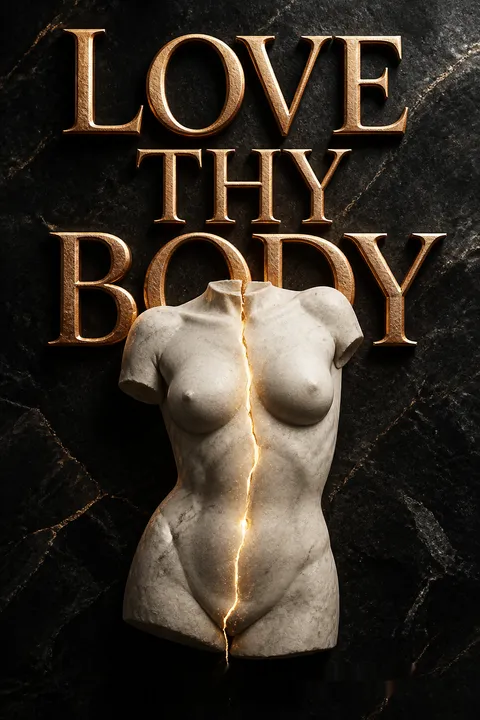

Key Takeaways
1. Modern Secular Ethics: A Dehumanizing Body-Person Dualism
In Love Thy Body, we will move beyond click-bait headlines and trendy slogans to uncover the worldview that drives the secular ethic.
Surface effects. The daily news cycle chronicles a secular moral revolution in areas like sexuality, abortion, assisted suicide, and transgenderism. These current events are merely surface effects, like waves on the ocean, driven by deeper worldview shifts. Understanding the core principles of this secular worldview is crucial for intelligent and compassionate engagement.
Fragmented worldview. Secular morality rests on a deep division in Western thought, splitting reality into a "fact" realm (empirical science) and a "value" realm (morality and theology). This "fact/value split" leads to a fragmented view of the human being, assuming a "body/person split" where the body is a mere instrument, and the "person" is defined by subjective values like cognitive function or self-awareness.
Strategic engagement. This two-story division provides a powerful strategy to show why secular ethics fail, both personally and publicly. By uncovering the dehumanizing worldview at the heart of controversial issues, we can present a biblical ethic that affirms a holistic view of the person, supporting human rights and dignity.
2. Personhood Theory: Devaluing the Human Body
If a baby is human life from conception but not a person until some later time, then clearly these are two different things.
Human non-person. Personhood theory, a cornerstone of secular bioethics, posits that simply being biologically human is insufficient for rights; one must also achieve "personhood" based on cognitive functions like consciousness or self-awareness. This creates a new category: the "human non-person," relegated to the lower story of mere biological existence, devoid of moral standing or legal protection.
Arbitrary criteria. The definition of personhood is subjective and arbitrary, with no scientific consensus on when it begins or what criteria are pivotal. This lack of objective grounding means that legal protection is based on varying degrees of cognitive function, effectively "relegating the proposition that all men are created equal to the ash heap of history."
Disposable matter. The implication is that human life, in its early stages or when cognitive function is diminished, is reduced to disposable raw material. It can be used for research, harvested for organs, or discarded without moral consequence, reflecting a very low view of the human body that ultimately dehumanizes all of us.
3. Biblical Worldview: Affirming the Embodied Person
The body truly is part of the personal reality of the human being and shares fully in his or her inherent dignity.
Integrated unity. In contrast to dualism, the biblical worldview affirms that body and soul together form an integrated psycho-physical unity. Humans are "embodied souls," created in God's image, meaning our physical existence is intrinsically valuable and reflects God's purposes. This perspective avoids the radical devaluation of human life seen in secular thought.
Teleological design. The Bible presents nature, including the human body, as God's handiwork, reflecting His purposes. This "teleological view" means our bodies have a built-in purpose, part of which is expressed as the moral law. Therefore, respecting the body and its design provides rational grounds for moral decisions, from the beginning of life to sexual ethics.
Incarnational ethic. Christianity's revolutionary claims—the Incarnation (God taking on a physical body), the bodily resurrection of Christ, and the promise of a new heaven and new earth with resurrected bodies—profoundly affirm the dignity of the material realm. This "incarnational ethic" means that respect for the person is inseparable from respect for the body, countering ancient Gnostic disdain for matter.
4. The Culture of Death: Abortion, Euthanasia, and Eugenics
To defend women’s rights, “You must be prepared to kill.”
Justifying killing. The body-person dualism, first applied to abortion, extends to euthanasia, infanticide, and eugenics. If personhood is tied to cognitive function, then those lacking it—fetuses, newborns, the disabled, the elderly—can be deemed "non-persons" and their lives considered "not worth living," justifying their elimination for perceived societal benefit or individual choice.
Darwinian influence. Darwin's theory, by reducing humans to mere material organisms driven by survival, provided a philosophical basis for devaluing human life. Prominent Darwinists like Ernst Haeckel, Jack London, Margaret Sanger, and Justice Oliver Wendell Holmes Jr. advocated for eugenics and euthanasia, viewing care for the "unfit" as interfering with natural selection.
Commodifying life. This worldview reduces human life to utilitarian calculations of costs and benefits. Practices like embryonic stem cell research, the sale of fetal organs, and transhumanism treat human life as raw material to be harvested, manipulated, or even bio-engineered into a "post-human" race, reflecting a profound disrespect for intrinsic human dignity.
5. Sexual Revolution: Detaching Sex from Personhood
Hookups are very scripted. . . . You learn to turn everything off except your body and make yourself emotionally invulnerable.
Schizoid sex. The hookup culture embodies the body-person dualism by creating a "drastic divide between physical intimacy and emotional intimacy." Sex is reduced to a purely physical, recreational act, disconnected from love or commitment, where partners are treated as instruments for pleasure, not whole persons. This requires individuals to "turn everything off except your body" to avoid emotional attachment.
The "ghost in the sex machine." This amoral view of sex, championed by figures like Freud, Sanger, Kinsey, and Foucault, treats the body as a "wet machine" or "meat skeleton" with no inherent moral significance. It promotes the idea that sexual liberation is the path to happiness, even salvation, by freeing individuals from the "oppression" of traditional morality.
Biology's promise. Science, however, increasingly confirms the body-person unity. Hormones like oxytocin and vasopressin create involuntary chemical bonds during sex, demonstrating that "we are designed to bond." The hookup culture, by repeatedly breaking these bodily "promises," leads to emotional pain, cynicism, and an inability to form lasting, fulfilling relationships, ultimately failing to match our true nature.
6. Gender Identity: Severing Self from Biology
It doesn’t matter what living, meat skeleton you’ve been born in; it’s what you feel that defines you.
"Assigned" sex. Transgender ideology, embedded in SOGI laws, asserts that gender identity is independent of biological sex, which is dismissed as merely "assigned at birth." This view treats the body as an irrelevant "meat skeleton," separate from the "true, authentic self" defined solely by inner feelings and desires, reflecting a profound devaluation of the physical body.
Postmodern fluidity. Queer theory, rooted in postmodernism, argues that gender is a "fiction," a "free-floating artifice" that can be chosen and remade at will, with no grounding in nature. This "pomosexual" view leads to an infinite number of gender identities, further fragmenting the self and reinforcing rigid gender stereotypes by defining identity based on stereotypical behaviors rather than biological reality.
Undermining women's rights. This de-naturalization of gender has severe consequences, particularly for women. If "woman" is not defined by biological sex, then legal protections for women as a class become impossible. The push to eliminate gender binaries in language and public spaces ultimately erases the "material reality of sex," making it impossible to fight sex-based oppression.
7. The Contractual Family: Eroding Natural Bonds
If the foundation of the family were transferred to choice, children would be cut adrift, without any moral claim on their own parents.
Atomistic individuals. Social contract theory, modeled on Newtonian physics, posits that humans are originally disconnected, autonomous "mushroom men" who form relationships only by choice to advance self-interest. This contractual view, now extending to marriage and family, dissolves natural, organic bonds in favor of agreements that can be terminated at will.
Children as products. This ideology redefines parenthood from a natural, biological bond to a contractual one, where children must be "chosen" to have a moral claim on their parents. This perspective can lead to children being viewed as commodities, manufactured through technology for "paying customers," and potentially "rejected" if they don't meet desired "quality control" standards.
Loss of obligation. The contractual model undermines the inherent responsibilities of family, replacing covenantal commitment ("for better or worse, until death do us part") with self-interested agreements. This erosion of natural obligations leaves children vulnerable and contributes to family breakdown, creating a "new form of poverty" and societal instability.
8. The State's Ascendancy: Loss of Freedom and Rights
If the state creates rights, the state can also take them away.
Defining personhood. When the state legalizes abortion by declaring some biological humans "non-persons," it assumes the authority to define who qualifies for personhood based on mental abilities. This principle extends to euthanasia, where the state can decide who "deserves to live or die," effectively reducing natural rights to legal rights that can be granted or revoked.
Redefining institutions. Similarly, by de-naturalizing marriage and gender, the state takes on the authority to define these fundamental institutions. If marriage is merely an emotional commitment and gender is a state of mind, the state can impose its definitions, leading to policies that erase biological distinctions and undermine the natural family.
Totalitarian creep. The contractual view of family ultimately empowers the state to micromanage personal relationships and consolidate power. If parenthood is detached from biology and becomes state-created, parents lose natural rights, becoming dependents on the state. This creates a society of disconnected, atomistic individuals, highly vulnerable to totalitarian control, as "the isolated individual is easy to manipulate and control."
9. Reclaiming a Teleological View: Purpose in Creation
The biblical worldview has the intellectual resources to offer a balanced explanation why we cannot simply take our identity from our natural inclinations.
Meaningful cosmos. Christianity offers a genuine alternative to an empty, pointless cosmos, asserting that the universe is meaningful and ordered by a loving Creator. This "teleological view" means that human nature, including our bodies and relationships, has inherent purpose and dignity, providing objective grounds for morality and human flourishing.
Integration over fragmentation. Instead of seeking freedom from the body or natural bonds, a biblical worldview encourages living in harmony with them. It emphasizes the integration of body and person, male and female complementarity, and the covenantal nature of relationships, which are designed to reflect God's own character and Trinitarian communion.
Truth and fulfillment. By embracing a mental "grid" that recognizes God's objective order, individuals can find greater fulfillment and coherence. This perspective counters the secular narrative that often leaves people feeling alienated and unfulfilled, demonstrating that biblical morality is not oppressive but "rationally compelling and personally attractive."
10. Cultivating Compassion: The Church's Role in a Broken World
The goal is “more rescue mission than culture war.”
Radical hospitality. In a world fragmented by secular ideologies, the church is called to be a "rescue mission," offering radical hospitality and genuine love to those wounded by the sexual revolution. This means welcoming "the outcast and the marginalized," including those struggling with sexual issues, without judgment, and providing a refuge for healing and restoration.
Holistic support. Beyond moral condemnation, the church must provide practical, long-term support for individuals facing difficult life circumstances, such as unexpected pregnancies, gender dysphoria, or same-sex attraction. This includes offering resources, community, and a safe space for vulnerability, recognizing that "people must be drawn in by a vision that attracts them by offering a more appealing, more life-affirming worldview."
Embodied truth. Christians must embody the gospel message, demonstrating its truth through loving relationships and strong, healthy communities. By building "local forms of community within which civility and the intellectual and moral life can be sustained," the church can become a "center of civilization," reflecting God's love and faithfulness in a world increasingly marked by loneliness and despair.
Review Summary
Reviews of Love Thy Body are largely positive, averaging 4.58/5. Supporters praise Pearcey's unified philosophical framework connecting abortion, euthanasia, homosexuality, and transgenderism to a secular "personhood theory" that separates body from self. Many Christians find it an essential apologetics resource. Critics argue the book relies on straw-man arguments, politically biased sources, and poor philosophical rigor. Some LGBTQ+ readers find the conclusions harmful despite following the initial logic. Several reviewers note a combative, preachy tone that undermines its persuasive intent.
People Also Read






About the Author


Download PDF
Download EPUB
.epub digital book format is ideal for reading ebooks on phones, tablets, and e-readers.








































