
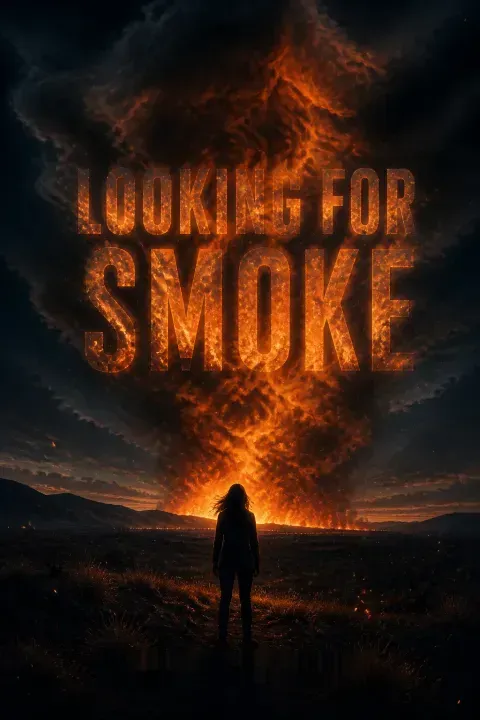


Plot Summary
The Giveaway at Indian Days
Mara Racette,1 newly relocated to the Blackfeet Reservation, attends the North American Indian Days powwow with her parents. The drumbeat resonates in her chest as the Arnoux family prepares an Honor Song for their late grandfather Dillon, who was a respected tribal council member and veteran.
His granddaughter Loren Arnoux2 and her grandmother Geraldine6 ask certain people to come forward for a giveaway ceremony. Mara1 is shocked to hear her name called. Loren2 places a folded Pendleton blanket into Mara's1 arms and apologizes for the cold treatment Mara1 has endured since moving to Browning. Loren's2 sister Rayanne,11 who has been missing for three months, apparently wanted Mara1 included.
The giveaway also draws in Eli First Kill,3 his little sister Cherie,8 Brody Clark,4 and Samantha White Tail.7 Geraldine6 gifts two magnificent white horses to Eli's3 absent father, stunning the crowd. After the ceremony, Jason Clark,5 Brody's4 older brother and the powwow emcee, gathers the group for a photograph between rows of horse trailers.
This opening establishes the reservation's tight social fabric and introduces the theme of belonging versus outsider status. Mara's internal struggle with her Blackfeet identity mirrors the book's broader questions about who truly belongs to a community. The giveaway ceremony serves as both a literal gift exchange and a metaphorical one: Loren extends an olive branch that Mara desperately needs, while Geraldine's lavish gift of horses to the First Kill family hints at hidden debts and secrets. The photograph becomes a crucial plot device, freezing a moment of fragile unity that will soon shatter.
Samantha Found Strangled
After the photographs, Loren2 searches for Samantha,7 who promised to dance the intertribal wearing Rayanne's11 gifted shawl. Samantha's7 mother approaches the group, worried because her daughter missed her Fancy Shawl competition. They search the powwow grounds and discover a horse trailer with its door ajar.
Brody's4 body knows something has changed before his mind does. Samantha's7 mother heaves open the door, revealing Samantha's7 lifeless body. Beadwork moccasins glint in the fading light, and the dark blue shawl spreads beneath her like frozen wings. Mara1 scrambles to check for a pulse while Brody4 calls 911.
Loren2 collapses to the dirt, screaming as tribal police swarm the scene. Detective Jeremy Youngbull10 and FBI agent Kurt Staccona9 arrive to question everyone in the giveaway group, who were the last people seen with Samantha.7 Eli3 abruptly leaves with Cherie,8 drawing suspicious looks.
The discovery of Samantha's body transforms the powwow from a celebration into a crime scene and turns every character into a potential suspect or witness. The trailer door left ajar suggests either a hasty escape or an invitation to discovery. Samantha's death echoes the unresolved disappearance of Rayanne, creating a pattern of violence against young Native women that the authorities seem ill-equipped to handle. The scene establishes the tension between community and law enforcement, as tribal police detective Youngbull and FBI agent Staccona begin their investigation with visible skepticism from the families.
No Justice on the Rez
After midnight, the families walk to their cars through the dark powwow grounds. When Mara1 says the police will find the killer, Geraldine6 stops cold. The older woman states flatly that if you want to get away with murder, do it on an Indian reservation.
Her voice carries the weight of months without answers for Rayanne.11 Geraldine6 explains that the tribal police did not act quickly when Rayanne11 vanished, assuming she was a runaway. By the time detective Youngbull10 took it seriously, her phone was dead and an April snowstorm had buried any evidence.
The FBI's involvement with Samantha's7 case offers little comfort. The system that fails Indigenous women is not an abstract concept to Geraldine;6 it is the brutal reality she has been living since her granddaughter disappeared without a trace.
Geraldine's statement crystallizes the book's central critique of systemic neglect toward Missing and Murdered Indigenous Women. Her words are not paranoia but lived experience. The dismissal of Rayanne's disappearance as a probable runaway reflects real-world patterns where Native women's cases receive less media coverage and fewer investigative resources. This turning point shifts the narrative from a whodunit to a deeper examination of whether justice is even possible within institutions that have historically failed Native communities.
Rayanne's Phone and Secrets
Days later, Loren2 receives a call from a stranger who found Rayanne's iPhone along Duck Lake Road. Ignoring warnings, she meets the man in the hospital parking lot with Mara1 as backup. The passcode unlocks the screen to reveal a photo of the two sisters.
While Mara1 distracts the men who found the phone, Loren2 frantically searches for clues. In Rayanne's11 Safari browser, the previous search history shocks her: queries about meth costs, fentanyl, and pill prices. Before handing the phone over to tribal police, Loren2 deletes the searches. The revelation shatters her certainty about knowing her sister.
She cannot reconcile the Rayanne11 who despised drugs for destroying their mother with someone who would research street prices. The same night, Loren2 and Mara1 break into Eli's3 truck at a party and find a box of matches and a hair tie similar to ones Rayanne11 used.
The deleted searches introduce the possibility that Rayanne was involved with drugs, complicating the victim narrative and testing Loren's loyalty. Loren's choice to erase evidence before police can see it reveals her deep distrust of law enforcement and her desperate need to control the story of who her sister was. This act of tampering parallels the larger theme of communities protecting their own when official channels fail them. The hair tie in Eli's truck plants suspicion on someone Loren has known since childhood, forcing her to question every relationship.
Rayanne's Body Finally Found
A wildfire rages near Duck Lake, forcing evacuations. When the wind shifts, men clearing livestock discover Rayanne's11 body in a field. Detective Youngbull10 brings the news to Geraldine6 and Loren2 personally. He reveals that Rayanne11 was manually strangled, with injuries nearly identical to Samantha's.7
The FBI now treats both cases as connected murders by the same person. The long months of ambiguous hope collapse into devastating certainty. Loren's2 grief explodes into violence: she destroys her bedroom, shatters perfume bottles, snaps a plastic hanger, and screams until her voice gives out.
Geraldine6 had prepared for this outcome, but the confirmation still flattens them both. The find also shifts the investigation's gravity. Agent Staccona9 now focuses on the giveaway group, interviewing everyone about the morning Rayanne11 disappeared as well as the night Samantha7 died.
The discovery of Rayanne's body transforms a missing persons case into a double homicide investigation, raising the stakes exponentially. The wildfire that reveals her corpse functions as both literal and metaphorical cleansing fire, exposing what was hidden beneath the surface. Loren's violent grief demonstrates how trauma can manifest as rage, foreshadowing her increasingly reckless pursuit of answers. The identical MO links the two murders definitively, narrowing the suspect pool to someone with access to both young women.
Eli Arrested for Murder
Mara1 arrives at Eli's3 house to find police cars and flashing lights. She watches from the driveway as Agent Staccona9 escorts a handcuffed Eli3 from the house into a patrol car. Their eyes meet, and Eli3 looks unmistakably guilty.
The arrest stems from several factors: Eli's3 habitual lateness to first period gave him opportunity the morning Rayanne11 vanished; text records showed a strained relationship with Samantha;7 Rayanne11 called Eli3 the day before she disappeared. Most damning, the police found Rayanne's11 jacket in the rusted brown truck parked in the First Kill driveway.
Eli3 had told everyone his father was away on a work contract, but the evidence points toward his family. Social services take Cherie,8 and the case appears solved. Only Mara1 believes Eli3 is innocent, remembering that the truck had not moved in a year and no jacket was there when she searched it days earlier.
Eli's arrest reveals how easily circumstantial evidence can be weaponized against marginalized individuals. The system that failed Rayanne and Samantha now threatens to fail Eli. The jacket planted in a vehicle that never runs suggests someone is framing the First Kill family, exploiting their reputation as an addict's household. Cherie's removal into foster care represents the collateral damage of an investigation more concerned with closing cases than finding truth. Mara's faith in Eli, based on intuition and observation, positions her as a counterforce to official incompetence.
Eli's True Secret Revealed
In the interrogation room, Agent Staccona9 confronts Eli3 with the evidence. Rather than confess to murder, Eli3 reveals a different truth: his father abandoned the family in early April, even before Rayanne11 disappeared. Eli3 has been caring for seven-year-old Cherie8 alone for months, forging documents and hiding their situation to prevent foster care placement.
He rolled the broken-down truck out of the shop only recently to maintain the illusion that his father still lived there, inadvertently creating the perfect frame for the real killer. His school tardiness was because he had to drive Cherie8 to elementary school each morning.
Staccona9 verifies Cherie's8 attendance records and bus driver statements, confirming Eli's3 alibi. Released from custody, Eli3 faces the collapse of his carefully constructed facade. Social services places Cherie8 with a foster family, tearing apart the siblings Eli3 sacrificed everything to protect.
Eli's secret recontextualizes every interaction in the novel. His aloofness, his protectiveness of Cherie, his refusal to engage with Samantha's texts: all were survival mechanisms for a teenager thrust into parenthood. The revelation exposes the hidden costs of reservation life where addiction fractures families and children shoulder adult burdens. The real killer exploited this vulnerability, using the empty house and absent father as cover. Eli's tragedy is that his greatest act of love, keeping his family together, became the very thing that made him a suspect.
Mara Confronts Brody Alone
Loren,2 armed with SnapShare photos showing Brody4 watching Samantha7 after the giveaway and leaving school the morning Rayanne11 vanished, decides to search his room. She finds Rayanne's11 purple schoolbag in his closet. Brody4 walks in and panics. In the struggle, Loren2 smashes a dumbbell into his head but falls against his dresser, gashing her scalp.
She flees across the ranch as Brody4 regains consciousness. When Mara1 arrives to check on Loren,2 she finds Brody4 in his blood-smeared bedroom holding Loren's2 cracked phone. Brody4 insists he did not hurt Loren,2 but the scene tells a different story.
Mara1 attacks him with her keys, then a lanyard around his neck. He slams her against the floor and presses his forearm into her throat. As her vision darkens, Mara1 grabs a dumbbell and bashes his jaw. Eli3 bursts in, having realized Brody4 planted the jacket, and beats Brody4 into submission before paramedics arrive.
The confrontation in Brody's bedroom serves as the novel's violent climax, where suspicion crystallizes into physical danger. Mara's transformation from hesitant outsider to fierce survivor completes her character arc. She fights with the same protective instinct her father showed in Bozeman, proving she belongs through action rather than identity. The blood-soaked room, with evidence of both Loren's injury and the struggle, becomes a tableau of the destruction Brody's secrets have wrought. Eli's late arrival, spurred by finally connecting Brody's late-night visit to the planted evidence, represents his choice to trust Mara over lifelong loyalty.
Brody's Full Confession
In custody, Brody4 tells Agent Staccona9 that Jason5 killed Rayanne11 after she stole a drug shipment worth a hundred thousand dollars. Jason5 strangled her and threw her in his truck, assuming she was dead. He called Brody4 from work, begging him to switch vehicles and dispose of the body.
When Brody4 opened the truck bed, Rayanne11 was still alive. Her eyes tracked movement, but she could not speak or move. Brody,4 haunted by the sight of suffering, pulled off his Guns N' Roses sweatshirt and smothered her, convincing himself he was ending her misery. He dumped her body in a remote field and threw her phone away.
Jason5 framed Brody4 by hiding Rayanne's11 schoolbag in his closet and directing him to plant the jacket in Eli's3 father's truck. Brody4 claims he never hurt Loren,2 that Jason5 attacked her in a rage and later died when Brody4 shot him in a confrontation at the supply barn.
Brody's confession reveals the tragic psychology of a follower who rationalized murder as mercy. His comparison to dispatching a wounded animal exposes a mind that has compartmentalized violence as part of ranch life. The sweatshirt fibers found in Rayanne's throat confirm his account, linking him directly to her death. Jason emerges as the architect of horror: a drug dealer who killed to protect his business, then systematically framed his own brother. The confession explores how family loyalty can be twisted into complicity, and how the line between victim and perpetrator blurs when love becomes a weapon.
Geraldine's Secret Justice
A previously unknown narrator reveals that Geraldine,6 not Brody,4 killed Jason.5 Convinced the tribal police and FBI would never hold Jason5 accountable, she set a trap. She told Loren2 to search Brody's4 phone for evidence, then broke a window at the supply barn to lure Jason5 there.
When Loren2 texted her the phone numbers Brody4 called the morning Rayanne11 disappeared, Geraldine6 confirmed they came from Jason's5 auto shop. She drove to the barn with her late husband's antique hunting rifle. Confronting Jason,5 she detailed everything she knew: the stolen drug money, the strangulation, the backpack Samantha7 carried that matched one she had seen Jason5 wear.
Jason5 lunged for a pistol hidden with his drug supplies. Geraldine6 shot him dead. She then fired a second round to make the scene ambiguous, retrieved the spent casing, and let the investigation conclude that Brody4 killed his brother in a rage over Loren.2
Geraldine's vigilante justice completes the novel's arc from institutional failure to community self-protection. Her actions raise uncomfortable questions: if the system cannot deliver justice, is extralegal violence justified? She becomes both avenging grandmother and cold-blooded killer, complicating easy moral judgments. The antique rifle, her husband's cherished possession, transforms from a symbol of heritage into an instrument of retribution. Her manipulation of her own granddaughter as bait reveals how far grief has pushed her beyond conventional morality. The secret she carries into the novel's ending suggests that closure sometimes requires acts that can never be spoken aloud.
Healing Through the Jingle Dress
After Rayanne's11 burial service, where Mara1 receives the Blackfeet name Looking For Smoke from elder Earl Big Crow, the community gathers on an open field at night. Cars form a crescent, their headlights illuminating Loren2 in her jingle dress. Red handprints painted across her mouth mark her as part of the MMIW movement, refusing to be silenced.
As drummers pound a heartbeat rhythm, Loren2 bounces and spins, the tin cones on her dress jingling with each step. The dance is a prayer for healing. Samantha's7 mother watches from beside her car, younger children in the back seat.
Sterling,12 Samantha's7 cousin, sits at the drum among classmates. Geraldine6 films the performance to share on social media, hoping the video will spread awareness of Missing and Murdered Indigenous Women far beyond the reservation. Mara1 weeps with pride, Eli3 clenching his jaw beside her, as Loren2 dances for every stolen sister.
The jingle dress dance scene transforms personal grief into political witness. Loren's body becomes both memorial and protest, each jingle a prayer sent upward. The red handprint, a recognizable MMIW symbol, connects this fictional story to a real movement, asserting that Native women will not be erased. The community gathering, from Samantha's family to Sterling's apology to Mara, suggests the possibility of repair even after devastating rupture. The dance offers no easy resolution but provides catharsis through cultural practice, reasserting identity and resilience in the face of systemic violence.
Analysis
Looking for Smoke operates at the intersection of young adult thriller and social indictment, using the conventions of a murder mystery to illuminate the crisis of Missing and Murdered Indigenous Women. The novel's structure mirrors its thematic concerns: four rotating first-person narrators offer competing perspectives on the same events, demonstrating how truth fragments when institutions fail to provide a coherent account. The killer is not a stranger lurking in the dark but someone embedded in the community, someone whose charm and success masked predatory violence. This choice refuses the comfort of externalizing evil and instead forces confrontation with how violence festers within when accountability is absent.
The novel's title, both a character's name and a metaphor, captures the central tension of the story. Smoke is what remains after fire has consumed: evidence that dissipates before it can be grasped, justice that vanishes into jurisdictional gaps, girls who disappear and are never found. Mara1 receives the name Looking For Smoke as an honor, recognizing her determination to chase what others dismiss as already gone. She embodies the book's argument that Native women must become their own investigators, their own witnesses, their own storytellers, because the systems designed to protect them have been corrupted by indifference, racism, and convenience.
Geraldine's6 vigilante act is the novel's most morally complex element. She executes Jason5 not in self-defense but as deliberate punishment, then allows Brody4 to take the blame. Her choice reflects generations of accumulated betrayal by law enforcement, from the delayed search for Rayanne11 to the DUI cover-up that enabled Jason's5 sense of invincibility. The novel does not celebrate her violence but presents it as the logical endpoint of systemic failure. When official channels close, communities find their own ways to restore balance.
The romantic subplot between Mara1 and Eli3 provides emotional counterweight to the darkness. Their relationship develops through mutual recognition: both carry secrets, both have been judged by appearances, both fight to protect family. Eli's3 vulnerability with Mara,1 from his Napi stories to his confession about his father, represents the trust the broader community must rebuild after the betrayals of Jason5 and Brody.4
Review Summary
Looking for Smoke receives largely positive reviews (3.95/5 stars) as an important YA thriller highlighting Missing and Murdered Indigenous Women. Readers praise the authentic Blackfeet cultural immersion, compelling characters, and surprising twists. The multiple POV narrative follows four teens investigating murders on their reservation. While many found it gripping and unputdownable, some critics note pacing issues in the middle sections and confusing POV switches. Reviewers consistently emphasize the book's vital social commentary on MMIW and systemic failures. Most recommend it despite occasional slow moments.
People Also Read



Characters
Mara Racette
Newcomer seeking belonging, witness turned investigatorMara moved to the Blackfeet Reservation from Bozeman during her junior year after her father threatened a classmate who objectified her. She is half-Blackfeet through her father but grew up off the rez, leaving her caught between identities. Kids at school treat her as an outsider, and she carries deep resentment about the move that cost her a coveted athletic training internship. She is quiet but fiercely observant, with a core of steel that emerges when threatened. Her isolation makes her receptive to Loren's2 unexpected friendship, and her outsider perspective allows her to see connections the lifelong friends miss. Her relationship with Eli3 develops from mutual suspicion to genuine trust.
Loren Arnoux
Grieving sister, reckless truth-seekerLoren has lost nearly everyone: her mother to addiction, her grandfather to illness, her older sister Rayanne11 to murder, and now her best friend Samantha7. The accumulated trauma manifests as violent rage. She smashes objects in her room, rips dream catchers apart, and punches walls. Her grief has calcified into a desperate need for answers that makes her reckless. She drags Mara1 into increasingly dangerous amateur investigations, breaks into cars, manipulates friends, and confronts suspects alone. Despite her fury, Loren carries deep guilt, believing the people closest to her become victims. Her jingle dress dancing becomes her only channel for healing, transforming private pain into public witness.
Eli First Kill
Secret guardian, reluctant suspectEli has been raising his seven-year-old sister Cherie8 alone since their meth-addicted father abandoned them in early April. To keep child services from separating them, he maintains an elaborate facade: forging signatures, paying bills with relay race winnings, and hiding their empty house. His hardened exterior protects a fierce devotion to Cherie8. He dated Rayanne11 secretly the previous fall but broke things off, believing she deserved someone with a future beyond the reservation. His evasiveness with friends and police stems entirely from protecting his secret. When the truth finally emerges, it costs him Cherie8 and nearly his freedom. His relationship with Mara1 develops as he learns to let someone past his walls.
Brody Clark
Complicit brother, mercy killer, antagonistBrody has spent his life following his older brother Jason5. After their mother left and their father died, Jason5 deferred college to raise Brody, creating a bond of obligation that Brody can never repay. He is funny, entitled, and casually cruel to outsiders like Mara1. When Jason5 killed Rayanne11 and demanded help covering it up, Brody complied. Discovering Rayanne11 still alive but brain-damaged in the truck bed, Brody smothered her, rationalizing the act as ending her suffering. His guilt manifests as restless anxiety and desperate attempts to protect Jason5 even as the investigation closes in. His self-image as a merciful figure masks his cowardice.
Jason Clark
Drug-dealing murderer, manipulative older brotherJason resented the poverty his father's ranching left them in and turned to drug trafficking for money. He built a substantial operation, dealing meth and fentanyl across the region. When Rayanne11 witnessed a transaction and stole a bag of product worth a hundred thousand dollars, Jason strangled her and threw her body in his truck bed. He manipulated Brody4 into disposing of the body and later framed him for the murder, hiding Rayanne's11 schoolbag in Brody's4 room. He killed Samantha7 at the powwow because she was carrying the stolen drug bag, threatening to expose his operation. Jason's charm, athletic success, and community standing concealed a predator who valued his drug business above family.
Geraldine Arnoux
Vigilante grandmother, grieving matriarchGeraldine is a nurse who raised her granddaughters after their mother succumbed to addiction. She has spent three months fighting for the investigation into Rayanne's11 disappearance, only to be dismissed and delayed by tribal police. When the system fails entirely, she takes justice into her own hands, using her late husband's antique rifle to execute Jason5 after extracting his confession. She plans carefully, manipulating even her own granddaughter2 as unwitting bait. Her actions are morally devastating but emerge from institutional betrayal. She carries the secret of her vengeance alone, finding cold comfort in knowing her granddaughter's11 killer will never harm anyone again.
Samantha White Tail
Murdered best friend, unwitting drug courierSamantha was Loren's2 best friend and a gifted artist with a sharp tongue. She was the ringleader of the group that made Mara1 feel unwelcome, calling her stuck-up and reinforcing her outsider status. After Rayanne's11 disappearance, Samantha pulled away from Loren2, unable to handle her grief. She found the drug bag Rayanne11 had stolen and kept it hidden for three months, too afraid of consequences to turn it in. She brought it to the powwow intending to give it to police, but was called for the giveaway before she could. Jason5 intercepted her afterward, strangled her, and recovered the bag. Her complicated legacy is one of genuine friendship, petty cruelty, and fatal hesitation.
Cherie First Kill
Eli's kid sister, innocent anchorSeven-year-old Cherie is the center of Eli's3 world. She is bright, stubborn, and blissfully unaware of how precarious their situation is until social services intervenes. She renamed the gifted horse Marshmallow and insists on bedtime Napi stories. When her father abandoned them, Cherie became Eli's3 reason for everything: his secrecy, his sacrifices, his desperate need to maintain the illusion of normalcy. Her removal into foster care is the cost of the truth coming out, and Eli's3 promise to bring her home becomes his driving purpose after the investigation ends.
Kurt Staccona
FBI agent, outsider investigatorAgent Staccona is a federal investigator assigned to the reservation on hardship duty. He approaches the case with professional detachment that reads as indifference to the community. He questions everyone aggressively, searching for inconsistencies and motives. His presence represents the federal resources that are supposed to solve these cases, yet his assumptions about drug involvement and his willingness to accept convenient suspects show how even well-intentioned outsiders can perpetuate systemic failures. He ultimately arrests Brody4 based on physical evidence and confession, never learning the full truth about Jason's5 death.
Jeremy Youngbull
Tribal detective, compromised investigatorDetective Youngbull is a tribal police officer who worked security at the powwow. He was old friends with Jason Clark5, having once covered up a DUI for him. His investigation into Rayanne's11 disappearance was lethargic at best, dismissive at worst. Geraldine6 suspects he deliberately delayed looking for evidence. At the powwow, he positioned himself at the bleacher entrance and claimed only the giveaway group entered the trailer area, making them all suspects. His presence in the background of photographs and his inconsistent attentiveness suggest either incompetence or complicity.
Rayanne Arnoux
Murdered older sister, moral compassRayanne was a high school senior with dreams of becoming a doctor. She was a gifted cross-country runner with an acceptance letter to Montana State University. She saw through the social cruelty directed at Mara1 and told Loren2 to stop shunning the new girl the night before she disappeared. Her hatred of drugs, born from watching them destroy her mother, drove her to a catastrophic decision: she stole a drug shipment from Jason5, attempting to flush the product. She did not realize the danger she was courting. Her death shattered her family and triggered the chain of events that exposed the drug operation.
Sterling Yellow Wolf
Samantha's cousin, drunk aggressorSterling is Samantha's7 cousin who got drunk at Brody's4 party and cornered Mara1 in the horse barn, believing she was interested in him. Eli3 intervened and punched him. He later apologizes at Rayanne's11 burial, admitting he was out of line. He plays the drum at Loren's2 healing dance, representing the possibility of reconciliation within the community.
Andrew Stern
Suspicious tourist, red herringA tall, white-haired non-Native visitor who attended the powwow and was pulled into the giveaway photographs. Camry, a girl at Brody's4 party, reports seeing him staring at Samantha7 in the concession line. Brody4 steals a campground guest book and forges Stern's signature on an April date to frame him as a suspect. Stern turns out to be cheating on his wife with another woman in Glacier, but he has solid alibis for both murders and is innocent of the crimes.
Plot Devices
The Giveaway Photographs
Captures suspects together, locks timelineJason5 takes group photos of the giveaway recipients between horse trailers. These photographs become crucial evidence, placing everyone in proximity to Samantha7 moments before her murder. The photos reveal details that characters initially miss: Brody4 looking backward at Samantha7, the backpack she carried, Jason's5 presence and his opportunity to intercept her. The photos are shared and scrutinized throughout the investigation, each viewing revealing new information.
Rayanne's iPhone
Reveals hidden secrets, drives suspicionFound by tourists along Duck Lake Road months after Rayanne's11 disappearance. When Loren2 retrieves it secretly, the phone reveals Rayanne's11 search history for drug prices and her DMs to Eli3 saying she missed him. Loren2 deletes the drug searches before police can see them, trying to protect her sister's image. The phone also shows a two-minute call to Eli3 the day before she vanished, which police use to build their case against him. The device represents the tension between public evidence and private truth.
Jason's Drug Operation
Hidden motive driving the murdersJason5 ran a drug trafficking business selling meth and fentanyl in the region. He kept supplies including pill presses, scales, and bagged product in a cupboard at the remote supply barn on the ranch. When Rayanne11 stole a shipment worth a hundred thousand dollars, he killed her to prevent exposure. When Samantha7 appeared with the stolen backpack three months later, he killed her to recover the drugs and silence a witness. The operation explains Jason's5 sudden wealth and his desperation to frame others for the murders.
Guns N' Roses Sweatshirt
Physical evidence linking Brody to RayanneBrody's4 distinctive gray-and-black sweatshirt with a yellow cross design. Fibers matching this sweatshirt were found in Rayanne's11 throat during autopsy. The same sweatshirt appears in a SnapShare photo showing Brody4 in the school parking lot the morning Rayanne11 disappeared, proving he left campus and switched vehicles with Jason5. The sweatshirt is what Brody4 used to smother Rayanne11 when he discovered her still alive in the truck bed. It becomes the physical proof connecting him directly to her death.
Geraldine's Antique Rifle
Instrument of vigilante justiceGeraldine's6 late husband's hunting rifle, kept mounted behind the radio in their living room as a treasured heirloom. Geraldine6 uses this rifle to execute Jason5 at the supply barn after extracting his full confession. She fires twice, making the scene appear potentially consistent with Brody's4 story, then removes the spent casing from the first shot. The rifle represents the old ways of protection transforming into an instrument of retribution when official justice fails.
Download PDF
Download EPUB
.epub digital book format is ideal for reading ebooks on phones, tablets, and e-readers.








































