
Key Takeaways
1. Embrace the Art of Falling
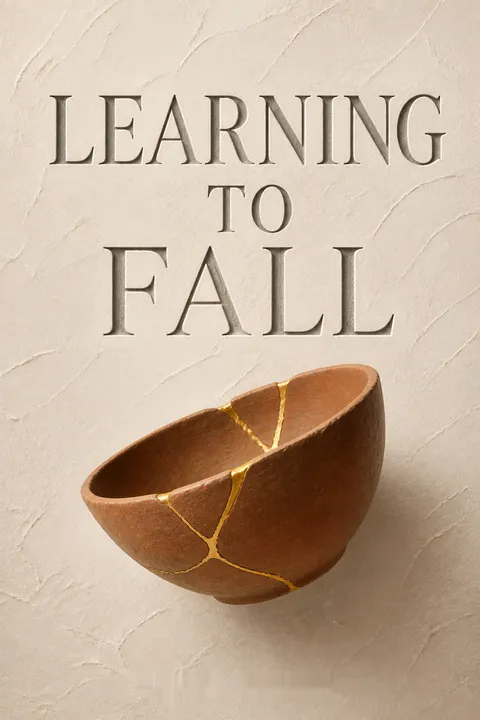
When we learn to fall, we learn that only by letting go our grip on all that we ordinarily find most precious—our achievements, our plans, our loved ones, our very selves—can we find, ultimately, the most profound freedom.
Life is terminal. The author, diagnosed with ALS at 35, confronts his mortality, realizing that life itself is a terminal condition for everyone. This awareness, though shocking, becomes a profound guide to living more fully. Learning to "fall" means accepting the inevitable descent into loss, illness, and death, not as a failure, but as an essential part of the human experience.
Beyond dualities. We often seek comfort by focusing on what we still have, but true liberation comes from accepting that we will one day lose everything. This paradox—that letting go leads to profound freedom—is the book's central theme. It's about finding blessings shaken out of an imperfect life, like fruit from a blighted tree, and embracing a "third way" through loss to wholeness.
Style of falling. While we have little say in the time or means of our falls, we can choose the manner. This "style" of falling is an opportunity to express our essential humanity, moving beyond mere posing or playing for laughs. It means accepting vulnerability, the cost of walking upright, and finding victory in the falling itself, living consciously in the presence of mystery.
2. Accept Imperfection as Paradise
The imperfect is our paradise.
Suffering is inherent. To be human is to suffer, a truth easily confirmed by experience. Instead of seeking a perfect life, we should strive for a full one, recognizing that flaws and broken dreams can bring us more fully awake. This perspective challenges traditional views that seek God only in beauty and perfection, urging us to find the divine in the "dark way" of imperfection and suffering.
God in all things. The author argues that God is the God of good and evil, light and darkness, sweet and bitter. This inclusive view, echoed in traditions like Hinduism's Shiva or the Koranic phrase "La’illaha il’Allahu," suggests that everything, from birth to death, joy to agony, is from God. Our challenge is to accept all that befalls us as belonging to the natural order, seeing nothing as foreign.
Ant as miracle. The author recounts a failed meditation in the wilderness, interrupted by an ant. What he initially saw as a spoiled moment, he later understood as a miracle—a messenger calling him back to the ordinary, imperfect world. This shift in perception highlights that true spiritual glamour lies not in extraordinary visions, but in the humble, everyday, and often messy reality of life.
3. Life is a Mystery, Not a Problem
For at its deepest levels life is not a problem but a mystery.
Beyond solutions. Our culture often treats life as a series of problems to be solved, applying rational, Aristotelian methods to everything from toothaches to spiritual enlightenment. While useful for practical matters, this approach fails at life's deepest levels. True mysteries, unlike problems, cannot be solved; they can only be participated in by letting go of the need for solutions.
Tigers and strawberries. The Zen parable of the man clinging to a branch over two tigers, savoring a strawberry, illustrates this point. The tigers (threats, mortality) are inseparable from the strawberry's sweetness (life's joys). We shouldn't wait for tragedy to appreciate small things, but recognize that the very presence of loss gives savor to life. No tigers, no sweetness.
Surrender to presence. When confronted with powerful, bewildering, or terrifying experiences, our problem-solving efforts are futile. At such cliff-edge moments, we can either retreat in bitterness or leap into mystery. Mystery asks only that we be fully, consciously present, handing ourselves over. This letting go is the first, and hardest, lesson of falling.
4. Cultivate Your Inner Wildness
To acknowledge one’s own soul, then, is to acknowledge the animal within.
Wildness misunderstood. We often associate wildness with savagery, excess, or loss of control, contrasting it with human reason. However, the author observes that wild animals exemplify quiet, purposeful awareness and self-discipline. They are fierce only when necessary, spend less time eating than their prey, and are free from the tormenting urges that plague humans.
Beyond human categories. Animals are neither innocent nor guilty, pure nor corrupt; these are strictly human categories. To live like an animal means living without doubt as to one's purpose, in perfect alignment with one's highest nature, without self-judgment or distraction. It means accepting that even in misery and terror, "this, too, is the way."
Practice of wildness. Cultivating inner wildness requires setting aside time for solitude and silence, not for reflection or analysis, but for "direct deed"—mindful absorption in the task at hand. This practice creates a "wildlife preserve" within, a space where our authentic selves can breathe, while our judging, worrying minds are kept at bay. This allows us to be "aplomb in the midst of irrational things."
5. Balance Solitude and Community
Unless thou first amend thy life going to and fro amongst men, thou shall not avail to amend it dwelling alone.
Mutual sustenance. While spiritual life involves an interior journey, it is often expressed and transformed only in relationships with others. Solitude and community are mutually sustaining: solitary practice develops inner resources, which then enable us to give generously and fully to others. Seeking only personal happiness is the surest way to remain unhappy.
Holy quiet and righteous busyness. The "vita mixta" or mixed life, balances action and contemplation. Without replenishing ourselves with solitude, our busyness becomes frustrating, resentful, and exhausting. Moreover, without "holy quiet," our efforts to do good can become self-righteous, driven by ego rather than genuine, selfless desire to serve.
Love's exit is its entrance. When we leave our "cave" of solitude in a spirit of true selflessness, we find that "other people are heaven itself." By letting go of our small, fearful selves in encounters, we simultaneously meet our own highest selves. The greeting "namaste" embodies this: acknowledging the divine spirit within another is to acknowledge it within oneself, transforming judgment into listening and connection.
6. Find Home in the Unfinished Present
The present moment is the unfinished house in which we dwell.
Unsettled is hopeful. Like the old New England farmhouses that are always "works in progress," our lives are never truly finished or settled. This "unsettled" state, rather than being a source of shame or despair, is where hope lies. It reminds us that life is a continuous process of building, adapting, and making do, rather than a fixed destination.
Beyond fantasy. We often live between the despair of never getting it all done and the manic fantasy of a perfect future where all wounds are healed. Both extremes rob us of the present moment. Our "patched and cobbled houses" physically embody all that remains unfinished and imperfect in ourselves, urging us to find contentment in the "now."
Joy in the building. Our true home is within, a "fountain of good" that, if continually dug, bubbles up regardless of external circumstances. This inner home is the "sure ground of our being and our doing" that withstands time and change. The journey home is a continuous return to this inner place, recognizing that we are already there, and the joy is in the ongoing work of building peace in the present moment.
7. Choose the World, All of It
In choosing the world we choose both pleasure and pain, joy and sorrow, health and illness, rapture and rue.
Immanent divinity. Many contemporary believers embrace an immanent God, present and working within us and the visible world, rather than a distant, transcendent one. In this view, a berry is not just a sign of the sacred but sacredness itself. Choosing the world means choosing God, but this choice must encompass all of it—the sunlit fields and the chainsaw, the black raspberry ice cream and weakening arms.
Pandora's box. The myth of Pandora illustrates that desire itself, regardless of its object, enmeshes us in a complex world where good and evil, pleasure and death, are inseparable. We cannot choose one without the other. To truly choose the world means accepting this inherent complexity, rather than evading it through busyness, superficial goodness, or "cheap transcendence."
Mystical seeing. Choosing the world requires "mystical seeing," a doting and practiced attention to the ordinary that allows us to be surprised by grace. This vision integrates scientific precision with a sense of mystery, recognizing both presence and absence. It's a lover's vision—immediate and unreserved—that finds every ordinary gesture holy, transforming the world into a luminous, sacred dance.
8. Develop a "Winter Mind"
One must have a mind of winter... not to think / Of any misery in the sound of the wind.
Silence as ground. Silence is the fundamental ground from which words come and to which they return, a background noise of the universe. The sound of winter wind through a New Hampshire forest, a "subtle nonsound," embodies this profound silence. To hear it without judgment, without projecting misery or happiness, is to cultivate a "mind of winter."
Emptiness as possibility. "Winter mind" means being so empty of preconception that one beholds the world without delusion, seeing "nothing that is not there" and, ultimately, "the nothing that is." This emptiness (sunyata in Buddhism) is not negation but pure possibility, the ground of being. It is the "gate of spiritual initiation," a destination reached through sincerity, suffering, and practice.
Accident prone to grace. While we cannot choose emptiness, we can make ourselves "accident prone" to it through practices like meditation or prayer (sthita, "standing firm"). This involves pointing our "sleds downhill," letting go of ego and attachments, and allowing ourselves to fall into emptiness as a grace. In this state, we merge with our source, returning to the great silence from which we came.
9. Master the Art of Doing Nothing
A truly good man does nothing, / Yet leaves nothing undone.
Busyness as distraction. Americans often equate busyness with worth, driven by a "Calvinist pathology" that sees good works as signs of salvation. However, excessive busyness, whether physical or mental, often serves as a distraction from fears, loneliness, and self-doubt. It's a way of avoiding intimacy with others and ourselves, hurling work and worry into a pit that can never be filled.
Stillness and attention. The "art of doing nothing" is not literal idleness, but cultivating moments of stillness and attention. It means being fully present to small tasks—baking cookies with a child, sharing coffee with a friend, feeling the sun—allowing the world to call us out of our preoccupations. These moments are small gifts of our loving presence, our life's work in our hands.
The still point. The ultimate challenge is to "do nothing in the midst of our doing," letting actions issue from a still center, "the still point of the turning world." This "absorbedness" means focusing completely on the task at hand, allowing the ego to disappear. Like Jesus doing the Father's will or a Hindu saint acting without karma, we burn ourselves completely, letting our actions flow from a purpose larger than our small selves.
10. Live at the Edge of Eternity
The present moment, entered into fully, is our gateway to eternal life.
Vantage of edges. The author loves edges—the edge of night, of an argument, of a body—for the unique vantage they provide, revealing past and present together. Facing a life shortened by illness, he stands at a personal edge, but recognizes that everyone lives at the edge: the present moment, an "evanescent sliver of time" between past and future.
Everyday mysticism. Dwelling fully in the present moment is our highest spiritual discipline and our salvation. This "mysticism of everyday life" requires no special powers, only imagination and a "doting and practiced attention to the ordinary." It means seeking eternity in worn shoes, rose petals, and overcooked broccoli, wanting our eternal life now, before it's over.
Widening the view. With practice, dwelling in the present expands to include past and future without anxiety, allowing us to feel in touch with life's unchanging essence. From a vantage point 100 years in the future, our current ordinary moments become history, as authentic as any past. This "mystic vision" reveals our impermanence, yet also our connection to something larger, eternal, and unchanging, urging us to "lighten up" and embrace grace.
People Also Read








Download PDF
Download EPUB
.epub digital book format is ideal for reading ebooks on phones, tablets, and e-readers.








































