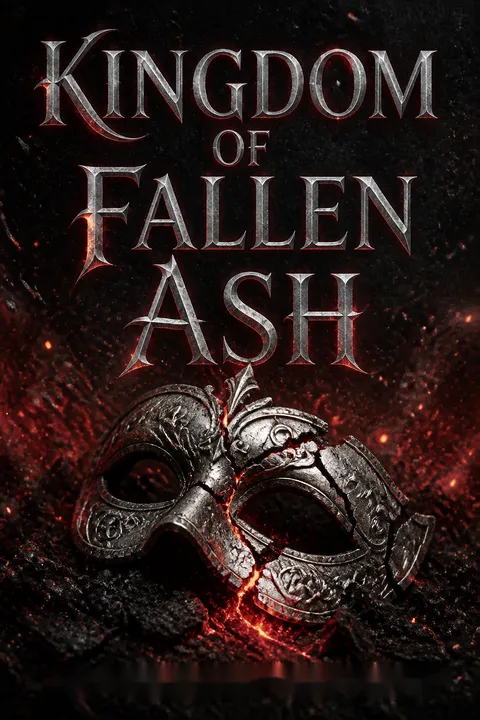

Plot Summary
Ashes and Expulsions
In the aftermath of a devastating war, New Haven rises as a society obsessed with order, genetic purity, and control. Dr. Katiana Blackburn, head of the medical department, oversees the annual Expulsion tests—rituals that determine who is "Cleansed" and who is "Tainted." When a child, Lily, fails to submit to her neurochip, Katiana is forced to execute her, haunted by the knowledge that the system she upholds is built on erasing lives and memories. The city's peace is maintained by neurochips, social stratification, and the threat of oblivion for those who cannot conform. Katiana's own family is not immune to the system's scrutiny, and her daughter Forest grows up in the shadow of these silent atrocities.
The Marked and the Masked
Forest Blackburn, Katiana's daughter, navigates the rigid world of the Untouchables, where every aspect of life is regulated. She and her brother Kai are model citizens on the surface, but cracks show in their family's facade. Forest hides a mysterious birthmark—her "mark"—and struggles with blackouts and visions that her mother medicates away. The Marked, those with forbidden abilities, are hunted and erased. Forest's life is a careful performance, but beneath the surface, she is restless, questioning, and drawn to the forbidden.
Order's Children
At school, Forest and Kai are surrounded by friends and rivals, all vying for status and approval. The arrival of Unfortunate transfer students—especially the enigmatic Fallan—disrupts the fragile peace. Forest is both repulsed and fascinated by Fallan, whose scars and defiance hint at a life beyond the city's sanitized walls. The siblings' relationships with their parents, friends, and each other are strained by the unspoken rules and the violence lurking beneath New Haven's order. Forest's blackouts intensify, and her connection to Fallan deepens, hinting at a shared, dangerous secret.
Unfortunate Encounters
Forest's empathy for the Unfortunates grows as she witnesses their suffering and the cruelty of her own people. A violent incident at the tram stop, where Unfortunates are beaten for minor infractions, shakes her faith in the system. Her friendship with Fallan and his circle—Hunter, Valerie, and Aaron—deepens, challenging her beliefs and drawing her into their world. The boundaries between Untouchable and Unfortunate, friend and enemy, become increasingly porous as Forest's abilities begin to manifest, and she and Fallan discover a psychic connection that neither fully understands.
Cracks in Perfection
As Forest's powers grow, so does the scrutiny on her and her family. Her relationship with Fallan becomes more intimate and fraught, while her friendship with the Official Xavier grows complicated. The city's neurochips, meant to ensure compliance, become tools of manipulation and erasure. Forest's blackouts are revealed to be the result of her mother's attempts to suppress her abilities. The truth about the Marked emerges: they are not just outcasts, but the inheritors of powers the city fears. Forest's mark is not a flaw, but a sign of something greater—and more dangerous.
The Unseen Divide
The city's divisions—between Untouchable and Unfortunate, Marked and Cleansed—are mirrored in Forest's internal struggle. She is torn between her loyalty to her family and her growing love for Fallan, between the safety of conformity and the call of rebellion. The city's leaders, including her father Andrew and the sinister Adam, tighten their grip, using the lottery—a gladiatorial spectacle where Unfortunates fight for survival—as a tool of terror. Forest's visions intensify, and she begins to see the cracks in the city's facade, realizing that the real enemy may be within.
The Unraveling Thread
Forest and Fallan's connection deepens into love, but their relationship is threatened by betrayal, manipulation, and the city's relentless surveillance. Xavier, once an ally, is revealed to be the city's Commander and a Marked himself, with his own agenda. The truth about Forest's family comes to light: her father is Marked, her mother complicit, and her own powers are the key to a prophecy that could destroy or save them all. The resistance, led by outcasts and Unfortunates, beckons, offering hope but demanding sacrifice.
Forbidden Connections
Forest and Fallan's love becomes a catalyst for change, inspiring others to question the system. Their psychic bond allows them to share thoughts, memories, and power, making them targets for the city's rulers. The lottery becomes a battleground, with Forest forced to fight for her life and the lives of her friends. Betrayals and revelations abound: Xavier's true nature, the role of the Marked, and the existence of a resistance beyond the city's walls. Forest must choose between safety and freedom, love and loyalty, as the city teeters on the brink of chaos.
The Shifting Truth
The boundaries between self and other, friend and foe, become fluid as Forest's powers reach their peak. She learns to control her abilities, bending minds and matter, but at great cost. The city's leaders, desperate to maintain control, unleash the Shifters—mutated beings drawn to Marked blood. Forest's visions reveal the true history of the Marked and the city's founding, exposing the lies at the heart of New Haven. The resistance grows, and Forest becomes its reluctant leader, her mark a symbol of hope and danger.
The Lottery of Blood
The lottery reaches its climax, with Forest, Fallan, and their friends forced to fight for survival in the city's arena. Betrayed by Xavier and Adam, hunted by Shifters, and abandoned by the system, they must rely on each other and their powers to escape. The cost is high: friends are lost, families shattered, and innocence destroyed. Forest's father is killed, her mother imprisoned, and the city descends into chaos. The Marked are revealed to be the Apparatus—a force capable of remaking the world or destroying it.
The Apparatus Revealed
The true enemy is revealed: a shadowy figure manipulating events from behind the scenes, using Xavier and the city's leaders as pawns. Forest's powers, once suppressed, are now the key to the city's salvation or destruction. The resistance, led by outcasts and Marked, rises against the city's rulers. Forest must confront Xavier, her own darkness, and the legacy of her family. The Apparatus—the collective power of the Marked—awakens, offering a chance for freedom but demanding sacrifice.
The End of Innocence
The final battle leaves the city in ruins, its order shattered. Forest, Fallan, and their friends escape into the ash beyond the city's walls, pursued by enemies and haunted by loss. The price of freedom is high: families are torn apart, and the old world is gone forever. But in the ashes, a new hope is kindled—a resistance that will fight for a world where difference is not a death sentence, and love is not a crime. Forest's journey from innocence to leadership is complete, but the struggle is far from over.
The Resistance Beckons
In the aftermath, Forest and her companions are taken in by the resistance—a hidden community of Marked, Unfortunates, and allies beyond the city's reach. The world outside is harsh, but it offers the promise of freedom and the chance to build something new. Forest's powers, once a curse, are now a beacon for others. The struggle against tyranny continues, but for the first time, Forest is not alone. The story ends with the promise of a new fight, a new family, and the hope that, in the ashes of the old world, something better can rise.
Analysis
Kingdom of Fallen Ash is a dystopian epic that interrogates the cost of order, the violence of purity, and the power of forbidden connection. At its heart, the novel is a meditation on identity, memory, and the struggle to reclaim one's self in a world built on erasure. Through Forest's journey—from obedient daughter to reluctant rebel, from innocence to leadership—the story explores the dangers of conformity and the necessity of resistance. The Marked, once symbols of shame, become the Apparatus: the force capable of remaking the world. The novel's greatest strength lies in its psychological depth: the duality within Forest, the psychic bond with Fallan, and the shifting boundaries between self and other. The narrative's use of memory manipulation, social stratification, and surveillance is both timely and timeless, echoing real-world anxieties about power, control, and the erasure of difference. Ultimately, Kingdom of Fallen Ash is a story of hope in the ashes: the belief that, even in the darkest times, love, empathy, and rebellion can kindle a new beginning.
Review Summary
Kingdom of Fallen Ash receives mixed reviews, averaging 4.03/5. Many readers praise its gripping dystopian world, slow-burn romance, and compelling characters, frequently comparing it to Divergent and The Hunger Games. The multiple POVs and constant plot twists kept many readers unable to put it down. However, critics consistently cite heavy grammatical errors, plot holes, unnecessary length, and underdeveloped world-building as significant drawbacks. Some note editing improvements over time, while others found the issues too distracting to continue.
People Also Read

Characters
Forest Blackburn
Forest is the daughter of Katiana and Andrew Blackburn, raised to be a model Untouchable but haunted by blackouts, visions, and a mysterious birthmark. Intelligent, empathetic, and fiercely loyal, she is torn between her family's expectations and her own growing sense of justice. Her psychic connection with Fallan awakens her forbidden powers, making her both a target and a symbol of hope. Forest's journey is one of self-discovery, as she learns to embrace her mark, her abilities, and her role as the Apparatus—a force capable of changing the world. Her relationships—with her family, Fallan, and her friends—are marked by love, betrayal, and sacrifice. Forest's greatest struggle is not with her enemies, but with herself: the darkness within, the legacy of her family, and the burden of leadership.
Fallan Markswood
Fallan is an Unfortunate transfer student, scarred by years of abuse and loss. Defiant, intelligent, and deeply wounded, he is both a rebel and a protector. His psychic bond with Forest is the heart of the story, allowing them to share thoughts, memories, and power. Fallan's past is marked by trauma—his family's murder, his own torture, and the betrayal of those he trusted. He struggles with anger, self-loathing, and the fear of losing Forest. Over the course of the story, Fallan evolves from a loner to a leader, learning to trust, love, and fight for something greater than himself. His relationship with Forest is both a source of strength and vulnerability, and together they become the Apparatus—a force capable of remaking the world.
Katiana Blackburn
Katiana is the head of New Haven's medical department and Forest's mother. She is both a perpetrator and a victim of the system, overseeing the Expulsion tests and medicating her daughter to suppress her powers. Katiana's love for her family is genuine, but her complicity in the city's atrocities haunts her. She is torn between her duty to the system and her desire to protect her children. As the story unfolds, Katiana's secrets are revealed: she is Marked, her husband is Marked, and she has been both a protector and a jailer to Forest. Her arc is one of guilt, sacrifice, and the hope of redemption.
Andrew Blackburn
Andrew is Forest's father, a high-ranking Official and a Marked in hiding. He is both a loving parent and a tool of the system, complicit in its violence and haunted by his own betrayals. Andrew's past is marked by loss—his abandonment of his Unfortunate family, his role in the death of Fallan's father, and his complicity in the city's crimes. His love for his family is genuine, but his inability to protect them leads to tragedy. Andrew's death is a turning point, forcing Forest to confront the truth about her family and her own powers.
Kai Blackburn
Kai is Forest's older brother, a model Untouchable who begins to question the system as he witnesses its cruelty. Intelligent, protective, and deeply conflicted, Kai's journey mirrors Forest's: from conformity to rebellion, from ignorance to awareness. His relationship with Forest is central to the story, marked by love, rivalry, and sacrifice. Kai's awakening is both painful and liberating, as he learns to see the world—and himself—through new eyes.
Xavier Hayes / The Commander
Xavier is an Official who becomes close to Forest, only to be revealed as the city's Commander and a powerful Marked. Charming, intelligent, and ruthless, Xavier is both an ally and an antagonist. His relationship with Forest is complex, marked by attraction, betrayal, and manipulation. Xavier's true motives are ambiguous: he seeks power, control, and perhaps redemption. His psychic abilities make him a formidable foe, and his connection to the city's rulers—and the shadowy Apparatus—drives much of the plot's intrigue.
Hunter
Hunter is an Unfortunate and Fallan's close friend, known for his kindness, loyalty, and resilience. He serves as a bridge between the Untouchables and Unfortunates, helping Forest and Kai navigate the world beyond their privilege. Hunter's relationship with Kai is particularly significant, hinting at a deeper bond and the possibility of healing old wounds. Hunter's arc is one of quiet strength, compassion, and the hope of a better world.
Valerie
Valerie is an Unfortunate, Fallan's companion, and a formidable presence in her own right. Scarred by years of abuse, she is both tough and vulnerable, loyal and unpredictable. Her relationship with Forest is fraught with jealousy, rivalry, and eventual respect. Valerie's arc is one of survival, self-discovery, and the possibility of forgiveness.
Adam
Adam is a high-ranking Official, known for his cruelty, arrogance, and devotion to the system. He is both a rival and a threat to Forest and her friends, embodying the city's violence and hypocrisy. Adam's actions—especially his role in the lottery and the persecution of the Marked—make him a central antagonist. His relationship with Andrew is marked by rivalry, betrayal, and the shared burden of complicity.
The Apparatus / The Silver-Masked Figure
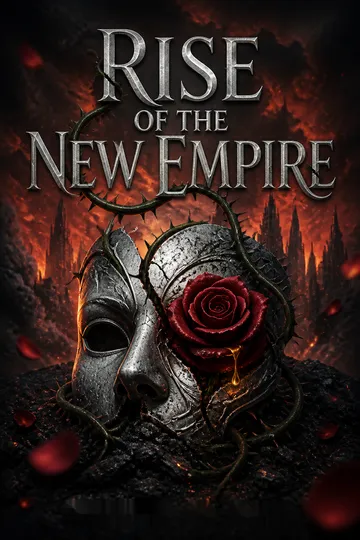
The Apparatus is the true enemy behind the city's order—a figure (or force) manipulating events from the shadows, using Xavier and the city's leaders as pawns. Their motives are ambiguous: control, power, and the eradication of the Marked. The Apparatus is both a symbol and a reality: the collective power of the Marked, the prophecy of change, and the threat of annihilation. Their presence haunts the story, driving the characters toward confrontation and transformation.
Plot Devices
Duality and Psychic Connection
The narrative is structured around dualities: Untouchable/Unfortunate, Marked/Cleansed, order/chaos, self/other. Forest and Fallan's psychic connection is both a plot device and a metaphor for empathy, understanding, and the possibility of change. Their ability to share thoughts, memories, and power allows for intimate character development and dramatic tension. The psychic bond is also a source of danger, making them targets for the city's rulers and the Apparatus.
Social Stratification and Surveillance
The city's rigid social hierarchy—Untouchables, Unfortunates, Marked—is enforced by neurochips, surveillance, and the threat of erasure. The lottery, Expulsion tests, and public punishments are tools of terror, designed to maintain order and suppress dissent. The narrative structure uses these devices to explore themes of conformity, resistance, and the cost of survival.
Foreshadowing and Prophecy
The story is rich in foreshadowing: Forest's mark, her blackouts, the visions of the Apparatus, and the recurring motif of ashes and rebirth. The prophecy of the Apparatus—the collective power of the Marked—drives the plot, hinting at a future where the world can be remade or destroyed. The narrative structure uses dreams, visions, and flashbacks to reveal hidden truths and build suspense.
Betrayal and Memory Manipulation
The city's rulers use neurochips and re-regulation devices to erase memories, rewrite history, and control behavior. Betrayals—by family, friends, and lovers—are central to the plot, forcing characters to question what is real and who can be trusted. The manipulation of memory is both a plot device and a metaphor for trauma, denial, and the struggle for selfhood.
Resistance and Rebellion
The emergence of the resistance—a hidden community of Marked, Unfortunates, and allies—offers hope and a new narrative structure. The story shifts from survival to rebellion, from individual struggle to collective action. The resistance is both a plot device and a symbol: the possibility of a world beyond order, where difference is not a death sentence, and love is not a crime.
About the Author
Other books by Katerina St. Clair
Download PDF
Download EPUB
.epub digital book format is ideal for reading ebooks on phones, tablets, and e-readers.








































