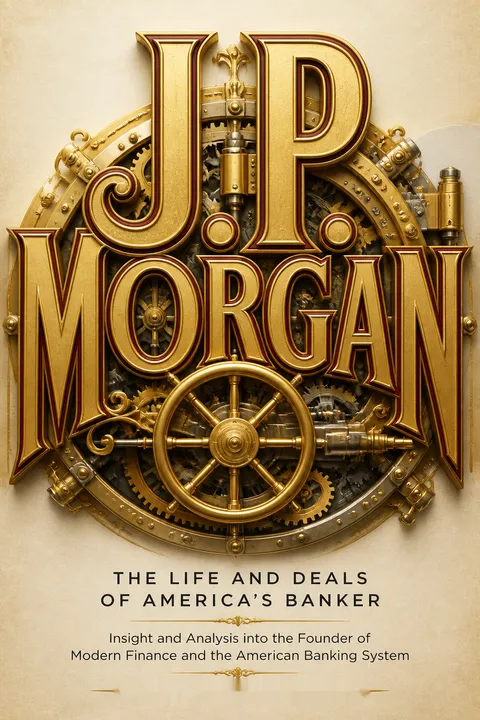

Key Takeaways
1. Morgan's Early Life Shaped His Financial Acumen
Morgan himself was astute, with a unique understanding of money.
Privileged upbringing. John Pierpont Morgan Sr. was born into a family with a strong financial background, which provided him with early exposure to the world of banking and commerce. His father, Junius Spencer Morgan, played a significant role in shaping his understanding of international business.
Education and health challenges. Despite suffering from health problems, including rheumatic fever and severe migraines, Morgan received a well-rounded education in both America and Europe. His time in Switzerland and Germany allowed him to develop fluency in multiple languages and hone his mathematical skills, which proved invaluable in his later career.
Early exposure to art. Morgan's exposure to art galleries and artists during his youth cultivated a lifelong passion for art collection. This passion not only provided him with personal enjoyment but also proved to be a sound investment, as his art collection grew to be worth millions of dollars.
2. Junius Morgan's Influence on J.P. Morgan's Career
Morgan’s father was his initial role model and guide in navigating the world of international business.
Mentorship and guidance. Junius Spencer Morgan served as a mentor and guide to his son, J.P. Morgan, in the complex world of international finance. He instilled in him a strong work ethic and a deep understanding of the principles of banking.
Partnership with George Peabody. Junius's partnership with George Peabody, a prominent American banker in London, provided J.P. Morgan with valuable experience and connections in the international financial community. This partnership laid the foundation for the Morgan family's future success in the world of banking.
Differing banking styles. While Junius was a more conservative banker, J.P. Morgan was more brash and willing to take risks. This difference in opinion often led to conflict between father and son, but it also pushed J.P. Morgan to forge ahead with innovative ideas and methods.
3. Morgan's Aggressive Business Tactics and Personal Life
He was determined, aggressive, and ambitious and stopped at nothing to get what he wanted.
Ruthless ambition. J.P. Morgan was known for his aggressive business tactics and unwavering determination to achieve his goals. He was willing to take risks and push boundaries to build his financial empire.
Personal life complexities. Despite his professional success, Morgan's personal life was marked by complexities and contradictions. He had extramarital affairs, struggled with health issues, and faced public scrutiny due to his wealth and power.
Physical insecurities. Morgan suffered from acne rosacea, which disfigured his nose and made him self-conscious. He hated being photographed and often had his photos retouched to conceal his condition. This physical insecurity contributed to his often hostile and aggressive demeanor.
4. The Peabody Effect: Building American Creditworthiness
You and I will, I trust, see that happy day, when as formerly, we can own ourselves Americans in Europe, without a blush for the character of our Country.
Restoring faith. George Peabody played a crucial role in restoring American creditworthiness in the eyes of European investors after several states defaulted on their debts in the 1840s. He worked tirelessly to promote the idea of repaying debts and restore confidence in the American economy.
Philanthropy and reputation. Peabody's philanthropic efforts, including building homes for London's poor and funding educational institutions, helped to improve his reputation and that of the United States. His generosity earned him the Freedom of the City of London, a rare honor for an American.
Junius Morgan's succession. Peabody's decision to bring Junius Spencer Morgan into his firm was pivotal in the Morgan family's rise to prominence. Although their relationship was not always smooth, Peabody's mentorship and guidance helped Junius establish himself as a leading banker in London.
5. Jack Morgan's Role and Relationship with His Father
He has been dear to us ever since we landed, most thoughtful of everything and immensely interested in Jessie’s social career!
Shadow of his father. Jack Morgan, J.P. Morgan's son, lived in the shadow of his powerful father and struggled to gain his confidence and recognition. He often felt excluded from important business deals and kept in the dark about his father's activities.
Contrasting personalities. Jack was a timid and reserved individual, in contrast to his father's aggressive and ambitious nature. This difference in personality contributed to the distance between them and Jack's feelings of inadequacy.
Taking care of family. Despite his own insecurities, Jack was a caring and supportive son to both his parents. He provided emotional support to his mother and kept a watchful eye on his father's workload and well-being.
6. Morgan's Intervention in the Panic of 1893 and 1907
You cannot appreciate the relief to everybody’s mind for the dangers were so great scarcely anyone dared whisper them.
Saving the gold standard. During the Panic of 1893, J.P. Morgan played a crucial role in saving the U.S. gold standard by organizing a syndicate of bankers to purchase gold and provide it to the government. This intervention helped to stabilize the financial system and prevent a potential collapse.
Rescuing the financial system. In the Panic of 1907, Morgan once again stepped in to rescue the financial system by providing liquidity to struggling banks and brokerage firms. His decisive actions helped to restore confidence and prevent a widespread economic crisis.
Criticism and controversy. Morgan's interventions in the panics of 1893 and 1907 were not without controversy. Some critics accused him of using his power to enrich himself and his associates, while others questioned the legality and ethics of his actions.
7. The Formation of U.S. Steel and Railroad Consolidation
Very likely, Andrew.
Creating a steel giant. J.P. Morgan played a key role in the formation of the United States Steel Corporation in 1901, which was the first billion-dollar company in the world. He consolidated several manufacturing companies, including Andrew Carnegie's Carnegie Steel Company, to create this industrial behemoth.
Railroad consolidation. Morgan also played a significant role in consolidating the railroad industry by acquiring and reorganizing several struggling railroad companies. This consolidation helped to stabilize the industry and improve its efficiency.
Monopoly concerns. The formation of U.S. Steel and the consolidation of the railroad industry raised concerns about monopolies and the concentration of economic power. These concerns led to increased scrutiny of Morgan's activities and the rise of the antitrust movement.
8. Morgan's Relationship with Theodore Roosevelt and Antitrust
This is the place to stop the trouble, then.
Clash of titans. J.P. Morgan's relationship with President Theodore Roosevelt was marked by conflict and tension. Roosevelt, a staunch advocate of antitrust policies, viewed Morgan's vast economic power with suspicion and sought to curb his influence.
Northern Securities case. Roosevelt's administration filed an antitrust lawsuit against the Northern Securities Company, a railroad holding company controlled by Morgan. The Supreme Court ultimately ruled against Northern Securities, leading to its dissolution and a major victory for the antitrust movement.
Panama Canal collaboration. Despite their differences, Morgan and Roosevelt collaborated on the construction of the Panama Canal. Morgan's firm served as the fiscal agent for the project, helping to finance and manage the construction of this vital waterway.
9. The Panama Canal: A Financial and Engineering Triumph
From a full and grateful heart, I say that this day has repaid me for the care and anxiety of fifty years of commercial life.
Financial backing. J.P. Morgan's firm played a crucial role in financing the construction of the Panama Canal, which was one of the most ambitious engineering projects in history. The canal significantly reduced shipping times and costs, transforming global trade.
Strategic importance. The Panama Canal gave the United States control over both the Atlantic and Pacific Oceans, enhancing its strategic and economic power. The canal also served as a symbol of American ingenuity and determination.
Legacy of the canal. The Panama Canal remains a vital waterway and a testament to the vision and engineering prowess of those who built it. It continues to play a significant role in global trade and commerce.
10. The Creation of the Federal Reserve System
Something has got to be done. We may not always have Pierpont Morgan with us to meet a banking crisis.
Response to financial instability. The Panic of 1907 highlighted the need for a more stable and regulated financial system. This led to the creation of the Federal Reserve System in 1913, which was designed to provide a safety net for banks and prevent future financial crises.
Morgan's influence. J.P. Morgan's actions during the Panic of 1907 influenced the design of the Federal Reserve System. His model of private bankers working together to stabilize the financial system served as a template for the new institution.
End of an era. The creation of the Federal Reserve System marked the end of an era in which private bankers like J.P. Morgan wielded immense power over the financial system. The new institution transferred much of that power to the government, creating a more regulated and stable financial environment.
11. Morgan's Legacy: Power, Influence, and Controversy
The first thing is character.
Financial titan. J.P. Morgan was one of the most powerful and influential figures in American history. He shaped the financial landscape of the United States and played a key role in its economic development.
Philanthropy and art collection. Morgan was a generous philanthropist and a passionate art collector. He donated millions of dollars to charitable causes and amassed a vast collection of art, which he later bequeathed to the public.
Controversial figure. Despite his accomplishments, Morgan remains a controversial figure. He was criticized for his aggressive business tactics, his vast economic power, and his perceived lack of accountability. His legacy continues to be debated and re-evaluated to this day.
Review Summary
J.P. Morgan - The Life and Deals of America's Banker receives positive reviews for its engaging and informative content. Readers appreciate the author's ability to make the subject interesting and accessible. The book provides insights into Morgan's life, his influence on American banking, and his role in shaping the country. While most reviewers find it well-written and enlightening, some criticize the author's defensive stance towards Morgan. Overall, readers value the book for its historical context and the detailed account of Morgan's life and impact on the financial world.
People Also Read



FAQ
1. What’s "J.P. Morgan - The Life and Deals of America’s Banker" by J.R. MacGregor about?
- Comprehensive Biography: The book is a detailed biography of John Pierpont Morgan Sr., chronicling his rise as one of the most influential bankers in American and global history.
- Focus on Deals and Legacy: It explores Morgan’s major financial deals, his role in shaping modern finance, and the creation of institutions like U.S. Steel and JPMorgan Chase.
- Historical Context: The narrative situates Morgan’s life within the broader transformation of America from an agrarian society to an industrial powerhouse.
- Personal and Professional Life: The book delves into Morgan’s personal struggles, family relationships, and the psychological complexities that influenced his business decisions.
2. Why should I read "J.P. Morgan - The Life and Deals of America’s Banker" by J.R. MacGregor?
- Understand Modern Finance: The book provides insight into the origins of modern banking and financial systems, many of which were shaped by Morgan’s innovations.
- Lessons in Leadership: Readers gain perspective on Morgan’s leadership style, risk-taking, and problem-solving during times of crisis.
- Rich Historical Detail: The biography offers a vivid account of the Gilded Age, the rise of American industry, and the personalities who shaped it.
- Humanizing a Titan: It presents Morgan not just as a financial giant, but as a complex, often troubled individual, making the story relatable and compelling.
3. What are the key takeaways from "J.P. Morgan - The Life and Deals of America’s Banker"?
- Power of Vision and Risk: Morgan’s success stemmed from his willingness to take calculated risks and his visionary approach to finance and industry.
- Crisis Management: He played a pivotal role in averting two major financial crises, demonstrating the importance of decisive leadership.
- Influence Beyond Wealth: Morgan’s true power lay not just in his personal fortune, but in his ability to control and mobilize vast sums of capital.
- Personal Struggles: Despite his public success, Morgan battled insecurities, health issues, and personal losses, which shaped his character and decisions.
4. How did J.P. Morgan revolutionize the American banking system according to J.R. MacGregor?
- Creation of New Structures: Morgan introduced innovative financial instruments and organizational structures, such as trusts and large-scale mergers.
- Attracting Foreign Capital: He helped restore international confidence in American finance, channeling British and European investment into U.S. industry.
- Crisis Intervention: Morgan’s interventions during the 1895 gold crisis and the Panic of 1907 set precedents for modern central banking and financial regulation.
- Foundation for the Federal Reserve: His actions highlighted the need for a central banking authority, directly influencing the creation of the Federal Reserve System.
5. What were the most significant deals and mergers orchestrated by J.P. Morgan as described in the book?
- U.S. Steel Formation: Morgan engineered the $480 million purchase of Carnegie Steel, creating the world’s first billion-dollar corporation.
- Railroad Consolidations: He reorganized and consolidated numerous railroads, stabilizing the industry and introducing the concept of “morganization.”
- Edison and Electricity: Morgan financed Thomas Edison, leading to the widespread adoption of electricity and the formation of General Electric.
- Panama Canal Financing: He structured and raised the funds necessary for the construction of the Panama Canal, a monumental engineering and financial feat.
6. What is "morganization" and how did it impact American industry, according to J.R. MacGregor?
- Definition of Morganization: "Morganization" refers to Morgan’s method of reorganizing failing companies, especially railroads, by consolidating them under centralized, efficient management.
- Stabilizing Industries: This process reduced destructive competition, standardized operations, and restored profitability to struggling sectors.
- Centralized Control: Morganization often resulted in Morgan and his partners holding significant control over vast swathes of American industry.
- Criticism and Antitrust: While effective, it also drew criticism for fostering monopolies and led to government antitrust actions, notably the breakup of Northern Securities.
7. How did J.P. Morgan handle financial crises, particularly the Panic of 1907, as detailed in the book?
- Leadership in Crisis: During the Panic of 1907, Morgan convened bankers, analyzed the situation, and injected liquidity to stabilize the markets.
- Restoring Confidence: He orchestrated bailouts for key institutions, prevented the collapse of the New York Stock Exchange, and calmed public panic.
- Negotiation with Government: Morgan worked closely with government officials, even locking bankers in his library until they agreed on a rescue plan.
- Legacy of Intervention: His actions demonstrated the need for a central bank, directly influencing the creation of the Federal Reserve.
8. What role did J.P. Morgan play in the financing and construction of the Panama Canal, according to J.R. MacGregor?
- Fiscal Agent for the U.S.: Morgan’s firm was chosen to manage the complex financial transactions between the U.S., France, and Panama.
- Raising Capital: He structured the payments for land and rights, ensuring the U.S. could secure the canal zone and begin construction.
- Strategic Importance: The canal project showcased Morgan’s ability to handle large-scale, international financial operations.
- Long-term Impact: The successful financing of the canal cemented America’s global economic and military influence.
9. How does J.R. MacGregor portray J.P. Morgan’s personal life and character in "J.P. Morgan - The Life and Deals of America’s Banker"?
- Complex Personality: Morgan is depicted as oscillating between confidence and deep insecurity, shaped by childhood illnesses and personal losses.
- Family Relationships: The book explores his strained relationships with his son Jack, his wives, and his beloved daughter Anne.
- Private Struggles: Morgan’s physical insecurities, especially regarding his nose, and his emotional pain from the loss of his first wife, are recurring themes.
- Pursuits Beyond Banking: He found solace in art collecting, yachting, and philanthropy, but remained a fundamentally restless and often unhappy man.
10. What was the "Peabody Effect" and how did it influence the Morgan banking dynasty, as explained by J.R. MacGregor?
- Peabody’s Legacy: George Peabody, a self-made American banker in London, set the stage for international finance and philanthropy.
- Partnership with Junius Morgan: Peabody’s selection of Junius Spencer Morgan (J.P. Morgan’s father) as his partner brought the Morgan family into global banking.
- Restoring U.S. Credit: Peabody’s efforts to rehabilitate American credit in Europe laid the groundwork for future transatlantic investments.
- Influence on Morgan Values: The Peabody-Morgan partnership instilled a blend of financial acumen and public responsibility that shaped J.P. Morgan’s approach.
11. How did government actions and antitrust policies affect J.P. Morgan’s businesses, according to the book?
- Antitrust Lawsuits: The Sherman Antitrust Act was used to break up Morgan’s Northern Securities Company and later targeted U.S. Steel and International Harvester.
- Political Opposition: Presidents Theodore Roosevelt and William Howard Taft pursued aggressive antitrust actions against Morgan’s trusts.
- Shift in Power: The rise of government regulation and the creation of the Federal Reserve marked the end of an era where private bankers like Morgan could unilaterally manage financial crises.
- Adaptation and Legacy: Despite these challenges, Morgan’s firm adapted and continued to play a central role in American and global finance.
12. What are the best quotes from "J.P. Morgan - The Life and Deals of America’s Banker" by J.R. MacGregor and what do they mean?
- “The first thing is character. Before money or anything else. Money cannot buy it… Because a man I do not trust could not get money from me on all the bonds in Christendom.” — Emphasizes Morgan’s belief that trust and integrity are the foundation of credit and business.
- “I don’t know as I want a lawyer to tell me what I cannot do. I hire him to tell how to do what I want to do.” — Reflects Morgan’s relentless drive and willingness to push boundaries to achieve his goals.
- “His power was not based on the millions he had, but with the billions he dealt with.” — Highlights the scale of Morgan’s influence, which far exceeded his personal wealth.
- “He was not only one of the most successful men in the world but also one of the saddest.” — Underscores the personal cost of Morgan’s ambition and the loneliness that accompanied his success.
About the Author
Other books by J.R. MacGregor
Download PDF
Download EPUB
.epub digital book format is ideal for reading ebooks on phones, tablets, and e-readers.








































