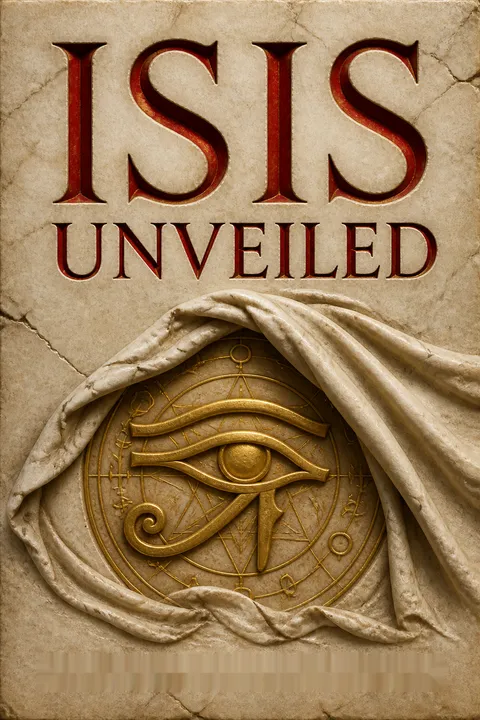

Key Takeaways
1. Ancient Wisdom's Unrecognized Primacy
"The discoveries of modern science do not disagree with the oldest traditions which claim an incredible antiquity for our race."
Profound ancient knowledge. The author argues that ancient civilizations, particularly the Egyptians, Chaldeans, and Hindus, possessed a level of scientific and philosophical understanding that often rivals or surpasses modern discoveries. This knowledge, preserved in esoteric traditions and symbolic writings, is frequently dismissed by contemporary scholars as mere superstition or primitive thought. For instance, ancient texts reveal advanced astronomical calculations, knowledge of the heliocentric system, and sophisticated engineering feats.
Lost arts and sciences. Many "lost arts" of antiquity, such as malleable glass, indestructible cements, and vibrant, unfading dyes, demonstrate a practical mastery of chemistry and physics that modern science has yet to fully replicate. The precision of ancient architecture, like the pyramids, and the intricate lace-making found in Egyptian tombs, point to a refinement of skill and scientific application that challenges the notion of a "barbaric" past.
Archaeological corroboration. Recent archaeological findings continually corroborate the incredible antiquity and advanced state of these ancient races. Discoveries of human existence predating the last glaciation by over 250,000 years, and the sophisticated implements found alongside human remains, suggest a long history of civilization that contradicts conventional timelines and the idea of humanity slowly emerging from animal brutality.
2. Existence as Cyclical Evolution
"The revolution of the physical world, according to the ancient doctrine, is attended by a like revolution in the world of intellect--the spiritual evolution of the world proceeding in cycles, like the physical one."
Universal cyclic law. The universe, humanity, and all forms of existence are subject to a grand, ceaseless cycle of evolution and dissolution. This cyclical progression applies to both the physical and spiritual realms, manifesting as alternating periods of growth, culmination, decline, and renewal. Ancient philosophers, unlike many modern thinkers, understood this interconnectedness.
Ages of humanity. Human history is divided into ages—Golden, Silver, Copper, and Iron—each reflecting a phase of spiritual and intellectual development, followed by a relapse into barbarism. This cyclical pattern means that highly civilized nations rise and fall, and mankind, after reaching a peak, descends again, only to reassert itself in a new, slightly higher cycle.
Cosmic and terrestrial cycles. These cycles are mirrored in cosmic phenomena, such as planetary revolutions and geological transformations. The earth itself undergoes periodic physical revolutions, with polar and equatorial climates exchanging places, leading to cataclysms and deluges. These terrestrial changes are intrinsically linked to the spiritual evolution of humanity, demonstrating a profound harmony between macrocosm and microcosm.
3. Universal Ether: The Primal Force
"The great magical agent, the dual current of light, the living and astral fire of the earth, has been represented in the ancient theogonies by the serpent with the head of a bull, a ram, or a dog."
The omnipresent medium. Ancient philosophers recognized a universal, all-pervading, subtle principle, often called Chaos, the Soul of the World, or Ether. This imponderable fluid is the source of all life and force, underlying electricity, magnetism, heat, light, and chemical action. It is the "living fire" or "Spirit of Light" that permeates all matter, organic and inorganic.
Will as creative force. This universal agent is not merely a passive medium but an intelligent force, responsive to conscious will. The will, being the first of all powers, can direct and concentrate this fluid to produce both physical and psychological effects. This explains phenomena ranging from levitation and instantaneous plant growth to healing and prophetic visions, all achieved by adepts who understood and controlled these currents.
Symbolism of the serpent. The serpent, a recurring symbol in ancient theogonies, represents this dual, creative, and destructive force. As the "Old Serpent of Genesis," it embodies the astral light, the generator and destroyer of all forms. Its "winding form" expresses the vibratory motion of this light, which, when mastered, grants magical powers, but when uncontrolled, can lead to delusion and destruction.
4. Man's Triune Nature and Immortality
"They taught that men have two souls, of separate and quite different natures: the one perishable--the Astral Soul, or the inner, fluidic body--the other incorruptible and immortal--the Augoeides, or portion of the Divine Spirit."
Body, soul, and spirit. Ancient philosophies, particularly the Kabala and Platonic schools, consistently describe man as a trinity: a physical body, a perishable astral soul (or fluidic body), and an incorruptible, immortal divine spirit (Augoeides). The physical body is derived from the elements, while the astral soul is composed of sidereal force, and the divine spirit is an emanation of God.
Post-mortem existence. At physical death, the astral soul separates from the body, retaining the individual's characteristics and memories. Its fate depends on its purity:
- Pure souls ascend to higher spheres, eventually merging with the divine spirit.
- Impure, earth-bound souls (larvae or umbra) linger near the physical plane, attracted to matter and susceptible to suffering or manipulation.
- The divine spirit, being immortal, remains a distinct entity, though its connection to the astral soul can be severed if the latter becomes too degraded.
Spiritual evolution. The ultimate goal of human existence is the purification of the astral soul and its reunion with the divine spirit, leading to individual immortality and a higher state of being. This process involves overcoming material desires and cultivating moral purity, a journey often described as a "circle of necessity" or successive transmigrations.
5. Limitations of Modern Science
"For a man of science to refuse an opportunity to investigate any new phenomenon, whether it comes to him in the shape of a man from the moon, or a ghost from the Eddy homestead, is alike reprehensible."
Bounded by physical nature. Modern science, despite its advancements, is inherently limited by its materialistic framework, which restricts investigation to observable physical phenomena. When confronted with anything beyond this scope, such as psychological or spiritual manifestations, it often resorts to denial, ridicule, or inadequate explanations like "unconscious cerebration" or "collective hallucination."
Ignorance of first causes. Scientists confess their inability to explain the origin and ultimate nature of things, stopping at the "firm frontiers of reason" and the "impassable chasm" between brain processes and consciousness. This self-imposed boundary prevents them from exploring the spiritual dimensions that ancient philosophers considered fundamental to understanding the universe.
Prejudice over inquiry. Despite calls from within their own ranks for open-minded investigation, many scientists exhibit "scientific psychophobia," fearing unpopular subjects and dismissing phenomena without thorough examination. This dogmatism, ironically, mirrors the theological intolerance they often criticize, hindering true progress in understanding the full spectrum of natural laws.
6. Magic as Applied Natural Philosophy
"Magic is as old as man. It is as impossible to name the time when it sprang into existence as to indicate on what day the first man himself was born."
Ancient science, not superstition. The author asserts that ancient magic was not charlatanry or supernatural intervention, but a profound science based on a deep understanding of nature's hidden forces. Adepts, hierophants, and thaumaturgists of old, like Paracelsus and Apollonius of Tyana, achieved their "wonders" by applying knowledge of these occult powers.
Control of natural forces. These practitioners were intimately familiar with the "imponderable waves of the astral light" and could control its currents through trained will-power. This enabled them to produce both physical effects (like levitation, invulnerability, or instantaneous plant growth) and psychological phenomena (such as clairvoyance, mesmerism, and healing).
Ethical application. True magic, or theurgy, was practiced by individuals of high moral purity and self-discipline, who sought knowledge for the benefit of humanity. In contrast, "black magic" or sorcery involved the selfish manipulation of these forces, often with the aid of lower elemental spirits, leading to harmful or deceptive outcomes.
7. Unity of Ancient Religious Wisdom
"The identity of the Bible with the legends of the Hindu sacred books and the cosmogonies of other nations, must be demonstrated at some future day."
Common philosophical roots. All ancient religions, from Hinduism and Zoroastrianism to Egyptian, Chaldean, and Greek mythologies, share a common esoteric "wisdom-religion." Their myths, allegories, and symbols, when correctly interpreted, reveal identical fundamental truths about God, man, and the cosmos.
Shared cosmogonies and ethics. This unity is evident in recurring themes such as:
- The concept of a primordial, unrevealed Deity.
- The emanation of a dual-sexed creative principle.
- The cyclical evolution of worlds and species.
- Ethical codes emphasizing virtues like compassion, self-control, and truthfulness, often predating biblical injunctions.
Biblical allegories as borrowed myths. The Hebrew Scriptures, particularly Genesis, are presented as compilations and reinterpretations of older Babylonian, Chaldean, and Hindu allegories. Figures like Adam, Noah, and the patriarchs are seen as euhemerized gods or zodiacal symbols, their stories adapted to fit a national narrative, often obscuring their original, profound philosophical meanings.
8. The Perversion of Christian Dogmas
"The Christian Church has two far mightier enemies than the 'heretics' and the 'infidels'; and these are--Comparative Mythology and Philology."
Distorted ancient truths. Many core Christian dogmas, such as the Trinity, Immaculate Conception, and Atonement, are argued to be distorted interpretations of older Pagan and Kabalistic allegories. These concepts, originally profound metaphysical ideas, were anthropomorphized and literalized by early Church Fathers, often to consolidate ecclesiastical power and suppress rival philosophies.
Plagiarism and interpolation. The Gospels themselves are presented as compilations and interpolations, with evidence suggesting that passages were altered or fabricated to fit theological agendas. For instance, the "Sortes Sanctorum" at the Council of Nicea, where canonical books were chosen by miraculous intervention, highlights the arbitrary nature of early Christian scripture formation.
Suppression of knowledge. The Church actively suppressed and destroyed ancient texts and Gnostic writings that revealed the Pagan origins of its doctrines. This deliberate obfuscation aimed to present Christianity as a unique, divinely revealed religion, rather than a syncretic system built upon older wisdom traditions.
9. The True Nature of Satan and Hell
"The Lucifer of the Cabale n'est pas un ange maudit et foudroye; c'est l'ange qui eclaire et qui regenere en tombant."
Allegory, not personality. The concepts of Satan as a personal, malevolent entity and Hell as a place of eternal damnation are presented as later anthropomorphic inventions of Christian theology. Ancient philosophies, including Kabalism and Zoroastrianism, understood "evil" as an impersonal, antagonistic force inherent in matter, or as a necessary principle for cosmic equilibrium and spiritual purification.
Dualistic principles. In ancient systems, figures like Typhon, Ahriman, or the Serpent in Eden symbolized the "dark side" of nature—the material, chaotic, or destructive aspect that is nonetheless essential for creation and regeneration. This dualism is not a battle between good and evil deities, but a dynamic interplay of forces that drives evolution and allows for spiritual growth through overcoming material challenges.
Hell as purification. The ancient concept of an underworld (Hades, Sheol, Amenthes) was often a realm of purification or an intermediate state for souls, not a place of eternal torment. The idea of "eternal damnation" is a later Christian dogma, used as a tool for control, and is philosophically inconsistent with an infinitely just and benevolent Deity.
10. Esoteric Interpretation: The Lost Key
"The real Hebrew Bible was a secret volume, unknown to the masses, and even the Samaritan Pentateuch is far more ancient than the Septuagint."
Veiled truths. The true meaning of sacred texts, including the Bible, is veiled in allegory, symbolism, and numerical codes, accessible only through esoteric interpretation. This "secret doctrine" was preserved by initiates in ancient sanctuaries and secret societies, who understood that literal interpretations would lead to misunderstanding and superstition.
Kabalistic methods. Kabalistic methods, such as gematria and themura, reveal hidden meanings in words and numbers, demonstrating the profound philosophical and scientific knowledge embedded in ancient scriptures. For example, the numerical values of letters in divine names or the symbolic significance of numbers like seven, three, and four, unlock deeper cosmological and anthropological truths.
Loss of original meaning. Over centuries, particularly with the rise of exoteric religions, the keys to these esoteric interpretations were lost or deliberately suppressed. This led to the literal acceptance of allegories, resulting in dogmatic absurdities and contradictions that continue to perplex modern scholars and fuel skepticism. The author advocates for a return to these ancient interpretive methods to rediscover the universal wisdom.
Review Summary
Isis Unveiled by Helena Petrovna Blavatsky receives polarized reviews averaging 4.05/5 stars. Supporters praise her erudition, arguing she demonstrates all religions stem from ancient Indian sources and challenges both dogmatic science and Christianity's literal scriptural interpretations. Critics find her writing dense, disorganized, and unnecessarily convoluted, recommending her students' works instead. Volume 2 on religion is generally preferred over Volume 1 on science. Readers note the book requires dedication, with many unable to finish due to archaic language and complexity.
People Also Read



About the Author
Other books by Helena Petrovna Blavatsky

Download PDF
Download EPUB
.epub digital book format is ideal for reading ebooks on phones, tablets, and e-readers.








































