
Plot Summary
Antarctic Silence Shattered
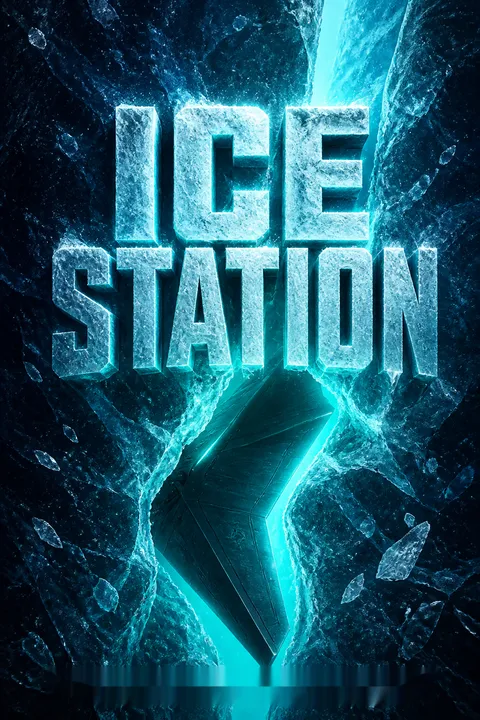
Wilkes Ice Station, a remote American research outpost buried deep in the Antarctic ice, is thrown into chaos when a team of divers vanishes after reporting strange noises and the sighting of a mysterious object beneath the ice. The station's radio operator, Abby Sinclair, sends a desperate distress signal, but the blizzard and a solar flare cut off all communication. The isolation is absolute, and the sense of foreboding grows as the station's chief, Ben Austin, and his team attempt a rescue, only to encounter something monstrous lurking in the icy depths. The last words from the divers: they've found a spaceship—and then, screams.
The Descent and Discovery
A second dive team, led by Austin, descends into the ice cavern. They discover a massive, black, winged craft embedded in the ice—seemingly a spaceship. But before they can investigate, they are attacked by unseen predators—killer whales and something even more savage. The team is slaughtered, their deaths echoing through the station's intercom. The survivors above are left with terror and unanswered questions: what is the ship, and what killed their friends?
Marines on the Ice
Lieutenant Shane Schofield ("Scarecrow") and his elite Marine Reconnaissance Unit are dispatched to Wilkes in response to the distress call. Battling the Antarctic elements, they arrive to find the station in disarray, survivors traumatized, and a group of French scientists already present. The Marines' orders are clear: secure the station, protect the discovery, and await reinforcements. But the presence of the French, and the recent murder of a scientist by another, James Renshaw, hint at deeper intrigue.
Allies Turned Assassins
The French "scientists" are revealed to be elite commandos, their cover blown when they massacre several Marines and station personnel in a sudden, brutal attack. The French have come not to help, but to seize the buried craft for France. The station becomes a war zone, with Schofield's team fighting for survival against a ruthless, well-prepared enemy. The Antarctic Treaty's illusion of neutrality shatters as national interests take precedence over human life.
The French Betrayal
The French commandos, using subterfuge and violence, attempt to eliminate all witnesses and claim the ship. Schofield's Marines are forced into desperate, close-quarters combat, using every trick and weapon at their disposal. The station's unique structure—ice tunnels, catwalks, and a central shaft—becomes a deadly maze. The French are cunning, but the Marines' resilience and teamwork turn the tide, though at great cost. The battle ends with the French defeated, but the station is left battered and bloodied.
Blood in the Water
The aftermath of the battle is no reprieve. The station's survivors are attacked by a pod of killer whales and mutated elephant seals, drawn by the blood and chaos. The pool at the station's base becomes a slaughterhouse, with humans and animals alike falling victim to the carnage. The Marines and scientists barely escape, their numbers further reduced, and the sense of being besieged by both man and nature intensifies.
The British Incursion
No sooner have the French been defeated than a new threat emerges: a full platoon of British SAS commandos, led by the legendary Brigadier General Trevor Barnaby. The SAS, under the guise of alliance, are here for the same reason as the French—to claim the ship for their own government. They jam communications, cut off escape, and launch a meticulously planned assault. Schofield recognizes Barnaby as a former mentor, now a deadly adversary.
The Station Under Siege
The SAS storm the station, using advanced tactics and overwhelming force. Schofield and his dwindling team are forced into a running battle, using the station's architecture and their own ingenuity to survive. The fight is brutal and personal, with betrayals and sacrifices on both sides. The Marines' numbers dwindle, and Schofield is captured, forced into a deadly duel with a traitor in his own ranks.
The Enemy Within
It is revealed that Snake Kaplan, a senior Marine, is an ICG (Intelligence Convergence Group) plant—a government agent embedded to ensure secrets are kept, even at the cost of his own team. Snake has been murdering wounded Marines and sabotaging the defense. The ICG's existence—a shadowy cabal within the U.S. military and intelligence community—comes to light, its purpose to secure technological superiority for America at any cost. The realization that the true enemy may be within is devastating.
The Subterranean Secret
A team led by Gant and Sarah Hensleigh explores the ice cavern and discovers the truth: the "spaceship" is a top-secret American stealth aircraft, the Silhouette, built decades earlier and lost in a seismic event. The hangar, buried by an earthquake, is filled with the frozen bodies of its builders. The ship's "alien" features are advanced human technology, including a nuclear-powered cloaking device. The Antarctic's monsters—mutated elephant seals—are the result of radiation from the ship's plutonium core.
The ICG Unmasked
As the survivors piece together the truth, more betrayals surface. Montana, another Marine, is revealed as an ICG agent and attempts to kill the remaining team. Sarah Hensleigh, too, is unmasked as ICG, responsible for the murder of a scientist and the manipulation of events at the station. The ICG's reach is vast, its methods ruthless. The survivors must fight not only external enemies but also those among them.
The Final Gambit
With the SAS defeated and the ICG agents exposed, Schofield and the survivors face a new threat: a nuclear missile, launched as an "eraser" to destroy the station and all evidence. The only hope is to escape in the Silhouette, using its vertical takeoff and cloaking device. As the ice shelf collapses and the missile closes in, Schofield and his team race against time, solving the ship's access code with the help of Kirsty's mathematical genius.
Nuclear Countdown
The Silhouette blasts out of the collapsing iceberg just as the nuclear missile strikes, vaporizing Wilkes Ice Station and erasing all trace of the events. The survivors, battered and traumatized, escape into the Antarctic sky, pursued by American stealth fighters intent on silencing them. Schofield uses the Silhouette's cloaking device to evade and destroy his pursuers, but the cost is high.
Escape from Oblivion
The survivors reach the USS Wasp, only to find the ICG waiting to "clean up" the last witnesses. Schofield, with the help of allies and a final act of sabotage, destroys the Silhouette and thwarts the ICG's plans. The cost in lives is immense, and the truth is nearly lost, but a handful of survivors remain to tell the tale.
The Cloaked Truth
With the help of Andrew Trent, a former Marine who survived a similar ICG purge, and investigative journalists, Schofield exposes the ICG's existence and methods to the world. The story becomes a media sensation, but the full truth—of international betrayals and the real nature of the "spaceship"—remains hidden, buried by governments eager to maintain the status quo.
Aftermath and Revelation
The survivors struggle to recover, haunted by loss and betrayal. Gant, gravely wounded, is cared for by Schofield. "Mother", presumed dead, is found alive, a testament to resilience. The world moves on, the events at Wilkes Ice Station fading into rumor and myth, but the scars remain.
Ghosts and Guardians
The ICG is purged, but its legacy lingers. Schofield and Trent, both officially "dead," become symbols of the cost of secrecy and the dangers of unchecked power. The Antarctic, indifferent and eternal, reclaims its secrets, and the world's attention shifts elsewhere.
The World Watches, Unknowing
The official story is sanitized; the true events are buried. The world's powers shake hands and reaffirm alliances, while beneath the ice, the ghosts of Wilkes Station and its victims remain. The cycle of secrecy, ambition, and betrayal continues, as the living continent endures.
Analysis
Ice Station is a masterclass in high-octane, militarized thriller fiction, but beneath its relentless action lies a meditation on trust, institutional corruption, and the cost of secrecy. The Antarctic setting is not just a backdrop but a metaphor for the cold, indifferent machinery of state power and the isolation of those who serve it. The novel interrogates the myth of the "neutral" frontier, exposing how national interests and covert agendas turn even the most remote places into battlegrounds. The ICG, as a symbol of the deep state, embodies the dangers of unchecked authority and the dehumanizing logic of "national security." The repeated betrayals—by allies, by superiors, by friends—force the characters to confront the fragility of trust and the necessity of personal integrity. Ultimately, Ice Station is a cautionary tale about the price of ambition and the ease with which truth can be buried beneath layers of ice, bureaucracy, and blood. Its lesson is clear: the real monsters are not alien, but human, and the fight for truth is as perilous as any battle in the frozen dark.
Review Summary
Ice Station is a fast-paced, action-packed thriller set in Antarctica. Readers praise its non-stop excitement, likening it to a Hollywood blockbuster. The protagonist, Shane Schofield, is a popular hero among fans. While some criticize the book's over-the-top nature and implausibility, many enjoy it as escapist entertainment. The novel features intense violence, military technology, and conspiracy elements. Reviews are mixed, with some loving the adrenaline-fueled story and others finding it too unrealistic. Overall, it's described as a fun, if not entirely believable, read.
Characters
Shane "Scarecrow" Schofield
Schofield is the central figure—a Marine lieutenant marked by physical and psychological scars. His hidden, mutilated eyes symbolize both trauma and the burden of command. Schofield is defined by his sense of duty, tactical brilliance, and deep loyalty to his team, but also by his isolation and the weight of loss. He is repeatedly forced to make impossible choices, sacrificing comrades and innocence for the greater good. His journey is one of survival, disillusionment, and ultimately, a desperate bid to expose the truth.
Elizabeth "Fox" Gant
Gant is a skilled Marine and one of the few women in the unit, respected for her competence and resilience. She harbors deep, unspoken feelings for Schofield, and her backstory of betrayal and loss mirrors his own. Gant's survival, despite grave injury, is a testament to her strength. Her relationship with Schofield is one of mutual respect, camaraderie, and the possibility of healing.
Buck "Book" Riley
Book is Schofield's oldest friend and the team's moral center. His humor and steadiness ground the unit, and his bond with the young Kirsty is especially poignant. Book's death—sacrificed to the killer whales by the SAS—underscores the brutality of the conflict and the cost of loyalty. His loss haunts Schofield and the survivors.
Sarah Hensleigh
Initially presented as a competent scientist and mother, Sarah is ultimately revealed as an ICG agent, responsible for murder and betrayal. Her ambition and lack of empathy contrast sharply with the Marines' camaraderie. Her stepdaughter Kirsty's rejection of her is both personal and symbolic—a repudiation of the ICG's inhumanity.
James Renshaw
Renshaw is the station's geophysicist, initially suspected of murder and madness. His eccentricity masks intelligence and integrity. Renshaw's vindication and survival are hard-won, and his role as Kirsty's godfather adds emotional depth. He represents the cost of suspicion and the importance of truth.
Kirsty Hensleigh
Kirsty is a precocious, mathematically gifted girl, caught in the maelstrom of violence. Her relationship with Schofield and Book provides moments of warmth and hope. Kirsty's mathematical insight is crucial to the survivors' escape, and her resilience in the face of trauma is quietly heroic.
"Mother" Newman
Mother is a physically imposing, shaven-headed Marine whose toughness is matched by her humor and loyalty. She survives against all odds, her escape from the doomed station a testament to willpower. Mother's affection for Schofield and her role as the team's emotional anchor are vital.
Snake Kaplan
Snake is a senior Marine, respected and relied upon—until he is revealed as an ICG plant. His betrayal is devastating, embodying the theme of the enemy within. Snake's actions force Schofield to confront the reality of institutional corruption and the fragility of trust.
Trevor Barnaby
Barnaby, the SAS commander, is both a mentor and nemesis to Schofield. His brilliance and cold pragmatism make him a formidable foe. Barnaby's willingness to kill and manipulate for national interest mirrors the ICG's ethos, and his death is both a personal and symbolic victory for Schofield.
Andrew Trent
Trent, a former Marine presumed dead, survived a similar ICG purge and now works to expose the conspiracy. His alliance with Schofield is crucial in bringing the truth to light. Trent's existence is a warning and a hope—a reminder that resistance is possible, even in the face of overwhelming power.
Plot Devices
Layered Betrayal and Paranoia
The narrative is driven by shifting allegiances and the constant threat of betrayal. The presence of ICG agents within the Marines, the duplicity of supposed allies (French and British), and the uncertainty of motives create a pervasive atmosphere of paranoia. The "enemy within" is as dangerous as any external threat, and the revelation of traitors is used to escalate tension and force difficult choices.
Locked-Room and Siege Structure
The station's architecture—a series of decks, tunnels, and a central shaft—creates a natural stage for siege and close-quarters combat. The isolation of Antarctica, compounded by storms and solar flares, heightens the sense of claustrophobia and desperation. Each incursion (French, British, American) raises the stakes, with the survivors forced to adapt or die.
Red Herrings and Misdirection
The initial discovery of a "spaceship" and the monstrous attacks suggest a science fiction or horror narrative, but the truth is more mundane and more damning: the ship is a lost American stealth project, and the real monsters are human. The use of mutated wildlife and the Antarctic setting serve as both literal and metaphorical misdirection, focusing attention on the unknown while the true threat operates in plain sight.
Countdown and Race Against Time
The story is structured around a series of countdowns: the arrival of enemy forces, the launch of eraser devices (nuclear and conventional), the collapse of the ice shelf, and the approach of the SEAL team. Each deadline forces the characters into action, compounding the sense of relentless pressure and narrowing options.
Modern Myth and Media
The aftermath of the events at Wilkes is shaped by media manipulation, government cover-up, and the selective release of information. The survivors' struggle to expose the truth is met with institutional resistance, and the official story is sanitized for public consumption. The use of real-world media (the Washington Post) and the motif of "officially dead" heroes underscore the theme of history as a battleground.
FAQ
```markdown
Synopsis & Basic Details
What is Ice Station about?
- High-stakes Antarctic Thriller: Ice Station plunges readers into a remote American research outpost in Antarctica, where a routine dive uncovers a mysterious "spaceship" buried deep beneath the ice, triggering a desperate struggle for control. The discovery quickly escalates into a multi-national covert war, as elite military units from France, Britain, and the U.S. converge on the station, each determined to seize the advanced technology.
- Survival Against All Odds: Lieutenant Shane "Scarecrow" Schofield, a scarred but brilliant Marine Recon leader, and his dwindling team find themselves caught in a deadly siege, battling not only foreign commandos and mutated Antarctic wildlife but also a shadowy U.S. government conspiracy known as the Intelligence Convergence Group (ICG). The narrative is a relentless race against time, filled with betrayals, impossible choices, and explosive action.
- Unmasking a Deeper Conspiracy: As Schofield fights to protect his remaining crew and the truth, the "spaceship" is revealed to be a lost American stealth aircraft with a cloaking device, its secrets guarded by the ruthless ICG. The story culminates in a desperate escape and a fight to expose the ICG's pervasive influence, highlighting themes of national security, loyalty, and the hidden costs of technological superiority.
Why should I read Ice Station?
- Relentless, High-Octane Action: If you crave non-stop, explosive action sequences and intricate tactical combat, Ice Station delivers in spades. Matthew Reilly's signature style ensures that every chapter is packed with adrenaline-pumping confrontations, from close-quarters knife fights in the dark to hovercraft chases across the ice and aerial dogfights.
- Intriguing Conspiracy and Betrayal: Beyond the surface-level military thriller, the novel weaves a compelling web of conspiracy, revealing a shadowy government organization (ICG) that infiltrates its own military units and manipulates events for technological advantage. This "enemy within" element adds layers of psychological tension and moral ambiguity, making you question every character's loyalty.
- Unique and Vivid Setting: The desolate, unforgiving landscape of Antarctica is brought to life as a character in itself, providing a claustrophobic and dangerous backdrop for the unfolding drama. The extreme environment, coupled with mutated wildlife and a buried secret, creates a truly immersive and unforgettable reading experience that pushes the boundaries of the thriller genre.
What is the background of Ice Station?
- Geopolitical Cold War Echoes: The novel is set against a backdrop of lingering Cold War-era paranoia and shifting international alliances, where "friendly" nations like France and Britain are depicted as ruthless competitors for technological dominance. The introduction of the Antarctic Treaty and its "neutral territory" status is immediately subverted, highlighting the author's cynical view of international cooperation when immense strategic value is at stake.
- Technological Speculation and Military Secrecy: The core mystery revolves around advanced military technology, specifically a stealth aircraft with a cloaking device, which taps into real-world fascination with black projects and classified defense initiatives. The narrative explores the ethical implications of unchecked scientific and military ambition, where the pursuit of superiority justifies extreme measures and human sacrifice.
- Antarctic Environment as a Character: Reilly extensively uses the unique geographical and climatic conditions of Antarctica—its extreme cold, blizzards, vast ice shelves, and unique marine life (killer whales, elephant seals)—not just as a setting, but as active elements shaping the plot and challenging the characters. The scientific research conducted at Wilkes Ice Station, particularly ice core analysis and marine biology, provides a plausible, albeit exaggerated, context for the extraordinary discoveries and dangers encountered.
What are the most memorable quotes in Ice Station?
- "My loyalty to my country is greater than my loyalty to you, Scarecrow.": This chilling declaration by Snake Kaplan, the ICG infiltrator, encapsulates the novel's central theme of loyalty versus national interest. It highlights the dehumanizing logic of the ICG, where personal bonds are sacrificed for a perceived greater good, and underscores the profound betrayal Schofield experiences.
- "Good strategy is like magic. Make your enemy look at one hand while you're doing something with the other.": Attributed to Trevor Barnaby, this quote serves as a tactical mantra throughout the book, reflecting the constant deception and misdirection employed by all sides. It's a meta-commentary on the narrative's own use of red herrings and plot twists, emphasizing the intellectual chess match beneath the physical combat.
- "You are smart, Scarecrow, and you are good, and don't you ever doubt that. Ever. You just have to believe in yourself.": Spoken by "Mother" Newman, this quote is a rare moment of emotional depth and affirmation amidst the chaos. It cuts through Schofield's self-doubt and the pervasive cynicism of the ICG, emphasizing the importance of personal integrity and self-belief in a world rife with betrayal.
What writing style, narrative choices, and literary techniques does Matthew Reilly use?
- Rapid-Fire, Cinematic Pacing: Reilly employs an extremely fast-paced, almost cinematic writing style, characterized by short sentences, frequent scene changes, and a constant escalation of stakes. This creates a relentless sense of urgency and propels the reader through the narrative at breakneck speed, mirroring the high-octane action sequences.
- Detailed Technical Descriptions and World-Building: Despite the speed, Reilly meticulously details military hardware, tactical maneuvers, and scientific concepts, lending a sense of authenticity to the fantastical elements. His descriptions of the Antarctic environment, advanced weaponry, and the "Silhouette" aircraft are vivid and immersive, grounding the extraordinary in plausible technical detail.
- Third-Person Omniscient with Shifting Focus: The narrative primarily uses a third-person omniscient point of view, allowing Reilly to jump between multiple characters and locations, providing a comprehensive overview of the unfolding global conspiracy. This shifting perspective builds suspense by revealing different pieces of the puzzle to the reader before the characters themselves, enhancing the sense of a vast, interconnected plot.
Hidden Details & Subtle Connections
What are some minor details that add significant meaning?
- Niemeyer's Name Badge and the "Preliminary Survey": The discovery of Otto Niemeyer's name badge in the epilogue, coupled with Alison Cameron's earlier research into his disappearance and his borrowing of a "Preliminary Survey" for the Wilkes location in 1979, subtly confirms the deep historical roots of the ICG's operations. It reveals that the "first" station, Little America IV, was not just a lost research outpost but a precursor to the Silhouette project, and that Niemeyer, an ICG figure, was involved in its initial concealment or recovery, linking the past to the present conspiracy.
- The "Happy New Year 1969!" Banner in Little America IV: This seemingly innocuous detail found in the inverted Little America IV station provides a precise temporal anchor for the station's abandonment and subsequent "flipping." It highlights the sheer passage of time and the natural forces (iceberg calving, flipping) that buried and preserved the secrets of the past, emphasizing how long the ICG's projects have been hidden and forgotten by the wider world.
- The Killer Whales' "Staking Claim" Behavior: Renshaw's observation that the killer whales "stake their claim" by brushing past their victims before the kill is a subtle but potent parallel to the human conflicts in the story. It reflects the territoriality and predatory nature of the French, British, and ICG forces, who similarly "claim" the station and its secrets through initial incursions and displays of dominance before moving in for the kill, underscoring the primal, animalistic aspects of human conflict.
What are some subtle foreshadowing and callbacks?
- Schofield's Scars and the "Scarecrow" Nickname: The initial mystery surrounding Schofield's hidden eyes and his nickname "Scarecrow" subtly foreshadows his traumatic past in Bosnia, where his eyes were deliberately scarred. This detail not only adds to his enigmatic persona but also serves as a constant reminder of the brutal realities of covert warfare and the personal cost of military service, linking his past trauma to the present betrayals.
- The Biotoxin Lab and Sea Snake Venom: The early mention of the Biotoxin Lab on B-deck and Sarah Hensleigh's work with Ben Austin on "antivenom for Enhydrina schistosa" (sea snake) subtly foreshadows the true cause of Bernie Olson's death. This detail, initially presented as background, later becomes crucial evidence in Renshaw's vindication, revealing Sarah's ICG involvement and her calculated use of a specific, highly lethal toxin to frame Renshaw.
- Andrew Trent's E-mail and the "Officially Dead" Status: Trent's e-mail to Schofield, warning him of ICG infiltrators and stating that Schofield is "officially dead," is a direct callback to Trent's own past experience in Peru. This parallel immediately signals the grave danger Schofield is in and establishes the ICG's modus operandi, creating a sense of inescapable doom and highlighting the cyclical nature of government cover-ups.
What are some unexpected character connections?
- Renshaw as Kirsty's Godfather: The revelation that James Renshaw is Kirsty's godfather adds an unexpected layer of emotional depth and personal stakes to his character. It transforms him from a mere eccentric scientist into a protective figure, explaining his concern for Kirsty and providing a familial link that grounds the high-stakes plot in human relationships. This connection also subtly highlights Sarah Hensleigh's coldness, as she is Kirsty's stepmother but lacks such a bond.
- "Mother" Newman's Loyalty to Schofield: Mother's decision to reject a prestigious transfer to an Atlantic Recon unit to stay with Schofield, explicitly stating her belief in him as a "good man" who cares for his troops, is an unexpected and powerful testament to Schofield's leadership. This connection underscores the theme of earned loyalty in contrast to the ICG's forced allegiance, providing Schofield with a crucial emotional anchor and moral support.
- Schofield's Unspoken Connection to Andrew Trent: The deep, almost telepathic understanding between Schofield and Andrew Trent, despite their physical separation, is an unexpected connection forged by shared trauma and betrayal. Trent's ability to anticipate Schofield's predicament and send a warning email, and Schofield's immediate recognition of Trent's plight, highlights a bond formed through the ICG's machinations, making them kindred spirits in the fight for truth.
Who are the most significant supporting characters?
- James Renshaw: Initially a suspect in a murder, Renshaw evolves into a crucial ally. His scientific knowledge, particularly in geology and biotoxicology, is instrumental in understanding the "spaceship" and exposing Sarah Hensleigh's treachery. His eccentricity and unexpected medical skills (from his brief stint in medicine) make him an unlikely but invaluable asset, providing both comic relief and critical plot exposition.
- "Mother" Newman: As a seasoned Gunnery Sergeant, Mother provides a grounded, no-nonsense perspective and unwavering loyalty to Schofield. Her physical resilience (surviving a killer whale attack and a leg amputation) and her emotional intelligence (her pep talk to Schofield) make her a powerful symbol of Marine fortitude and the human spirit. Her survival against the odds is a testament to her strength and a source of hope.
- Kirsty Hensleigh: The young, mathematically gifted girl is far more than a civilian in distress. Her ability to decipher the Silhouette's Fibonacci code is the key to the survivors' escape, making her a child prodigy whose intellect directly impacts the plot's resolution. Her innocence and vulnerability also serve as a moral compass for Schofield, motivating his desperate actions and highlighting the human cost of the conflict.
Psychological, Emotional, & Relational Analysis
What are some unspoken motivations of the characters?
- Schofield's Drive for Redemption: Beyond his stated duty to protect the station and his men, Schofield is implicitly driven by a deep-seated need for redemption and to prevent a repeat of past failures. His internal monologue about Andrew Trent's fate in Peru, and his determination to not let his own men be sacrificed by a shadowy government entity, reveals a personal quest to right past wrongs and protect the innocent, even at immense personal cost.
- Sarah Hensleigh's Calculated Ambition: Sarah's motivation extends beyond simple ICG loyalty; her marriage to Brian Hensleigh and her subsequent actions are rooted in a cold, calculating ambition for status and access. Her willingness to sacrifice personal relationships and commit murder for "technological superiority" reveals a deep-seated desire for power and recognition, using the ICG as a vehicle for her own advancement rather than purely patriotic ideals.
- Snake Kaplan's Twisted Patriotism: Snake's unwavering loyalty to the ICG, even as he betrays and murders his comrades, stems from a deeply ingrained, albeit twisted, sense of patriotism. His belief that "My loyalty to my country is greater than my loyalty to you, Scarecrow" suggests a conviction that his actions, however brutal, serve a higher national purpose, highlighting the dangerous extremism that can arise from unquestioning allegiance to an abstract ideal.
What psychological complexities do the characters exhibit?
- Schofield's Burden of Command and Trauma: Schofield grapples with immense psychological complexity, marked by the visible scars on his eyes and the invisible wounds of past trauma (Bosnia, Peru). He constantly battles his own anger and impulsiveness, relying on learned tactical frameworks (Barnaby's three-step analysis) to maintain control. His struggle to trust anyone, even his own men, after experiencing betrayal, showcases the psychological toll of leadership in a morally ambiguous world.
- Renshaw's Eccentricity as a Defense Mechanism: James Renshaw's manic, talkative eccentricity and seemingly disorganized nature can be interpreted as a psychological defense mechanism against the isolation and the traumatic events he witnessed at Wilkes. His deep immersion in scientific detail and his need to explain everything, even in dire circumstances, might be a way to impose order on a chaotic and terrifying reality, masking a profound vulnerability.
- Gant's Emotional Resilience and Hidden Affection: Libby Gant exhibits remarkable psychological resilience, enduring severe physical injury and betrayal while maintaining her combat effectiveness. Her unspoken affection for Schofield, revealed in her internal thoughts and Book's observations, adds a layer of emotional depth, showing a capacity for love and vulnerability beneath her tough exterior, a stark contrast to the cold pragmatism of the ICG agents.
What are the major emotional turning points?
- Book Riley's Sacrifice: Book's death, being fed to the killer whales by Barnaby, is a profound emotional turning point for Schofield. It shatters his composure, fueling a raw, vengeful anger that momentarily overrides his tactical discipline. This loss underscores the brutal cost of the conflict and deepens Schofield's personal stake in defeating his enemies, transforming the mission from a duty into a deeply personal vendetta.
- Renshaw's Vindication and Schofield's Trust: The moment Renshaw reveals the video evidence of Snake's betrayal and the true nature of Olson's death is a critical emotional shift. It vindicates Renshaw, transforming him from a suspected murderer into a trusted ally, and forces Schofield to confront the horrifying reality of an enemy within his own ranks. This re-establishment of trust is vital for the survivors' cohesion and their ability to fight back.
- Kirsty's Mathematical Breakthrough: Kirsty's ability to identify the Fibonacci sequence in the Silhouette's access code is an emotional turning point that shifts the narrative from despair to hope. It highlights the power of unexpected talents and the resilience of innocence, providing a moment of intellectual triumph amidst overwhelming physical threats and offering a path to escape when all other options seem exhausted.
How do relationship dynamics evolve?
- Schofield and His Team: From Unit to Family: The relationship dynamics within Schofield's unit evolve dramatically under pressure. Initially a professional military unit, the shared trauma, betrayals, and sacrifices forge a familial bond, particularly evident in Mother's unwavering loyalty and Book's protective instincts towards Kirsty. The loss of comrades like Hollywood and Samurai deepens the survivors' reliance on each other, transforming their professional allegiance into a profound personal connection.
- Schofield and Renshaw: From Captor/Captive to Mutual Reliance: The relationship between Schofield and Renshaw undergoes a significant transformation. Starting with Renshaw as a suspected murderer and Schofield as his interrogator, their dynamic shifts to one of mutual reliance and respect. Renshaw's scientific expertise and Schofield's tactical prowess become interdependent, culminating in Renshaw saving Schofield's life and becoming a trusted confidant, highlighting the power of shared adversity to forge unexpected alliances.
- Sarah and Kirsty: The Unmasking of a Dysfunctional Family: The relationship between Sarah Hensleigh and Kirsty is initially presented as a typical mother-daughter dynamic, but it subtly hints at underlying tension. The revelation that Sarah is Kirsty's stepmother, and her subsequent betrayal, exposes a deeply dysfunctional and manipulative relationship. Kirsty's quiet rejection of Sarah and her eventual embrace of Schofield as a protector symbolizes the triumph of genuine care over calculated ambition, reflecting the broader theme of authentic human connection versus ICG's cold pragmatism.
Interpretation & Debate
Which parts of the story remain ambiguous or open-ended?
- The Full Extent of the ICG's Reach: While the ICG is exposed and some of its members are purged, the story leaves the full extent of its influence and its long-term future ambiguous. The implication is that such a deep-seated organization, with high-ranking officials like Kozlowski, would be incredibly difficult to dismantle entirely, suggesting that the fight against it is ongoing and perhaps never truly won.
- The Fate of the Silhouette's Technology: Although the Silhouette is destroyed, the knowledge of its cloaking device and nuclear propulsion system is now public, thanks to Schofield and the Camerons. However, the story doesn't explicitly detail the global implications or the subsequent race among nations to replicate this technology, leaving the long-term impact of this revelation open to interpretation.
- The Future of Schofield and Trent: Both Schofield and Trent are "officially dead" and have exposed a powerful government conspiracy. Their future roles, whether they continue to operate as rogue agents fighting the ICG or seek a quieter life, remain open-ended. The ending suggests they are now guardians of truth, but the specific path they will take is left to the reader's imagination.
What are some debatable, controversial scenes or moments in Ice Station?
- Book Riley's Death by Killer Whales: The scene where Trevor Barnaby deliberately lowers Book Riley, handcuffed and helpless, into a pool of killer whales is highly controversial. It's a moment of extreme brutality and psychological torture, designed to break Schofield. While it serves to highlight Barnaby's ruthlessness and the savagery of the conflict, some readers might find it gratuitously violent and a difficult death for a beloved character.
- The ICG's Justification for Its Actions: The ICG's rationale, as articulated by Kozlowski, that their actions—including the murder of American soldiers—are for "national security" and to maintain America's technological superiority, presents a morally ambiguous and controversial justification. It forces readers to confront the ethical dilemmas of state power and whether the ends can ever justify such extreme means, sparking debate about patriotism and unchecked authority.
- Schofield's Use of the Nuclear Missile: Schofield's decision to arm and launch the Silhouette's nuclear missile, albeit with a delay and aimed at the destroyed station, is a controversial act. While it serves to erase the evidence and prevent the ICG from acquiring the technology, it involves the use of a weapon of mass destruction. This moment challenges Schofield's moral compass and raises questions about the lengths to which a hero must go to achieve his objectives.
Ice Station Ending Explained: How It Ends & What It Means
- The Nuclear Eraser and the Silhouette's Destruction: The climax sees Schofield, Renshaw, and Kirsty escaping the collapsing Wilkes Ice Station in the Silhouette, a nuclear-powered stealth fighter with a cloaking device. They blast out of the newly formed iceberg just as a nuclear missile, launched by a rogue British fighter ([Barnaby's](#trevor-
About the Author
Other books by Matthew Reilly


Download PDF
Download EPUB
.epub digital book format is ideal for reading ebooks on phones, tablets, and e-readers.








































