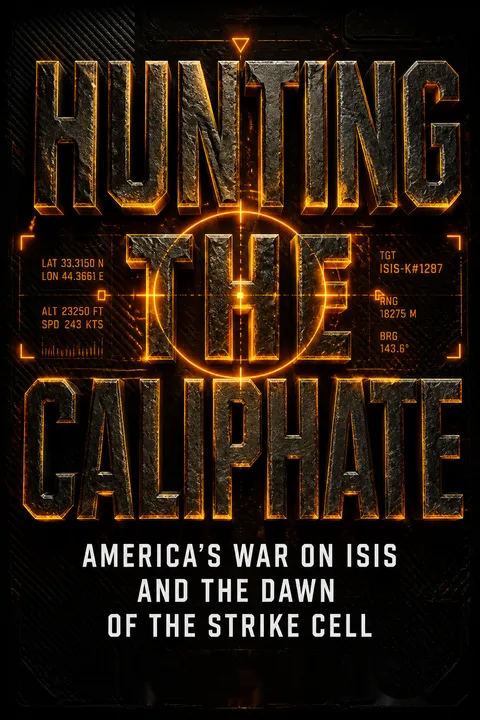

Key Takeaways
1. 9/11 Ignited a Personal Call to War for U.S. Warfighters.
The 9/11 attacks on American soil came at a time when I was preparing to take command of an Army brigade combat team in Germany. I was also contemplating a return to civilian life once I completed that command. To be honest, the slow bureaucratic processes of the military had left me feeling frustrated.
Personal Impact. For Major General Dana Pittard, 9/11 reignited his commitment to military service, shifting his focus from potential retirement to leading troops in combat. Similarly, for Master Sergeant Wes Bryant, a young Air Force Tactical Air Control Party (TACP) specialist, the attacks solidified his path as a warfighter, driving him to pursue elite special operations roles. Both authors felt a profound duty to protect the nation, transforming their career trajectories.
Renewed Motivation. Pittard, a veteran of Operation Desert Storm, found renewed purpose in the face of a new, unconventional enemy, leading him to multiple deployments in Iraq and Afghanistan. Bryant, initially frustrated by missing early deployments, pushed through rigorous special operations training, including the Army Special Forces Combat Diver Qualification Course, to become a Joint Terminal Attack Controller (JTAC). Their personal narratives underscore how 9/11 galvanized a generation of military personnel.
Diverted Paths. Bryant's journey, in particular, highlights a deep-seated desire to be a "predator...the hunter," leading him back to the TACP career field after a stint in Pararescue. This personal drive, born from the 9/11 attacks, would ultimately place both men at the forefront of America's fight against ISIS, shaping their roles in defining a new kind of war.
2. ISIS Emerged as an Unprecedented, Brutal, and Sophisticated Enemy.
ISIS was sophisticated—not just in its military ability but in its recruitment techniques and use of social media for propaganda purposes.
Origins and Evolution. ISIS formed from the remnants of al-Qaeda in Iraq (AQI) after the 2003 U.S. invasion, strengthened by veteran Sunni fighters and led by Abu Bakr al-Baghdadi. By 2012, it had established a foothold in Syria, recruiting from numerous opposition groups and aggressively expanding its influence. This evolution from a shattered insurgency to a formidable force was rapid and alarming.
Unmatched Brutality. ISIS distinguished itself through extreme fanaticism, marked by mass executions, public beheadings, and the enslavement of women and children, particularly targeting religious minorities like the Yazidi. Their barbaric acts, often publicized through social media, served as both terror tactics and recruitment tools, shocking the world and solidifying their image as a uniquely cruel adversary.
Military Prowess. Unlike previous insurgencies, ISIS demonstrated impressive battlefield skill, discipline, and leadership, often outfighting U.S.-trained Iraqi Security Forces. They rapidly seized vast territories in Iraq and Syria, including major cities like Fallujah and Mosul, capturing significant amounts of U.S.-made military equipment. Their ability to adapt tactics, such as using human shields and concealing movements, made them an elusive and dangerous foe.
3. Initial U.S. Response to ISIS was Hampered by Political Hesitation and Restrictive Rules of Engagement.
Although it was clear that General Austin, as the commander of CENTCOM, took the ISIS threat very seriously, it was not clear whether the Obama administration did.
"JV Team" Dismissal. Despite ISIS's rapid territorial gains and escalating brutality in early 2014, the Obama administration initially downplayed the threat, with President Obama famously describing ISIS as the "JV team." This perception contributed to a delayed and cautious U.S. military response, allowing ISIS to consolidate power and expand its caliphate.
Restrictive ROE. When a small U.S. task force was eventually deployed to Iraq in June 2014, its mission was severely limited to protecting the U.S. Embassy and Baghdad International Airport (BIAP), with a strict "boots on the ground" cap of 300 personnel. Crucially, rules of engagement (ROE) prohibited offensive combat operations or close air support for Iraqi forces unless in direct self-defense of U.S. troops, even as ISIS launched rocket attacks.
Bureaucratic Hurdles. This political timidity translated into significant bureaucratic challenges for frontline commanders like Major General Pittard and JTACs like Wes Bryant. Efforts to change the dangerous ROE, which required approval from the highest levels of the Pentagon and White House, faced immense pushback. This created a frustrating environment where U.S. forces were "handcuffed by politics and bureaucrats in Washington," risking lives for the sake of political perception.
4. ISIS Atrocities and Strategic Blunders Forced a Shift in U.S. Policy and Unleashed Airpower.
We cannot stand by and allow this to happen again.
Yazidi Massacre. The turning point came in August 2014, when Major General Pittard witnessed a live drone feed of ISIS fighters massacring eighty Yazidi men near Sinjar, after separating women and children for enslavement. This horrific act of genocide, coupled with the plight of tens of thousands of Yazidis trapped on Sinjar Mountain, spurred a moral imperative for intervention.
Sinjar Mountain Crisis. The humanitarian crisis on Sinjar Mountain, where 20,000+ civilians faced death by starvation or ISIS, garnered international attention and forced President Obama's hand. He authorized humanitarian airdrops and, crucially, airstrikes to prevent further mass killings and protect American personnel in Erbil. This marked the first significant expansion of U.S. airpower beyond self-defense.
Erbil Threat and Policy Shift. ISIS's aggressive advance into Kurdish territory, threatening the capital Erbil, was a strategic blunder. It galvanized the previously reluctant Kurdish Peshmerga and provided the justification for broader U.S. airstrikes. This shift in policy, though initially limited to Erbil, opened the door for the systematic use of airpower against ISIS, marking the true beginning of the offensive campaign.
5. The "Strike Cell" Revolutionized Remote Warfare and Enabled Indigenous Forces.
Airpower was expertly synergized in support of ground combat forces, with most of the airstrikes directed and controlled from remote operations centers—”war rooms” that would come to be known as Strike Cells.
Concept and Genesis. The "strike cell" emerged as the dominant method for hunting and killing ISIS, particularly after the Obama administration restricted U.S. combat action primarily to an air campaign. These remote operations centers, initially ad hoc at the U.S. Embassy and later formalized at BIAP, allowed for the precise application of airpower without large numbers of U.S. ground troops.
BIAP Strike Cell Setup. The BIAP Strike Cell was a unique, multi-service team of conventional and special operations forces, including Air Force, Navy, and Army JTACs, intelligence analysts, and communications specialists. It was equipped with:
- Secure networked computers with Google Earth imagery and target databases.
- Multiple big-screen TVs displaying live drone and aircraft video feeds.
- Amplified radios and secure phones for communication with aircrews and ground liaisons.
This setup provided unparalleled situational awareness, often surpassing that of forces on the ground.
Operational Effectiveness. The strike cell's ability to fuse intelligence, manage multiple air assets, and coordinate precision strikes from a distance proved devastatingly effective. It allowed for rapid decision-making, enabling the destruction of ISIS targets while minimizing collateral damage and civilian casualties. This innovative approach became the blueprint for future counter-ISIS operations across Iraq and Syria, demonstrating how technology and remote control could transform modern warfare.
6. Uniting Disparate Iraqi and Kurdish Forces was Critical to Early Victories Against ISIS.
We needed more firepower in the argument, so I enlisted General Lloyd Austin who was well respected by both the Kurds and the Iraqis. He called the Kurdish President Masoud Barzani and somehow convinced, cajoled, or threatened Barzani to allow the Iraqi military to participate.
"Herding Cats." The anti-ISIS coalition was a contentious mix of Iraqi Security Forces, Kurdish Peshmerga, Shia militias, and Sunni tribes, often more interested in fighting each other than ISIS. Major General Pittard faced the immense challenge of uniting these disparate groups, who harbored deep-seated historical grievances and distrust. The Kurds, initially adopting a "live and let live" approach with ISIS, were particularly difficult to sway.
Mosul Dam Breakthrough. The ISIS threat to the strategically vital Mosul Dam provided an opportunity to foster cooperation. Despite initial Kurdish refusal to work with the Iraqi military, General Austin's intervention convinced Kurdish President Barzani to allow Iraqi Counter Terrorism Service (CTS) troops to participate. The sight of the elite, all-black clad CTS, led by the "Black Scorpion" Major General Fadhil, so impressed the Kurds that they asked the Iraqis to lead the assault.
Amerli and Haditha. This newfound cooperation led to significant victories:
- Amerli: The liberation of the besieged Shia-Turkmen town of Amerli, a "humanitarian relief" mission, saw Iraqi Army, Kurdish Peshmerga, and even Iranian-backed Shia militias coordinate with U.S. airpower. This proved that a common enemy could unite "strange bedfellows."
- Haditha Dam: The successful defense and reinforcement of Haditha Dam, deep in Sunni Al Anbar province, further demonstrated the effectiveness of combined Iraqi-U.S. operations. These early successes, driven by U.S. air support and Pittard's persistent diplomacy, built Iraqi confidence and momentum against ISIS.
7. The Syrian Battlefield Became a Complex Proxy War with Multiple, Conflicting Actors.
In my fifteen years involved in America’s war on terror, by then across three major countries in the Middle East, I had really never seen such a unique and complex battlefield as Syria.
Multi-faceted Conflict. Syria presented an incredibly convoluted operational environment, with dozens of militia groups fighting the Assad regime, ISIS, and each other. The U.S. supported the New Syrian Forces (NSF), a surrogate force with conflicting loyalties, while also navigating the presence of al-Nusra Front (an al-Qaeda affiliate) and the Syrian regime, all while trying to avoid direct intervention in the civil war.
Russian Intervention. In September 2015, Russia's military entry into Syria dramatically escalated the complexity. Despite claiming to target ISIS, Russian airstrikes primarily hit anti-Assad rebel forces, including U.S.-backed groups. Russian aircraft aggressively shadowed U.S. drones and fighter jets, leading to tense standoffs and near-engagements, forcing U.S. forces to operate under strict de-confliction rules to avoid accidental conflict with a nuclear power.
Turkish Complications. The U.S. alliance with Turkey, crucial for airfields and airspace, was fraught with its own issues. Turkey viewed the U.S.-allied Kurds as enemies and refused to formally join the coalition. A Turkish F-16 shooting down a Russian Su-24 near the Syrian border further destabilized the region, highlighting the dangerous interplay of national interests and proxy conflicts that defined the Syrian battlefield.
8. Political Interference and Bureaucracy Constantly Challenged Frontline Military Operations.
Our mission was constantly encumbered by the strangling policies instated by higher leadership.
"Is This Any Way to Run a War?". From the outset, the U.S. military campaign against ISIS was plagued by political indecision and bureaucratic constraints. Arbitrary "red lines" for airstrikes, like the "Abisellan Line" near Erbil, prevented timely engagement of lucrative ISIS targets, allowing them to adapt and escape. This constant second-guessing from Washington created immense frustration among warfighters.
Undermanned and Underequipped. The "boots on the ground" cap and inconsistent directives led to critical shortages of drones and delays in resupplying and reinforcing surrogate forces in Syria. This left U.S.-backed Syrian fighters vulnerable and demoralized, often down to minimal ammunition, and forced U.S. special operations teams to operate with insufficient resources. The political climate often prioritized perception over operational effectiveness.
Sharp Shooters and Second-Guessing. Even after strikes were authorized, the BIAP Strike Cell faced constant scrutiny and "sharp shooting" from other agencies and higher headquarters, questioning targeting decisions and munitions use. This bureaucratic oversight, often from those lacking direct battlefield understanding, created a culture of apprehension that sometimes led to missed opportunities or even risked the lives of U.S. forces on the ground, as seen in the incident where a high-profile ISIS leader was allowed to escape due to a lawyer's misinterpretation of ROE.
9. Afghanistan's Enduring Conflict Saw the Rise of ISIS-K and a Resurgent Taliban.
Although the landscape of the battlefield had changed immensely, the fluctuating nature of our strategy remained fully intact.
ISIS-K Emergence. By 2017, the U.S. focus on ISIS in Iraq and Syria had allowed a new enemy, ISIS-K (Khorasan), to gain a strong foothold in Afghanistan. ISIS-K aggressively recruited disgruntled Taliban fighters and foreign combatants, further complicating an already unstable nation-state. This new threat intensified the conflict and created a tribal war between ISIS-K and the Taliban.
Taliban Resurgence. The presence of ISIS-K inadvertently reinvigorated the Taliban, who saw ISIS-K as a competitor for power. Areas previously suppressed of Taliban activity, particularly in northern Afghanistan, became hotbeds of renewed insurgency. This meant U.S. forces were now fighting a two-front war against both ISIS-K and a strengthened Taliban.
"Whack-a-Mole" Operations. Operations like HAMZA in Nangarhar Province exemplified the "whack-a-mole" nature of the Afghan conflict. U.S. special operations teams, often holding ground for extended periods, relied heavily on air and artillery strikes to defend against ISIS-K fighters who exploited abandoned talc mining tunnels for concealment. This static, predictable approach led to:
- Limited forward progress despite constant strikes.
- Increased U.S. casualties from well-planned ISIS-K attacks.
- Afghan partners lacking real stake in holding contested ground.
This reflected a broader failure in strategy, culminating in public acknowledgments of not "winning in Afghanistan."
10. The Human Cost and Psychological Toll of Relentless Warfare.
On every mission throughout the years following, the scars from that day always burned brightly in the back of my mind. The memories never left me; but drove me to be better.
Personal Scars. The relentless nature of the war on terror left deep psychological scars on warfighters. Wes Bryant's experience of a deadly ambush in Afghanistan, resulting in the death of Staff Sergeant John Doles, fueled his determination to prevent future friendly casualties. This personal commitment underscored the profound impact of combat on individual soldiers.
Moral Dilemmas. Operating in a "thick fog" of war, JTACs faced constant moral dilemmas, balancing the imperative to kill the enemy with strict rules of engagement and the risk of civilian casualties. The near-fratricide incident with a Shia militia, where a strike was aborted at the last second, served as a stark reminder of the devastating consequences of misjudgment and the importance of professional objectivity amidst intense pressure.
The Warrior's Resolve. Despite the psychological toll, the anger, and the frustration with political constraints, warfighters maintained an unwavering resolve. Bryant's epiphany in Bahrain, realizing that not all Middle Easterners were the enemy, allowed him to shed prejudice and become a more "even-tempered warfighter." This ability to compartmentalize emotions and focus on the mission, driven by a deep sense of duty and patriotism, was crucial for enduring the relentless hunt against ISIS.
Review Summary
Hunting the Caliphate receives strong praise overall, averaging 4.03 out of 5 stars. Readers appreciate the dual perspectives of a general officer and a senior NCO, calling it one of the finest war memoirs available. Many highlight its vivid portrayal of air campaigns against ISIS, political frustrations, and complex Middle Eastern dynamics. Critics note some US-centric bias and find the JTAC perspective less field-focused than expected. Most agree it offers civilians valuable insight into modern military operations and the challenges of fighting terrorism under restrictive political oversight.
People Also Read



Download PDF
Download EPUB
.epub digital book format is ideal for reading ebooks on phones, tablets, and e-readers.








































