
Key Takeaways
1. Love Begins with Intrinsic Self-Worth
We don’t become worthy of love someday; we are worthy of love simply because we exist.
Intrinsic worth. Many believe love must be earned through accomplishments or by becoming "fixed" or "whole," but the truth is, worthiness is inherent. This fundamental belief that love is something outside of us, something we must strive for, leads to a constant, exhausting pursuit. The journey to self-love is about remembering and claiming this intrinsic worth, not earning it.
Discovering goodness. Buddhist teachings, like Shambhala's "basic goodness," assert that we are primordially whole, awake, and good, like a diamond in dust. Society often tells us we are broken and need external fixes, but true liberation comes from realizing we are inherently lovable just as we are. This self-discovery process involves:
- Looking at yourself: Becoming familiar with your thoughts and emotional patterns through practices like meditation.
- Discovering basic goodness: Seeing beyond confusion and pain to your innate peace, wisdom, and strength.
- Developing faith: Cultivating unwavering trust in this primordial wholesomeness, which can overcome self-doubt.
Radiating splendor. When you glimpse and trust your basic goodness, you develop "ziji," or confidence, which radiates outward. This self-acceptance allows you to present yourself authentically, inviting others to respond in kind. Learning to love yourself fiercely is the most radical spiritual practice, making everything possible as you meet the love within.
2. Embrace Solitude for True Freedom
To be encouraged to stay with our vulnerability is news that we can use.
Beyond distraction. In a world saturated with instant connection, true solitude has become foreign, often leading to discomfort. Many fill their free time with distractions, mistaking "free-wild" activity for genuine freedom. Embracing solitude, or "free-free," means relaxing into the space of your life and exploring what it feels like to be vulnerable without constant external input.
Discipline of renunciation. Committing to being single, or simply taking time alone, often reveals a need for discipline in renouncing romantic distractions. This isn't about avoiding connection, but about intentionally befriending oneself. Just as meditation helps us become familiar with our inner landscape, disciplined solitude allows us to sit with emotions like loneliness without needing to immediately "fix" them.
Disciplined Hope. For those longing for partnership, solitude can be a fertile ground for "Disciplined Hope." This isn't passive wishing, but an active trust that desires will be met in divine timing. It involves:
- Cultivating inner resources: Engaging in activities that connect you to your soul.
- Practicing self-care: Prioritizing physical and emotional well-being.
- Trusting the journey: Believing that your life is leading you to what is highest for you, even when it feels like waiting.
3. Date with Openness, Not Fixed Expectations
For love to last, it is best not to have too many expectations. It is better just to offer love.
The shark of expectations. Entering dating with a rigid checklist of desired qualities often leads to disappointment. This "shark of fixed expectations" can devour the potential for genuine connection by making love conditional. Instead of interviewing potential partners against an idealized image, cultivate an open heart that allows love to flourish organically.
Beyond the checklist. While it's natural to have preferences, clinging to a detailed list can blind you to unexpected connections. True compatibility often emerges from shared humor, understanding, and an inexplicable "magic" that transcends superficial criteria. When you drop fixed expectations, you create space for authentic encounters, even if they don't fit your preconceived notions.
Bodhicitta in dating. The Buddhist concept of "bodhicitta," or an open/awake heart, encourages loving fully by suspending judgments and future projections. See dating as an adventure in meeting new people, an opportunity for self-discovery, rather than an interview for a life partner. This mindset allows you to:
- Be present: Engage with the other person as much as possible in the moment.
- Trust your heart: Prioritize genuine connection over superficial compatibility.
- Offer love freely: Approach each interaction with kindness and a willingness to connect without demanding specific outcomes.
4. True Love is Built on Four Sacred Qualities
With true love, you feel complete in yourself; you don’t need something from outside.
A loving practice. Falling in love can feel dangerous, threatening the ego's protective layers, but it's also an exciting exposure of our genuine self. True love, from a Buddhist perspective, is a "loving practice" consisting of four qualities that bridge self-love and love for others:
- Maitri (Loving-kindness): Rooted in self-friendship, offering gentle, loving presence to oneself and extending it to others.
- Karuna (Compassion): Understanding and desiring to relieve the suffering of others, stemming from relating to one's own pain.
- Mudita (Sympathetic Joy): Delighting in the joy of others, without possessiveness, allowing love to flow freely.
- Upeksha (Equanimity): Remaining calm in the face of uncertainty, embracing inclusiveness and extending love to all beings.
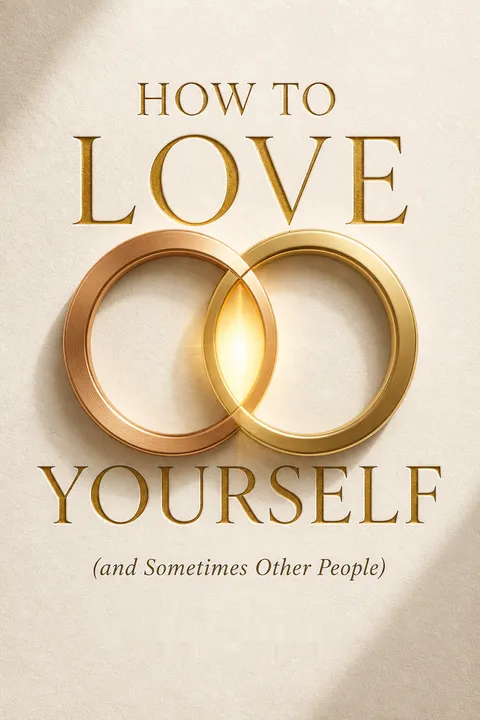
Interdependence, not codependence. When two individuals come together, the ideal is not to become one, but to create a "third" – a sacred container where each maintains their integrity while being enhanced by the other. This is symbolized by the vesica piscis, where two overlapping circles create a new space without losing their individual form. This allows for:
- Absolute freedom: Knowing your happiness isn't dependent on the other, allowing both partners to be fully themselves.
- Mutual growth: Each person becomes more, not less, because of the relationship.
- Shared joy: Experiencing the other's happiness as your own, without the need to confine or possess.
Love's boundless nature. When these qualities are cultivated, love expands beyond the romantic partner to embrace all beings. This openheartedness allows you to fall in love with the world daily, seeing beauty and connection everywhere. This profound love is not scary but liberating, capable of touching everyone and leaving a lasting impact beyond one's physical lifetime.
5. Commitment Means Fidelity to Your Own Soul
How can we expect to have a committed relationship with another if we are not committed to the most integral and authentic aspect of our own being?
Semper fidelis to self. Committed relationships, whether romantic or platonic, thrive when individuals remain faithful to their own soul's voice. The challenge lies in reconciling commitment to a human partner with devotion to the divine within. True commitment means never abandoning or betraying your inner truth, even as you align your life with another.
The discomfort of relationships. Relationships are inherently uncomfortable, marked by the Buddha's three types of suffering:
- Suffering of suffering: The inevitable pain of birth, aging, sickness, and death, including relationship breakdowns.
- Suffering of change: The impermanence of pleasure and the constant evolution of ourselves and our partners.
- All-pervasive suffering: The subtle discomfort of craving something other than what is, leading to dissatisfaction.
These truths highlight that seeking solid ground or manipulating outcomes in relationships is a source of pain.
Beyond craving. The alternative to suffering is to relax with your partner as they are, accepting the ever-changing nature of both individuals. This means letting go of specific outcomes and appreciating the present moment. A "good" relationship isn't defined by the absence of discomfort, but by how you meet it together, recommitting to love fully despite challenges. This creates a true home where love can flourish, built on a foundation of self-love and mutual acceptance.
6. Cultivate Boundless Platonic Love
A strong, immediate, and powerful connection with someone does not presuppose a sexual relationship.
Soul family. Some connections transcend romance, feeling like a reunion with someone you've known forever. These platonic "soul mates" can be as powerful and transformational as romantic ones, offering deep understanding, support, and love. Such friendships are not secondary but foundational, providing a rich tapestry of connection that enriches life.
Openhearted engagement. Often, we are too lost in our own concerns to appreciate the boundless potential for love around us. Meditation helps create a spacious internal environment, allowing us to relax and be more available to the world. Recognizing that everyone possesses basic goodness, just like ourselves, opens the heart to engaging new people without judgment. This can lead to:
- New connections: Striking up conversations with strangers, leading to unexpected friendships.
- Deeper bonds: Cultivating existing friendships with open, fluid love, free from the attachments often found in romantic relationships.
- Unconditional support: Relying on platonic loves as rocks during personal tragedies, knowing they offer unwavering presence.
Expanding the myth of possibility. True friendship expands our understanding of what's possible for our lives. It provides a "sacred container" where souls can reveal hidden truths to each other, fostering growth and self-acceptance. By investing in these diverse sources of love, we reduce the immense pressure placed on a single romantic partner, allowing all relationships to thrive with less expectation and more ease.
7. Sacred Sex Unifies Body and Soul
Man has no body distinct from his Soul; for that call’d Body is a portion of Soul discern’d by the five Senses, the chief inlets of Soul in this age.
Embodied presence. Sacred sex is not merely anatomical; it's an act of profound presence and connection between body and soul. Many religious traditions have historically created a rift between the body and spirit, leading to feelings of guilt or inadequacy around physical pleasure. Reclaiming the body as sacred, as an indivisible part of the soul, is crucial for experiencing sex as a healing and empowering act.
The heart's wisdom. The "nous," or spiritual eye of the heart, is the point of intersection between the divine and human. It's through the heart that we connect with everything, including our own body's wisdom. For sex to be sacred, the primary relationship is with one's own body, learning to trust its communication and stay present within it. This involves:
- Sexual empowerment: Understanding that sexual energy is innate and can be cultivated for vitality and creativity, whether or not one is having sex.
- Inner work: Transforming any "ancient hatred" or ambivalence towards the body into a profound self-love.
- Conscious energy: Practices like "Alchemies of Horus" (Sex Magic) can help move sexual energy from the base of the spine to the mind, unifying opposites.
Intention and communication. Sacred sex begins with clear intention and openhearted communication. It's about giving of yourself fully, being present, and creating a safe environment where both partners feel valued. This means:
- Ethical consent: Being attuned to your partner's encouragement and boundaries, not just the absence of "no."
- Expressive vulnerability: Communicating desires, likes, and dislikes from the heart, even when it feels uncomfortable.
- Emotional space: Allowing for any emotions (laughter, tears) to arise during intimacy, maintaining presence throughout.
By treating sex as a sacred opportunity, rooted in self-care and self-love, it becomes a powerful way to connect with the most profound aspects of being.
8. Heal a Broken Heart by Releasing Ego's Story
Rather than letting our negativity get the better of us, we could acknowledge that right now we feel like a piece of shit and not be squeamish about taking a good look.
Ego vs. heart. When a relationship ends, it's often the ego, not the heart, that breaks. The ego, with its need for definitive "whys" and fixed narratives, creates immense pain by clinging to what "should have been." The heart, being limitless and vast, simply feels the vulnerability of its protective armor being stripped away. This "broken heart" is actually the natural heart, exposed and tender.
Beyond story lines. Healing involves moving beyond the ego's endless "story lines" and fantasies about what could have been different. Each person involved in a breakup has their own version of events, and neither is unilaterally "right." Instead of seeking definitive answers, the path to healing is to:
- Sit with the pain: Allow yourself to feel the raw ache of loss without numbing or distracting.
- Embrace vulnerability: Recognize that this tenderness is a blessing, a form of "bodhicitta" or openheartedness.
- Release attachment: Let go of the need to control the narrative or the outcome, accepting the impermanence of the situation.
Conscious uncoupling. This process of "conscious uncoupling" transforms grief into growth. It means accepting that love alone is not always enough; it needs a shared vision, faith, and hope to sustain a committed relationship. When a partnership ends, the love cultivated doesn't disappear; it becomes fluid and unconfined, expanding one's capacity to love. This allows for:
- Self-compassion: Prioritizing self-care, rest, and healthy coping mechanisms.
- Forgiveness: Realizing that you don't have to stop loving the person, but the conditions of expression merely change.
- Inner strength: Recognizing that the pain, when fully felt, leads to an expansion of the heart and a deeper understanding of self-love.
9. Love Endures Beyond Impermanence
Love is not love until it’s unconditional.
Unconditional love's paradox. True love means no longer waiting for an external source to complete you; it begins within. Happiness in love requires accepting the paradox of full commitment and nonattachment, embracing the inevitable separations and distances in life. This allows for passionate engagement in the present moment, without clinging to future outcomes.
Cultivating inner abundance. When you realize that love is an abundant, limitless source within you, external relationships become reflections of this inner wholeness, rather than a means to fill a void. Disappointments in others become opportunities to expand your own self-love. This shift in perspective allows you to:
- Respond with sovereignty: Choose how you respond to life's challenges, rather than feeling like a victim.
- Trust divine timing: Practice "Disciplined Hope," believing that what's next is always more love.
- Recognize significance: Value relationships that add to, covet, and maintain the feelings you most desire to experience.
Love's eternal nature. Love is not bound by time or circumstance; it is infinite and boundless, even if the objects of our love are impermanent. When a loved one departs, the love itself doesn't vanish; it creates a person-sized hole that allows love to become more fluid and unconfined. This understanding, rooted in the contemplation of change, impermanence, and death, reminds us to cherish every moment we have.
Love today. The ultimate request is to love today. Love yourself, for you are inherently good and worthy. Develop unwavering faith in your self-worth. Share your heart with everyone you encounter, whether romantic partners, platonic friends, or even strangers. This daily practice of openheartedness allows you to live a life where love is always present, always expanding, and always available, regardless of external circumstances.
Review Summary
Readers generally find How to Love Yourself (and Sometimes Other People) an insightful, accessible read that blends Buddhist and Christian perspectives on self-love and relationships. Many appreciate the dual-author format, practical tips, and honest anecdotes, though some feel the book focuses more on relationships than self-love. Critics note repetitiveness and difficulty relating to the authors' spiritual backgrounds. Common praise highlights meaningful quotes, meditation guidance, and thought-provoking content, while criticism points to abstract writing and a lack of deep, actionable advice on loving oneself.
People Also Read




About the Author
Other books by Lodro Rinzler





Download PDF
Download EPUB
.epub digital book format is ideal for reading ebooks on phones, tablets, and e-readers.








































