
Key Takeaways
1. Cultivate Inner Peace: Mindfulness, Self-Compassion, and Equanimity
If there’s no escaping our measure of disappointment and sorrow, then the path to peace and well-being must lie in learning to open our hearts and minds to embrace whatever life is serving up at the moment.
Accepting reality. Chronic illness often turns life "upside down," leading to intense mental suffering on top of physical pain. The author's pivotal realization was that while she couldn't force her body to get better, she could heal her mind. This involves acknowledging that disappointment and sorrow are inherent to the human condition, and true peace comes from embracing life as it is, rather than resisting it.
Mindfulness is key. This practice involves paying attention to your present-moment experience with care, kindness, and compassion. It's not about forcing joy, but about gently acknowledging what's happening in your mind and body, even if unpleasant. This caring attention paves the way for self-compassion and equanimity, helping you navigate life's inevitable ups and downs with a balanced and peaceful mind.
A recipe for peace. The author's approach combines stark realism with practical skills and humor. It emphasizes that our lives are uncertain and unpredictable, and acknowledging this is the first step. By cultivating caring attention, kindness, compassion, and equanimity, we can learn not to be lost in painful regrets or overwhelmed by future worries, finding peace even amidst health struggles.
2. Practice Strategic Letting Go: Your "Not-To-Do" List for Chronic Illness
Wisdom is learning what to overlook.
Prioritize energy. Living with chronic illness demands a shift from traditional "to-do" lists to a "not-to-do" list. This involves consciously deciding what activities, thoughts, and expectations to release to conserve precious energy and reduce suffering. It's a greater challenge than simply accomplishing tasks, requiring discipline and self-awareness.
Release mental burdens. Key items on this "not-to-do" list include:
- Worrying about others' views: Stop torturing yourself with assumptions about what people think of your illness.
- Treating discouraging thoughts as permanent: Recognize that negative moods are temporary and often linked to physical state.
- Ignoring your body's pleas: Avoid pushing limits, even for rebellious satisfaction, as it leads to "crashes."
- Undertaking treatments to please others: Research and consult trusted sources, not just persuasive friends.
- Being angry at others' non-compliance: Accept that people won't always behave as you wish; cultivate equanimity.
- Believing in "positive thinking" tyranny: Allow yourself to feel frustration and weariness; they are natural responses.
- Glorifying your pre-illness life: The past wasn't perfect, and life is in constant flux; focus on the present.
- Self-criticism for breaking rules: Forgive yourself immediately; transform your inner critic into an ally.
Self-compassion first. This practice is an act of self-compassion, recognizing that everyone makes mistakes and faces limitations. By letting go of unrealistic expectations and self-blame, you free up mental and physical energy to better care for yourself and find peace with your current circumstances.
3. Master Communication: Educate Loved Ones and Set Healthy Boundaries
The only way to make sense out of change is to plunge into it, move with it, and join the dance.
Educate your circle. When chronic illness strikes, family and friends are often confused and worried. The burden falls on the chronically ill to make their invisible condition visible. This education eases emotional distress and helps align others' expectations with your capabilities. Strategies include:
- Sharing third-party information: Use internet links or book excerpts to provide neutral facts.
- Communicating in writing: Letters or emails can be less confrontational, allowing you to explain your day-to-day life and unpredictability using "I" statements.
- Enlisting an ally: Ask a trusted person to help explain your situation or provide support during social interactions.
Navigate conflicts skillfully. Chronic illness strains relationships, but conflicts can be resolved. The author suggests:
- Sticking to the issue: Use mindfulness to stay focused on one conflict at a time.
- Using "I-messages": Express your feelings ("I feel frustrated") instead of accusatory "You-messages" ("You didn't do...").
- Practicing active listening: Put yourself in their shoes, reflecting their feelings to show understanding.
- Knowing yourself: Identify your conflict tendencies (anger, withdrawal) and try a different approach to break old patterns.
- Embracing compromise: View compromise as a positive outcome, fostering mutual respect.
Accepting limitations. Despite best efforts, some people may never fully understand or provide the desired support. Cultivate equanimity and self-compassion, recognizing that their inability is about them, not you. Letting go of the desire for them to behave as you wish can bring immense relief and peace.
4. Mindfully Address Pain: Ease Physical Suffering by Healing the Mind
Nothing in life is to be feared, it is only to be understood.
Pain's three components. Physical discomfort isn't just bodily sensation; it includes emotional reactions (frustration, fear) and stressful thoughts ("This pain will never go away"). Two of these three components are mental, and they can intensify physical symptoms because the mind and body are interconnected.
Mindfulness for emotions. When physical symptoms are intense, emotions can be a "muddy blur." Mindfulness helps identify these emotions (e.g., "Irritation is present"). Responding with acceptance (understanding) rather than aversion (resistance) is crucial. Aversion intensifies suffering, creating a cycle of pain and emotional distress. Acceptance, coupled with self-kindness, allows you to calmly examine the sensations.
Challenging stressful thoughts. Unpleasant sensations and emotions often trigger "stressful thought patterns"—full-blown, often baseless stories like "I'll never leave the house again." Mindfulness helps you:
- Become aware of these stories: Observe them without judgment.
- Assess their validity: Question if they are truly factual.
- Stop the cycle: Realize you don't have to believe every thought.
Formal meditation benefits. Meditation provides a quiet setting to observe emotional reactions and challenge stressful narratives. It sharpens your ability to pay attention, revealing the impermanence of emotions and thoughts. This practice can calm the mind, reduce mental suffering, and in turn, alleviate physical symptoms by breaking the mind-body feedback loop that intensifies pain.
5. Navigate Life's Unique Challenges: From Invisibility to Uncertainty
Simply be present with your own shifting energies and with the unpredictability of life as it unfolds.
The invisible struggle. Many chronic illnesses are invisible, leading to unique challenges:
- Guilt: Feeling responsible for not "beating" the illness, especially when others perceive you as healthy.
- Embarrassment: Worrying about negative judgment for not meeting societal expectations of health or productivity.
- Fear of misunderstanding: Being labeled lazy, a malingerer, or a "drug seeker," or having your disability dismissed.
- Hiding symptoms: Leading to increased isolation and a sense of betrayal to oneself.
Uncertainty's heavy toll. Chronic illness exponentially increases life's unpredictability, making daily life a constant negotiation:
- Fluctuating symptoms: Not knowing how you'll feel moment-to-moment makes planning difficult and can lead to self-blame.
- Social commitments: Balancing the desire for connection with the risk of overexertion or last-minute cancellations.
- Others' reactions: Never knowing if people will respond with understanding or insensitivity.
- Asking for help: Deciding when to ask for assistance without feeling like a burden or losing independence.
- Medical procedures: The unpredictability of how your body will react to routine treatments.
- Emergencies: Worrying about your capacity to cope in unforeseen crises.
Embrace "Don't-Know Mind." To cope, the author suggests cultivating a "Don't-Know Mind," accepting that you cannot predict the future. This practice, along with removing self-referential terms ("I'm in pain" becomes "Pain is present"), helps depersonalize symptoms and fosters equanimity. It allows you to greet each day with open-hearted curiosity, rather than fear.
6. Transform Isolation: Find Solace and Connection Through Mindfulness
The worst loneliness is to not be comfortable with yourself.
Loneliness vs. solitude. Being alone is a neutral state, but it becomes painful loneliness when accompanied by a longing for different circumstances. Chronic illness often forces isolation, making it crucial to learn to be alone without being lonely. The "worst loneliness" is not being comfortable with oneself, highlighting the need for inner peace.
Mindful approach to loneliness. To heal loneliness, the author recommends:
- No self-blame: Recognize that loneliness is a universal human experience, not a character flaw.
- Friendly acceptance: Treat loneliness as an "old friend" or familiar guest, allowing it to be present without resistance.
- Investigation: Explore its triggers (e.g., others' plans, specific times of day) and challenge distorted stories ("I'll always be lonely").
- Self-compassion: Speak kindly to yourself, acknowledging the pain ("It's hard to be by myself").
- Neutral description: Describe the feeling without emotionally charged words ("feeling isolated" vs. "unbearably isolated").
Embracing solitude's gifts. As loneliness transforms, being alone can offer unexpected richness:
- Heightened awareness: Observing small details in your environment (a spider, birdsong) with keen senses.
- Creative flow: Allowing the mind to wander freely, sparking ideas for writing or hobbies.
- Personal rhythm: Dictating your day's pace, eating when hungry, resting when needed, fostering intentionality.
- Deeper connection: Becoming more attentive and empathetic to others when you do interact.
- Spiritual exploration: Nurturing inner life through prayer, meditation, or practices like Tonglen, which fosters connection by breathing in others' suffering and breathing out compassion.
A two-for-one practice. Tonglen, a Tibetan compassion practice, is particularly powerful for isolation. By breathing in the suffering of others and breathing out kindness, you not only connect with them but also cultivate self-compassion, making your own emotional pain manageable.
7. Reclaim Joy: Appreciate the Present, Release the Past
Human happiness is a disposition of mind and not a condition of circumstances.
Beware "Good Old Days Syndrome." It's natural to long for a pre-illness life, but idealizing the past ("everything was perfect") is distorted thinking that breeds unhappiness in the present. Life has always been a mix of joys and sorrows, regardless of the era or personal circumstances. Recognizing this helps you avoid feeling miserable about a romanticized past that never truly existed.
"Why not me?" Instead of the self-pitying "Why me?" when faced with hardship, adopt the "Why not me?" perspective. This acknowledges that suffering is universal and that life isn't always fair. This shift in mindset, inspired by the Mustard Seed story and Rosanne Cash, helps shed resentment and the fruitless battle to make life "fair," leading to greater peace and acceptance.
Confront envy and resentment. These emotions arise when we want what others have or feel unjustly deprived. The author's "Hawaii incident" illustrates how even minor triggers can cause significant suffering. Using the four-step approach (recognize, label, investigate, let it be) helps:
- Recognize: Identify the emotion, understanding it's internal, not external.
- Label: Acknowledge its presence non-judgmentally ("I see you, envy").
- Investigate: Explore its physical sensations, underlying desires, and challenge distorted stories ("I need to go to Hawaii to be happy").
- Let it be: Cultivate self-compassion, accepting the emotion's impermanence without resistance.
Slow down and savor. To truly enjoy the life you have, cultivate a "slow lane" mentality:
- Double task time: Reduce stress by allotting more time for tasks, even splitting them over days.
- Single-tasking: Focus fully on one activity at a time to enhance enjoyment and reduce symptoms.
- Slow motion: Perform routine tasks (dressing, dishes) at 75% speed to engage senses and find interest.
- Stimulate parasympathetic nervous system: Use diaphragm breathing, mindfulness, imagery, or lightly touching lips to induce calm and naturally slow down.
Appreciate your body. Chronic illness can foster a profound appreciation for the body's wondrous, self-organizing systems (circulatory, respiratory, excretory). Mindful contemplation of these functions, even when impaired, can evoke awe and gratitude, fostering a deeper connection and compassion for your physical self.
8. Be an Advocate: Dispelling Misconceptions and Supporting Your Caregivers
One’s dignity may be assaulted, vandalized, and cruelly mocked, but it can never be taken away unless it is surrendered.
Dispelling misconceptions. The chronically ill face numerous misunderstandings that erode dignity and hinder proper care. It's crucial to educate others, not to blame them, but to foster understanding. Common misconceptions include:
- Doctors can fix everything: Many chronic illnesses lack cures or clear diagnoses.
- Looks equal health: "You look fantastic" ignores internal suffering.
- Illness manifests uniformly: Symptoms and responses vary greatly among individuals.
- Sick vs. healthy dichotomy: Many experience remissions or episodic conditions.
- Mental states don't affect physical symptoms: Stress exacerbates chronic pain.
- Rest guarantees recovery: Days of rest don't assure functionality for an event.
- Laughing means no pain: People often bear symptoms to participate in life.
- Being home is leisure: It's often a demanding "job" of managing illness and household.
- "It's your fault" comments: Blaming attitude, "just snap out of it," or spiritual judgments are hurtful.
Supporting caregivers. Caregivers often suffer as much as, or more than, the patient, facing burnout, depression, and social isolation. They need care too:
- Open communication: Discuss reasonable duties, what the patient can do, and external help needed.
- Preserve pre-illness relationship: Find ways to share enjoyable activities that fit current limitations.
- Encourage self-care: Insist they pursue hobbies, socialize, and take breaks without guilt.
- Show appreciation: Acknowledge their efforts; don't take them for granted.
- Share challenges: Allow them to confide their struggles, fostering mutual support.
- Address their health: Encourage them to seek medical attention for their own symptoms.
- Offer specific help: Instead of vague "Call me if you need anything," offer concrete tasks like grocery runs or yard work.
Lessons for all. Living with chronic illness offers profound lessons:
- Broader perspective: Suffering is universal; you are not singled out.
- Identity beyond work: Fulfillment comes from a range of interests, not just a job title.
- Present moment focus: Dwelling on past regrets or future worries creates stress; "drop it" and savor the now.
- Depersonalize suffering: "Pain is present" rather than "I am in pain" fosters acceptance.
- Less is more: Decluttering and giving away possessions brings freedom.
- Kindness is medicine: Self-compassion heals the mind and brings peace.
- Illness is the great equalizer: Underneath societal trappings, we are all equals.
Review Summary
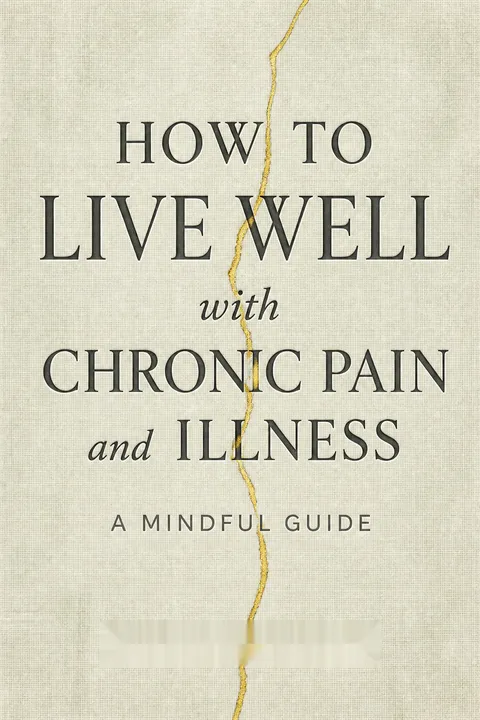
How to Live Well with Chronic Pain and Illness receives overwhelmingly positive reviews (4.16/5 stars), with readers praising Toni Bernhard's compassionate, practical approach to managing chronic conditions. Many appreciate her firsthand experience with M.E./CFS and her emphasis on mindfulness, self-compassion, and acceptance. Readers find particular value in chapters addressing isolation, guilt, caregiver relationships, and what others should (or shouldn't) say to chronically ill people. Some note the book's Buddhist principles and mindfulness techniques may not appeal to everyone, while a few felt it focused more on chronic illness than chronic pain specifically. Overall, reviewers describe it as comforting, validating, and an essential resource.
People Also Read






Download PDF
Download EPUB
.epub digital book format is ideal for reading ebooks on phones, tablets, and e-readers.








































