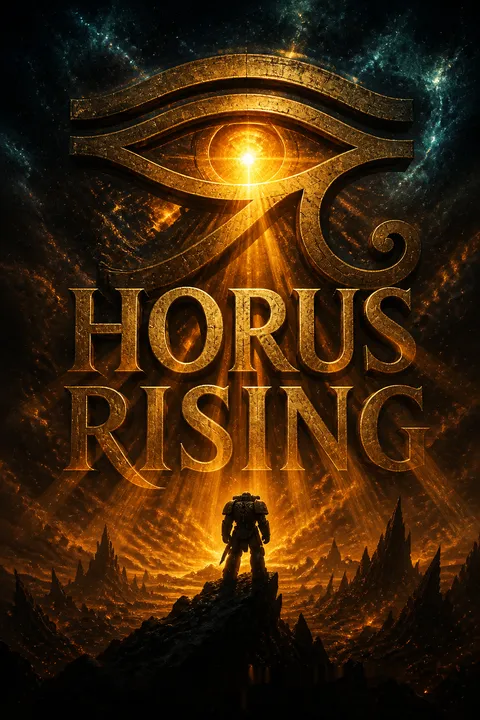

Plot Summary
Seeds of Betrayal Sown
The Great Crusade, led by the Emperor and his genetically engineered sons, the Primarchs, has nearly united humanity. Chief among these is Horus, the Emperor's favored son, now Warmaster, tasked with leading the crusade in his father's stead. Yet, beneath the triumphs and unity, seeds of doubt and division are sown. The Emperor's withdrawal to Terra and the rise of civilian authority create unease among the warriors. The Luna Wolves, Horus's Legion, stand at the forefront, but the galaxy's peace is fragile, and the ambitions and flaws of men and demigods alike threaten to unravel all that has been built.
The Emperor's Murdered Envoy
When the Luna Wolves encounter a human world ruled by a self-styled Emperor, Horus seeks peaceful compliance. His trusted envoy, Sejanus, is sent to negotiate but is murdered, sparking a brutal assault. The Luna Wolves, led by Captain Garviel Loken, storm the palace, facing advanced defenders and invisible assassins. The violence is a tragedy born of misunderstanding, and the true Emperor's vision of unity is stained by the blood of kin. The event haunts Loken, who sees the irony and sorrow in the tale, and the Legion's new warcry—"For the Warmaster!"—rings hollow in the aftermath.
Loken's Test of Conscience
Loken, steadfast and honorable, is chosen to join the Mournival, Horus's inner council. He is tested not just in battle but in conscience, wrestling with the morality of conquest and the cost of truth. Through conversations with iterator Sindermann and remembrancer Mersadie Oliton, Loken's humanity is revealed. He questions whether the Imperium's truth must always be enforced by violence and whether there is room for mercy and understanding. His doubts, far from being weakness, are what make him worthy to advise the Warmaster, serving as the voice of reason and dissent in a world of certainty and war.
The Mournival's New Voice
Loken's induction into the Mournival is marked by ritual and camaraderie, but also by unease. The Mournival—Abaddon, Torgaddon, Aximand, and now Loken—are the soul of the Legion, balancing each other's strengths and flaws. Their bond is sealed under the moon's light, a symbol of unity and mortality. Loken, not a "Son of Horus" by blood, brings a fresh perspective. The Mournival's role is to guide Horus, to question and support, to be the naysmiths who prevent hubris. Yet, beneath the surface, old traditions and secret lodges hint at deeper currents within the Legion.
Remembrancers and Remembrance
The arrival of the remembrancers—artists, poets, and chroniclers—marks a new era. Their task is to record the glories of the crusade, but they find themselves outsiders among the warriors. Through their eyes, the cost of war is made real: the grief, the doubts, the fleeting nature of victory. Ignace Karkasy, the poet, and Euphrati Keeler, the imagist, struggle to capture the truth, even as they are changed by what they witness. The remembrancers' presence is both a celebration and a challenge, forcing the Astartes to confront the meaning of their deeds and the legacy they will leave behind.
The Lodge and the Truth
Beneath the Legion's discipline lies the secret fraternity of the warrior lodge, a brotherhood that transcends rank and fosters loyalty—but also secrecy. Loken, wary of such hidden bonds, is drawn into the lodge by Aximand and Torgaddon, discovering that many of his brothers, including his closest friend Vipus, are members. The lodge is presented as a harmless tradition, a place for warriors to speak freely, but Loken senses the danger of secrets kept too well. The tension between loyalty to the Legion and loyalty to truth becomes a central conflict, foreshadowing the fractures to come.
The Whisperheads' Dark Secret
Sent to crush insurgents in the Whisperheads mountains, Loken and his company face not just human resistance but something far stranger. The region is steeped in superstition, and the name "Samus" haunts the vox. The Astartes dismiss the tales as primitive fear, but the reality is more sinister. In the depths of the fortress, Sergeant Jubal succumbs to madness, slaughtering his brothers and becoming something monstrous. Loken is forced to kill him, an act that shatters the Legion's code and leaves Loken and Sindermann searching for answers—disease, warp, or something worse?
Samus: The Unthinkable Horror
Jubal's transformation is a horror beyond comprehension—a loyal Astartes possessed, his body twisted by a force from the warp. The event is covered up, explained away as disease, but Loken, Sindermann, and Keeler know the truth is darker. The incident exposes the Imperium's vulnerability to the warp's corruption and the limits of reason and science. The Warmaster comforts Loken, explaining that such horrors are the price of using the warp, but insists there are no gods or daemons, only dangerous phenomena. The truth is buried for the sake of morale, but the seeds of doubt and fear remain.
The Warmaster's Burden
Horus, burdened by the Emperor's trust and the expectations of the crusade, struggles to balance mercy and strength, diplomacy and war. The Mournival serves as his conscience, each member bringing a different perspective. The Warmaster's political acumen is revealed as he navigates the demands of allies, the ambitions of rivals, and the growing bureaucracy of the Imperium. The arrival of Erebus, the Word Bearer chaplain, adds another voice to the inner circle, one that is both wise and enigmatic. Horus's decisions shape the fate of the galaxy, but every choice carries a cost.
The War on Murder
Responding to a call for aid, the Luna Wolves and their allies descend on the world of Murder, facing the deadly megarachnid. The war is brutal and pure, a test of martial skill and unity. Loken, Torgaddon, and the Emperor's Children's Tarvitz forge bonds in battle, while rivalries and pride simmer beneath the surface. The arrival of Sanguinius and the Blood Angels brings hope and glory, but also highlights the differences between the Legions. The war is won, but at great cost, and the lessons of brotherhood and humility are hard learned.
Brotherhood and Rivalry
The Emperor's Children, led by the proud Eidolon, suffer heavy losses on Murder, their arrogance exposed. Torgaddon's blunt honesty and Tarvitz's humility bridge the gap between Legions, while Lucius's obsession with perfection leads to both brilliance and isolation. The Mournival's role as the Warmaster's war dogs is revealed, delivering rebuke and guidance to allies and rivals alike. The bonds of brotherhood are tested and reforged in the crucible of war, but pride and ambition remain dangerous temptations.
The Interex: Lost Cousins
The discovery of the interex, a human civilization descended from ancient Terra, offers a chance for alliance and understanding. The interex are advanced, peaceful, and wary, their society shaped by coexistence with the alien kinebrach and a deep fear of Chaos. Horus seeks to bridge the gap, but cultural differences and mutual suspicion make progress slow. Loken learns of the interex's knowledge of the warp's dangers, and the hope of unity flickers. Yet, beneath the surface, old wounds and new fears threaten to turn hope into tragedy.
The Hall of Devices
A visit to the interex's Hall of Devices reveals forbidden weapons and ancient fears. The anathame, a cursed blade, is stolen, and the blame falls on the Imperium. Tensions erupt as the interex accuse Horus's party of murder and treachery. Loken, caught in the chaos, fights to protect the Warmaster, but the bonds of trust are shattered. The dream of alliance dies in fire and blood, and the Imperium is forced to withdraw, the seeds of future conflict sown in misunderstanding and loss.
Chaos and Catastrophe
The events on Xenobia Principis expose the fragility of peace and the ever-present threat of Chaos. The interex's warnings about the warp and Kaos echo the lessons of the Whisperheads, but the Imperium is slow to learn. The Emperor's absence is keenly felt, as bureaucracy and ambition threaten to undermine all that has been achieved. Erebus, the Word Bearer, emerges as a subtle manipulator, his true motives hidden. The theft of the anathame is a harbinger of greater darkness to come.
The Sons of Horus
In the aftermath of tragedy, Horus renames his Legion the Sons of Horus, embracing his role as the Emperor's chosen. The change is celebrated, but also marks a turning point. The bonds of brotherhood are reaffirmed, but the cracks beneath the surface widen. The remembrancers, the iterators, and the warriors all sense that the galaxy is on the brink of something momentous. The Emperor's vision endures, but the path ahead is uncertain, and the shadow of betrayal looms.
The Anathame Stolen
In the darkness of the Vengeful Spirit, Erebus holds the stolen anathame, a blade of ancient evil and unknown power. Its theft, blamed on the Imperium, has set the interex against their lost cousins and unleashed forces beyond comprehension. Erebus's true allegiance and purpose remain hidden, but his actions will have consequences that echo across the stars. The anathame is a symbol of the corruption and temptation that threaten to consume even the greatest of heroes.
The Emperor Protects
Euphrati Keeler, scarred by the horrors she has witnessed, finds solace in faith, creating a secret shrine to the Emperor. Her journey mirrors the struggles of all those who seek meaning in a galaxy of war and uncertainty. Loken, burdened by secrets and doubts, clings to his duty and his humanity. The remembrancers, the iterators, and the warriors all search for truth, even as the lines between loyalty and betrayal blur. The Emperor's protection is both a comfort and a question, as the future grows ever darker.
Towards Davin's Shadow
The expedition sets course for Davin, summoned by Erebus to settle an old score. The journey is a brief detour, but the shadow of the past and the promise of the future hang heavy. The seeds of heresy have been sown, and the galaxy stands on the brink of the greatest betrayal in its history. The story of Horus Rising ends, but the Horus Heresy is only beginning.
Analysis
Horus Rising is a masterful exploration of the triumphs and tragedies at the dawn of the Horus Heresy, the greatest betrayal in the Warhammer 40,000 universe. Through the eyes of Garviel Loken and his brothers, the novel examines the cost of unity, the dangers of pride, and the fragility of truth in a world built on war. The interplay between loyalty and doubt, reason and faith, is at the heart of the story, as characters struggle to reconcile their duty with their conscience. The remembrancers and iterators serve as both witnesses and catalysts, forcing the warriors to confront the meaning of their actions and the legacy they will leave. The rise of secret lodges, the horrors of the warp, and the failures of diplomacy all foreshadow the coming catastrophe, while the bonds of brotherhood and the hope of understanding offer a fleeting glimpse of what might have been. Horus Rising is not just a tale of war and betrayal, but a meditation on the nature of power, the limits of reason, and the enduring need for meaning in a universe of darkness. Its lessons—about the dangers of unchecked ambition, the importance of questioning authority, and the cost of forgetting our humanity—resonate far beyond the battlefield, making it a timeless and essential work of science fiction.
People Also Read

Characters
Garviel Loken
Loken is the captain of the Luna Wolves' Tenth Company, a warrior of honor and integrity. Chosen for the Mournival, he becomes the voice of reason and doubt, questioning the morality of conquest and the cost of truth. His relationships—with Horus, the Mournival, Sindermann, and the remembrancers—reveal his deep humanity beneath the Astartes exterior. Loken's journey is one of growth and pain, as he confronts the horrors of the warp, the secrets of the lodge, and the burden of leadership. His loyalty is tested, but his conscience remains his guiding star, making him both a hero and a tragic figure.
Horus Lupercal
Horus is the Emperor's favored son, the first Primarch, and now Warmaster of the Imperium's armies. Charismatic, brilliant, and deeply human, he inspires loyalty and love in his followers. Yet, the weight of command and the absence of the Emperor leave him vulnerable to doubt and manipulation. Horus seeks to balance mercy and strength, diplomacy and war, but every decision carries a cost. His relationships—with the Mournival, Sanguinius, and the other Primarchs—are complex, shaped by love, rivalry, and ambition. Horus's rise is glorious, but the seeds of his fall are sown in pride, burden, and the machinations of those around him.
Ezekyle Abaddon
Abaddon is the Luna Wolves' first captain, a warrior of unmatched ferocity and ambition. Fiercely loyal to Horus, he serves as the Mournival's voice of action and strength, often clashing with Loken's caution and Aximand's analysis. Abaddon's pride and temper make him both a formidable leader and a potential source of division. His relationship with Horus is one of devotion, but also of expectation and pressure. Abaddon's journey is one of loyalty tested, as he navigates the shifting tides of brotherhood, ambition, and the growing darkness within the Legion.
Tarik Torgaddon
Torgaddon is the Luna Wolves' second company captain, known for his humor, warmth, and irreverence. He serves as the Mournival's emotional center, balancing the seriousness of his brothers with laughter and camaraderie. Torgaddon's friendship with Loken and his ability to defuse tension make him beloved by all. Yet, beneath the jokes lies a deep loyalty and a keen understanding of the burdens of leadership. Torgaddon's role is to remind his brothers of their humanity, even as the galaxy grows ever more grim.
Horus Aximand ("Little Horus")
Aximand, captain of the Fifth Company, is known as "Little Horus" for his resemblance to the Primarch. Quiet, thoughtful, and analytical, he serves as the Mournival's voice of reason and strategy. Aximand's insights are invaluable, but his reserve can be mistaken for coldness. His relationship with Loken evolves from rivalry to respect, and his loyalty to Horus is deep. Aximand's presence in the lodge and the Mournival reflects the complexities of brotherhood and the dangers of secrets kept too well.
Kyril Sindermann
Sindermann is the primary iterator of the 63rd Expedition, a scholar and philosopher tasked with spreading the Imperial Truth. He serves as mentor and confidant to Loken, guiding him through doubt and crisis. Sindermann's faith in reason and humanity is tested by the horrors he witnesses, but his wisdom and compassion endure. His relationship with the remembrancers and the Astartes bridges the gap between warrior and civilian, and his role as a naysmith is crucial to the moral health of the Legion.
Mersadie Oliton
Mersadie is a documentarist and remembrancer, chosen to record the deeds of the crusade. Her relationship with Loken is one of mutual respect and curiosity, as she seeks to capture not just facts but feelings. Mersadie's perspective offers a window into the human cost of war and the search for meaning in a galaxy of violence. Her empathy and courage make her a vital witness to history, even as she is changed by what she sees.
Ignace Karkasy
Karkasy is a remembrancer and poet, known for his wit, irreverence, and refusal to flatter. His observations cut through the propaganda, exposing the contradictions and costs of the crusade. Karkasy's friendship with Mersadie and Keeler, and his interactions with Loken, reveal the power of art and memory to challenge and comfort. His fate is a reminder of the dangers of truth in a world that prefers comforting lies.
Euphrati Keeler
Keeler is a remembrancer and imagist, scarred by the horrors she witnesses in the Whisperheads. Her journey from trauma to faith mirrors the struggles of all those who seek meaning in darkness. Keeler's secret shrine to the Emperor and her questions to Loken highlight the tension between reason and belief, loyalty and conscience. Her role as a witness and a believer foreshadows the rise of the Imperial cult and the power of faith in the face of despair.
Erebus
Erebus is the first chaplain of the Word Bearers, a master of diplomacy and intrigue. Outwardly wise and supportive, he is in truth a subtle manipulator, orchestrating events from the shadows. Erebus's theft of the anathame and his influence over Horus and the Mournival mark him as a key architect of the coming heresy. His motives are hidden, but his actions will have consequences that echo across the galaxy.
Plot Devices
The Mournival
The Mournival is an informal inner council of the Luna Wolves, composed of four captains representing different humors and perspectives. Its purpose is to advise the Warmaster, to question and support, to serve as the Legion's conscience. The Mournival's structure allows for dissent and debate, preventing the dangers of unchecked authority. Its rituals and bonds symbolize the strength and fragility of brotherhood, and its evolution reflects the changing nature of the Legion and the Imperium.
The Lodge
The warrior lodge is a clandestine brotherhood within the Legion, fostering bonds across rank and company. It offers a space for free speech and support, but also encourages secrecy and the potential for subversion. The lodge's existence highlights the tension between loyalty to the Legion and loyalty to the Emperor, and foreshadows the fractures that will lead to heresy. Its rituals and tokens are both symbols of unity and seeds of division.
Remembrancers and Iterators
The remembrancers and iterators serve as chroniclers, artists, and teachers, tasked with recording and spreading the Imperial Truth. Their presence forces the warriors to confront the meaning and cost of their actions, and their works shape the legacy of the crusade. The tension between truth and propaganda, memory and myth, is a central theme, as is the power of art and story to challenge, comfort, and inspire.
Foreshadowing and Irony
Throughout the narrative, foreshadowing and irony are used to build tension and tragedy. The opening line—"I was there, the day Horus slew the Emperor"—sets the stage for the coming heresy. The seeds of doubt, pride, and division are sown early, and the characters' struggles with loyalty, truth, and conscience hint at the catastrophe to come. The theft of the anathame, the rise of the lodge, and the failures of diplomacy all point towards the galaxy's impending fall.
The Warp and Chaos
The warp, source of psychic power and faster-than-light travel, is also a realm of horror and corruption. The events in the Whisperheads and the interex's warnings reveal the dangers of Chaos, a force that destroys from within and cannot be defeated by strength alone. The Imperium's reliance on the warp is both its greatest asset and its greatest vulnerability, and the refusal to acknowledge its dangers sets the stage for disaster.
Download PDF
Download EPUB
.epub digital book format is ideal for reading ebooks on phones, tablets, and e-readers.








































