
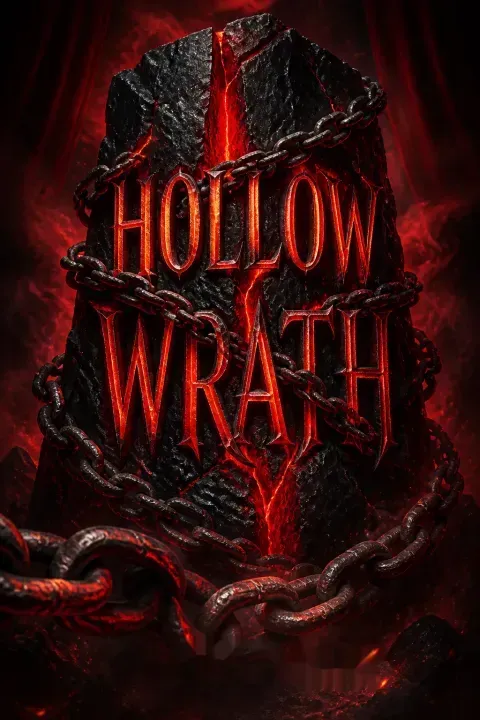


Plot Summary
Prologue
Two men haul a lifeless female body from a transit van through a downpour, carrying her to a rusted bridge barrier. One checks for a pulse and finds nothing. They argue about what their mother will say, then hoist the naked, battered form over the railing. Arabella1 plunges into the black river below, her long dark hair whipping upward as she hits the surface with bone-crushing force.
Underwater, blood unfurls from her wounds like eerie vines. The depths swallow her. No heartbeat. No struggle for air. Then a voice echoes in the void, soft but urgent, repeating the same command: wake up. Her eyes snap open, and a muted scream tears from her lips as bubbles burst from her mouth.
The prologue establishes death and resurrection as the novel's governing metaphor. Arabella's literal return from clinical death foreshadows her psychological rebirth throughout the narrative. The casual cruelty of the two men, later revealed as her foster brothers, normalizes the violence that has defined her world. The mysterious voice calling her back hints at supernatural forces, later connected to her mother's witchcraft. The river functions as both grave and baptismal font: a false death that enables her eventual transformation. By opening with an ending that isn't final, the prologue announces that conventional mortality does not apply in this story's universe.
Hellion's Midnight Rescue
Arabella1 has been chained in a cage inside Kyro's mansion for so long that her water has run out and hope has abandoned her. Footsteps approach, a lock is picked, and a man she does not recognize enters wearing skull-like face paint with one black and white spiral eye, the other covered by an eyepatch. He cuts through the cage lock and her shackles with bolt cutters, tosses her a bag of clothes, and tells her to shower.
When she demands answers, he identifies himself as Hellion,4 says Kyro is dead, and announces he is taking her to her sister Noir.3 The words strike Arabella1 like a physical blow: her sister is alive. Hellion4 offers no further explanation before walking out, leaving the door open behind him and her freedom within reach.
This rescue operates as a false dawn: Arabella exchanges one form of captivity for another, though she cannot yet recognize it. Hellion represents the morally ambiguous savior, his painted face signaling that her new world will be as strange and threatening as the old one. The revelation that Noir lives rekindles purpose but also introduces the central tension: freedom in this universe always carries hidden costs. The cage imagery persists throughout the novel as both literal architecture and psychological condition, suggesting that liberation is never simply a matter of unlocked doors.
Red Eyes in the Carnival
Hellion4's motorcycle cuts through foggy woods until a horror carnival materializes, its peeling sign reading 'Welcome to Oddity Carnival and Cirque.' The attractions are grotesque: severed limbs dangling as prizes, performers with needle-sharp teeth lurking in shadows, a woman dragging a rusted meat cleaver.
Arabella1 spots Noir3 across the grounds and they collapse into each other weeping. After their tearful reunion, Noir3 introduces Arabella1 to the Hollows: Soul5 with green spiral eyes and Wrath,2 whose red spiral gaze locks onto her with paralyzing intensity.
He towers over the others, his face painted with black stitches across his mouth, darkness bleeding from his eyes. Neither breaks the stare. Something dark crackles between them, an unspoken recognition that feels both ancient and irrevocable.
Oddity functions as a liminal space where conventional morality is suspended and monstrosity is celebrated rather than hidden. Wrath's instant, silent fixation on Arabella bypasses ordinary attraction and enters the territory of fated recognition. His muteness becomes not absence but intensified presence; the stitched mouth symbolizes a voice sealed by trauma, communicating through pure, unnerving visibility. The mutual stare that neither breaks establishes their relationship's fundamental dynamic: both are predators and prey to each other, locked in a recognition that preexists language.
Madame's Dark Reading
Noir3 pulls Arabella1 into a hidden chamber within the circus tent, where Madame7 sits among crystals, incense, and strange artifacts. The older woman in red and gold velvet studies Arabella1 with unnerving intensity.
When Arabella1 reaches for a glowing red pendant, Madame7 recoils, her expression flickering with something like fear. She declares Arabella1 carries extremely dark energy and flatly refuses to let her stay. Noir3 argues fiercely while Hellion4 intervenes, and after tense negotiation, Hellion4 emerges with keys to Trailer 666.
Arabella1 will stay on trial, assigned the new identity of Aurelia,1 dressed in black and gold with gold eye contacts. Madame7's gaze follows her with wariness bordering on dread, as though she sees something even Arabella1 has not yet discovered about herself.
Madame serves as the threshold guardian whose refusal reflects the story's deeper logic: Arabella genuinely does not belong in the ordinary world either. The dark energy Madame senses is both accumulated trauma and latent supernatural inheritance from her mother. The immediate attraction to the pendant, which belonged to Oddity's founder, hints at blood memory. Madame's mixture of fear and fascination positions her as an oracle who glimpses the shape of tragedy but cannot prevent it, her authority limited by forces older than her tenure at the carnival.
Writing on Her Skin
Unable to sleep after her first day at Oddity, Aurelia1 takes sleeping pills and passes out. Wrath2 picks the flimsy lock on her trailer and crouches beside her bed, watching her breathe, his red eyes tracing the curve of her bare back.
He discovers the empty pill bottle and realizes how defenseless she has made herself. Rather than killing her, he climbs onto the bed, rain dripping from his hair onto her skin, and uses a marker to write across her back in backward script. The message is a twisted nursery rhyme ending with 'my little corpse is never, ever alone.'
He presses his forehead to hers, inhales deeply, then forces himself to leave. The next morning, Noir3 and Blush6 discover the writing and are horrified. Aurelia,1 however, feels something unexpected: not just violation, but a dark thrill.
This scene crystallizes Wrath's particular pathology: he is compelled to mark what he cannot speak. Writing becomes his voice, and Aurelia's body becomes his page. The nursery rhyme format infantilizes her while claiming her as his 'little corpse,' a pet name that fuses affection with death. His restraint in not killing her, despite having every opportunity, signals that she has already begun to alter his lifelong patterns. The sleeping pills represent her attempt to escape him psychologically, which only makes her more vulnerable physically, a paradox that defines their entire dynamic.
Necrophilia Confession
When Noir3 and Blush6 discover Wrath2's writing on Aurelia1's back, Noir3 wants to confront him, but Blush6 drops a revelation that silences them both: Wrath2 is a necrophiliac. He only achieves sexual gratification with partners who are already dead.
Blush6 explains matter-of-factly that if Wrath2 had wanted Aurelia1 dead, she would already be a corpse in chains. The fact that she still breathes means something unprecedented has occurred. Rather than recoiling in horror, Aurelia1 processes this information with unsettling calm, feeling a strange pull toward the knowledge.
She realizes his every interaction with her, including his restraint during the break-in, has been a negotiation with his own deepest compulsion. His violence becomes legible as a form of devotion, his self-control as a language of care she has never received from anyone.
The necrophilia reveal functions simultaneously as horror and perverse romance. In a genre where male leads are often 'dangerous' in abstract ways, Wrath's danger is concrete and pathological. His attraction to Aurelia while she still lives violates his own entrenched patterns, making her exceptional in the most disturbing possible way. Blush's matter-of-fact delivery normalizes the carnival's moral framework: here, not killing someone is a legitimate love language. Aurelia's lack of revulsion hints at her own broken relationship with death, having already died once herself, and foreshadows her eventual embrace of Wrath's darkness.
Mirror Words of Obsession
Days later, Wrath2 corners Aurelia1 in the circus dressing room, his shirtless, tattooed body blocking the exit. He seizes her throat and yanks her against him. When she taunts him about his necrophilia and grinds against his arousal, daring him to take her alive, he bends her over a vanity. Snatching a marker, he scrawls across the mirror over her reflection: he would dig up her decaying bones just to keep violating her.
When she spits at his reflection, he licks it off the glass. Then his writing shifts, becoming almost beautiful: he did not fall for her, he collapsed. She is the first he has spoken to without his voice, the first he has touched and left alive. He marks her chest with a poem calling her his forever.
The mirror serves as a liminal surface where Wrath's interior world becomes visible and his words become deeds. His script oscillates between death threats and romantic declarations without distinguishing between them, suggesting that in his psyche, possession and destruction are identical. Aurelia's strategy of meeting his aggression with sexual provocation reveals her adaptive response to trauma: control through performance. His act of licking her spit from the mirror demonstrates a degradation indistinguishable from intimacy. Her status as 'the first' establishes her as the sole recipient of his inner life, a role that is both an honor and a sentence.
The Tunnel of Blood
After discovering Wrath2's disturbing drawings of women who resemble her in his bedroom, Aurelia1 flees into the carnival at night. She runs through the Tunnel of Blood, a water ride filled with real severed limbs, spinning saw blades, and screaming faces embedded in the walls.
Wrath2 pursues in a second boat. When he draws close, she shoots him in the shoulder and he falls into the crimson river. She calls his name in panic, but he resurfaces and captures her.
He hangs her by chains from a tree, cuts off her clothes, and subjects her to escalating acts of sexual brutality using his knife handle, barbed wire, and the gun she shot him with. Yet when she whispers for him to kiss her, he falters, then presses his lips to hers for the first time in his life.
The Tunnel of Blood literalizes their relationship's central paradox: love and violence flow through the same current. Aurelia shoots him in genuine self-defense yet immediately regrets it, revealing her conflicted attachment. Wrath's ability to continue after being shot demonstrates profound dissociation from physical pain, a trauma response. The kiss represents the threshold he has never crossed with previous victims, intimacy being more dangerous to him than murder. That he gives her this first signals her unique status: not prey but something approaching an equal partner in his fractured psyche, capable of receiving what he has never offered.
Flashback to Betrayal
Years earlier, a young Arabella1 tears down a dark street barefoot, fleeing her foster family's mansion. She reaches a waiting van where Gray,10 her boyfriend, catches her in his arms and reassures her that everything is arranged: passport, cash, a flight to Canada.
She climbs into the back, believing she is finally free. When the doors open again, it is not an airport but an isolated bridge. Her foster brother Zye9 stands in the rain, pulling his belt from its loops. Gray10 watches without expression as Zye,9 Elias,11 and Lake12 drag her back inside the van.
Over hours, all three brothers violently rape her while Gray10 stands guard. By dawn, she stops breathing. They dump her body in the river, but something calls her back from the darkness: a woman's voice, ancient and insistent.
This flashback provides the psychological foundation for Aurelia's entire character. Gray's betrayal is qualitatively worse than her brothers' violence because it weaponized hope itself. The escape fantasy he constructed made her complicit in her own destruction, a dynamic that explains her later resistance to Wrath's possession: she cannot trust promises of safety. The gang rape by her foster brothers, witnessed by the man who claimed to love her, creates a template where intimacy and violation are fused, which simultaneously repels and attracts her to Wrath. The voice that resurrects her hints at her mother's supernatural intervention.
The Betrayer's Blood
Disguised in masks and wigs, Aurelia1 and Blush6 enter an exclusive men's club where Gray10 visits every Wednesday. They intercept a worker headed to his private room, tie her in a closet, and take her place. Gray10 is drunk and unsuspecting. Aurelia1 dances for him, straddles his lap, then removes her wig and mask so he recognizes who she really is. His terror is immediate.
Blush6 restrains him while Aurelia1 drives two sharp hair pins into his chest, then into his testicles as he screams. Finally, she plunges both spikes into his eyeballs, delivering the death she has rehearsed in her mind for two years. She collapses beside his body afterward, sobbing not from guilt but from release, years of stored agony finally exiting her body.
This revenge scene functions as a dark mirror of Gray's original betrayal. Where he once watched her be violated in a confined space, she now makes him the object of controlled violence in a private room. The hair pins are domestic weapons, symbolically appropriate for undoing the intimate betrayal he committed. Her tears afterward are not grief but the body's release of long-stored trauma, a physical catharsis. Blush's presence as witness and accomplice transforms what could have been a solitary act into a communal one, binding Aurelia to the carnival's ethos of shared darkness and mutual protection.
Brothers in the Death Rooms
Wrath,2 with Soul5's help, has kidnapped Lake12 and Elias11 and strapped them to chairs in the Death Rooms control center. When Aurelia1 arrives, she is initially furious that Wrath2 took her revenge from her, but he kneels before her and explains he only wanted to hold her past still while she sliced its throat.
She is moved by his submission. She walks into the room, takes a spoon, and scoops out all four of her foster brothers' eyes while they scream. Then she and Wrath2 retreat behind tinted glass to watch on monitors as the blinded brothers stumble through the trap-filled maze.
Aurelia1 controls the buttons: nails shoot from walls, a pressure plate drops one into a fire pit, and the last is diced by razor wires in a spiderweb formation. She laughs as they die.
The Death Rooms sequence completes Aurelia's revenge arc with theatrical cruelty. Wrath's gesture of kneeling, an act of submission from someone pathologically incapable of yielding, demonstrates how profoundly she has altered his behavioral repertoire. The spoon as a blinding implement is deliberately crude and brutal, denying her brothers the dignity of a clean death. The surveillance room scenario, where she watches her victims die on screens while controlling the environment, positions her as both participant and audience, echoing the dissociation she experienced during her own rape while also granting her the power she was denied.
Childhood Horror Unmasked
Seeking answers about his recurring nightmares, Wrath2 visits Madame,7 who performs a spell called the Night Awakening. That night, he dreams with terrible clarity: he is a small boy in Oddity's circus tent. His godfather Valen8 drags a woman with long black hair and striking blue eyes onto a desk, exposes her, and forces the child Wrath2 between her legs.
When the boy resists, Valen8 strikes him and commands him to choke her while violating her. The boy cries but obeys, and the woman dies beneath his small hands. Afterward, Valen8 leads him to a nursery where an infant girl cries. Valen8 draws a knife, but the boy begs him to spare the baby. The embroidery on the blanket reads Arabella.1
This revelation reshapes the entire narrative, transforming what seemed like dark fate into a specific, shared trauma orchestrated by a single architect. Wrath and Aurelia are bound not by destiny but by the same act of violence: Valen used a child to destroy a mother and then disposed of the daughter. The nightmare explains Wrath's necrophilia as a conditioned response imprinted during his most formative years. His recurring drawings of a woman who resembled Aurelia are now comprehensible as repressed memory attempting to surface. The spell introduces genuine supernatural elements, suggesting the mother's witchcraft had real power that persists beyond her death.
Valen's Gambit Exposed
While Aurelia1 trains late at night in the circus, Madame7 begins to tell her something about her mother. Before she can finish, Valen8 ambushes them, chloroforming Aurelia1 and shooting Madame.7 Aurelia1 wakes in a boiler room cage.
Valen8 crouches before her and reveals everything: her mother Ophelia was a witch who founded Oddity and performed human sacrifices. She killed Wrath2's parents during a purge night, so Valen8 took revenge by forcing young Wrath2 to rape and kill her, sparing baby Arabella1 only because Wrath2 begged.
He then gave the infant to Iris, a woman he knew would abuse her. He even spotted adult Arabella1 at Kyro's mansion, arranging to buy her. Now he hands her over to Zye,9 the last surviving foster brother, to finish what he started.
Valen emerges as the true villain of the story, the architect of both Wrath's and Aurelia's suffering. His revelation retroactively explains the strange coincidences of their meeting as products of his decades-long machinations. The witch revelation recasts Aurelia's survival and resurrection as potentially supernatural rather than merely improbable. Valen's motivation, revenge for his best friend's death, demonstrates how cycles of violence perpetuate across generations until someone chooses to break them. His confession also strips away the last mysteries, setting the stage for the final confrontation by making explicit what had been only hinted.
Nailed to the Wall
Zye,9 the brother who obsessed over Aurelia1 for years, nails both her hands to the wall and burns her with a heated poker while mocking her for sending his brothers' eyeballs. When his phone rings, she sees her only chance. She tears her palms through the nails, the flesh giving way with sickening pops, and drops silently to the floor.
While Zye9's back is turned, she charges, shoving him into the fireplace. His clothes and skin ignite. He staggers out, face melting, and lunges at her, but Wrath2 crashes through the door and shoots him dead. Wrath2 wraps her in his leather jacket, presses a kiss to her head, and carries her to his motorcycle. She collapses against him sobbing as he whispers that he is there now.
This climactic confrontation brings Aurelia's revenge arc full circle. Where she was once passive and victimized, she now fights back with brutal effectiveness, using her ballet-trained body to shove her abuser into flame. The nails through her palms evoke crucifixion imagery, positioning her as a martyr who descends into hell and returns transformed. Wrath's arrival as cavalry is deliberately subordinated to her own agency: she had already incapacitated Zye before he fired the killing shot. Their reunion on the motorcycle symbolizes their relationship's essential quality: forward motion, instability, and the necessity of holding onto each other through chaos.
The Shower Reconciliation
For a week after learning Wrath2 killed her mother, Aurelia1 isolates herself, refusing to see him. Noir3 visits and reminds her that Wrath2 was a victim too, a child without control, and that her own darkness found its equal in his.
Aurelia1 finally walks to the Hollows trailer and waits naked in Wrath2's shower. When he finds her, he presses her against the cold tile. She apologizes for blaming him, but he stops her, saying she should never apologize to him.
He was born a monster regardless of how it started, but her darkness slipped through the cracks of her own brokenness and found a home. They have sex against the shower wall, violent and desperate, as she accepts that they are sewn together with barbed wire: neither can leave without bleeding.
The reconciliation scene resolves the central conflict of blame and forgiveness. Aurelia's choice to return to Wrath despite knowing what he did to her mother represents an existential decision: she chooses the present relationship over the historical wound. Her nakedness in the shower, a space of purification, symbolizes her willingness to be washed clean of the past without forgetting it. Wrath's admission that he was 'born a monster' is simultaneously self-protective deflection and genuine self-assessment. The barbed wire metaphor captures their bond's essential nature: painful, damaging, and impossible to sever without mutual destruction.
Epilogue
At a campfire gathering in the trailer park, fireworks burst over Oddity as Aurelia1 sits on Wrath2's motorcycle, his arms wrapped around her from behind. He slides a black ring onto her finger, the band streaked with crystallized red fire called flamestone. He murmurs against her neck that no fire will ever harm her except by the heat of his own hands or the blaze burning within her soul.
She surveys the odd family around the fire: Noir3 curled against Hell,4 Soul5 and Blush6 watching the sky. She reflects that when she first arrived at this horror carnival, she never imagined it could become sanctuary, or that the silent monster who claimed her2 could become her obsession. She has found peace in the chaos. She is finally home.
The epilogue closes the circle from the prologue's false death to a genuine rebirth. The campfire gathering presents the carnival's community as a chosen family of broken individuals who have found belonging in shared darkness, a counterpoint to the biological families that failed them both. The flamestone ring symbolizes both Wrath's possessiveness and his acknowledgment of her autonomy: the fire belongs to her soul as much as his hands. The fireworks echoing the earlier burning of the circus tent transform destruction into celebration. Aurelia's final reflection positions her arc not as healing in the conventional sense but as integration: she has not become whole, but has learned to live fully within her fragmentation.
Analysis
Hollow Wrath2 operates at the extreme edge of dark romance, where the genre's familiar 'dangerous man' trope is pushed to its logical terminus: a protagonist whose sexuality is literally necrophilic, conditioned into him through childhood sexual abuse. The novel asks a genuinely uncomfortable question: can someone whose deepest desires are pathologically intertwined with death be worthy of love, and what does it mean to love such a person? The answer it provides is not redemption but acceptance. Wrath2 does not become less dangerous; Aurelia1 becomes more dangerous herself, meeting his darkness with her own until the asymmetry between them collapses. The novel's central insight is that trauma is not healed by gentleness but by finding someone whose damage fits the shape of your own. Both protagonists are survivors of sexual violence who have internalized their abuse in complementary ways: Wrath2 externalized it as aggression, Aurelia1 internalized it as numbness, and together they create a closed circuit where pain and pleasure lose their distinction. The carnival setting is not incidental but essential, creating a space outside normal morality where their relationship can exist without the pretense of being healthy. Oddity is a society of the broken, where traditional ethical frameworks are replaced by codes of loyalty, consent through negotiation rather than conventional norms, and the understanding that some people are too damaged for the ordinary world. The revelation that Valen8 orchestrated both their traumas transforms what might have been mere dark coincidence into a conspiracy of intergenerational violence, making their union not just personally healing but cosmically just: the children of the woman one killed and the other's parents killed find each other and break the cycle by refusing to perpetuate it. The novel's extreme sexual content and graphic violence serve a thematic purpose beyond titillation or shock: they insist that for some people, intimacy can only be accessed through the doorway of controlled harm, and that this is not a failure of love but its specific, necessary form.
Review Summary
Hollow Wrath by Jodie King receives a polarizing 4.44/5 rating. Most reviewers praise the extremely dark, taboo romance featuring selective mute MMC Wrath and fierce FMC Aurelia/Arabella in a circus horror setting. Fans celebrate the "pitch black" intensity, poetic writing, obsessive dynamic, and extreme explicit content involving necrophilia themes, fisting, chains, and hooks. Critics find the graphic violence anatomically disturbing and nauseating, with some DNFing due to the brutal spice scenes. Readers emphasize checking extensive trigger warnings, noting it's darker than book one and not standard dark romance but extreme horror erotica.
People Also Read
Characters
Arabella / Aurelia
Resurrected survivor seeking revengeA young woman who literally died and returned, Arabella was fostered by the abusive Iris and tormented by three foster brothers before her boyfriend Gray10 betrayed her into a gang rape that killed her. She woke in a river and spent two years captive in Kyro's mansion before Hell4 freed her. At Oddity, she is renamed Aurelia and discovers her capacity for both violence and dark desire. Beneath her defiance lies a profound need to belong somewhere, to someone. She is drawn to Wrath2 precisely because his darkness mirrors her own, and their relationship becomes the crucible in which she reclaims agency over her body and her rage. Her arc moves from victimhood to active vengeance to a hard-won acceptance of her own twisted nature.
Hollow Wrath
Mute necrophiliac performer and killerA towering, shirtless performer at Oddity whose face is painted with black stitches across his mouth and whose red spiral eyes burn with barely contained madness. He is selectively mute, speaking only to his brothers Hell4 and Soul5, and communicates through writing, signing, and violence. As a child, his godfather Valen8 forced him to rape and kill a woman, conditioning his necrophilia as a trauma response. He has never kept a sexual partner alive until Aurelia1. His obsession with her is immediate and absolute, manifesting as stalking, possessive marking, and brutal sexual encounters where he constantly fights his impulse to kill her. His drawings and writings reveal an inner world of poetic darkness he can express to no one else.
Noir / Harley
Aurelia's protective older sisterAurelia1's half-sister who was also held captive by Kyro and subjected to repeated rape before Hell4 rescued her. She is now a dancer at Oddity and Hell4's partner in a deeply possessive, BDSM-inflected relationship. She fought fiercely for Aurelia1 to stay at the carnival, feeling guilt for having left her behind during their escape. She serves as both emotional anchor and moral compass for Aurelia1, the one person who understands her trauma without needing it explained.
Hellion / Hell
Hollows leader and Noir's partnerThe de facto leader of the Hollows, recognizable by his single black and white spiral eye and eyepatch. He rescued Noir3 from Kyro and later freed Aurelia1 as a gesture of love for her sister. Though feared as a psychopath by outsiders, he functions as the stabilizing force for his brothers Wrath2 and Soul5, often negotiating between their violent impulses and the Shadows' demands. His relationship with Noir3 mirrors Wrath2 and Aurelia1's: possessive, dark, but genuinely devoted.
Hollow Soul
Wrath's brother and fellow performerThe third Hollow brother, distinguished by his neon green spiral eyes, split tongue with piercings, and a pet lizard named Toxin. He is more openly hedonistic than Wrath2, given to taunting and provocation. He communicates with Wrath2 through their own sign language and assists in the kidnapping of Lake12 and Elias11. When the Shadows threaten to kill Wrath2 for burning Oddity, Soul offers his own 'mercy' as sacrifice, revealing the depth of his loyalty.
Blush
Lesbian performer and Aurelia's allyA curvy performer with black and pink hair and glowing pink eyes who befriends Aurelia1 immediately. She is the one who reveals Wrath2's necrophilia and trains Aurelia1 in fire performance. Beneath her bubbly demeanor is a fierce loyalty and a taste for violence that makes her an ideal companion for Aurelia1's revenge mission against Gray10. She participates in the foursome scene but maintains her primary identity as a lesbian, treating the encounter as a dark adventure rather than a shift in orientation.
Madame
Oddity's matriarch and psychicThe older woman who runs Oddity Carnival and Cirque, dressed always in red and gold. She practices fortune telling and psychic readings but draws a firm line against witchcraft. From the moment she meets Aurelia1, she senses a dark energy she cannot fully read, and her initial rejection masks a deeper recognition of something fated. She performs the Night Awakening spell on Wrath2, triggering his recovered memory, at great risk to herself. Her shooting by Valen8 catalyzes the final act of the story.
Valen
Wrath's godfather and hidden villainAn aging, wealthy hoarder and prolific Shadow killer who raised Wrath2 after his parents' deaths. He presents a genial facade that masks profound sadism, particularly toward women. He was the one who forced child Wrath2 to rape and kill Aurelia1's mother Ophelia, then gave infant Arabella to an abusive foster family as punishment. His loyalty to the Shadows makes him untouchable until his attack on Madame7 and Aurelia1. He represents the institutionalized evil that created both protagonists and the cycle of vengeance they must break.
Zye
Oldest and most sadistic foster brotherThe eldest of Aurelia1's three foster brothers, who developed an obsessive, controlling fixation on her that included forcing her to watch him rape other women as a form of psychological torture. He orchestrated her gang rape and believed he had killed her. He is the final target on her revenge list, and his death in the boiler room, burned and then shot by Wrath2, closes the circle of her trauma.
Gray
The boyfriend who betrayed AureliaA man who pretended to love Aurelia1 and promised to help her escape her foster family, only to deliver her directly to Zye9 and watch as she was gang-raped to death. His betrayal is the foundational wound of her adult life, teaching her that trust is a prelude to destruction. Aurelia1 kills him in a gentleman's club by driving hair pins into his eyes, the first and most personally satisfying of her revenge murders.
Elias
Second foster brotherOne of the three brothers who participated in Aurelia1's gang rape. He and Lake12 are kidnapped by Wrath2 and Soul5 and delivered to the Death Rooms, where Aurelia1 scoops out his eyes with a spoon before he is killed by the maze's traps.
Lake
Third foster brotherThe third foster brother who participated in Aurelia1's rape. He dies alongside Elias11 in the Death Rooms, blinded and then killed by the various traps, his death witnessed by Aurelia1 and Wrath2 on the control room monitors.
Plot Devices
The Dismembered Den
Wrath's underground torture workshopA rotting cabin in the woods near Oddity that serves as Wrath2's workspace. Below ground, it contains a surgical room where he keeps victims paralyzed but alive for extended periods, performing acts of mutilation and preservation. The Den is where he stores mannequins made from real bodies and where he conducts his grisly work for the Shadows. It also houses the entrance to the more elaborate underground facilities including the Death Rooms. The Den represents Wrath2's professional identity and the compartmentalization of his violence, separate from his growing feelings for Aurelia1.
The Shock Collar
Aurelia's tool to control Wrath during sexDuring one of their encounters, Aurelia1 snaps a shock collar around Wrath2's throat without his knowledge, holding the remote as leverage. She uses it to stop him if he goes too far during vaginal sex, knowing he fears his own impulse to kill her during the act. The collar represents the negotiated power exchange in their relationship: Aurelia1 is willing to risk death to be with him fully, but she refuses to be a passive victim. It is a physical manifestation of the trust and mutual risk that defines their bond, allowing them to engage in the most dangerous sexual act while giving her a means of survival.
The Night Awakening Spell
Magical ritual to recover Wrath's lost memoryMadame7 performs a ritual using Wrath2's hair, blood, and a chant to break through the barrier in his mind that has obscured his childhood trauma. The spell does not create new knowledge but strips away the distortion from his recurring nightmares, allowing him to remember with clarity the night Valen8 forced him to kill Aurelia1's mother. The spell introduces genuine supernatural elements into the story, validating the hints of witchcraft and dark magic that have surrounded Oddity. It functions as the key that unlocks the central mystery of the plot and explains the fated quality of Wrath2 and Aurelia1's connection.
The Death Rooms
Oddity's trap-filled execution mazeA network of corridors and chambers beneath the circus equipped with lethal traps triggered by pressure plates and remote controls. The rooms are used during Dark Night as one of the amusements where condemned individuals are released and hunted through various deadly obstacles: nail shooters, fire pits, razor wire webs, and crushing mechanisms. Wrath2 and Aurelia1 use the Death Rooms to execute Lake12 and Elias11, watching from a control center behind tinted glass as the blinded brothers stumble through the maze. The rooms literalize the carnival's function as a site of ritualized vengeance and sanctioned murder.
The Barbed Wire Necklace
Wrath's handmade gift marking Aurelia as hisWrath2 crafts a necklace from actual barbed wire, twisting it with his bare hands until his fingers are shredded and bleeding, forming the word 'LittleCorpse' in cruel, connected letters. He carves 'Be Mine 4 Ever' into his own palm. When he presents it to Aurelia1, she is moved to tears, recognizing it as the most meaningful gift anyone has ever given her: something made of pain, specifically for her, that no one else could receive. The necklace becomes a physical symbol of their relationship, beautiful and damaging, worn willingly against her throat like a collar she has chosen.
About the Author
Other books by Jodie King


Download PDF
Download EPUB
.epub digital book format is ideal for reading ebooks on phones, tablets, and e-readers.








































