
Plot Summary
Arrival in the Vertical Eden
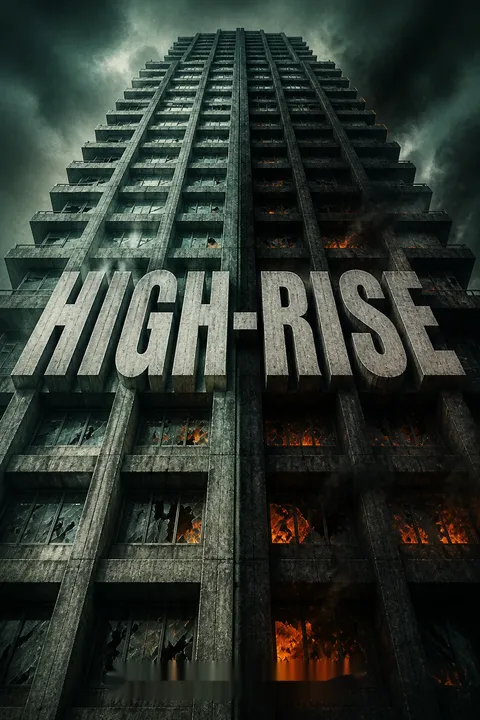
Dr. Robert Laing moves into a luxurious high-rise, a marvel of modern architecture, seeking anonymity and peace after his divorce. The building is a self-contained world, offering every convenience: pools, shops, schools, and a diverse but homogenous population of professionals. At first, the atmosphere is one of polite civility, with residents mingling freely and enjoying the amenities. Laing, along with his sister Alice and neighbor Charlotte, finds comfort in the building's efficiency and the promise of a new beginning. The high-rise stands as a symbol of progress, a vertical city that seems to offer escape from the chaos of the outside world. Yet, beneath the surface, subtle tensions and rivalries begin to simmer, hinting at the fragility of this engineered paradise.
Cracks in the Facade
As the building fills to capacity, small disputes over noise, elevator etiquette, and shared facilities begin to escalate. Social divisions emerge, subtly mapped by floor level: the wealthy and powerful occupy the upper floors, the middle class the center, and the working professionals the lower levels. Parties become exclusive, gossip intensifies, and petty acts of sabotage—like bottles thrown from balconies—signal a growing disregard for neighbors. Laing observes these changes with unease, noting how quickly the veneer of civility can erode. The building's design, meant to foster community, instead amplifies isolation and competition. The residents' focus shifts inward, their identities increasingly tied to their place within the high-rise's hierarchy, setting the stage for deeper conflict.
The Dog in the Pool
A power outage plunges several floors into darkness, resulting in chaos and minor injuries. In the aftermath, the drowned body of a resident's dog is discovered in the swimming pool. The incident, possibly deliberate, becomes a catalyst for open hostility between floors. The dog's death is more than an accident—it's a symbolic act, marking the end of innocence and the beginning of retribution. The building's residents, already divided by class and convenience, now find themselves polarized by alliances and grievances. The pools, once communal spaces, become battlegrounds. Laing senses that the high-rise is developing a life of its own, feeding on the anxieties and aggressions of its inhabitants, and that the descent into chaos has truly begun.
Social Fault Lines Deepen
The aftermath of the dog's death sees the building split into factions. The upper floors, feeling besieged, restrict access to amenities; the lower floors retaliate with vandalism and pranks. Elevators become contested territory, and the once-neutral middle floors act as buffers, but even these alliances are fragile. Wilder, a documentary filmmaker from the lower floors, becomes obsessed with exposing the building's dysfunction, while Royal, the architect living in the penthouse, grows increasingly isolated and defensive. Laing, caught in the middle, tries to maintain neutrality but is drawn into the web of intrigue and resentment. The high-rise, designed to eliminate social barriers, instead becomes a microcosm of class warfare, with each group defending its turf against perceived threats from above or below.
The First Death
Tensions reach a breaking point when a resident from the top floor plunges to his death, landing on a car below. Whether suicide or murder, the event is met with a chilling indifference by the community. No one calls the police; the incident is absorbed into the building's new reality. The death serves as a grim milestone, signaling that the social contract has been broken. Residents begin to barricade themselves, and the building's amenities fall into disrepair. Laing reflects on the transformation, recognizing that the high-rise has become a closed system, cut off from the outside world and governed by its own emergent rules. The sense of safety and order that once defined the building is replaced by suspicion and fear.
Descent into Tribes
As services fail and violence escalates, the residents organize into clans based on floor proximity and shared grievances. Barricades are erected, and punitive raids become common. Wilder attempts to rally the lower floors, envisioning himself as a revolutionary leader, while Royal and his allies on the upper floors plot to maintain their dominance. The middle floors, once mediators, are drawn into the conflict. Social norms disintegrate, replaced by primitive rituals and territorial aggression. The building's architecture, once a symbol of progress, now resembles a fortress under siege. Laing, increasingly detached from his former life, adapts to the new order, finding a strange satisfaction in the freedom to act without consequence. The high-rise has become a laboratory for the darkest aspects of human nature.
Wilder's Ascent Begins
Driven by a mix of ambition, paranoia, and existential dread, Wilder embarks on a physical and symbolic ascent of the building. He seeks to confront Royal, whom he sees as the architect of their collective downfall, and to claim a place among the elite. Along the way, Wilder encounters resistance, violence, and moments of unexpected camaraderie. His journey is both a literal climb and a psychological odyssey, as he sheds the trappings of his former identity and embraces the building's new logic. Wilder's obsession with documenting the chaos gives way to a more primal desire for dominance and recognition. His ascent mirrors the building's descent, each step upward marked by greater brutality and alienation.
Royal's Dilemma
Anthony Royal, once the master of the high-rise, finds himself trapped by the very structure he designed. As the building descends into anarchy, Royal oscillates between guilt, fascination, and a desperate need to assert control. His attempts to mediate or escape are thwarted by the building's self-contained nature and the hostility of his neighbors. Royal's marriage deteriorates, and his symbolic status as "lord of the manor" becomes a liability. He is both a victim and a perpetrator, complicit in the building's failures yet powerless to halt its decline. Royal's isolation deepens as he witnesses the emergence of new social orders, tribal alliances, and the rise of violent leaders like Wilder. The high-rise becomes his prison and his legacy.
The Siege Mentality
With the building's infrastructure in ruins, daily life becomes a struggle for survival. Residents hoard food, water, and weapons, and alliances shift with each new crisis. The outside world fades from memory, replaced by the immediate demands of clan loyalty and self-preservation. Nighttime brings raids, assaults, and acts of revenge. The building's corridors echo with the sounds of conflict, and the once-bright communal spaces are now littered with debris and graffiti. Laing fortifies his apartment, forming uneasy partnerships with neighbors like Steele, the orthodontist, and Eleanor, a drifting alcoholic. The high-rise's promise of autonomy and luxury has devolved into a Hobbesian nightmare, where life is nasty, brutish, and short.
Collapse of Order
The last vestiges of order disappear as the clans fragment into smaller, more violent groups. Cannibalism, sexual predation, and ritualized violence become commonplace. The building's amenities are destroyed or repurposed for survival. The residents, once defined by their professions and social status, now identify only with their immediate tribe or themselves. Wilder, nearing the top of the building, is transformed into a painted, near-mythic figure, while Royal retreats into madness and isolation. Laing, too, adapts to the new reality, finding a perverse sense of belonging in the chaos. The high-rise, once a beacon of modernity, is now a vertical jungle, ruled by the law of the strongest and most cunning.
Night of Violence
The building is plunged into darkness, and the residents give themselves over to a night of unrestrained violence and debauchery. Barricades are stormed, apartments ransacked, and old scores settled. The boundaries between clans blur as survival instincts take precedence over loyalty. Laing participates in the carnage, both as a victim and a perpetrator, and emerges changed. The night marks a point of no return, as the residents abandon any pretense of civilization. In the aftermath, the building is eerily quiet, its inhabitants exhausted and diminished. The high-rise has become a closed ecosystem, feeding on itself and its occupants.
The Clan Wars
As resources dwindle and alliances shift, the remaining clans wage war for control of the building's last strongholds. Wilder, now a near-feral leader, pushes toward the penthouse, determined to confront Royal and claim the summit. Royal, meanwhile, clings to the remnants of his authority, hosting ritualized dinners and plotting with his dwindling circle of followers. The women of the building, once marginalized, begin to assert their own power, forming new alliances and taking control of key resources. The high-rise is now a patchwork of fiefdoms, each ruled by its own logic and rituals. The final confrontations are brutal and decisive, leaving only a handful of survivors to shape the building's future.
Wilder's Final Climb
Wilder, battered and transformed by his journey, makes his final push to the top of the building. He is both hunter and hunted, pursued by memories, enemies, and his own demons. The upper floors are eerily empty, their former occupants dead or fled. Wilder's confrontation with Royal is anticlimactic—a brief, violent encounter that ends with Royal's death. The true rulers of the high-rise are now the women and children, who have formed their own society on the roof. Wilder, stripped of purpose and identity, is absorbed into this new order, his quest for dominance rendered meaningless by the building's inexorable logic.
The Blood Garden
On the roof, the women and children have created a strange, ritualized society, centered around the sculpture garden and sustained by the remnants of the building's resources. The men, including Wilder, are reduced to ceremonial roles or prey. The violence of the past is both remembered and reenacted in new forms. Royal, mortally wounded, witnesses the transformation of his creation into something unrecognizable. The high-rise, once a symbol of masculine ambition and technological prowess, is now ruled by those who were once marginalized. The cycle of violence and renewal continues, with each generation adapting to the building's demands.
The Last Feast
Laing, now fully adapted to the building's new reality, prepares a meal of roasted dog for his companions, Alice and Eleanor. The act is both practical and symbolic—a final acceptance of the building's logic and the abandonment of old taboos. The outside world is a distant memory, irrelevant to the daily struggle for survival. Laing finds a strange contentment in his new role, caring for his small "family" and embracing the freedom to act without restraint. The high-rise has become his world, and he has become its creature.
New Rules, New Rulers
The building settles into a new equilibrium, governed by rules born of necessity and brutality. The old hierarchies are gone, replaced by a fluid, ever-shifting order. The women, now the dominant force, enforce their own codes of conduct and survival. The men who remain are either subservient or dead. The high-rise is both a prison and a sanctuary, its inhabitants bound together by shared trauma and mutual dependence. The cycle of violence is self-perpetuating, each new outrage reinforcing the building's hold over its residents.
The World Outside Forgotten
As the high-rise's internal society stabilizes, the outside world fades into irrelevance. Occasional glimpses of the city beyond the parking lot are met with indifference or hostility. The residents have no desire to leave; their identities are now inseparable from the building and its rituals. Laing, reflecting on his journey, realizes that the high-rise has fulfilled its promise—not as a utopia, but as a crucible for the most primal aspects of human nature. The building endures, its lights flickering in the darkness, as a warning and a prophecy for the world beyond.
Analysis
Ballard's High-Rise is a chilling allegory of modernity's promise and peril, using the microcosm of a luxury apartment building to explore the fragility of civilization and the latent savagery within us all. The novel dissects how technological progress and social engineering, rather than liberating individuals, can amplify isolation, competition, and regression. The high-rise, intended as a utopian solution to urban chaos, becomes a crucible for class warfare, tribalism, and the collapse of moral order. Ballard's characters, stripped of their professional identities and social norms, reveal the thin veneer of civility that separates order from chaos. The building's descent into violence and ritual mirrors the psychological unraveling of its residents, culminating in a new, brutal equilibrium ruled by necessity and instinct. High-Rise warns that the structures we build—physical, social, psychological—can just as easily become prisons as sanctuaries, and that the seeds of our undoing lie not in the failures of technology, but in the unexamined depths of human nature.
Review Summary
Reviews of High-Rise are polarized. Many praise Ballard's sharp, clinical prose and compelling concept—a luxury apartment building whose residents descend into tribal savagery—drawing comparisons to Lord of the Flies. Fans highlight the chilling social commentary on class, civilization, and primal instincts. Critics, however, find the premise unbelievable, noting that residents can simply leave the building, unlike truly isolated characters in similar works. Female characters are frequently cited as underdeveloped. Most agree the concept is stronger than its execution, though Ballard's atmospheric writing and darkly satirical vision leave a lasting impression.
People Also Read





Characters
Dr. Robert Laing
Laing begins as a reserved, introspective physiologist seeking anonymity and peace after his divorce. Initially, he tries to remain neutral, observing the building's social dynamics with clinical detachment. However, as the high-rise descends into chaos, Laing is drawn into the conflict, forming alliances and adapting to the new order. His psychological journey is one of gradual surrender to the building's logic; he moves from observer to survivor, ultimately embracing the violence and tribalism around him. Laing's relationships—with his sister Alice, neighbor Charlotte, and later Eleanor—reflect his shifting identity and need for connection. By the end, he is both caretaker and predator, fully assimilated into the high-rise's new society.
Richard Wilder
Wilder is a documentary filmmaker from the lower floors, driven by a mix of resentment, ambition, and existential dread. He sees himself as a revolutionary, determined to expose the building's dysfunction and claim a place among the elite. Wilder's journey up the high-rise is both literal and symbolic—a quest for power, meaning, and self-assertion. As he ascends, he sheds his civilized persona, becoming increasingly violent and feral. His relationships—with his wife Helen, his children, and various women—are marked by frustration and alienation. Wilder's final transformation is into a mythic, almost animal figure, his quest for dominance ultimately subsumed by the building's new matriarchy.
Anthony Royal
Royal is the building's designer and the first resident of the penthouse. He embodies the ideals and hubris of modernist architecture, believing that the high-rise can foster a new kind of community. As chaos spreads, Royal is consumed by guilt, fascination, and a desperate need to assert control. His marriage to Anne deteriorates, and his symbolic authority becomes a liability. Royal's psychological unraveling mirrors the building's decline; he is both a victim and a perpetrator, complicit in the failures of his creation. In the end, he is reduced to a powerless observer, witnessing the rise of a new order he cannot comprehend.
Helen Wilder
Helen begins as a passive, exhausted wife, overwhelmed by the demands of motherhood and the building's pressures. As Wilder abandons her, she is forced to fend for herself and her children, eventually joining the women's enclave on the upper floors. Helen's transformation is from victim to survivor, and finally to a leader in the building's new matriarchal society. Her relationship with Wilder is marked by dependence and resentment, but she ultimately finds strength and agency in the chaos. Helen's journey reflects the broader shift in power from men to women within the high-rise.
Charlotte Melville
Charlotte is a copywriter and single mother, initially drawn to Laing's detachment and intelligence. She is practical, resilient, and determined to protect her son. As the building descends into violence, Charlotte becomes increasingly vulnerable, caught between rival factions and ultimately victimized by Wilder. Her fate underscores the dangers faced by those who try to maintain their integrity and independence in a collapsing society. Charlotte's psychological arc is one of hope, disillusionment, and resignation.
Alice Frobisher
Alice is Laing's older sister, living a few floors below him with her alcoholic husband. She represents the pull of family and domesticity, offering Laing a sense of stability amid the chaos. As the building's order collapses, Alice becomes increasingly dependent on Laing, and their relationship takes on ambiguous, even incestuous overtones. Alice's decline mirrors the breakdown of traditional social structures, and her eventual submission to the building's new order reflects the loss of individual agency.
Anne Royal
Anne is younger than Royal, accustomed to privilege and deference. She is unsettled by the building's decline and initially urges Royal to leave. As the chaos intensifies, Anne adapts by joining the women's enclave, finding solidarity and purpose among her peers. Her relationship with Royal deteriorates, and she ultimately rejects his authority. Anne's journey is one of adaptation and self-preservation, emblematic of the shifting power dynamics within the high-rise.
Steele
Steele is Laing's neighbor, a meticulous and repressed dental surgeon. As the building's order collapses, Steele emerges as a violent enforcer, delighting in cruelty and control. He forms alliances with Laing and others, but his true loyalty is to the building's new logic of power and domination. Steele's psychological transformation is from respectable professional to sadistic predator, embodying the dark potential unleashed by the high-rise's collapse.
Eleanor Powell
Eleanor is a film critic and alcoholic, drifting through the building's corridors in search of meaning and connection. She forms a bond with Laing, becoming part of his makeshift family. Eleanor's survival depends on her ability to adapt and submit, but she retains a core of wit and resilience. Her presence highlights the building's capacity to absorb and transform even the most marginalized residents.
Paul Crosland
Crosland is a television newsreader who becomes the nominal leader of Laing's floor. He represents the last vestiges of order and authority, maintaining a tenuous link to the outside world. As the building's society fragments, Crosland's influence wanes, and he is reduced to a figurehead. His psychological arc is one of denial and gradual acceptance of the new reality.
Plot Devices
The High-Rise as Microcosm
The high-rise is both setting and character, a self-contained world designed to eliminate the inconveniences of urban life. Its vertical structure amplifies social divisions, turning floor level into a marker of status and power. The building's amenities, meant to foster community, instead breed isolation and competition. As services fail and violence spreads, the high-rise becomes a crucible for the residents' darkest impulses. The building's design, with its closed systems and lack of external oversight, enables the rapid breakdown of order and the emergence of new, primitive social structures.
Foreshadowing and Symbolism
Ballard uses small acts of sabotage, like bottles thrown from balconies and the dog's death, to foreshadow the building's descent into chaos. The high-rise's amenities—pools, elevators, shops—become battlegrounds and symbols of lost civility. The building's verticality mirrors the social hierarchy, and the ascent/descent motif recurs throughout, especially in Wilder's journey. Animals, especially dogs and birds, symbolize both domestication and savagery, their fates paralleling those of the residents.
Shifting Narrative Perspectives
The novel alternates between the perspectives of Laing, Wilder, and Royal, each representing different responses to the building's collapse. This structure allows Ballard to explore the psychological transformations of his characters and the ways in which the high-rise shapes their identities. The shifting viewpoints also highlight the subjectivity of experience and the unreliability of perception in a world where reality is constantly renegotiated.
Ritual and Regression
As order collapses, the residents develop new rituals—raids, feasts, clan meetings—that replace the routines of civilized life. Violence, cannibalism, and sexual predation become normalized, and the building's society regresses to a state of tribalism and matriarchy. The breakdown of language, the rise of symbolic acts (like body painting and ritualized violence), and the abandonment of taboos all signal a return to a more primitive mode of existence.
Isolation and Self-Containment
The high-rise's design and the residents' collective denial ensure that the building remains isolated from the city beyond. Attempts to seek help or escape are thwarted by social pressure and the building's physical barriers. The residents' identities become inseparable from the high-rise, and the outside world fades into irrelevance. This isolation accelerates the building's transformation into a closed ecosystem, governed by its own emergent rules.


Download PDF
Download EPUB
.epub digital book format is ideal for reading ebooks on phones, tablets, and e-readers.








































