
Plot Summary
Midnight Confession
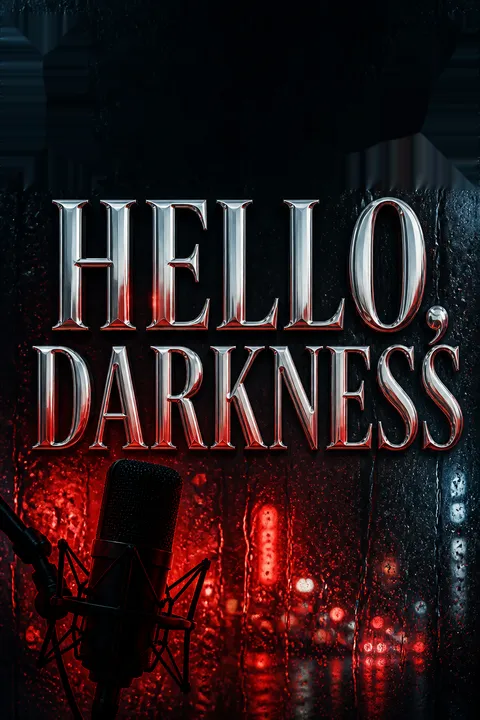
Paris Gibson, beloved late-night radio host, ends her show with a call from a regular listener, "Valentino." His voice, usually odd but harmless, is now menacing. He blames Paris for his girlfriend leaving him, claiming she followed Paris's advice. He threatens that he's kidnapped her and will kill her in seventy-two hours, making Paris responsible. The call shakes Paris to her core, shattering the comforting routine of her show. She's left with a chilling sense of responsibility and fear, her safe, anonymous world suddenly invaded by real danger. The darkness outside the studio now feels alive with threat, and Paris's voice, once a source of solace, is now a potential trigger for violence.
Threats in the Dark
Paris immediately contacts the police, who treat the call as a probable prank, but she can't shake her dread. The call's trace leads only to a payphone, deepening the mystery. Meanwhile, the reader glimpses the captive girl's terror and the twisted intimacy of her relationship with her abductor. The city's night is filled with other troubled lives—families fractured, marriages strained, and secrets festering. Paris's isolation is palpable; her home, once a sanctuary, now feels vulnerable. The threat is both personal and public, as her role as a radio confidante is weaponized against her. The darkness is no longer just a backdrop—it's a character, pressing in on all sides.
Tangled Relationships
The narrative weaves through the lives of Paris's listeners and acquaintances: Dean Malloy, a police psychologist struggling with his rebellious son Gavin and a complicated love life; Judge Kemp, whose daughter Janey is missing; and Toni Armstrong, whose husband Brad's sexual compulsions threaten their family. Each character is haunted by secrets, regrets, and the fear of losing control. Paris's own past is revealed—her tragic love for Jack, her retreat from television to radio, and her guarded, solitary existence. The emotional stakes rise as the characters' lives intersect, their vulnerabilities exposed by the unfolding crisis.
The Missing Girl
As Janey Kemp's absence becomes undeniable, her parents' denial gives way to panic. The police, led by Sergeant Curtis and aided by Dean, begin to connect her disappearance to Valentino's threat. The investigation uncovers Janey's involvement in a secretive online "Sex Club," where teens arrange anonymous hookups. The club's existence exposes a web of risky behavior, exploitation, and adult predators. Paris's radio show becomes a focal point for clues, as the police comb through recordings for connections between callers and victims. The city's underbelly is laid bare, and the urgency to find Janey intensifies.
Secrets and Suspects
The investigation casts suspicion on several men: Marvin Patterson, the station's janitor with a criminal past; Stan Crenshaw, the owner's nephew with a history of sexual misconduct; and Brad Armstrong, a dentist with a record of molestation and a spiraling addiction. Each man's secrets are peeled back, revealing motives, opportunities, and disturbing obsessions. Paris is forced to confront her own vulnerability, as her anonymity is threatened and her past with Dean resurfaces. The lines between victim and perpetrator blur, and the sense of danger grows more acute.
The Sex Club Web
The Sex Club's message boards and clandestine meetings are revealed as hunting grounds for predators. Janey and her friends, including the troubled Melissa, are both participants and prey. The police struggle to keep up with the technology and the shifting alliances among teens and adults. Gavin's involvement with Janey and the club puts him under suspicion, straining his relationship with Dean. The investigation becomes a race against time, as the digital and physical worlds collide, and the cost of secrecy becomes deadly.
Unraveling the Past
Paris's history with Dean and Jack comes to the fore, exposing the emotional scars that shaped her retreat from the world. The tragic accident that left Jack incapacitated and ultimately dead is revealed as the result of a love triangle and a moment of betrayal. Paris's guilt is mirrored by Dean's, and their rekindled feelings threaten to overwhelm them. The past is not dead—it's a living force, shaping the present crisis and the choices they must make. The investigation into Janey's disappearance becomes entwined with the need for personal redemption.
Dangerous Addictions
Brad Armstrong's sexual addiction spirals out of control, leading him to prey on vulnerable girls from the Sex Club. His wife Toni's struggle to protect her family and confront the truth is a microcosm of the larger battle against denial and self-destruction. The narrative explores the psychology of addiction, the rationalizations that enable it, and the collateral damage it inflicts. The theme of compulsion—whether for sex, control, or absolution—runs through every character, driving the plot toward its violent climax.
The Voice of Valentino
The police and Paris close in on Valentino's identity, piecing together clues from the calls, the victims' lives, and the suspects' backgrounds. The killer's voice—seductive, mocking, and chilling—becomes a character in its own right, haunting Paris and the investigation. The narrative delves into the mind of a predator shaped by childhood trauma, incest, and a warped sense of justice. The killer's need for attention, control, and punishment is revealed as both personal and pathological. The tension mounts as Paris becomes the next target.
Family Fault Lines
The investigation forces families to confront their failures: Dean and Gavin's fraught relationship, the Kemps' denial and blame, Toni's reckoning with Brad's crimes, and Paris's struggle to forgive herself. The lie detector test for Gavin, the interrogation of Brad, and the unraveling of Stan's and Marvin's secrets bring the characters to the brink. The cost of silence, denial, and misplaced trust is laid bare. The narrative's emotional core is the longing for connection and the fear of loss, as each character faces the consequences of their choices.
The Wrong Man
The police arrest Brad Armstrong, convinced he is Valentino, but Paris and Dean sense something is wrong. The evidence is circumstantial, and the true killer remains at large. Meanwhile, Stan's erratic behavior and Marvin's confessions muddy the waters. The real predator moves closer, exploiting the chaos and the gaps in the investigation. Paris, alone in the studio, becomes increasingly aware that the threat is not over. The sense of impending violence is palpable, as the narrative hurtles toward its climax.
The Real Predator
The killer is unmasked as John Rondeau, a police officer with a history of incest, childhood trauma, and a deep-seated hatred of women. His psychological profile is a chilling study in the making of a predator—abused, abandoned, and driven by a need to punish and control. Rondeau's manipulation of the investigation, his technical skills, and his ability to blend in make him a formidable adversary. Paris's confrontation with him is a battle of wills, as she fights to survive and expose the truth.
Off the Air
Rondeau disables the radio station's phones and transmission, isolating Paris. He murders Stan and prepares to kill her, weaving a narrative that will frame Stan for the crimes. Paris, drawing on her experience as a negotiator and survivor, tries to keep him talking, buying time for rescue. The darkness of the studio becomes a crucible, forcing Paris to confront her deepest fears and regrets. The tension is excruciating, as help races to reach her before it's too late.
Darkness Revealed
Dean and Curtis, realizing the truth, race to the station with SWAT. Paris, wounded but defiant, faces Rondeau in a final confrontation. The police arrive in time to save her, killing Rondeau in a hail of gunfire. The aftermath is a blur of relief, pain, and gratitude. The darkness that haunted Paris—literal and metaphorical—is finally dispelled, but not without cost. The survivors are left to pick up the pieces, their lives forever changed by the ordeal.
Aftermath and Light
In the wake of the violence, the characters begin to heal. Paris, scarred but alive, emerges from her self-imposed darkness, ready to embrace life and love with Dean. Gavin and Dean reconcile, Toni faces an uncertain future, and the city mourns Janey. The narrative closes with a sense of hope and renewal, as Paris prepares to return to the airwaves, her voice stronger for having faced the darkness. The lessons of the ordeal—about vulnerability, courage, and the power of connection—resonate in every character's journey toward the light.
Analysis
Sandra Brown's Hello, Darkness is a masterful blend of psychological thriller, police procedural, and character-driven drama. At its core, the novel is an exploration of the ways in which darkness—trauma, guilt, addiction, secrecy—can both destroy and transform. The story's structure, with its interwoven perspectives and carefully planted misdirections, keeps the reader in a state of suspense, mirroring the characters' own uncertainty and fear. The novel's treatment of technology is prescient, highlighting the double-edged nature of anonymity and connection in the digital age. Brown's characters are flawed, wounded, and deeply human; their struggles with trust, responsibility, and redemption resonate beyond the confines of the plot. The ultimate message is one of hope: that even in the darkest night, the possibility of healing and love endures. The journey from isolation to connection, from secrecy to truth, is both harrowing and uplifting—a testament to the resilience of the human spirit.
Review Summary
Hello, Darkness by Sandra Brown receives generally positive reviews (4.04/5 stars), praised for its suspenseful plot and engaging mystery. Readers appreciate Brown's ability to keep them guessing about the killer's identity until the end, with multiple suspects creating compelling twists. The story follows radio host Paris Gibson who receives threatening calls from "Valentino," reuniting her with psychologist Dean Malloy from her past. While many loved the romantic suspense blend, some criticized elements like cheating subplots, predictability, and too many character perspectives. Brown's sex scenes and writing style earned specific praise, though a few found it clichéd or underwhelming.
Characters
Paris Gibson
Paris is a late-night radio host whose soothing voice masks a life marked by tragedy and self-imposed isolation. After a love triangle ends in her fiancé Jack's catastrophic accident and death, Paris retreats from television to radio, shunning the public eye and personal relationships. Her empathy and wisdom make her a confidante to thousands, but she is haunted by guilt and loneliness. The Valentino threat forces her to confront her past, her fears, and her capacity for courage. Through the ordeal, Paris transforms from a passive survivor to an active agent of her own fate, reclaiming her right to love and be seen.
Dean Malloy
Dean is a police psychologist, torn between his professional detachment and personal demons. His failed marriage, troubled relationship with his son Gavin, and unresolved feelings for Paris define his inner conflict. Dean's sense of responsibility is both his strength and his burden—he is driven to save others, but struggles to forgive himself for past failures, especially regarding Jack. As the investigation unfolds, Dean's analytical skills and emotional intelligence are tested. His rekindled love for Paris offers him a chance at redemption, but only if he can accept vulnerability and relinquish control.
Gavin Malloy
Gavin is Dean's teenage son, caught between adolescence and adulthood, loyalty and resentment. His involvement with Janey and the Sex Club places him under suspicion and strains his relationship with his father. Gavin's anger masks a deep longing for acceptance and love, and his journey is one of painful self-discovery. The ordeal forces him to confront the truth about his parents, his own choices, and the meaning of trust. Gavin's eventual honesty and courage help to heal the rift with Dean and set him on a path toward maturity.
Janey Kemp
Janey is the judge's daughter, beautiful, reckless, and deeply wounded. Her search for excitement and validation leads her into the dangerous world of the Sex Club, where she becomes both a participant and a victim. Janey's disappearance and murder are the fulcrum of the narrative, exposing the vulnerabilities of youth, the failures of authority, and the predations of adults. Her voice, heard through calls and memories, is a haunting reminder of innocence lost and the high cost of denial.
Sergeant Robert Curtis
Curtis is the lead detective on the case, embodying the virtues of persistence, pragmatism, and empathy. He navigates the political pressures of the department, the egos of colleagues, and the pain of the victims' families with quiet strength. Curtis's partnership with Dean and Paris is marked by mutual respect and occasional friction, but his commitment to justice never wavers. He serves as a stabilizing force, guiding the investigation through false leads and emotional turmoil.
Brad Armstrong
Brad is a dentist whose sexual compulsions have destroyed his career, marriage, and self-respect. His predation on vulnerable girls is both a symptom and a cause of his unraveling. Brad's rationalizations, self-pity, and moments of remorse make him a complex antagonist—more pathetic than monstrous, but still dangerous. His downfall is both inevitable and pitiable, a cautionary tale about the corrosive power of addiction and denial.
Toni Armstrong
Toni is Brad's wife, struggling to protect her children and salvage her marriage in the face of betrayal and public shame. Her journey is one of painful awakening, as she moves from denial to confrontation, and finally to acceptance. Toni's courage in exposing Brad's crimes and cooperating with the police is a testament to her resilience. She represents the collateral damage of addiction and the possibility of healing through truth.
Stan Crenshaw
Stan is the owner's nephew, a man whose privilege and dysfunction have insulated him from consequences. His history of sexual misconduct and emotional instability make him a plausible suspect, and his jealousy of Paris adds to the tension. Ultimately, Stan is more pitiable than dangerous—a product of neglect and entitlement, whose fantasies never translate into real violence. His near-death experience is a turning point, forcing him to confront his own limitations.
Marvin Patterson / Lancy Ray Fisher
Marvin, the station's janitor, is a man with a criminal past and a longing for redemption. His obsession with Paris is rooted in admiration, not malice, and his efforts to reinvent himself are both touching and tragic. Marvin's false confession and subsequent exoneration highlight the dangers of prejudice and the possibility of change. He is a reminder that not all outsiders are threats, and that the search for belonging can take unexpected forms.
John Rondeau (Valentino)
Rondeau is the true villain—a police officer whose childhood trauma, incestuous abuse, and hatred of women have shaped him into a cunning, remorseless killer. His ability to manipulate, his technical skills, and his capacity for violence make him a formidable adversary. Rondeau's psychological complexity is both fascinating and horrifying; he is both a product and a perpetrator of abuse. His final confrontation with Paris is a battle between light and darkness, empathy and cruelty, survival and annihilation.
Plot Devices
Dual Narrative Structure
The novel employs a shifting point of view, moving between Paris, Dean, the police, the killer, and various suspects. This structure allows the reader to experience the story from multiple angles, deepening the emotional impact and building suspense. The use of the killer's voice—both as a caller and as an internal monologue—creates dramatic irony, as the reader knows more than the characters, but not enough to solve the mystery until the climax.
Foreshadowing and Red Herrings
The narrative is rich with foreshadowing—ominous calls, unexplained absences, and hints of past trauma. Red herrings abound: Stan's erratic behavior, Marvin's criminal record, Brad's addiction, and the Sex Club's shadowy members all serve to distract and mislead both the characters and the reader. The true identity of Valentino is carefully concealed, with clues scattered throughout, making the final reveal both surprising and inevitable.
Thematic Symbolism
The motif of darkness—literal and metaphorical—runs through the novel. Paris's preference for working in the dark, her sunglasses, and her retreat from the public eye symbolize her fear and guilt. The killer's use of darkness as cover, and the city's nocturnal dangers, reinforce the theme of vulnerability. The eventual emergence into light—both for Paris and the survivors—signals healing and hope.
Technology as Double-Edged Sword
The story explores the power and peril of technology: the radio show as a lifeline and a weapon, the Sex Club's online anonymity as both liberation and danger, and the killer's technical prowess as a means of evasion. The investigation's reliance on recordings, digital footprints, and surveillance highlights the tension between connection and exposure, privacy and accountability.
Psychological Realism
The novel delves deeply into the psychology of its characters, exploring the roots of compulsion, the scars of abuse, and the struggle for self-forgiveness. The killer's pathology is contrasted with the survivors' resilience, and the possibility of change is held in tension with the reality of damage. The emotional authenticity of the characters' journeys grounds the suspense in genuine human stakes.


Download PDF
Download EPUB
.epub digital book format is ideal for reading ebooks on phones, tablets, and e-readers.








































