
Plot Summary
Night of Terror Unleashed
In the early hours of July 5, 1983, the quiet of Tacoma, Washington, is shattered when Andrew Webb and Randy Nolan, both drunk and armed, force their way into the Sanford home. Their search for missing guns turns violent, with Webb threatening to kill a terrified teenager, Shane Sanford. Police intervention narrowly averts tragedy, but the incident marks the beginning of a violent saga. Webb's repeated assaults, fueled by paranoia and substance abuse, set the tone for a community on edge. The event is not isolated; it is the third such attack by Webb, whose friendships with Paul St. Pierre and Cory Cunningham are rooted in shared delinquency. This night of terror is a harbinger of the darkness to come, as the boundaries between victim and perpetrator blur in a neighborhood unraveling under the weight of its secrets.
Seeds of Violence Sown
The roots of violence in this story stretch deep into the troubled soil of two families: the Webbs and the St. Pierres. Both are marked by strict, sometimes abusive parenting, religious fervor, and cycles of emotional and physical trauma. Andrew Webb grows up in a household where anger is the only permissible emotion, and incest and abuse are whispered realities. Paul St. Pierre, slow and ostracized, finds acceptance only through aggression and substance abuse. Their friendship, forged in shared alienation and reinforced by drugs and violence, becomes a crucible for destructive behavior. The neighborhood, once a tapestry of interconnected families, becomes a breeding ground for dysfunction, where the line between normalcy and deviance is perilously thin.
The Disappearance of Damon
In February 1984, Damon Wells, a gentle young man devoted to his family, vanishes after attending a party at the St. Pierre house. His disappearance is initially dismissed by police as a runaway case, but his family's anxiety grows as days pass without word. The last to see him, Steve Wood, recounts a fight with Andrew Webb at the party, after which Damon stayed behind. Roommates recall a violent altercation in the bathroom, blood, and a hasty cleanup. Rumors swirl, and fear silences potential witnesses. It is only months later, after a series of confessions and mounting pressure, that the truth begins to surface: Damon's fate is far darker than anyone imagined, and his absence is the first sign of a deeper rot.
Confessions and Cover-Ups
The fragile web of silence begins to tear when Roy Kissler, a former friend, confronts Paul St. Pierre, who chillingly confesses to murder. Details emerge of Damon Wells's brutal beating, his throat slit by Andrew Webb, and his body buried in the woods. The conspirators—Paul, Chris St. Pierre, and Webb—burn evidence, wash away blood, and threaten anyone who might talk. As guilt and fear mount, Chris St. Pierre, wracked by conscience and pressure from police, finally leads authorities to the shallow graves. The horror is compounded by the discovery that another young man, John Achord, has also vanished. The cycle of violence and concealment is laid bare, exposing the depths to which these men have sunk.
The Rush Concert Killing
On the night of a Rush concert in May 1984, John Achord, a brain-injured but optimistic young man, crosses paths with the St. Pierre brothers and Andrew Webb. Lured to their house, he is shot in the head—allegedly in self-defense by Paul St. Pierre—and then stabbed repeatedly. The group, now practiced in disposing of bodies, wraps Achord in carpet and buries him near Damon Wells. The brutality escalates: fearing forensic evidence, they later exhume Achord's body, decapitate him, and encase his head in cement, dumping it in a river. The casualness with which they recount these acts to friends and family is as chilling as the crimes themselves, revealing a complete moral collapse.
A Head in a Bucket
The discovery of Achord's head, encased in cement and retrieved from the river, becomes the centerpiece of the investigation. The act is not just an attempt to evade justice but a symbol of the killers' descent into depravity. The police, piecing together confessions, witness statements, and forensic evidence, reconstruct the sequence of events. The motives are tangled: paranoia, a desire to cover up previous crimes, and a twisted sense of power. The community reels as the full extent of the violence becomes public, and the families of the victims are left to grapple with unimaginable loss.
Family Shadows and Secrets
The narrative delves into the family histories that shaped the killers. The Webbs' legacy of abuse, religious extremism, and incest creates a breeding ground for psychological damage. The St. Pierres, though outwardly more stable, are not immune to dysfunction. Paul's mental illness and Chris's lifelong struggle with a heart defect and a need for acceptance make them vulnerable to manipulation and violence. The story reveals how cycles of trauma, untreated mental illness, and societal neglect can converge to produce tragedy. The families, both victims and perpetrators, are left fractured, their lives defined by secrets and shame.
The Law Closes In
As the investigation intensifies, police navigate a maze of conflicting confessions, recantations, and legal maneuvering. Detectives Yerbury and Price, persistent and methodical, piece together the evidence needed for prosecution. The legal process is fraught with ethical dilemmas: coerced statements, plea bargains, and questions of mental competency. The prosecution, led by Carl Hultman, faces off against skilled defense attorneys, each side battling not just for a verdict but for the narrative that will define the case. The courtroom becomes a theater of accusation, denial, and revelation, as the community watches, hungry for justice but wary of its cost.
Betrayal, Bargains, and Blame
The trials are marked by shifting alliances and betrayals. Andrew Webb, facing the death penalty, strikes a deal to testify against the St. Pierres, only to recant and refuse to take the stand. Chris St. Pierre, who cooperated with police, finds himself abandoned by the prosecution in favor of a more expedient conviction. The defense exposes prosecutorial misconduct, media manipulation, and the unreliability of key witnesses. The truth becomes elusive, as each participant rewrites their role to minimize culpability. The legal system, designed to deliver justice, is revealed as a battleground of competing interests, where the line between right and wrong is blurred by desperation and self-preservation.
Trials of Guilt and Insanity
The trials of Paul and Chris St. Pierre are a study in contrasts. Paul, diagnosed with paranoid personality disorder, vacillates between grandiosity and paranoia, his mental state a central issue in his defense. Chris, portrayed as a follower caught in a web of violence, struggles to assert his innocence. The prosecution paints both as cold-blooded killers, while the defense argues diminished capacity and the corrosive influence of family and circumstance. The testimony is harrowing: graphic autopsy reports, confessions, and the emotional pleas of victims' families. The jury is left to weigh not just facts, but the moral weight of mercy versus retribution.
The Verdicts and Their Price
The verdicts are delivered: Paul St. Pierre is found guilty of aggravated murder and sentenced to life without parole; Chris is convicted of felony murder and kidnapping, spared the death penalty but condemned to a life behind bars. The community is divided—some see justice served, others see a system that failed to address the root causes of violence. Paul's mental deterioration leads to his death in prison, while Chris, stricken with multiple sclerosis, remains incarcerated, haunted by remorse. Andrew Webb, the manipulator and survivor, serves his sentence and is eventually released, his transformation in prison a subject of debate and skepticism.
Aftermath: Justice and Memory
The families of Damon Wells and John Achord are left to mourn, their grief compounded by the public spectacle of the trials and the lingering sense of injustice. The survivors—both victims' and perpetrators' families—struggle to find closure. Letters of apology, clemency hearings, and appeals become the new battlegrounds. The story becomes a cautionary tale about the limits of the legal system, the enduring scars of trauma, and the difficulty of forgiveness. The community, once bound by shared history, is now united only by loss and the hope that such horrors will not be repeated.
Lessons from the Abyss
In the end, the story of the St. Pierre brothers and Andrew Webb is not just a tale of crime and punishment, but a meditation on the roots of violence. The narrative draws connections between childhood trauma, brain injury, substance abuse, and the emergence of psychopathic behavior. It challenges readers to consider the role of family, community, and society in both enabling and preventing tragedy. The book closes with a call to action: to break cycles of abuse, to recognize the signs of mental illness, and to build systems of support that can intervene before violence erupts. The legacy of Damon Wells and John Achord is not just in their deaths, but in the lessons their story imparts to a world still struggling to understand the darkness within.
Analysis
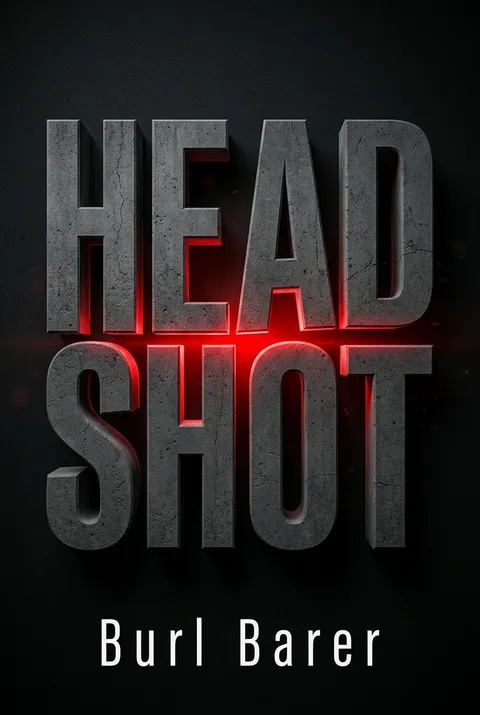
A modern meditation on violence, trauma, and justiceHead Shot is more than a true crime narrative; it is a profound exploration of the roots and repercussions of violence in American life. Through its detailed examination of family dysfunction, mental illness, and the failures of the legal system, the book challenges readers to look beyond individual culpability and consider the broader forces at play. The story is a cautionary tale about the dangers of untreated trauma, the corrosive effects of secrecy and shame, and the limitations of retributive justice. It asks uncomfortable questions: Can cycles of violence be broken? Is redemption possible for the irredeemable? What does justice mean in a world where the line between victim and perpetrator is often blurred? Ultimately, Head Shot is a call to empathy and prevention—a reminder that the abyss of violence is not just the product of monstrous individuals, but of a society that fails to care for its most vulnerable. The lessons of Damon Wells and John Achord endure, urging us to confront the darkness within and build a world where such tragedies are not inevitable.
Characters
Paul St. Pierre
Paul St. Pierre is the central perpetrator, a man whose life is defined by mental illness, social rejection, and a desperate need for control. Ostracized as a child, he finds identity in aggression and substance abuse, eventually joining the Marines, where his fascination with violence deepens. Paul's relationships are fraught—he dominates his younger brother Chris and forms a toxic bond with Andrew Webb. His paranoia and impulsivity drive the escalation from petty crime to murder. In court, his mental instability becomes both a defense and a curse, as he is ultimately deemed competent but deeply disturbed. Paul's inability to form genuine connections, coupled with his grandiose self-image, leads to his downfall. He dies in prison, his life a cautionary tale of untreated illness and the corrosive effects of violence.
Christopher St. Pierre
Chris St. Pierre is the reluctant participant, a man shaped by a lifetime of physical frailty and a yearning for acceptance. Overshadowed by his domineering brother, Chris is drawn into the orbit of violence almost against his will. His role in the crimes is ambiguous—both an accessory and a victim of circumstance. Chris's cooperation with police is motivated by guilt and a desire to unburden his conscience, but he is ultimately betrayed by the legal system and those around him. His psychological profile is marked by passivity, fear, and a deep sense of shame. In prison, he is further diminished by illness, his remorse genuine but powerless to undo the past. Chris embodies the tragedy of a good kid led astray, his life a testament to the dangers of weak will and misplaced loyalty.
Andrew Webb
Andrew Webb is the story's most complex figure—a man whose childhood is marred by abuse, religious extremism, and head injuries. Charismatic yet deeply disturbed, Webb oscillates between moments of charm and episodes of explosive violence. His relationships are transactional; he uses others to achieve his ends, whether in crime or in cutting deals with prosecutors. Webb's psychological makeup is a blend of narcissism, antisocial tendencies, and possible brain damage. He is both a victim and a perpetrator, shaped by forces beyond his control but fully responsible for his actions. In prison, he reinvents himself as a spiritual leader, but questions linger about the authenticity of his transformation. Webb's refusal to testify against his co-defendants is both an act of self-preservation and a final, ambiguous gesture of loyalty.
Damon Wells
Damon Wells is the first victim, a young man whose life is defined by kindness and devotion to family. His disappearance is the catalyst for the unraveling of the killers' web of lies. Damon's trusting nature makes him vulnerable to manipulation and violence. His brutal death—beaten, stabbed, and buried in a shallow grave—serves as a stark reminder of the randomness of evil. Damon's family is left shattered, their grief compounded by the public spectacle of the investigation and trials. In the narrative, Damon represents the senselessness of violence and the enduring pain of loss.
John Achord
John Achord, the second victim, is a survivor of a traumatic brain injury, striving to rebuild his life with optimism and resilience. His openness and friendliness make him an easy target for the killers, who exploit his trust. Achord's murder is marked by particular brutality—shot, stabbed, decapitated, and his head encased in cement. His family's anguish is deepened by the gruesome nature of his death and the protracted search for his remains. Achord's story is a testament to the vulnerability of those on the margins and the far-reaching consequences of violence.
Roy Kissler
Roy Kissler is a former friend of the St. Pierres, whose decision to confront Paul and report his confessions to police becomes a turning point in the case. Kissler's background is checkered—once involved in drugs and crime, he finds redemption through faith and becomes a builder and family man. His willingness to risk his safety to expose the truth marks him as a rare figure of integrity in a landscape of fear and silence. Kissler's actions force the investigation forward, but he is haunted by the knowledge of what his friends have become.
Mark Perez
Mark Perez is a roommate and peripheral figure, present at key moments but always on the edge of the central drama. His testimony is crucial in reconstructing the timeline of events, but he is also a victim of intimidation and fear. Perez's reluctance to get involved, and his eventual decision to speak to police, highlight the moral dilemmas faced by those caught in the orbit of violence. He represents the ordinary person thrust into extraordinary circumstances, struggling to do the right thing.
Tony Youso
Tony Youso is drawn into the crimes through proximity and fear. His role is primarily as an accessory—helping to dispose of evidence, including the infamous bucket containing Achord's head. Youso's actions are motivated by self-preservation; he is more afraid of the killers than of the law. His eventual cooperation with police is less an act of conscience than a response to mounting pressure. Youso's character illustrates how ordinary people can become complicit in extraordinary evil through fear and inertia.
Detective Robert Yerbury
Detective Yerbury is the lead investigator, whose dogged pursuit of the truth is instrumental in bringing the killers to justice. He navigates a complex web of lies, conflicting statements, and legal obstacles with patience and integrity. Yerbury's empathy for the victims and their families is matched by his commitment to due process. He serves as a stabilizing force in a chaotic narrative, embodying the ideals of law enforcement even as he confronts the limitations of the system.
Carl Hultman
As the lead prosecutor, Carl Hultman is both a champion of justice and a lightning rod for criticism. His pursuit of convictions is relentless, sometimes crossing ethical lines in the service of what he sees as the greater good. Hultman's willingness to cut deals, manipulate the media, and push the boundaries of legal procedure makes him a polarizing figure. He is both respected and resented, his legacy defined by the high-profile nature of the case and the questions it raises about the nature of justice.
Plot Devices
Interwoven Confessions and Contradictions
The story's structure relies heavily on a tapestry of confessions, recantations, and contradictory statements. Each character—whether perpetrator, witness, or investigator—offers a version of events colored by self-interest, fear, or guilt. This narrative device creates a sense of uncertainty and moral ambiguity, forcing both the legal system and the reader to question the reliability of memory and the possibility of truth. The use of plea bargains, jailhouse confessions, and shifting alliances adds layers of complexity, as the search for justice becomes entangled with the characters' psychological unraveling.
Psychological Profiling and Mental Illness
The trials hinge on the psychological states of the accused, particularly Paul St. Pierre and Andrew Webb. Expert testimony about mental illness, brain injury, and personality disorders becomes central to the defense, raising questions about culpability and the limits of the law. The narrative uses these devices to explore broader themes of responsibility, free will, and the impact of trauma. The courtroom becomes a battleground not just of facts, but of competing theories of the mind.
Family History as Destiny
The book employs detailed backstories to illustrate how cycles of abuse, neglect, and dysfunction can produce violence. The intergenerational transmission of trauma is not just background but a driving force in the narrative, influencing the choices and fates of the main characters. This device invites readers to consider the broader social and psychological factors that contribute to crime, challenging simplistic notions of good and evil.
Legal and Ethical Ambiguity
The legal proceedings are depicted as fraught with ethical dilemmas: prosecutorial misconduct, media manipulation, and the use of unreliable witnesses. The narrative structure mirrors the chaos of the case, with mistrials, appeals, and shifting charges reflecting the instability of the truth. The law is both a tool for justice and a source of further harm, as the pursuit of convictions sometimes overrides the search for understanding.
Symbolism of Evidence
Key pieces of evidence—the bucket of cement, the Gerber knife, the bloodstained carpet—are imbued with symbolic weight. They serve as tangible reminders of the brutality of the crimes and the lengths to which the perpetrators go to conceal their guilt. The recovery and presentation of these objects in court become rituals of exposure and reckoning, forcing both characters and readers to confront the reality of violence.
Download PDF
Download EPUB
.epub digital book format is ideal for reading ebooks on phones, tablets, and e-readers.








































