
Key Takeaways
1. Biblical Counseling is Rooted in God's Sufficient Word.
The Bible presents a grand narrative in which God is both the Author and the Hero, with the story climaxing in Christ.
Ultimate wisdom. Biblical counseling begins by affirming that God's Word is the ultimate source of wisdom for life's brokenness. Unlike secular approaches that seek answers from human reason, this framework turns to the Creator to understand the creature. It rejects the notion of "Christ + human wisdom," asserting that Scripture is sufficient for all matters of the soul, including emotional and mental struggles.
Beyond symptoms. This approach moves beyond merely addressing symptoms or sprinkling biblical principles onto worldly advice. It delves into God's grand narrative – the drama of redemption – to understand human identity, problems, and solutions. This means using the Bible not just for answers, but to correctly frame life's ultimate questions, ensuring a truly biblical perspective.
Comprehensive care. While "Bible only" for theory and prescriptive therapy, gospel-centered counseling embraces descriptive research and acknowledges physiological factors under the Creation Mandate. It aims to impact the world with Christ's wisdom, rather than adopting the world's flawed philosophies, providing comprehensive and compassionate care for the whole person.
2. Our View of God is the Most Important Thing About Us.
What comes into our minds when we think about God is the most important thing about us.
Core identity. Our understanding of God profoundly shapes our entire being and how we navigate life's challenges. When facing confusion or brokenness, the first and most crucial step is to examine our image of God. This perspective, championed by figures like A.W. Tozer and David in Psalm 27, asserts that our deepest conceptions of God dictate our responses to suffering and sin.
Trinitarian reality. Biblical counseling starts with the Trinitarian God – Father, Son, and Holy Spirit – as the eternal community of holy love. This relational God, who existed in perfect communion before creation, defines reality as relational. Understanding God as fundamentally loving and sovereign counters distorted views that portray Him as an uninvolved Creator or a cruel taskmaster, which are often Satan's insidious lies.
Holy love. Every problem of the soul stems from an unbalanced or distorted view of God's infinitely perfect character, particularly His holy love. We ask:
- "God, do you care?" (questions about His love)
- "God, are you in control?" (questions about His holiness)
Knowing God in the fullness of His affectionate sovereignty, as both the Lion and the Lamb, is central to finding peace and fostering Christlike character.
3. Spiritual Warfare is the Battle for Our Hearts and Minds.
Spiritual warfare is the battle for our minds and hearts to believe and trust the truth from God instead of lies from the Devil.
Satan's schemes. The Bible reveals that our struggles are not merely "flesh and blood" but spiritual battles against the schemes of Satan. His primary strategy is a "bait-and-switch": first tempting us to rebel against God by doubting His good heart, then condemning us for that rebellion. He whispers lies like "God is holding back on you" or "You're better off trusting yourself."
Condemnation tactics. Once we succumb, Satan shifts to accusation, slandering us to God and to ourselves. He aims to fill our souls with shame, leading to self-contempt and despair, convincing us that God has justly rejected us. He also uses others to accuse and divide, fostering "bitter envy, selfish ambition, and divisive speech" (James 3:15).
Christ's counterstrategy. Our weapon against these strongholds is the gospel truth. We demolish arguments and pretensions that set themselves against the knowledge of God, taking every thought captive to Christ (2 Cor. 10:4-5). This involves:
- Seeing life with "spiritual eyes" to perceive God's goodness.
- Believing God's true nature as a pursuing Father, forgiving Groom, and comforting Mentor.
- Remembering Christ's victory over sin and Satan, which empowers us daily.
4. God Designed Us as Comprehensive, Relational Beings.
The whole, healthy, holy person’s inner life increasingly reflects the inner life of Christ — relationally, rationally, volitionally, and emotionally.
Original design. To understand human brokenness, we must first grasp God's original, "very good" design for humanity as image-bearers (imago Dei). We were created to reflect God, relate to God, rule under God, and rest in God. This comprehensive understanding of human nature is crucial for defining true health and the target of counseling: Christlikeness.
Four chambers of the heart. God designed us as one comprehensive being with interrelated capacities, often described as the "four chambers of the heart":
- Relational: Created to love passionately and sacrificially, thirsting for communion with God, connection with others, and inner peace (shalom).
- Rational: Created to think wisely, perceiving God's world and advancing His kingdom, thinking in words (beliefs) and pictures (images).
- Volitional: Created to choose courageously, acting purposefully and pursuing goals that glorify God.
- Emotional: Created to experience deeply, responding to life with integrity and expressing feelings in godly ways.
Holistic personhood. We are also embodied physical beings and embedded life-situational beings, meaning our physical bodies and social environments profoundly influence our inner life. Counseling must address this holistic personhood, recognizing that we are everlasting beings whose ultimate "environment" is God, and whose purpose is to live "coram Deo" (face-to-face with God).
5. Sin is Spiritual Adultery and Corrupts Our Entire Being.
The essence of sin is spiritual adultery — choosing to love anyone or anything more than God.
Serpentine seduction. Sin entered the world through Satan's cunning seduction, which began by planting seeds of doubt about God's good heart ("Hath God said?"). This led to Eve's deception and Adam's knowing choice to love Eve more than God. Every temptation since follows this pattern: enticing us to distrust God's goodness and to trust our own fallen hearts.
Four rags of the Fall. Sin's impact is profound, transforming our original "robes of righteousness" into "rags of corruption":
- Condemnation: From righteousness to guilt and fear of judgment.
- Separation: From communion to alienation from God.
- Corruption: From reflecting God's image to a depraved nature.
- Captivity: From dominion to enslavement to sin's power.
Sin-sick heart. Sin corrupts the four chambers of our heart:
- Relational Corruption: We become "spiritual adulterers," wired for worship but choosing false lovers, desperately seeking to quench our thirst apart from God.
- Rational Corruption: We become "heart idolaters," suppressing truth, believing foolish lies about God, and creating idols in our own image.
- Volitional Corruption: We become "enslaved destroyers," unable to have dominion over our passions, compulsively choosing self-centered, destructive paths.
- Emotional Corruption: We become "ungoverned users," losing sensitivity, indulging in sensuality, and using emotions to suppress pain or manipulate others.
6. The Gospel Offers Complete Salvation: Justification, Reconciliation, Regeneration, and Redemption.
We must build our biblical counseling models of change on Christ’s gospel applied to Chris tians — justified, reconciled, regenerated, and redeemed people.
Four gospel miracles. The gospel is not just about forgiveness; it's a complete salvation that transforms our relationship with God and our very nature. These four aspects are:
- Justification: God, the Judge, declares us "Not Guilty! Forgiven!" by reckoning Christ's righteousness to our account.
- Reconciliation: God, the Father, says "Welcome Home!" adopting us into His family, removing the chasm of sin.
- Regeneration: God, the Creator, says "You're a New Creation in Christ! Saints!" implanting a new heart and disposition towards holiness.
- Redemption: God, the Victor, says "You Are More than Conquerors through Christ! Victors!" freeing us from sin's power and granting resurrection power.
New nurture and nature. Justification and reconciliation define our "new nurture" – who we are to Christ by grace through faith, establishing peace with God. Regeneration and redemption define our "new nature" – who we are in Christ by grace through faith, giving us power in Christ.
Gospel memory. Many counselors and counselees suffer from "gospel amnesia," forgetting these profound truths. Biblical counseling constantly reminds believers of their new identity as forgiven, welcomed, new creations, and victors in Christ, empowering them to live out the transformation already accomplished.
7. Applying the Gospel to Suffering Requires Brutal Honesty and Radical Reliance.
Fully biblical gospel-centered counseling deals thoroughly both with the sins we have committed and with the evils we have suffered.
Beyond sin. Gospel-centered counseling addresses both personal sin and the evils we suffer. Christ's victory on the cross defeats not only sin but also its effects, including suffering, sorrow, and death. The gospel offers healing hope in the midst of suffering, transforming tragedy into "eucatastrophe" – something extraordinarily amazing out of horrible evil.
Brutal honesty. Facing suffering requires candidness, acknowledging that "it's normal to hurt." Paul, in 2 Corinthians 1:8-9, openly shared his despair, feeling "under great pressure, far beyond our ability to endure, so that we despaired even of life." God is the "Father of compassion and the God of all comfort," who laments our pain and fortifies us in our weakness, enabling us to comfort others.
Radical reliance. Suffering often serves the purpose of teaching us not to rely on ourselves but on "God, who raises the dead." This "God-the-continuous-raiser-of-the-Dead" offers daily resurrection experiences from our "daily casket experiences." Our hope is firmly fixed on God's past, present, and future deliverance, and on the mutual support of fellow believers who "help us by your prayers."
8. Growth in Grace is a Community Journey within the Church.
Sanctification is a community journey.
God's grand vision. God's eternal plan is for His infinite, multifaceted wisdom and grace to be made known through the church. This means the church is not just a place with a biblical counseling ministry, but a "church of biblical counseling," where every member is equipped to speak and live gospel truth in love.
Equipping the saints. Christ's vision for pastors and teachers is "to prepare God's people for works of service" (Eph. 4:11-12). This means training every member to be a disciple-maker, embodying truth in love through personal ministry of the Word. The church functions as a "teaching hospital for soul physicians," where experienced members mentor others in compassionate, truth-filled care.
Unified ministry. This unified vision integrates:
- Pulpit and personal ministry: The same confidence in God's Word applies to both preaching and counseling.
- One-another ministry: Informal and formal interactions, small groups, and ministry teams are all opportunities for gospel conversations.
- Church and community: Internal growth in truth and love equips believers to be ambassadors for Christ, impacting the world with the gospel.
9. Remembering Our Future with Christ Transforms Our Present.
As saints who struggle with suffering and sin, we must crop back into the picture our future purity (the wedding) and future victory (the final war).
Eschatology for life. Our eternal destiny with Christ profoundly impacts our daily lives. The "end of the story" – God's ultimate victory and the wedding of Christ to His church – provides perspective and strength for present suffering and sin. This "eschatology" is not just abstract doctrine but a vital source of hope.
Spiritual mathematics. Old Testament saints like Abraham and Moses practiced "spiritual mathematics," weighing present troubles and temptations against future glory. Paul, in 2 Corinthians 4:17, calculated that "our light and momentary troubles are achieving for us an eternal glory that far outweighs them all." This eternal perspective prevents us from losing heart.
Overcomers. Satan tries to crop eternity out of our mental pictures, slandering heaven and those who live there. But Revelation, filled with images of Christ's final victory and our eternal dwelling with Him, calls us to remember the future. Jesus' promise, "Behold, I am coming soon!" (Rev. 22:7), motivates us to live as "overcomers," standing guard and faithfully applying His truth today.
10. Sanctification is Grace-Empowered Heart Change: Putting Off and Putting On.
Sanctification is the grace-motivated and grace-empowered art of applying our justification, reconciliation, regeneration, and redemption so that our inner life increasingly reflects the inner life of Christ (relationally, rationally, volitionally, and emotionally) as we put off the old dead person we no longer are and put on the new person we already are in Christ (relationally, rationally, volitionally, and emotionally) for God’s glory.
Working out salvation. Sanctification is the lifelong process of growing in Christlikeness, where our inner life increasingly reflects Christ's. It's not "trying harder" in our own strength, nor "letting go and letting God" passively. Instead, it's "communing with God" – actively cooperating with the Holy Spirit, who transforms us daily.
Mortification and vivification. This process involves two key aspects:
- Mortification (Putting Off): Habitually weakening the flesh and stripping off the "old grave clothes" of our former sinful patterns. This means repenting of foolish mind-sets, divorcing false lovers, rejecting self-beautification, uprooting self-centeredness, putting to death destructive self-gratification, and crucifying addictive passions.
- Vivification (Putting On): Growing, maturing, and enlivening the regenerate person by putting on the "new wedding attire" of Christlike patterns. This involves renewing our minds with grace narratives, enjoying God as our supreme good, reckoning on our identity in Christ, nourishing love for others, fanning into flame our freed will to empower others, and soothing our soul in our Savior.
Resurrection Power Multipliers (RPMs). We connect with Christ's resurrection power through various "RPMs," which are means of grace:
- Spiritual Foundation: Immersion in God's Word (preaching, teaching, study).
- Spiritual Formation: Practice of individual and corporate spiritual disciplines (prayer, meditation, fellowship).
- Spiritual Friendship: Soul care, mentoring, and biblical counseling with other believers.
- Spiritual Fellowship: Connection with the body of Christ in small and large groups.
- Spiritual Filling: Yielding to and being controlled by the Holy Spirit.
- Spiritual Fruit: Engaging in ministry for Christ (service, evangelism, discipleship).
- Spiritual Family: Fostering godly relationships in our homes.
- Spiritual Fighting: Availing ourselves of the whole armor of God in spiritual warfare.
Review Summary
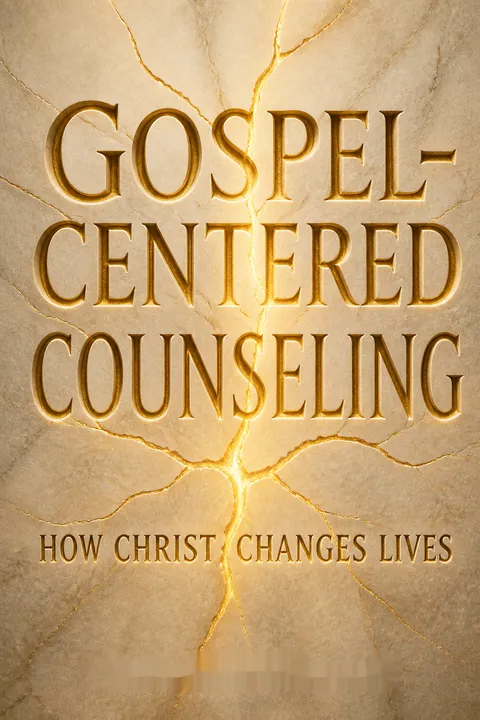
Gospel-Centered Counseling receives an overall rating of 4.2/5, with readers praising its theologically rich, Christ-centered approach to biblical counseling. Many appreciate its comprehensive framework rooted in Scripture and the Trinity, along with its practical case studies and memorable sections on grace and sanctification. Common criticisms include redundancy, an overly structured "checklist" feel, and excessive lists that can feel formulaic. Despite these concerns, most reviewers highly recommend it, particularly for those seeking a systematic theological foundation for biblical counseling.
People Also Read







Download PDF
Download EPUB
.epub digital book format is ideal for reading ebooks on phones, tablets, and e-readers.








































