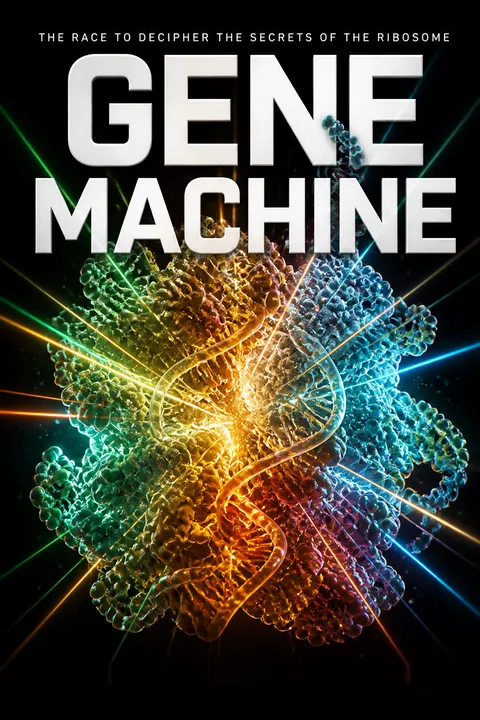

Key Takeaways
1. An Unconventional Path to Scientific Breakthroughs
My problem was that I knew only the most basic biology and had no idea what biological research entailed.
Embracing change. Venki Ramakrishnan's journey began far from biology, with a PhD in theoretical physics, a field he found uninspiring. Recognizing the molecular biology revolution, he made the audacious decision to pursue a second graduate degree in biology, despite having no prior lab experience. This radical shift underscored his willingness to abandon established paths for areas of greater intellectual excitement and impact.
Learning anew. His initial foray into biology was marked by fundamental ignorance, even requiring instruction on basic lab tools like the Pipetman. This period of intense learning, from undergraduate courses to postdoctoral research on ribosomes, built a diverse skill set that would prove invaluable. His experience highlights that deep expertise in one field can provide a unique perspective when applied to another, fostering interdisciplinary breakthroughs.
Strategic pivots. Ramakrishnan's career was a series of calculated risks and pivots, driven by a desire to tackle fundamental questions. From neutron scattering, which he deemed a "dead end," to X-ray crystallography, he continuously sought techniques that could provide atomic-level insights. This adaptability, combined with a relentless focus on the "big questions," ultimately positioned him for the ribosome challenge.
2. The Ribosome: Life's Fundamental Molecular Machine
Millions of life forms exist without eyes, but every one of them needs ribosomes.
Life's central processor. The ribosome, often overlooked in public consciousness compared to DNA, is the universal molecular machine responsible for protein synthesis in every living cell. It translates the genetic code from messenger RNA (mRNA) into chains of amino acids, which then fold into proteins that perform virtually all cellular functions, from muscle movement to thought. Its fundamental role makes it indispensable for all known life.
Complex nanomachinery. This intricate particle, composed of roughly fifty proteins and three large RNA molecules, has over a million atoms and operates as a two-part machine. The small subunit binds mRNA and decodes the genetic message, while the large subunit stitches together amino acids brought by transfer RNA (tRNA). This coordinated movement, consuming energy at each step, makes the ribosome a true "nanomachine."
Beyond basic function. Understanding the ribosome's structure was not merely an academic pursuit; it held immense practical implications. Many antibiotics, for instance, work by blocking bacterial ribosomes, offering a pathway to combat infectious diseases. Deciphering its atomic structure promised to reveal how these drugs bind and could guide the design of new, more effective treatments against growing antibiotic resistance.
3. X-ray Crystallography: Seeing the Invisible Atomic World
For the first time, molecules could be ‘seen.’
Overcoming resolution limits. For centuries, the atomic world remained invisible due to the wavelength limitations of visible light. The discovery of X-rays and Max von Laue's experiment in 1912, showing X-rays diffracting off crystals, provided the key. This proved X-rays had wavelengths short enough to resolve atomic details, paving the way for X-ray crystallography to visualize molecules.
The phase problem. While X-ray diffraction patterns revealed the arrangement of atoms in a crystal, reconstructing a 3D image of the molecule faced a critical hurdle: the "phase problem." Detectors measure only the amplitude of scattered X-rays, not their phase (relative timing), which is crucial for combining waves to form an image. Pioneering methods, like Patterson maps and heavy-atom derivatives, were developed to overcome this, allowing scientists to gradually build atomic models.
From salt to proteins. Early crystallography, exemplified by Lawrence Bragg's work on common salt, demonstrated the power of the technique for simple molecules. However, applying it to complex biological molecules like proteins, with thousands of atoms and inherent flexibility, seemed impossible. Max Perutz's heroic efforts to solve the structure of hemoglobin, a protein fifty times larger than anything previously tackled, marked the dawn of protein crystallography and structural biology.
4. Pioneering Perseverance Against Formidable Odds
She had exactly the right combination of ambition and tenacity needed for this project.
Ada Yonath's early vision. Ada Yonath, an Israeli scientist, embarked on the seemingly impossible task of crystallizing ribosomes in the late 1970s, a time when many eminent scientists had abandoned the problem. Despite initial skepticism and the immense size and flexibility of the ribosome, she persisted, driven by a singular ambition to understand its structure. Her early efforts, though yielding only microcrystals, were a crucial psychological breakthrough, demonstrating that ribosomes could crystallize.
The extremophile advantage. A key turning point came with the use of ribosomes from extremophilic bacteria, such as Bacillus stearothermophilus and later Haloarcula marismortuii (from the Dead Sea). These organisms, adapted to extreme temperatures or salinity, produced more stable ribosomes, which were more amenable to crystallization. This strategic choice, often made in collaboration, led to the first three-dimensional crystals of ribosomal subunits.
Cryocrystallography's impact. A major hurdle in ribosome crystallography was radiation damage, as intense X-ray beams would destroy the delicate crystals before sufficient data could be collected. Yonath, in collaboration with Håkon Hope, pioneered the use of cryocrystallography for ribosome crystals, rapidly cooling them to vitrify the water and slow down damage. This technique, initially met with skepticism, became indispensable, allowing her group to achieve crystals diffracting to atomic resolution.
5. The Strategic Leap: Leveraging New Crystallographic Methods
If I had decent crystals, just a dozen or so of these metal atoms bound to a ribosomal subunit should give me its structure.
Beyond "soak and pray." Traditional heavy-atom methods for solving protein structures were often hit-or-miss, relying on the unpredictable binding of heavy atoms to crystals. Ramakrishnan, drawing on his physics background, recognized the potential of Multiwavelength Anomalous Diffraction (MAD) using synchrotrons. This technique, which exploits the wavelength-dependent scattering of certain atoms, promised a more reliable path to obtaining phases, especially for large, complex molecules.
The "secret bullet" compounds. Ramakrishnan's calculations showed that specific lanthanide elements, with their strong anomalous scattering properties, could provide sufficient signal to solve the ribosome structure if bound in sufficient numbers. The discovery of osmium hexammine, a compound previously used for RNA structures, proved to be an even more potent tool, binding in dozens of sites and providing an exceptionally strong signal. The synthesis of this compound by a friend, Bruce Brunschwig, was a critical, unsung contribution.
Overcoming technical hurdles. The successful application of MAD required not only the right compounds but also advanced synchrotron facilities and precise data collection. The ability to pre-orient crystals using a kappa goniometer at the Advanced Photon Source (APS) was crucial for accurately measuring the small anomalous differences. This meticulous approach, combined with on-the-fly data processing, allowed Ramakrishnan's team to overcome the challenges of weak diffraction and radiation damage, ultimately yielding high-quality electron density maps.
6. The Race Intensifies: Competition for Atomic Structures
It was like the opening scene from the movie It’s a Mad, Mad, Mad, Mad World in which just after a car crash, an old man tells a group of assembled strangers that he buried the loot from a robbery in a park.
A crowded field. After years of slow progress, the ribosome field exploded into a fierce, multi-group race for the first atomic structures. Ramakrishnan's team, initially aiming for a niche with the 30S subunit, found themselves in direct competition with Ada Yonath's group, Tom Steitz and Peter Moore's team at Yale (focusing on the 50S), and Harry Noller's group (with Marat Yusupov and Jamie Cate, working on the 70S). This sudden surge of activity transformed the scientific landscape.
Strategic maneuvers and setbacks. The competition was marked by both scientific breakthroughs and strategic maneuvering. Ramakrishnan's team faced setbacks, including the accidental destruction of hundreds of crystals due to a faulty freezing device and a two-year delay caused by a "magnesium blunder" in their cryoprotectant. These challenges highlighted the inherent difficulties and unpredictable nature of cutting-edge research, even with a clear strategy.
The "dark horse" emerges. Despite being perceived as a "dark horse" and a "Johnny-come-lately," Ramakrishnan's team made rapid progress on the 30S subunit. Their ability to identify and place all known ribosomal proteins and map the architecture of an entire RNA domain in their initial low-resolution maps was a significant turning point. This unexpected leap forward, announced at a meeting in Denmark, signaled their serious contention in the race.
7. The LMB's Unique Culture: A Catalyst for Deep Science
My year at the LMB made me realize what a special place it was and changed my entire outlook on science.
A model for research. The MRC Laboratory of Molecular Biology (LMB) in Cambridge, England, where Ramakrishnan spent his sabbatical and later joined permanently, proved to be a unique and transformative environment. It fostered a culture of intellectual curiosity, encouraging scientists to tackle the most interesting and difficult problems, rather than merely pursuing publishable results. This ethos, combined with stable funding and a focus on fundamental questions, distinguished it from many other institutions.
Collaboration and mentorship. The LMB's crowded, collegial atmosphere, with senior scientists often sharing desks and labs, promoted informal discussions and cross-pollination of ideas. Ramakrishnan benefited immensely from the mentorship of crystallographers like Andrew Leslie and Phil Evans, who taught him the practicalities of the method. This collaborative spirit, even among world-renowned figures, was a hallmark of the institution's success.
Focus on small teams. Unlike the trend of large research groups, the LMB emphasized small teams, forcing group leaders to remain intimately involved in the experimental work and focus on core questions. This structure provided intensive mentorship for junior scientists and fostered a deep engagement with the science itself. Ramakrishnan's decision to move his entire operation to the LMB, despite personal sacrifices, reflected his belief in its unparalleled environment for tackling the ribosome.
8. Unveiling the Ribozyme: RNA at the Heart of Life
It was surrounded entirely by RNA elements, showing that the ribosome was clearly a ribozyme, as had long been suspected.
Crick's prophetic insight. For decades, the role of ribosomal RNA (rRNA) was debated, with many believing it merely served as a scaffold for proteins. However, Francis Crick had presciently suggested in 1968 that a "primitive ribosome could have been made entirely of RNA." This idea gained traction with the discovery of ribozymes by Tom Cech and Sidney Altman, proving RNA's catalytic capabilities.
Structural confirmation. The atomic structures of both ribosomal subunits provided definitive proof. The Yale group's 50S structure, in particular, pinpointed the catalytic center for peptide bond formation—the crucial reaction that links amino acids into proteins. This site was found to be composed entirely of RNA, with no protein within a significant radius, unequivocally establishing the ribosome as a ribozyme.
Echoes of an RNA world. The structures strongly supported the "RNA world" hypothesis, suggesting that life may have originated with RNA molecules capable of both storing genetic information and catalyzing reactions. The proteins, largely located on the exterior of the ribosome, appeared to be later evolutionary additions, stabilizing the RNA core and fine-tuning its function, rather than performing the core catalytic tasks.
9. Decoding Life's Accuracy and Antibiotic Mechanisms
We had figured out the underlying structural reason for why the ribosome is so accurate and why the genetic code had this strange property of being a three-letter code but generally requiring perfect matches only at the first two positions.
The decoding mechanism. The 30S subunit's structure revealed how the ribosome accurately reads the genetic code. It was known that tRNA-codon pairing required perfect matches at the first two positions but allowed "wobble" at the third. Our structures, particularly with antibiotics like paromomycin, showed specific RNA bases flipping out to sense the shape of the codon-anticodon base pairs. This "reading head" mechanism explained the ribosome's high accuracy, discriminating between correct and incorrect tRNAs based on subtle shape differences.
Antibiotics: Molecular insights. The structures also provided unprecedented detail into how antibiotics inhibit bacterial growth. By soaking various antibiotics into ribosome crystals, their precise binding sites were identified. For example:
- Spectinomycin bound to a hinge point, preventing the ribosome's head from wobbling and thus inhibiting translocation.
- Tetracycline blocked the binding of new tRNAs, halting protein synthesis.
- Chloramphenicol and erythromycin, studied by other groups, blocked the peptidyl transferase center and the protein exit tunnel, respectively.
Rational drug design. These atomic-level insights into antibiotic action opened new avenues for pharmaceutical companies to design novel drugs. Understanding the precise interactions between antibiotics and ribosomal RNA could lead to the development of compounds effective against antibiotic-resistant bacteria, a critical global health challenge.
10. The Human Element: Politics, Prizes, and Personalities
Some hanker after it so much that it changes their behaviour, and their writings and public appearances have all the hallmarks of a political campaign.
The allure of the Nobel. The Nobel Prize, with its immense prestige and financial reward, profoundly impacts the scientific community, often leading to intense competition and strategic maneuvering. Ramakrishnan candidly describes the "pre-Nobelitis" that can affect scientists, transforming their public persona and creating a "political campaign" for recognition. This human desire for validation, while understandable, can sometimes overshadow the pure pursuit of science.
Arbitrary rules and subjective judgments. The Nobel's arbitrary "rule of three" recipients often leads to deserving contributors being overlooked, generating controversy and frustration. Ramakrishnan reflects on the subjective nature of prize committees, where personal relationships, perceived "seniority," and even a lack of enthusiasm can influence outcomes. His own experience, including a direct confrontation with a Nobel committee member, highlights the complex interplay of scientific merit and human dynamics.
Post-Nobelitis and its challenges. Winning the Nobel brings a deluge of public attention, often leading to "post-Nobelitis," where laureates are asked to pontificate on diverse topics outside their expertise. Ramakrishnan's initial annoyance at media attention and his "dark horse" label underscore the discomfort of being thrust into the limelight. He resolved to emulate scientists who continued to focus on research, using the prize's platform to advocate for science rather than becoming a "professional Nobel laureate."
11. The Endless Frontier: Science Marches Beyond the Summit
When we get there, we realize we have just climbed a foothill, and there is an endless series of mountains ahead still to be climbed.
Beyond static snapshots. The initial atomic structures of the ribosome were monumental achievements, but they represented static "snapshots" of a complex, dynamic machine. Understanding the ribosome's full "movie"—how it selects tRNAs, translocates along mRNA, and initiates/terminates protein synthesis—required further investigation into its various functional states. This realization spurred a new wave of research, pushing the boundaries of structural biology.
Cryo-EM: A new revolution. Ironically, electron microscopy (EM), initially dismissed as "blobology," underwent a revolutionary transformation. Advances in microscopes and detectors, coupled with sophisticated software, enabled cryo-EM to achieve near-atomic resolution without the need for crystals. This breakthrough democratized structural biology, making it possible to solve structures of large, flexible complexes that were previously intractable, including various forms of the ribosome.
New frontiers in ribosome research. The structural insights paved the way for a multidisciplinary approach to understanding the ribosome:
- Single-molecule physics (FRET, optical tweezers): Measuring dynamic movements and forces during translation.
- Ribosome profiling: Mapping ribosome activity on every mRNA in a cell, revealing real-time protein synthesis.
- Regulation and quality control: Investigating how cells regulate ribosome activity, respond to errors, and how viruses hijack the machinery.
The ribosome, once a "black box," continues to be a vibrant field, with new questions emerging as fast as old ones are answered, proving that scientific discovery is an endless journey.
People Also Read



Download PDF
Download EPUB
.epub digital book format is ideal for reading ebooks on phones, tablets, and e-readers.








































