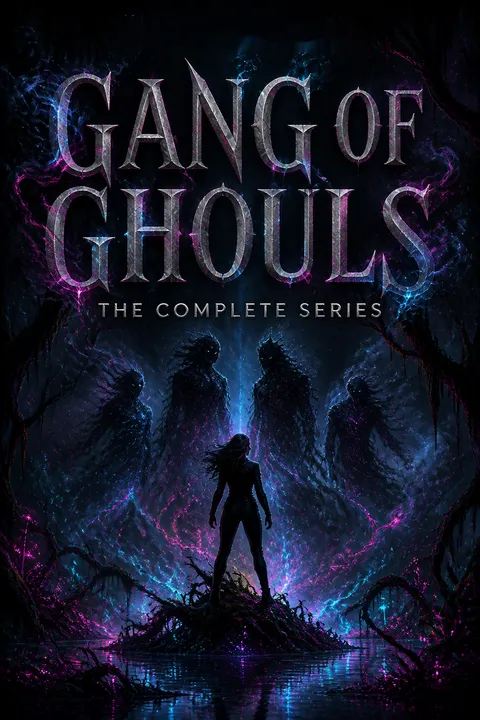

Plot Summary
Homecoming and Hauntings
After seven years in a psychiatric hospital, Lily Strom comes home to Lovell Rise College, determined to start over and prove her sanity. But the town is as unwelcoming as ever, with old classmates like Ansel Hunter mocking her and professors like Mr. Grimes singling her out. Lily's family has all but disowned her, and the mystery of her past—what happened the day she was committed—haunts her. As she tries to fit in, she's plagued by strange sensations and the feeling that something is watching her, especially when she visits the marsh where she once nearly drowned. The wind whispers her name, and the past feels closer than ever, setting the stage for a return of old, impossible friends.
Ghosts of the Marsh
In the marsh, four spirits—Nox, Kai, Ruin, and Jett—watch over Lily, desperate to protect her but unable to reach her as they once did. Once her imaginary friends, they're now ghosts, bound to the place where they died decades ago. They see Lily's pain and the cruelty she faces, and their frustration grows. When Kai reveals a plan to regain physical bodies by possessing the worst of Lily's tormentors, the gang seizes the chance. They orchestrate a deadly accident, taking over the bodies of Ansel, Mr. Grimes, Vincent, and Zach. With new forms and old loyalties, they're determined to defend Lily—and settle old scores.
College Cruelty Unleashed
Back at college, Lily's reputation as "psycho girl" spreads like wildfire. She's harassed by students and staff alike, her car is vandalized, and even her assigned peer advisor, Vincent, treats her with contempt. The cruelty escalates until Lily is physically attacked and locked in a utility room by her classmates. Meanwhile, the newly embodied gang members struggle to reconnect with Lily, who doesn't recognize them in their new forms. Their attempts to protect her only make things worse, drawing more suspicion and violence. Lily's isolation deepens, and the mystery of her lost memories grows more urgent.
The Gang Returns
The four men—now in the bodies of Lily's tormentors—reveal themselves to her, insisting they're her childhood protectors. At first, Lily is terrified and skeptical, but as they share memories only her imaginary friends could know, she's forced to accept the impossible. The men are fiercely protective, vowing to defend her from anyone who threatens her. Their presence is both a comfort and a complication, as their violent methods draw more attention and danger. As Lily's trust grows, so does her attraction to the men, blurring the lines between friendship, family, and something more.
Possession and Protection
The gang's aggressive defense of Lily leads to bloody confrontations with her bullies and the college administration. Their supernatural abilities—strength, mind control, emotional manipulation, and artistic transformation—give them an edge, but also make them targets. As they settle into Lily's life, they push her to confront her past and the mystery of her lost memories. Meanwhile, a powerful local family, the Gauntts, begins to take an interest in Lily, and strange marks appear on her skin. The gang's loyalty is tested as they face threats from both the living and the dead.
Unraveling the Past
Determined to reclaim her life, Lily investigates the day she was committed. With the gang's help, she confronts her family and the marsh spirits, uncovering the truth: the Gauntts, a family of supernatural predators, manipulated her and her sister, Marisol, using magic to erase memories and control victims. Lily's lost time was the result of a magical mark placed on her by Nolan Gauntt, who abused Marisol and many others. The marsh spirits, former victims, reveal the depth of the Gauntts' crimes. Lily's rage and pain become the fuel for her own emerging powers.
The Gauntts' Shadow
The Gauntts retaliate, using their influence to turn the town against Lily and the gang. They manipulate the police, poison children with magic, and unleash their marked minions to hunt Lily down. The gang is forced into hiding, relying on allies among the Gauntts' former victims and the reformed Skeleton Corps gang. As the Gauntts' power grows, so does Lily's. She learns to wield her marsh-born magic, breaking the marks on others and rallying an army of the abused. The final battle looms, and the cost of victory becomes clear.
Blood, Magic, and Betrayal
The Gauntts' attacks grow more desperate and deadly. Friends are lost, and the gang is pushed to the brink. Lily's powers reach new heights as she learns to manipulate blood and water, but the strain threatens to consume her. The Gauntts offer her a deal: join them and save the children, or watch more innocents die. Lily refuses, choosing to fight even as the odds stack against her. The gang's unity is tested, and Marisol steps up, determined to claim her own agency in the war. The stage is set for a final, devastating confrontation.
Marsh Spirits Awaken
In a last-ditch effort, Lily returns to the marsh, seeking the help of the spirits of the Gauntts' victims. She offers herself as a conduit, channeling their rage and pain into a force of nature. The marsh spirits rise, taking monstrous form, and descend on the Gauntts as they attempt another soul-transfer ritual. The Gauntts are drowned and destroyed by the very magic they sought to control. Lily nearly loses herself in the process, but is saved by the love and loyalty of her found family. The cycle of abuse is broken, and the marsh is finally at peace.
The Siege of Lovell Rise
With the Gauntts dead, their magic unravels. The marks on their victims fade, and the town begins to heal. But the aftermath is chaotic: the police and media descend, seeking answers for the violence and the deaths. Lily and the gang must navigate the fallout, protecting their allies and ensuring the truth comes to light. Marisol finds her voice, speaking out against the Gauntts and inspiring others to do the same. The Skeleton Corps is reformed under new, just leadership. Lily's powers settle, and she learns to live with the scars of her past.
The Final Confrontation
The truth about the Gauntts' crimes is exposed, and their legacy is shattered. Survivors come forward, and the community begins to reckon with the damage done. Lily and the gang are cleared of wrongdoing, their heroism recognized by those who matter. Marisol starts a new life, free from fear. The gang finds new purpose, using their powers to protect the vulnerable and build a better future. Lily's relationship with the men deepens, and together they create a new kind of family—one forged in love, loyalty, and the refusal to let evil win.
Aftermath and New Beginnings
One year later, Lily's life has transformed. She's a rising star, her music career taking off, and her sister is thriving. The gang has found peace and purpose, their supernatural gifts now a force for good. Together, they've built a home filled with laughter, love, and the occasional frog. The scars of the past remain, but they're no longer chains. Lily has learned to trust herself, to love fiercely, and to fight for what matters. The story ends not with an ending, but with the promise of more adventures, more healing, and more hope.
Analysis
Gang of Ghouls is a dark, thrilling, and ultimately hopeful exploration of trauma, survival, and the power of found family. At its core, the series is about reclaiming agency from those who would steal it—whether through violence, manipulation, or supernatural means. Lily's journey from outcast to heroine is both a personal and communal one: she cannot heal alone, and neither can the town. The supernatural elements—ghosts, possession, magic—are not just genre trappings, but metaphors for the scars of abuse and the struggle to break free from cycles of harm. The reverse harem structure is used not for titillation, but to show the many forms love and support can take, and to challenge the idea that healing is a solitary process. The Gauntts are chilling villains, their predation a stand-in for all forms of generational abuse and corruption. The story's resolution is both cathartic and realistic: the scars remain, but they are no longer chains. Gang of Ghouls is a testament to the resilience of survivors, the necessity of community, and the belief that even the most broken can find hope, love, and a new beginning.
Review Summary
People Also Read

Characters
Lily Strom
Lily is the heart of the story—a young woman returning home after seven years in a psychiatric hospital, burdened by trauma and the mystery of her lost memories. She's fiercely loyal, stubborn, and determined to protect her sister, Marisol, at any cost. Lily's journey is one of reclaiming agency: from bullied outcast to supernatural warrior, she learns to wield the marsh-born magic that once marked her as "crazy." Her relationships with the four men—Nox, Kai, Ruin, and Jett—are complex, blending friendship, romance, and found family. Lily's greatest strength is her compassion, but she must also learn to embrace her own darkness to defeat the Gauntts. Her arc is one of healing, self-acceptance, and the creation of a new kind of family.
Nox (Lennox Savage)
Nox is the de facto leader of the Skullbreakers, both in life and after death. Possessing the body of Mr. Grimes, he's physically imposing, brash, and unyielding in his loyalty to Lily and his friends. Beneath his tough exterior lies deep guilt over past failures and a desperate need to keep his loved ones safe. Nox's supernatural power is raw strength and the ability to project force, but his true gift is his unwavering devotion. He struggles with the limits of violence as a solution, learning to trust Lily's judgment and embrace vulnerability. His love for Lily is both possessive and tender, and his journey is one of redemption and learning to lead with both heart and muscle.
Kai
Kai is the brains of the group, possessing Zach's body and a mind that's always several steps ahead. Analytical, reserved, and sometimes socially awkward, he's a master manipulator—of both people and supernatural energies. His power is mind control, but he's often blind to his own feelings. Kai's arc is about learning to connect, to trust, and to let himself be loved. His relationship with Lily is a slow burn, built on mutual respect and intellectual chemistry. He's the first to see the big picture, but must learn that not everything can be solved with logic. His loyalty is absolute, and his growth is in embracing the messiness of emotion and family.
Ruin
Ruin, in Ansel's body, is the group's optimist and heart. He's exuberant, affectionate, and always ready with a joke or a hug. His supernatural power is emotional manipulation, but he uses it to comfort and inspire rather than control. Ruin's past is marked by neglect, and he clings to joy as a survival mechanism. His love for Lily is open and unconditional, and he's the first to accept her as she is. Ruin's journey is about learning that it's okay to feel pain and anger, and that true happiness comes from facing the darkness, not avoiding it. He's the glue that holds the group together, teaching them—and Lily—the value of hope.
Jett
Jett, possessing Vincent's body, is the most reserved and enigmatic of the group. He expresses himself through art, using his supernatural power to reshape reality in subtle, creative ways. Jett's past is full of pain and self-doubt, and he struggles with guilt over past mistakes. His relationship with Lily is the slowest to develop, marked by hesitance and deep longing. Jett's arc is about learning to forgive himself, to accept love, and to use his gifts for healing rather than destruction. He's the group's conscience, reminding them—and himself—that beauty can be found even in brokenness.
Marisol Strom
Lily's younger sister, Marisol, is the catalyst for much of the story's action. Abused and manipulated by the Gauntts, she's initially fragile and withdrawn, but with Lily's support, she finds her voice and agency. Marisol's journey is one of reclaiming her life, learning to fight back, and discovering her own strength. She's both a symbol of what's at stake and a fully realized character, whose healing mirrors Lily's. Her relationship with the gang is one of growing trust, and her arc is about moving from victim to survivor to advocate.
The Gauntts (Nolan, Marie, Thomas, Olivia)
The Gauntts are the story's central antagonists—a family of supernatural predators who use magic to steal youth, erase memories, and control their victims. Nolan and Marie, the patriarch and matriarch, are chillingly calm, manipulative, and utterly remorseless. Their children, Thomas and Olivia, are complicit in the family's crimes, perpetuating the cycle of abuse. The Gauntts' power is both magical and social: they control the town through wealth, influence, and fear. Their arc is one of hubris and downfall, as their own magic and the spirits of their victims turn against them. They embody the story's themes of generational trauma and the corrupting nature of unchecked power.
Peyton
Once Lily's chief tormentor, Peyton is revealed to be another of the Gauntts' victims, her cruelty the result of magical manipulation and her own pain. As her memories are restored, she becomes a key ally, helping to rally other survivors and expose the Gauntts' crimes. Peyton's arc is about redemption, self-forgiveness, and the messy process of healing. She's a reminder that victims can also be perpetrators, and that breaking the cycle of abuse requires both courage and compassion.
Skeleton Corps
The Skeleton Corps are the local gang who once murdered the Skullbreakers and later serve as the Gauntts' enforcers. Many of their members are revealed to be marked and manipulated by the Gauntts, their loyalty bought or coerced. As Lily and the gang break the marks, the Corps fractures, with some members joining the fight against the Gauntts. The Corps represent the broader community's complicity and the possibility of change, showing that even the most damaged systems can be reformed from within.
Marsh Spirits
The spirits of the Gauntts' murdered hosts and victims linger in the marsh, bound by pain and unfinished business. Initially unable to communicate, they become Lily's allies in the final battle, channeling their rage and magic to destroy the Gauntts. The marsh spirits embody the story's themes of justice, retribution, and the power of collective action. Their arc is one of transformation—from helpless victims to agents of their own liberation.
Plot Devices
Supernatural Possession and Memory Magic
The story's central plot device is the supernatural: ghosts, possession, and memory-altering magic. The gang's return to life by possessing the bodies of Lily's tormentors is both a literal and metaphorical reclaiming of agency. The Gauntts' use of magical marks to erase memories and control victims is a powerful metaphor for generational trauma and abuse. The breaking of these marks—through Lily's growing powers and the support of her found family—serves as both plot engine and emotional catharsis. The supernatural is not just spectacle, but a means of exploring the psychological scars of abuse, the struggle for self-determination, and the possibility of healing.
Found Family and Reverse Harem
The reverse harem structure is more than just romantic fantasy—it's a narrative device that allows Lily to experience different forms of love, support, and acceptance. Each man represents a different aspect of healing: protection, intellect, hope, and creativity. Their collective devotion to Lily, and her eventual acceptance of all of them, is a radical act of self-love and defiance against a world that tried to break her. The found family trope is used to contrast the toxic, abusive family of the Gauntts, highlighting the power of chosen bonds over blood ties.
Trauma, Amnesia, and Recovery
The use of amnesia and recovered memories is both a plot mystery and a psychological device. Lily's lost time is the key to unraveling the Gauntts' crimes, and her journey to reclaim her memories mirrors the process of trauma recovery. The breaking of magical marks is a metaphor for therapy, confrontation, and the reclaiming of narrative. The story uses foreshadowing—strange marks, whispers in the marsh, Lily's sense of being watched—to build suspense and gradually reveal the truth.
Duality of Violence and Healing
The story constantly balances violence and healing: the gang's brutal methods are both a source of danger and a means of protection. Lily's powers are destructive, but also restorative. The narrative structure alternates between scenes of confrontation and moments of intimacy, showing that true strength lies in the ability to both fight and forgive. The final battle, in which the marsh spirits destroy the Gauntts, is both a reckoning and a release, allowing the survivors to begin anew.
Narrative Structure and Perspective
The story is told through multiple perspectives—Lily, the gang members, and occasionally other characters—allowing for a deep exploration of psychological states and relationships. The use of flashbacks, dreams, and recovered memories creates a layered narrative, mirroring the process of piecing together a shattered self. The structure is cyclical: the story begins and ends with Lily returning home, but she is transformed by the journey.
About the Author
Download PDF
Download EPUB
.epub digital book format is ideal for reading ebooks on phones, tablets, and e-readers.








































