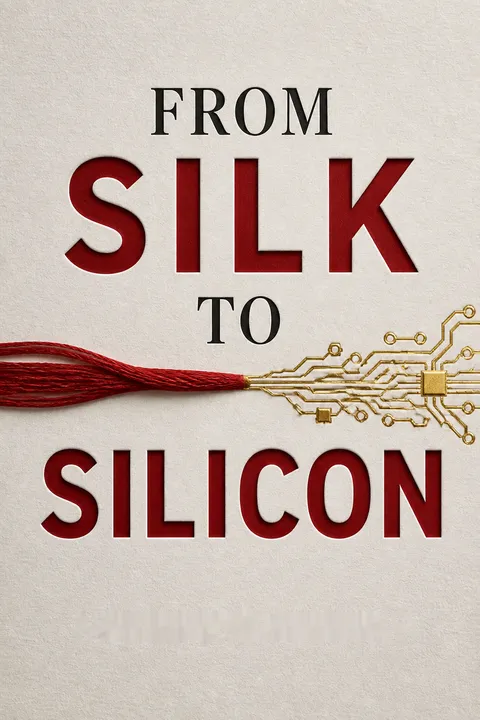

Key Takeaways
1. Individuals, Not Just Forces, Drive Globalization
To my knowledge, however, globalization has never been seen through the lens of a small number of people whose heroic deeds gave it a gigantic boost.
Human agency matters. The book argues that globalization, often viewed as a result of sweeping forces like war or trade, is fundamentally shaped by a few extraordinary individuals. These ten figures, through their unique actions and decisions, profoundly accelerated the interconnectedness of the world, demonstrating the difference that men and women make in history. Their stories provide the "flesh and blood" of globalization, highlighting how individual choices can alter the course of impersonal circumstances.
Beyond grand narratives. While wars, trade, and migration are undeniable drivers, focusing on specific personalities reveals the triumphs, failures, and motivations behind these large-scale shifts. It allows us to measure contemporary leaders against those who came before them, understanding that history is a rich combination of both broad trends and decisive human action. The book posits that understanding these central personalities is crucial for a complete grasp of history.
Transformational impact. The selected individuals were not merely transactional leaders; they were transformational. They didn't just win battles or negotiate treaties; they "opened doors to a broad array of possibilities for progress," changing prevailing societal paradigms and raising hopes across civilizations. Their achievements were not only spectacular in their own eras but continue to shape our world today, laying essential groundwork for the global society we inhabit.
2. Empire Builders Forged Early Global Connections
Genghis Khan not only brought so much territory under one political roof but he started the process, which every other leading character in this book would broaden and deepen, of creating the physical, commercial, and cultural connections that define globalization today.
Unifying vast territories. Genghis Khan, rising from the central Asian steppes, built the largest land empire in history, stretching from the Pacific to Eastern Europe. His conquests, though brutal, created unprecedented physical, commercial, and cultural connections across Eurasia, symbolized by the revitalization of the Silk Road. This "Pax Mongolica" fostered an era of peace, modernization, and prosperity, uniting diverse populations under a single political and administrative roof.
From trade to empire. Robert Clive, a rogue clerk turned warrior, captured India for the British Empire, transforming the East India Company from a fragmented trading operation into a territorial power. His victories at Arcot and Plassey cemented British supremacy over India's wealthiest provinces, laying the foundation for an empire that would spread market economics, democratic ideals, and the rule of law across a quarter of the world's landmass. Clive's actions demonstrated how commercial enterprises, backed by military force, could become instruments of global expansion.
Dual nature of globalization. Both Khan and Clive exemplify the dual nature of globalization: the dislocation and destruction it can inflict, alongside the peace, modernization, and prosperity it can create. Their empires, built through brutal force, ultimately established channels for the spread of commerce, exchange of ideas, and unification of administrative procedures, profoundly boosting early globalization.
3. Explorers and Innovators Shrink the World
If Henry could get an expedition past Bojador, he would break psychological barriers that had held back European exploration for centuries, and liberate Portuguese minds to venture out into the world with an even greater sense of possibility and confidence.
Breaking geographical barriers. Prince Henry the Navigator, driven by a mix of religious zeal and a lust for riches, systematically explored the African coast, overcoming centuries of superstition surrounding Cape Bojador. His methodical approach to discovery, meticulous documentation, and institutionalization of exploration laid the groundwork for Europe's first maritime empire and the systematic exploration of Africa, Asia, and the Americas. This era established continuous trade among all key regions of the earth for the first time.
Conquering distance with speed. Cyrus Field, a paper industry tycoon, orchestrated the laying of the transatlantic telegraph cable, arguably the single greatest leap forward in global communications. This "Victorian Internet" reduced communication time between Europe and America from weeks to seconds, fundamentally reshaping war, peace, diplomacy, and commerce. Field's perseverance in the face of repeated failures demonstrated the power of human ingenuity to overcome seemingly impossible technological and logistical challenges.
Shrinking time and space. These pioneers dramatically "shrank" the world. Henry's voyages opened new physical horizons, while Field's cable collapsed the temporal and spatial barriers to information exchange. Their achievements were critical to furthering globalization, making the world smaller and the spread of international influences infinitely faster, paving the way for future communication breakthroughs like radio, television, and the internet.
4. Global Finance and Industry Power Interconnectedness
For this growing international bond market brought together Europe’s true ‘capitalists’: that elite of people wealthy enough to be able to tie up money in such assets, and shrewd enough to appreciate the advantages of such assets compared with traditional forms of holding wealth [like land].
The circulatory system of the world. Mayer Amschel Rothschild, from the confines of the Frankfurt ghetto, founded the most powerful bank the world had yet seen, pioneering financial globalization. The House of Rothschild created a multinational network that channeled capital across borders, financing governments, wars, and industries, and developing a sophisticated international bond market. This system allowed for the unprecedented movement of money, connecting borrowers and creditors of different nationalities with increasing ease.
Fueling global growth. John D. Rockefeller, a meticulous bookkeeper, built the global petroleum industry, transforming it from a chaotic scramble into a highly organized, vertically integrated system under Standard Oil. His empire, which dominated global markets, fueled industrialization worldwide and became a model for multinational corporations. Rockefeller's strategic vision and ruthless efficiency made oil the world's most important commodity, driving economic growth, trade, and investment across borders.
Beyond profit motives. Rockefeller also launched global philanthropy, establishing institutions like the Rockefeller Foundation with an explicit mission to help humanity "throughout the world." This initiative, run with business-like efficiency, addressed global challenges in health and education, filling a crucial space between government and corporate activities. Both Rothschild's financial innovations and Rockefeller's industrial and philanthropic empires were pivotal in making the world more economically integrated and addressing its pressing social problems.
5. Supranationalism Redefines Borders and Cooperation
The European Union is an unparalleled historical experiment in governance.
Dissolving national boundaries. Jean Monnet, a French cognac salesman turned diplomat, became the architect of the European Union, leading one of the most far-reaching experiments in globalization. His "Schuman Plan" established the European Coal and Steel Community (ECSC), forcing an unprecedented surrender of national sovereignty to a supranational authority. This initiative aimed to abolish trade and regulatory barriers between sovereign states, ultimately leading to a common currency and central bank.
Building peace through integration. Monnet's vision was to prevent future European wars by making conflict materially impossible and politically unthinkable. He believed that by pooling interests and delegating sovereign powers to common institutions, nations would gradually change their behavior, fostering a habit of cooperation. The ECSC was the "first step in the federation of Europe," laying the cornerstone for the European Economic Community (EEC) and eventually the European Union (EU).
A model for global governance. The EU, a direct descendant of Monnet's work, has grown into a powerful multinational regional grouping, establishing freedom of movement for goods, people, services, and money across its borders. Despite current challenges, its success in fostering peace and prosperity among diverse nations serves as a microcosm for organizing globalization itself, offering a model for other regional blocs and raising fundamental questions about the future of supranational governance.
6. Free Markets Unleash Global Economic Integration
To those waiting with bated breath for that favorite media catchphrase, the ‘U-Turn,’ I have only one thing to say. You turn if you want to. The lady’s not for turning.
Dismantling state control. Margaret Thatcher, "The Iron Lady," spearheaded a revolution that revived free markets and profoundly globalized the British economy. She aggressively privatized state-owned companies, weakened labor unions, and deregulated financial markets, dismantling decades of socialist policies. Her unwavering conviction that "there is no alternative" to shrinking government and letting markets flourish set a new global standard.
Unlocking trade and investment. Thatcher's policies released a gusher of trade and money across borders, linking Britain with other countries as it had not been for generations. Privatization forced former state monopolies to become globally competitive, while deregulation of the City of London transformed it into a leading international financial hub. Her confrontational approach to unions also made the workforce more competitive in a globalized economy.
A global paradigm shift. Thatcher's "shock therapy" provided the first clear proof that socialism could be rolled back, inspiring similar free-market reforms worldwide. Her ideas, later encapsulated in the "Washington Consensus," influenced nations across Western Europe, Latin America, and Asia to embrace lower trade barriers, less regulation, and reduced government ownership, adding "steroids to globalization" and reshaping the global economic landscape.
7. Technological Revolutions Accelerate Global Change
He built the products—the semiconductors, the transistors, the integrated circuits, the microprocessors—that drove the consumer products revolution that has transformed global society in the twenty-first century.
The brain of the digital age. Andrew Grove, a Hungarian refugee, became the driving force behind Intel and the Third Industrial Revolution. As CEO, he transformed Intel into the world's most important technology company, pioneering the mass production of microprocessors—the "computer on a chip" that became the brains of personal computers, smartphones, and countless other devices. His relentless focus on making chips smaller, faster, and cheaper, embodied in "Moore's Law," set the pace for unprecedented technological advancement.
Revolutionizing high-tech management. Grove's distinctive contribution was to combine Silicon Valley's creative culture with unparalleled organizational discipline. He developed groundbreaking management principles, emphasizing accountability, continuous improvement, and the ability to adapt swiftly to "inflection points"—moments of fundamental change. His "constructive confrontation" and strategic decision to pivot Intel from memory chips to microprocessors in the face of Japanese competition became legendary, defining how high-tech companies survive and thrive in a volatile global market.
Globalizing innovation and production. Grove's Intel not only produced core technology but also globalized its manufacturing and R&D, establishing facilities and tapping talent across continents. This spread both the technology and the processes for commercial production, making him a pioneer of the modern communications age. His ideas on management and innovation continue to influence technology companies worldwide, driving the digital revolution that underpins contemporary globalization.
8. China's Relaunch Reshapes the Global Order
In joining China to the world and vice versa, Deng made globalization larger and deeper than ever, and he unleashed new forces that will move the center of global commerce and political influence from the West toward the East.
Opening a closed giant. Deng Xiaoping, a pragmatist who endured political purges and exile, emerged as China's supreme leader in the late 20th century, fundamentally transforming the Middle Kingdom. He reversed Mao's isolationist and ideologically rigid policies, launching an economic counterrevolution that opened China to global markets and unleashed the ingenuity of its people. His reforms, like the "Four Modernizations" and special economic zones, prioritized economic development and growth over socialist dogma.
Unleashing unprecedented growth. Deng's "it doesn't matter if the cat is black or white, so long as it catches the mouse it is a good cat" philosophy led to three decades of unprecedented economic growth, averaging over 9% annually. He lifted hundreds of millions out of poverty, expanded foreign trade a hundredfold, and encouraged Chinese students to study abroad. By joining the World Trade Organization, China bound itself to international standards of openness, becoming a central and vibrant part of the globalized society.
A new global power. Deng's legacy is a China that is a formidable economic and political force, shifting the center of global influence from West to East. While maintaining the Communist Party's monopoly on power, he demonstrated that economic liberalization could coexist with authoritarian rule, a paradox that continues to shape China's trajectory. His successors, like Xi Jinping, continue to invoke Deng's vision while navigating new challenges of slower growth, inequality, and a more assertive stance on the international stage.
9. Transformational Leaders are "Hedgehogs" with Singular Focus
The fox knows many things, but the hedgehog knows one big thing.
Unwavering dedication. The individuals in this book were all "hedgehogs," relentlessly pursuing one big idea with missionary-like faith. This singular focus provided clarity to their complex maneuvers and fueled their resilience in the face of daunting setbacks. Their fierce determination allowed them to overcome despair and remain impervious to humiliation or tragedy, betting everything on their core obsession.
Long-term commitment. These leaders started their efforts at a very early age and never abandoned them, building their accomplishments over decades. From Robert Clive's step-by-step career in India to John D. Rockefeller's control of the world's most important commodity, and Margaret Thatcher's lifelong espousal of free-market beliefs, their long-term horizons were crucial. They were not "wunderkinder" but rather individuals whose achievements compounded over time.
Bold risk-takers. Their obsessions left them no choice but to take bold risks, which were often "educated" risks within their confined fields of expertise. Whether it was Genghis Khan and Robert Clive risking physical survival, or Jean Monnet, Margaret Thatcher, and Deng Xiaoping gambling on revolutionary ideas, their singular goals compelled them to push boundaries and defy conventional wisdom, demonstrating an extraordinary capacity for sustained courage.
10. Great Leaders Ride, Not Create, the Tides of History
They steered history only insofar as they seized the opportunity that contemporary circumstances afforded them.
Capitalizing on existing trends. The book argues that these leaders did not fundamentally change the course of history but rather capitalized on powerful trends already in motion. They "swam with the stream rather than against it," seizing opportunities that contemporary circumstances presented. While others might have eventually achieved similar feats, these protagonists were "first movers" due to their intelligence, quickness, and singular obsession.
Serendipitous timing. Each leader emerged at a moment when the "tide in the affairs of men" was at its flood. Prince Henry benefited from Europe's awakening spirit of exploration, while Robert Clive rode the momentum of rising British industrial and naval power. Mayer Amschel Rothschild exploited the chaos of the Napoleonic era, and Cyrus Field leveraged the nascent telegraph technology. John D. Rockefeller capitalized on the burgeoning industrial revolution and global oil demand.
Contextual opportunity. Jean Monnet's vision for a united Europe gained traction only because post-WWII Europe and the US were desperate for unity. Margaret Thatcher's reforms succeeded because socialist policies had failed miserably, and Deng Xiaoping's economic counterrevolution gained momentum as Mao's policies decimated China. These leaders were products of their time, shaping it by recognizing and seizing opportune moments.
11. Accidental Globalists Driven by Personal Ambition, Not Grand Vision
Accelerating the interconnectedness of nations was never their motivation; instead, they were propelled by the urge to acquire power, or fortune, or fame, or something else that came with solving a concrete set of urgent problems in front of them.
Personal drivers, global impact. The book reveals that these individuals were not grand strategists for globalization itself. Their motivations were often personal: the pursuit of power, fortune, fame, or revenge. Genghis Khan sought power and plunder, Prince Henry aimed for riches and religious conversion, and Mayer Amschel Rothschild desired wealth. Their actions, driven by these immediate, concrete goals, inadvertently led to profound global transformations.
Step-by-step progress. Their achievements were not the result of a preconceived global vision but rather a series of incremental steps, addressing one challenge at a time. John D. Rockefeller, initially an accountant, likely didn't envision a global oil behemoth. Jean Monnet, while having a long-term vision for Europe, focused on solving acute political problems of the moment. Their "accidental globalism" highlights how solving immediate, tangible problems can have unforeseen, far-reaching consequences.
The role of serendipity. Serendipity played a significant role in their paths to global influence. Whether it was Genghis Khan's response to a murdered emissary, Cyrus Field's chance encounter with an engineer, or Deng Xiaoping's narrow escape from arrest, a thin line often separated their immortality from obscurity. Their ability to capitalize on these chance occurrences, combined with their relentless drive, propelled them to reshape the world.
12. Complex Challenges Demand Resilient, Detail-Oriented Leadership
There is no reason to believe that rising complexity has altered the basic process of forcing change: taking advantage of shifting circumstances, identifying a major problem, and attacking it at its weakest point with the clear strategic thinking and single-minded tenacity of a Prince Henry, a Cyrus Field, or an Andy Grove.
Mastery of intricate details. These leaders were not just strategists; they were deeply involved in the "nitty-gritty" of their complex projects. Prince Henry managed a vast industrial empire from shipbuilding to colonial administration. Mayer Amschel Rothschild meticulously coordinated a multinational banking and smuggling network. Cyrus Field navigated technological, scientific, and political complexities, while John D. Rockefeller managed a global corporate empire with obsessive attention to detail.
Surrounding themselves with talent. None achieved their feats alone; they consistently surrounded themselves with exceptional talent. Genghis Khan recruited engineers and scholars from conquered lands, Prince Henry attracted top experts to Sagres, and Cyrus Field coordinated diverse teams of scientists, engineers, and financiers. John D. Rockefeller and Andrew Grove built highly skilled managerial teams, and Deng Xiaoping revitalized China's bureaucracy with younger, more competent staff.
Resilience in the face of adversity. Their challenges were as formidable as any today, from the "forbidden zones" of the Silk Road to the psychological barrier of Cape Bojador, or the post-WWII devastation of Europe. Their ability to identify major problems, attack them at their weakest points, and demonstrate "single-minded tenacity" allowed them to push through seemingly impossible obstacles. This resilience, combined with their capacity for detailed execution, is a timeless lesson for navigating today's complex global landscape.
Review Summary
From Silk to Silicon by Jeffrey E. Garten profiles ten historical figures who shaped globalization, from Genghis Khan to Deng Xiaoping. Reviews average 3.87/5 stars, with readers appreciating the accessible biographical approach and fascinating historical insights. Common criticisms include insufficient depth due to brief chapters, failure to adequately address subjects' negative impacts and moral failings, and questionable inclusion of certain figures like Margaret Thatcher. Many found earlier chapters more engaging than later ones. Readers valued learning about lesser-known figures like Jean Monnet and Cyrus Field, though some found the writing dry and the connection to globalization unconvincing.
People Also Read







Download PDF
Download EPUB
.epub digital book format is ideal for reading ebooks on phones, tablets, and e-readers.








































