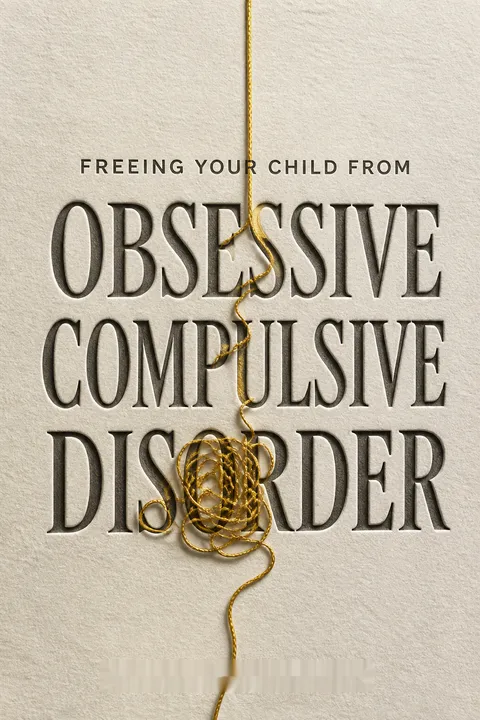

Key Takeaways
1. OCD is a Treatable Brain Condition, Not a Character Flaw.
The message of this book is that children can truly break free from OCD if they have their parents’ help and support.
Understanding OCD. Obsessive-compulsive disorder (OCD) is a neurobiological condition affecting 1 in 100 children, often as young as four. It manifests as intrusive, unwanted thoughts (obsessions) and repetitive actions (compulsions) that disrupt daily life, social relationships, and academic functioning. Children with OCD feel trapped by senseless rules and demands, enduring scrutiny, pain, and embarrassment.
Brain glitch, not choice. Modern research, including PET scans, reveals OCD as a "brain hiccup" or "brain lock"—a biochemical mishap where the brain's filtering system malfunctions, causing thoughts to get stuck. This understanding shifts blame from the child or parent to a treatable medical condition. It's not about a child willfully choosing bizarre behaviors, but rather being controlled by an invisible enemy in their brain.
Hope and recovery. This new era offers potent tools: cognitive-behavior therapy (CBT) and, if necessary, medication. These treatments help children distinguish between their own thoughts and "OCD junk mail," fostering a sense of control and hope. The outlook is no longer grim; children can gain control over symptoms and lead normal lives.
2. Parents are Essential Guides in the Fight Against OCD.
For you to lead your child out of the land of OCD, you need to be a good tour guide.
Front-line combatants. Parents are on the front line against OCD, often feeling disoriented and helpless as their child's behavior becomes unrecognizable. They are crucial in the recovery process, providing the tools and support needed for their child to break free. Without parental understanding and involvement, treatments are less effective, as OCD often pulls parents into its web of fear and ritual.
Reclaiming authority. OCD can usurp parental authority, making children's moods and rituals dictate household life. Parents need a battle plan to combat this enemy, which often means translating the bizarre customs of OCD into knowable concepts. By understanding OCD, parents can reclaim their role as confident guides, helping their children navigate the tumultuous land of OCD.
Empowering children. Just as parents teach children not to talk to strangers, they can guide them in dealing with OCD. This involves helping children see OCD as a "bully" or "monster" that can be bossed back. When parents are sure-footed guides, their children are more likely to follow, transforming from victims to self-possessed OCD detectors.
3. OCD is a "Brain Trick" – Relabel and Externalize It.
The shift is from “I am a problem” to “I have a problem.”
Junk mail from the brain. OCD thoughts are like junk mail: intrusive, irrational, recurrent, disturbing, and anxiety-producing. They look official and sound important, claiming terrible things will happen, but they are false alarms. Everyone has strange thoughts, but for children with OCD, these thoughts get stuck and demand attention.
Relabeling is power. The first step in battling OCD is to relabel these thoughts as "brain tricks," "junk mail," or a "brain hiccup." This externalizes the problem, separating the child's identity from the disorder. For example, instead of "I am crazy," the child learns "My brain is playing a trick on me." This helps children understand:
- They are not crazy or bad.
- The thoughts are not personal or real.
- They are not responsible for these thoughts.
Bossing back the bully. Giving OCD a name (e.g., Mr. Bossy, Worrywart, Brain Bug) transforms it into a common enemy for the child and parents to fight together. This empowers the child to "boss back" the OCD, refusing to listen to its demands and reclaiming control over their time and actions. This process helps children focus their anger and efforts on winning back their freedom.
4. Break the OCD Cycle: Resist Compulsions and Let Anxiety Pass.
Compulsions only reduce temporarily the anxiety created by obsessions.
The vicious cycle. OCD operates in a vicious cycle: obsessive thoughts trigger intense distress, leading to compulsions that provide temporary relief. This relief negatively reinforces the compulsion, making the child believe it's the only way out. However, the power of rituals doesn't last, and the nagging doubt quickly resurfaces, demanding more elaborate rituals.
Anxiety will pass. A core principle of behavior therapy is that anxiety, like cold water in a pool, will diminish on its own if not fed by compulsions. The human body is designed to "reset" to baseline within 10-15 minutes, even during intense anxiety. Children learn that by resisting the compulsion, they send a signal to their brain that there's no real danger, allowing the "all clear" signal to sound.
Show and tell. Breaking the cycle involves "exposure and ritual prevention" (ERP). Children are coached to:
- Show: Intentionally do the opposite of OCD's commands (e.g., touch a feared object and not wash, do a ritual wrong, shorten a ritual).
- Tell: Use "boss-back talk" to challenge the OCD (e.g., "You're a brain trick, I'm not listening!").
- Refocus: Engage in preferred activities to shift attention away from the obsession.
This process teaches the brain a new path, proving that nothing bad happens when rituals are resisted, and freedom is gained.
5. Effective Treatment Combines Cognitive-Behavioral Therapy (CBT) and, if Needed, Medication.
For the first time ever for any psychiatric condition or any psychotherapy technique, we have scientific evidence that cognitive-behavioral therapy alone actually causes chemical changes in the brains of people with OCD.
CBT as first-line. Expert consensus guidelines recommend Cognitive-Behavioral Therapy (CBT), particularly Exposure and Ritual Prevention (ERP), as the first line of defense for children with OCD. CBT helps children internalize strategies for resisting OCD, leading to lifelong benefits and even observable changes in brain chemistry. It teaches children to "unlearn" the compulsive responses to obsessive thoughts.
Medication's role. Medications, primarily Selective Serotonin Reuptake Inhibitors (SSRIs), can augment CBT by:
- Reducing the volume and intensity of symptoms.
- Decreasing distress and anxiety.
- Lifting co-occurring depression.
Medication can "take the edge off," making it easier for a child to engage in the challenging work of behavior therapy. It's like "waterwings" to help stay afloat while learning to swim.
Combined approach. While CBT alone is highly effective, many children benefit from a combination of medication and therapy, especially if symptoms are severe or accompanied by depression. The goal is to find the optimal balance that empowers the child to fight OCD, with the understanding that the more CBT is practiced, the less reliance there may be on medication.
6. Understand OCD's Changing Course and Prepare for Setbacks.
The starting assumption in this book is that your child can markedly improve from OCD and be armed with lifelong strategies to combat any recurrences.
Wax and wane. OCD is often a chronic condition with symptoms that wax and wane over time. New symptoms may emerge, or old ones resurface, often triggered by stress, illness, fatigue, or significant life changes. This variability is normal and does not necessarily indicate a worsening condition.
Relapse prevention. The goal of treatment is not to eradicate OCD forever, but to equip children with lifelong strategies to manage it. This includes:
- Expecting setbacks: Viewing lapses as normal, beatable occurrences rather than catastrophic failures.
- Identifying triggers: Recognizing what exacerbates symptoms (e.g., exams, family events, sleep deprivation).
- Early intervention: Snapping into action at the first sign of a slip, using learned strategies or seeking booster sessions with a therapist.
Optimistic mindset. Parents can foster optimism by helping children accurately appraise the causes of setbacks (temporary, specific, external) rather than internalizing blame. This teaches resilience and prevents a single slip from spiraling into a full relapse or collapse. The child learns to "fall and get back up," confident in their ability to cope.
7. Tailor Your Parenting: Balance Nurturing with Empowering Your Child.
Finding the balance between roots and wings is a challenge that is not unique to OCD, but it will take some extra thought and practice in this realm.
Roots: Creating a safe environment. Nurturing "roots" means providing emotional safety where fears can be expressed without judgment. This involves:
- Accepting fears without demanding justification.
- Letting the child set the pace of treatment.
- Providing a calm home environment free from ridicule.
- Making room for negative feelings like distress and discouragement.
Wings: Coaching for independence. Empowering "wings" means coaching your child to face challenges and develop self-reliance. This involves:
- Being a positive coach, focusing on effort and progress, not perfection.
- Staying focused on the immediate problem, avoiding past failures or future catastrophizing.
- Devising a clear communication system for OCD moments.
- Allowing the child to take risks and make mistakes, fostering resilience.
Avoiding traps. Parents must avoid common traps like blaming each other, over-diagnosing every behavior as OCD, or overreacting. Consistency between parents is vital, as mixed messages can undermine progress. The goal is to empower the child to fight OCD, not to fight the child.
8. Master Specific Strategies for Common OCD Symptoms.
Underneath, it plays the same song making children doubt and have sticky thoughts about contamination, mistakes, bad thoughts, or order, every time.
Contamination fears. The most common theme, where children fear invisible dirt or germs leading to dreadful consequences. The key intervention is to understand it's not about being clean, but about being sure enough. Strategies include:
- Relabeling: "Mr. Clean is tricking you."
- Exposure: Touching "dirty" objects and resisting washing.
- Limits: Shortening washing time, limiting supplies, using "question coupons" for reassurance.
Checking/Repeating/Redoing. Driven by a gnawing fear that a task is incomplete or wrong. The brain's "unfinished business" circuit gets stuck. Strategies include:
- "Who wants to know?": Differentiating real questions from OCD's demands.
- "Once and Done": Answering questions only once.
- Exposure: Intentionally leaving things unchecked, doing rituals "wrong."
Just Right (Evenness, Ordering, Symmetry, Numbers, Hoarding). Characterized by a need for precision or perfection, often without a clear feared consequence, but an unbearable feeling of "not right." Strategies include:
- "Good Enough": Challenging the pursuit of perfection.
- Exposure: Intentionally messing up order, doing things the "wrong" number of times, resisting fixing.
- Hoarding: Gradually discarding items, setting limits on collecting.
Intrusive Thoughts (Harm, Scrupulosity, Sexual). Disturbing, unbidden thoughts or images that attack a child's sense of self. Strategies include:
- "You are not weird; OCD is weird": Distinguishing obsessions from personal identity.
- Flooding: Prolonged exposure to the feared thought/image until anxiety reduces.
- "No comment, I don't do deals": Refusing to engage with OCD's bargains or threats.
9. Manage Crisis Moments with Calm Containment and Clear Limits.
When your child is escalating, the goal is: Not to stop the outburst. To slow it down. Not to add fuel to the fire.
Understanding meltdowns. Children with OCD may "lose it" not to manipulate, but because their brain circuits are overloaded by constant "brain noise" and anxiety. These outbursts can be intense, serving as a desperate attempt to force a crescendo to an otherwise relentless internal drone. Parents must approach these moments with compassionate guidance, not blame.
Crisis management steps:
- Stop, pull back, breathe: Avoid immediate, reactive responses.
- Contain: Reestablish safety by setting a limit or removing the child from the situation. Don't engage with the "why" or "what if" during escalation.
- Talk slowly and calmly: Use a firm, non-threatening voice.
- Label the state: "It looks like you are stuck. You are really having a hard time now."
- Give feedback later: Once calm, process what happened and discuss alternative responses for next time.
Preventing eruptions. Proactive strategies include:
- Knowing triggers: Identifying situations that lead to meltdowns (e.g., overstimulation, transitions, fatigue).
- Avoiding triggers: Minimizing exposure to known triggers when possible.
- Teaching self-control: Encouraging verbal expression of feelings and practicing cool-down strategies (e.g., counting, deep breaths, walking away).
10. Prioritize Self-Care and Seek Support to Sustain Your Role.
Taking care of yourself may have come to sound like another unwanted job, but without you, your child may not achieve recovery.
Your sanity is vital. Parenting a child with OCD is an exhausting, demanding, and isolating experience. Parents are the "glue" holding everything together, making self-care not an indulgence, but a necessity. Without recharging, parents risk burnout, irritability, and becoming less effective in their crucial role.
Acknowledge negative feelings. It's normal to feel anger, sadness, guilt, and shame when coping with OCD. Suppressing these emotions is toxic. Acknowledging them (e.g., through support groups, counseling, or journaling) helps lift the burden and prevents them from undermining parenting efforts. Guilt, in particular, is destructive, as OCD is nobody's fault.
Combat isolation. Many parents cope alone due to the stigma and misunderstanding surrounding OCD. Connecting with other parents in support groups (online or in-person) provides validation, shared strategies, and a sense of community. It helps to realize that your child's challenges, while unique, are shared by many.
Realistic expectations. This is an extraordinary time, requiring a "lean years" mindset. Prioritize your child's treatment, cut back on other commitments, and allow for convenience shortcuts (e.g., simpler meals, less cleaning). Remember, progress is a marathon, not a sprint, and celebrating small triumphs for both yourself and your child is essential.
11. Collaborate with Schools and Friends to Create a Supportive Environment.
Student-student relationships are an absolute necessity for healthy cognitive and social development and socialization.
Impact on school. OCD significantly impacts a child's educational experience, affecting attention, work production, grades, and social functioning. Symptoms related to bathrooms, hallways, and assignments can be constant challenges, even for children who manage to hide their OCD.
Involving the school. The decision to involve the school depends on the degree to which OCD disrupts the child's education or the classroom. Options range from informal communication with teachers to formal special education services under IDEA or Section 504. Goals include:
- Providing accurate information about OCD.
- Devising accommodations (e.g., untimed tests, reduced assignments, hall passes).
- Establishing a communication system between home and school.
Peer relations. Friendships are crucial for development, but OCD can lead to social isolation due to embarrassment or difficulty explaining symptoms. Children may choose to keep their OCD a secret or selectively share information with trusted friends. Rehearsing how to explain OCD (e.g., "My brain plays tricks on me") can empower them.
Community support. Connecting with other children with OCD, through support groups or OCF events, can be profoundly reassuring. Creating a "Good Health Intervention" curriculum in schools can foster empathy and reduce stigma by presenting OCD as one of many health conditions.
Review Summary
Freeing Your Child from Obsessive Compulsive Disorder receives overwhelmingly positive reviews (4.2/5 stars), with parents praising its practical, comprehensive approach to helping children with OCD. Readers appreciate the book's focus on parenting strategies, behavior therapy techniques, and self-care for parents. Many found it life-changing, reporting significant improvements in their children's symptoms. The book explains OCD as "brain hiccups" and teaches children to "boss back" their intrusive thoughts. Some criticism notes repetition and limited coverage of internal OCD. Overall, reviewers highly recommend it as an essential resource for parents, teachers, and clinicians.
People Also Read










Download PDF
Download EPUB
.epub digital book format is ideal for reading ebooks on phones, tablets, and e-readers.








































