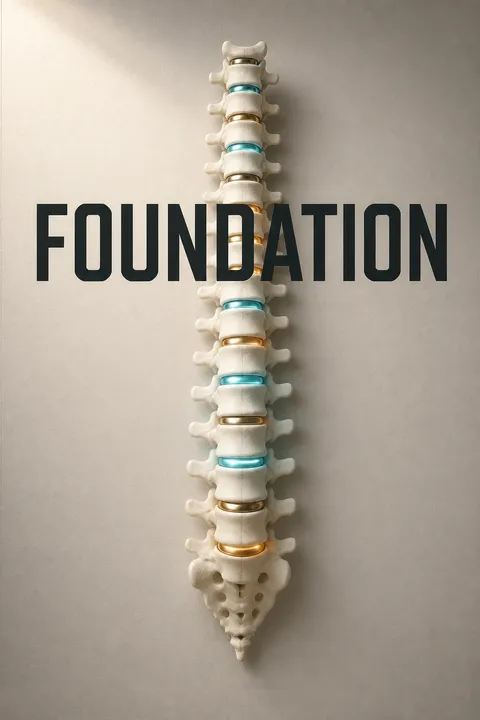

Key Takeaways
1. Redefine Your Core: Shift Focus to the Posterior Chain
The notion that your abdomen is the core of your body is dated.
Rethink core strength. For too long, conventional wisdom has mistakenly placed the emphasis of core strength on the abdominal muscles, leading to endless situps and crunches. This front-focused approach not only neglects the true power center of your body but can also exacerbate back pain by overstressing the smaller, more fragile spinal muscles. Foundation training fundamentally redefines the core, shifting the focus from the visible "six-pack" to the much larger, more powerful muscles in the back of the body.
Engage the posterior chain. Your real core is the posterior chain—a powerful network of muscles including your glutes, hamstrings, lower back, and upper back. These muscles are designed to support the weight of your upper body, propel movement, and provide stability. When these muscles are strong and work together, they create a solid muscular base that protects your spine and allows for confident, pain-free movement. For every exercise you do for the front of your body, you should do at least four for the back.
Integrated movement is key. Foundation training teaches integrated movement, ensuring all these posterior muscles work in harmony. This approach prevents the smaller, delicate muscles of the lower spine from being overworked and compressed, which is a common cause of chronic pain. By activating your true core, you unlock a new level of power, flexibility, and endurance, transforming your body's mechanics from the ground up.
2. Back Pain's True Roots: Sedentary Habits and Faulty Movement Patterns
Unless some blunt force trauma or accident happened, your back problem started long before the pain.
Beyond acute injury. Most back pain isn't a sudden event but the culmination of years of repetitive, mechanical stress on the spine. Our modern, sedentary lifestyle, characterized by prolonged sitting and poor posture, forces the lower spine to act as a fulcrum for movement, a role it's not designed for. This constant forward bending and internal rotation put immense pressure on discs and small back muscles, leading to gradual degeneration and inflammation.
The cycle of pain. When pain strikes, traditional remedies like medication or physical therapy often provide only temporary relief because they treat symptoms, not the root cause. Without addressing the underlying faulty movement patterns, the cycle of injury and low-grade inflammation persists, leading to chronic, nagging pain. Eric Goodman's own experience with severe disc degeneration in his early twenties, despite being an athlete, highlighted the inadequacy of conventional approaches and spurred the development of Foundation training.
Correcting the mechanics. Foundation training intervenes by correcting these damaging movement patterns. It teaches your body to move effectively and powerfully, in balance, so that injuries due to mechanical imbalances and weaknesses fall by the wayside. By changing how you move, you can alleviate pain and prevent its return, even if structural degeneration remains, as seen in Eric's own lasting relief despite unchanged X-rays.
3. Master the Hinge: Move from Your Hips, Not Your Lower Spine
Flexibility and forward bending should come from gross joint movements at the hips and not from the spine.
The spine's true role. Your spine is primarily a center of stability, not extreme flexibility. While it needs to move fluidly, excessive bending from the waist distorts its natural S-curve, hyper-flexing some vertebrae and reducing mobility in others. This puts immense pressure on the discs and small spinal muscles, leading to pain and degeneration. Foundation training emphasizes that movement, especially forward bending, should originate from the powerful hip joints, keeping the spine braced and extended.
Hinging for health. The "hinge" is the fundamental movement pattern taught in Foundation training. It involves extending your back in a straight line from your butt to your neck and bending deeply from your hip joints, with a slight bend in your knees. This action shifts the load from the vulnerable lower spine to the strong muscles of the posterior chain—your glutes and hamstrings—which are designed to absorb and distribute force. Think of a child squatting: butt out, back straight, head up – a perfect anatomical hinge.
Primitive movement patterns. Our bodies evolved with joint lines similar to four-legged animals, where movement is propelled from the hind legs with a rigid spine. Foundation training re-educates your body to return to these primitive, integrated movement patterns. By mastering the hinge, you learn to use your glutes as propelling muscles, reduce compression on your spinal nerves, and protect your knees and ankles from undue stress, allowing you to move with natural power and grace.
4. Foundation Training: A Simple, Progressive Path to Lasting Pain Relief
Our goal is to give you three basic workouts of increasing intensity in the cleanest possible way.
A structured journey. Foundation training offers a clear, progressive plan to conquer back pain and build lasting strength. The program consists of three 2-week workouts—Basic, Moderate, and Intense—each designed to correspond to different levels of pain and rehabilitation. This structured approach ensures you build strength and correct movement patterns incrementally, preventing re-injury and fostering long-term success.
The power of repetition. The initial Basic workout, focusing on five fundamental exercises like The Founder, is crucial for fixing acute pain and establishing correct movement patterns. Repetition is key to mastering these movements, even if they feel awkward or cause shaking initially. This consistent practice solidifies muscle memory, allowing the correct mechanics to carry over into daily life. Many clients report significant pain reduction within just two weeks, feeling their back muscles "turn on" for the first time.
Beyond pain relief. As you progress through the Moderate and Intense workouts, you'll not only eliminate pain but also build layers of strength, increase flexibility, and enhance overall fitness. Foundation training becomes a baseline for any physical activity, from yoga to weightlifting, making everything easier and more powerful. The goal is not just to fix a problem, but to transform your body's capabilities, ensuring you remain vibrant, active, and healthy for life.
5. Strengthen Your Body's Natural Stabilizers and Propellers
Foundation trains you to use your most powerful muscles properly, creating lasting power and flexibility throughout the most important areas of your body.
Targeting key muscles. Foundation training specifically targets and strengthens the muscles vital for spinal stability and powerful movement. These include the deep spinal stabilizers—the multifidi, erector spinae, and quadratus lumborum—which often become overworked and strained with poor posture. By bracing the spine, these muscles allow the larger, more powerful muscles to do their job without causing pain.
Activating the powerhouses. The program also focuses on the body's primary propelling muscles: the glutes and hamstrings. When the lower spine is extended and the glutes fully contract, hip flexors lengthen, and stress is removed from the knees and ankles. Weak glutes, often a result of a sedentary lifestyle, force the lower back and hamstrings to compensate, leading to tension and pain. Foundation exercises ensure these large muscles are properly activated and integrated into every movement.
Releasing tension. Additionally, exercises like the Lunge Stretch and Windmill target the iliopsoas and adductor muscles. Tight iliopsoas muscles, often a symptom of a weak spine, pull the pelvis forward and exaggerate spinal curvature. By strengthening opposing spinal extensors, the psoas can relax. Similarly, strengthening and lengthening the adductors improves pelvic movement and reduces back and knee pain. This comprehensive approach ensures all relevant muscle groups work in balance, alleviating pain and enhancing overall body function.
6. The Foundation Lifestyle: A Holistic Approach to Wellness
As you break through the barriers that pain has created in your life, you are going to feel your energy and power return.
Beyond the workout. Foundation training is more than just exercises; it's a holistic lifestyle designed to support your body's newfound strength and freedom from pain. Once you experience the profound physical and emotional relief of a pain-free life, you'll naturally want to optimize other aspects of your well-being. This lifestyle integrates relaxation, restorative sleep, a metabolic tune-up, and clean eating to complement your physical training.
Combatting modern stressors. Our fast-paced, high-stress lives often lead to unhealthy behaviors like poor eating, excessive alcohol, and sleep deprivation, all of which contribute to inflammation and back pain. Stress hormones like cortisol can heighten inflammation, disrupt sleep, and promote fat accumulation, further straining your back. The Foundation lifestyle encourages conscious choices to counteract these modern pressures, fostering a sense of balance and sustained energy.
Small changes, big impact. Adopting the Foundation lifestyle means making deliberate choices for your health. This includes incorporating daily relaxation techniques, prioritizing 7-8 hours of quality sleep, and being mindful of what you consume. These seemingly small adjustments, when consistently applied, create a powerful synergy with your physical training, transforming your overall health and ensuring your body functions at its peak.
7. Fuel Your Body: Embrace Clean, Anti-Inflammatory Eating
Food is fuel. The better you eat, the better your body will run.
Eat for performance. Just as a high-performance car needs premium fuel, your body thrives on clean, nutrient-rich food. The Foundation lifestyle emphasizes an anti-inflammatory diet, focusing on fresh, whole, and organic foods. This approach avoids processed, refined foods, excessive sugar, and unhealthy fats that contribute to inflammation, a key driver of pain and poor health.
The Paleolithic principle. We advocate for a Paleolithic diet, mirroring what our ancient ancestors ate: lean meats, fish, fresh vegetables, fruits, and nuts. This means minimizing or eliminating "white" foods like processed bread and pasta, and opting for complex carbohydrates like yams, brown rice, and whole grains, especially after strenuous workouts for optimal recovery. Portion control is also crucial; base your intake on your activity level, and practice mindful eating to avoid overconsumption.
Hydration and mindful choices. Proper hydration is paramount; aim for a gallon of water daily to support cellular function, muscle health, and overall energy. Natural juices are fine, but water should be your primary fluid. The "90 percent rule" allows for occasional indulgences, but consistent clean eating will eventually shift your cravings away from processed junk. By making conscious, healthy food choices, you provide your body with the essential nutrients to repair, regenerate, and perform at its best.
8. Prioritize Recovery: Optimize Sleep, Manage Stress, and Rest
You need 7 or 8 hours of sleep a night so that your body can recover and regenerate.
Recovery is non-negotiable. In the pursuit of fitness, recovery is as vital as the workout itself. Overtraining, or insufficient recovery time, leads to constant breakdown, burnout, and increased susceptibility to injury. Your body needs adequate rest to repair muscle tissue, regenerate the nervous system, and consolidate learning. We recommend 48 hours between hard resistance workouts and incorporating 1-2 full rest days per week.
The power of sleep. Sleep is not a passive state; it's a critical period for physical and mental restoration. During deep sleep, growth hormone is released to repair muscles, the nervous system calms, and cortisol levels are at their lowest. Inadequate sleep, often less than 7-8 hours, disrupts hormone balance, increases appetite, impairs concentration, and weakens the immune system. Eating clean in the evening, avoiding stimulants like sugar, can significantly improve sleep quality.
Stress reduction techniques. Emotional stress manifests physically, causing muscle tension that restricts blood flow and oxygen to tissues, leading to spasms and pain. Techniques like deep breathing, meditation, or mindful engagement in Foundation workouts can effectively reduce stress hormones like cortisol. By actively managing stress and prioritizing restorative sleep, you create an optimal internal environment for healing, strength building, and sustained well-being.
9. Vary Your Workouts: Confuse Your Body for Peak Fitness
The best workout for you is one you have never done.
Avoid the "junk pace." Your body is an adaptive machine; if you perform the same workout repeatedly, it will become efficient at it, burning fewer calories and yielding diminishing returns. This "junk pace" can be counterproductive, as it requires recovery without delivering maximal benefits. To continuously challenge your body and boost your metabolism, you must vary your workouts and introduce new stimuli.
High-intensity interval training (HIIT). Interval training is a highly efficient way to maximize your cardio workouts. It involves alternating bursts of intense activity (80-95% effort) with periods of easy recovery. This approach builds a stronger cardiovascular system, increases oxygen delivery to muscles, and creates a significant "afterburn" effect, where your body continues to burn calories at a heightened rate for hours after the workout. Examples include:
- Elliptical workouts with increasing strides or mixed paces.
- Bike intervals with flat/hill variations or drop-sets.
- Treadmill hill repeats or descending intervals.
- Rowing machine power sets or pace intervals.
Embrace variety. Don't limit yourself to one type of exercise. Mix it up with activities like swimming, dancing, boxing, hiking, or circuit classes. The goal is to work your body in ways it doesn't expect, keeping your metabolism buzzing and preventing boredom. Foundation training provides the stable base, allowing you to explore diverse physical activities with confidence and agility, continuously pushing your fitness boundaries.
10. Foam Rolling: Your Daily Tool for Muscle Health and Flexibility
Foam rolling can do the job.
The poor man's massage. Professional athletes rely on teams of therapists to keep their muscles supple and pain-free. For everyone else, foam rolling offers an accessible and effective way to achieve similar benefits. A dense foam cylinder, or even a tennis/lacrosse ball for smaller areas, allows you to apply body weight to specific muscle groups, performing self-myofascial release. This technique targets "knots" or trigger points, increasing blood flow to tight tissues and improving flexibility.
Preventing injury and enhancing performance. Muscle knots can restrict movement and make muscles vulnerable to injury, as seen in the example of a sprinter with chronic hamstring pulls. Foam rolling before workouts prepares your muscles for activity, making them suppler and more responsive. It's a crucial step in preventing injuries and ensuring your muscles can contract and lengthen effectively, supporting the integrated movements learned in Foundation training.
Targeted relief. Foam rolling can be applied to various muscle groups that commonly hold tension or develop knots due to sedentary habits or intense activity. These include:
- Calves and Hamstrings
- Adductors and IT Band
- Glutes and Quads
- Psoas-Hip Flexors
- Lats and Pecs
- Upper and Lower Spine
- Arches and Toes (using a ball)
By incorporating 5-10 minutes of foam rolling into your daily routine, you actively release tension, improve circulation, and enhance overall body awareness, contributing significantly to your pain-free, flexible, and powerful Foundation lifestyle.
Review Summary
Foundation receives mostly positive reviews (4.17/5) for helping with back pain through posterior chain strengthening exercises. Many readers report significant pain relief, improved posture, and recovery from herniated disks and chronic issues. The exercises focus on back, hip, and glute muscles rather than traditional core work, combining elements of yoga, pilates, and strength training. Critics note excessive promotional content, basic information for fit readers, and overstated claims. Some find exercises too intense initially. Most recommend the book alongside accompanying DVDs for best results.
People Also Read








Download PDF
Download EPUB
.epub digital book format is ideal for reading ebooks on phones, tablets, and e-readers.








































