
Key Takeaways
1. Following Jesus: The Call to Discipleship
The true Jesus is summoning you to follow him, to a life of discipleship.
Beyond invented characters. Many people, both within and outside the church, create an "invented Jesus" who makes few real demands and offers comfort without challenge. However, the real Jesus, as depicted in the New Testament, consistently calls his followers to active discipleship, urging them to engage with and address the plight of the world. This book explores the profound "so what?" that naturally follows from encountering the authentic Jesus.
Discipleship's challenge. The New Testament writers, particularly the Gospels, present Jesus not just as a historical figure but as a living summons to a life of active following. This challenge, often underestimated, requires a deep engagement with the biblical narrative to understand its full impact on contemporary life. The author encourages reading entire books of the Bible to grasp their full flavor and thrust, rather than just snippets.
Word and sacrament. The journey of following Jesus involves the whole person—heart, mind, soul, and strength. The book emphasizes the close connection between the visible word (Eucharist) and the written word (Scripture), seeing them as intertwined sources of context and energy for discipleship. A church neglecting either risks spiritual atrophy and misdirected strength, highlighting the holistic nature of Christian formation.
2. Hebrews: Jesus, The Sympathetic High Priest and Final Sacrifice
The sacrifice of Jesus is the moment when the human race, in the person of a single man, offers itself fully to the creator.
Jesus' compelling portrait. Hebrews presents Jesus as the Son of God, superior to angels, yet fully human—"our man in heaven." He is the true Joshua, leading God's people to their promised land, and the eternal high priest "according to the order of Melchizedek," able to sympathize with our weaknesses because he was tested as we are. This multifaceted image culminates in Jesus as the "pioneer and perfecter of our faith," enduring the cross for joy.
Old Testament fulfilled. The letter reinterprets the Old Testament as an unfinished story, constantly pointing beyond itself to a greater reality found in Jesus. Themes like angelic subservience, human dominion, God's "rest," a king-priest, and a new covenant are shown to find their ultimate fulfillment in Christ. This demonstrates that God's act in Jesus was not an isolated event but the climax of his age-long plan, providing a rock-solid foundation for faith and discipleship.
The final sacrifice. Hebrews tackles the difficult concept of sacrifice by framing it as a natural human act of offering creation to the Creator, and as a means to cleanse the conscience from wrongdoing. Since humanity cannot achieve this total offering alone, God provides the ultimate sacrifice in Jesus. His death on the cross, the culmination of his suffering, purifies us, deals with our moral deficit, and makes true human life possible, inviting us to follow him with boldness and gratitude.
3. Colossians: Jesus, The Victorious King Over All Powers
The cross was not the defeat of Christ at the hands of the powers; it was the defeat of the powers at the hands—yes, the bleeding hands—of Christ.
World of "powers." Paul wrote to the Colossians in a world permeated by fear of "powers"—gods, demons, and unseen forces influencing daily life. Modern society, too, grapples with seemingly uncontrollable "economic forces," "political climates," and "tribal allegiances" that cause widespread suffering. These are the "inner dimension of exterior events," entities larger than human sum, creating situations nobody wants but nobody can stop.
Christ's victory. Paul reveals that all things, including these "powers," were created in, through, and for Christ, intended for order, not chaos. The problem arose when humans surrendered their responsibility, empowering these forces. The cross, seemingly a defeat, was in fact Christ's decisive victory over these rebel powers. Jesus challenged them at every turn, and by enduring crucifixion, he stripped them naked, making a public example of them, proving the power of bleeding love stronger than any earthly force.
Thanksgiving and thanksliving. Having been defeated, the powers are not annihilated but reconciled and brought into new order under Christ's authority. This cosmic victory calls for profound gratitude and "thanksliving." Disciples are freed from the grip of these powers to follow Jesus, implementing his victory through an ethical life rooted in the cross. Every act of worship, prayer, and daily living becomes an affirmation that Jesus is Lord, and the Church's mission is to implement this triumph.
4. Matthew: The Kingdom of the Son of Man
All authority in heaven and on earth has been given to me; so go and make disciples of all nations, baptizing them ... and teaching them ... ; and look, I am with you always, even to the close of the age.
A Coronation Anthem. Matthew's Gospel is presented as a "Coronation Anthem," beginning with a genealogy that builds suspense towards Jesus, the King. He is named "Jesus" (YHWH saves from sin and exile) and "Emmanuel" (God with us). This dual identity—savior and divine presence—frames the entire narrative, culminating in the risen Jesus' declaration of "all authority in heaven and on earth" and his promise to be "with you always."
The Son of Man's kingdom. Jesus' claim to "all authority" directly references Daniel 7, where a "son of man" figure receives an everlasting kingdom after suffering at the hands of monstrous pagan nations. Matthew casts Jesus in this role, interpreting his suffering, crucifixion, and resurrection as the vindication and enthronement of the Son of Man. The cross is thus revealed as a decisive royal act, a saving act, the defeat of evil, and a great divine act of Emmanuel.
Discipleship's commission. With the Son of Man now crowned King, his followers receive a "great commission" to make disciples of all nations, teaching them to obey all that Jesus commanded. This includes the subversive message of the Sermon on the Mount, advocating for meekness and peacemaking. Following Jesus means actively challenging societal injustices and idolatries, becoming agents of his kingdom, and working to woo the world back to the God of love and justice.
5. John: The Incarnate Glory and New Temple
We beheld his glory, glory as of the only-begotten of the Father, full of grace and truth.
Glory in the cross. John's Gospel invites readers to see Jesus' entire story as a transfiguration, where his human face reveals the living God. The author emphasizes that John sees Jesus' glory supremely revealed on the cross, transforming Calvary into a mount of transfiguration. This perspective challenges conventional notions of glory, highlighting it in the ultimate act of self-giving love.
Signs and "lifting up." John structures his Gospel around seven "signs" of new creation, with the crucifixion being the climactic seventh sign, revealing God's glory. The phrase "lifted up" (John 3.14-16, 12.23-32) carries multiple meanings: Jesus' physical crucifixion, his exaltation, and his drawing all people to himself through his self-sacrificial love. This paradox underscores that God's love is most fully revealed in his willingness to take the world's agony upon himself.
Jesus as the new Temple. John portrays Jesus as the replacement for the Jerusalem Temple, the place where heaven and earth meet and God dwells. "The Word became flesh, and dwelt among us" (John 1.14) uses the word for "tabernacled," signifying God pitching his tent among humanity in Jesus. His cleansing of the Temple and his declaration to rebuild it in three days (referring to his body) illustrate this. As the true Temple, Jesus is the source of living water, and his followers become channels for this healing love, extending his mission to the world.
6. Mark: The Servant King Who Bears the World's Evil
The Son of Man did not come to be served but to serve, and to give his life a ransom for many.
Projection and false power. Mark's Gospel highlights the disciples' misunderstanding of Jesus' mission, particularly James and John's desire for worldly power and glory. This reflects a human tendency to "project" inner evil onto others, seeking to defeat perceived enemies with violence. Jesus rebukes this, explaining that true greatness lies in service and self-sacrifice, contrasting it with the world's principle of "might is right."
Jesus' third option. In Gethsemane, Jesus rejected both violent revolution and quietist retreat. Instead, he chose to absorb the world's projected evil and pain onto himself, rather than perpetuating it. Using the analogy of a fox ridding itself of fleas by submerging with a ball of wool, Jesus becomes the "spotless Lamb" concentrating the world's evil on himself, allowing the world to emerge clean. This sacrificial act, fulfilling Isaiah 53, defines him as the Servant King.
Discipleship: Implementing victory. Mark's Gospel serves as a manual for followers, revealing Jesus first as Messiah, then as the Servant King. Disciples are called to implement the victory of the cross, not through crusading or passive non-involvement, but by taking up their own cross. This means standing between warring factions, acting symbolically, healing the wounded, and courageously confronting societal injustices with the power of love, not projection, becoming part of the solution rather than the problem.
7. Romans: The God Who Raises the Dead Overcomes Fear
The most frequent command in the Bible is: `Don't be afraid.'
The surprising command. Contrary to popular misconceptions of God as a rule-giver, the most frequent command in the Bible is "Don't be afraid." This command directly confronts humanity's pervasive fears: of loneliness, failure, rejection, aging, and ultimately, death. We often project these fears onto God, creating a "man-made monster" in our own image, which we then resent and fear.
Resurrection's profound impact. The resurrection of Jesus proves this fear-based conception of God to be a lie. It reveals that the God who created the world is the God who raises the dead, signifying that "it's going to be all right." While intellectually grasping this truth is a start, it takes a lifetime for this belief to permeate our deepest fears and anxieties, transforming them into trust. As John states, "perfect love casts out fear."
Relying on the surpassing God. Personal crises, like Paul's profound depression in Asia, can force a deeper reliance on "the God who raises the dead." Such moments, though alarming, become opportunities for faith to penetrate deeper layers of our being, where fears reside. The true God gives new, richer life, opening our "clenched fists of our fears" to receive his love. Trusting this God means trusting him with every aspect of life, from daily tasks to old age and death itself, echoing Israel's renewed hope after exile.
8. 2 Kings: Renewing the Mind Amidst Compromise
Do not be conformed to this world, but be transformed by the renewing of your minds, so that you may discern what is the will of God—what is good and acceptable and perfect.
Naaman's renewed perspective. The story of Naaman, the Syrian general healed by Elisha, illustrates a mind being renewed. Naaman's encounter with the God of Israel leads him to declare, "Now I know that there is no God in all the earth except in Israel." Though initially muddled (asking for Jewish soil to worship on), he grapples with the compromises of his old life, asking for pardon for bowing in Rimmon's house. This represents a "glass half full" approach, a genuine step towards aligning his thinking with the true God.
Living sacrifice and transformed mind. Paul's exhortation in Romans 12.1-3 calls for presenting our whole selves as a "living sacrifice" and being "transformed by the renewing of our minds." This means carrying Jesus with us, making our entire lives an act of gratitude and self-offering. It also entails actively resisting conformity to the "Rimmons" of our world—the false gods and injustices of society—and allowing God's life-giving love to reshape our thinking.
Acknowledging compromise. Straight thinking recognizes that we are often entangled in societal compromises (e.g., economic injustices). Like Naaman, we must acknowledge these, ask for forgiveness, and work incrementally to eliminate them. Elisha's "Go in peace" to Naaman contrasts with Gehazi's tragic story, where deliberate greed and deceit, despite proximity to God's power, lead to spiritual distortion. Following Jesus means moving towards the light, even if it's a gradual process of disentangling from the "old dispensation."
9. Temptation: A Call to Wholeness, Not Dualism
Temptation always takes as its starting point something which is in itself good.
Beyond simplistic dualism. Traditional approaches to temptation often present a clear-cut battle between good and evil, leading to either spiritual pride (Peter Pan mode) or gloomy despair (Eeyore mode). This simplistic dualism fails to address the complexities of real life. The author argues that such views are inadequate because they often misinterpret the nature of temptation and the "flesh."
Goodness as temptation's root. Temptation does not originate from inherently evil things, but from the misuse of God's good creation. Chocolate, sex, alcohol, and emotions are all divine gifts. Sin arises when these good things are elevated out of their proper, God-given context, sought for a fleeting thrill rather than lasting satisfaction. To hate parts of God's world or ourselves in the fight against temptation is to deny the goodness of creation.
"Flesh" as rebellion. In biblical terms, "flesh" does not mean physicality but a human being in rebellion against God. The "works of the flesh" (anger, jealousy, pride) can be practiced by disembodied spirits. The answer to temptation is not self-hatred or denying parts of ourselves, but rather discovering what within us is "out of shape, distorted, in pain." This long-term process requires prayer, fasting, and wise guidance, leading to self-denial that is also self-affirmation, rooted in the security of God's deep love.
10. Hell: A Warning Against Dehumanization and Social Injustice
It is dangerously possible to start reflecting gods other than the true God in whose image we were made.
Beware the desire to punish. The discussion of "hell" must begin with a caution against the human desire to see others punished, which often stems from jealousy, fear, or repressed guilt rather than true justice. The author stresses that such a desire is antithetical to a Christian worldview and can poison the soul.
This-worldly warnings. Many New Testament passages often interpreted as referring to eternal post-mortem punishment actually concern God's actions within history and the world. For instance, Jesus' warnings about "Gehenna" and cosmic collapse (Mark 13) refer to the cataclysmic fall of Jerusalem and the devastation awaiting Israel if it rejected his path of peace, turning the city into a "huge and foul extension of its own rubbish-dump."
Dehumanization and social hell. The core biblical insight is that humans, made in God's image, can progressively choose to live "out of tune" with divine intention, worshipping other gods and atrophying their true humanity. This can lead to individuals becoming "less and less truly human." More critically, this "disastrous marriage" of hell and earth manifests corporately when societies prioritize self-interest over justice, leading to widespread dehumanization, injustice, and suffering (e.g., inflation vs. homelessness, arms trade vs. healthcare). Following Jesus means confronting this "hell on earth" by naming idolatry and offering both critique and comfort, working for God's kingdom of gentleness and justice to come "on earth as it is in heaven."
11. Heaven and Power: The Ascended Lord's Love-Driven Empire
Heaven is God's space, which intersects with our space but transcends it.
Heaven redefined. "Heaven" is often misunderstood as a distant, escapist realm, used to enforce morality. Biblically, heaven is God's dimension, intersecting and transcending our reality, "all around us." The Christian hope is not merely "going to heaven when we die," but the ultimate union of "new heavens and a new earth," where God's creation perfectly reflects his love, wisdom, justice, and peace.
The human Jesus in heaven. Jesus' ascension is his entry into this God-dimension, not a departure from his humanity. The ascended Jesus retains his human flesh and the marks of the cross, affirming the lasting value of being human. This challenges the notion that divinity means shedding humanity; instead, Jesus' risen humanity is the blueprint for genuine, fulfilled humanness, now exalted as Lord of the world.
Power of love over love of power. Society is "dying for power, and... dying of power," with manipulation and domination pervading relationships and nations. The ascension of Jesus, however, sets the "power of love" against the "love of power." God's exaltation of Jesus, the "Son of Man" from Daniel 7, vindicates his way of weakness and self-giving love, not the monster's arrogance. This divine power, revealed in the cross as victory over evil, is now to be exercised through his people, implementing his kingdom of love, wisdom, and gentleness throughout creation, hastening the day when God's will is done on earth as in heaven.
12. New Life: Resurrection as the Promise of a Renewed World
The righteous rest in peace, in order to rise in glory.
Resurrection, not mere immortality. The Christian hope is not simply the immortality of the soul, but a future resurrection—a new, embodied physicality. This is evident even in texts like the Wisdom of Solomon, which, beyond speaking of souls "in the hand of God," also anticipates a "visitation" where the righteous "shine forth" and "govern nations," signifying a renewed world with renewed people. This "package deal" of national, global, and personal renewal was central to first-century Jewish hope.
The Easter question. The profound question of Easter is what event could have compelled Jesus' disciples, whose hopes for national liberation were dashed by his crucifixion, to declare that "resurrection" had already happened to him. Their conviction that the great new day had dawned, despite ongoing injustice, points to an undeniable, transformative event that forced them to reinterpret their entire understanding of God's plan.
A world reborn. The resurrection of Jesus signifies the beginning of God's new world, a "world reborn." It is the ultimate answer to tyranny, declaring God's victory over all evil and the certainty that his kingdom will come on earth as in heaven. This hope is not an escape from this world but a promise of its radical renewal, where "new heavens and a new earth" are united, and all tears are wiped away. Following Jesus means living as "Easter people" in a world full of "Calvarys," sharing his ministry of drying tears and shining his morning light into darkness.
Review Summary
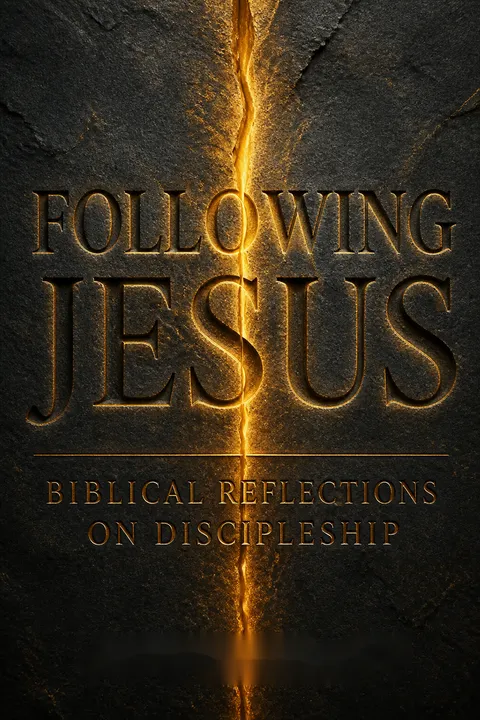
Following Jesus by N.T. Wright receives mostly positive reviews (4.26/5). Readers praise Wright's accessible yet scholarly approach to exploring New Testament books and Christian discipleship. The book combines biblical exposition with practical theology, making complex ideas understandable for general readers while maintaining depth. Reviewers appreciate Wright's pastoral warmth, cultural context, and focus on following Jesus authentically. Some express disagreement with certain theological positions, particularly regarding heaven and hell. The book's structure—six chapters on New Testament books, six on theological concepts—is widely praised as effective for devotional reading or group study.
People Also Read






About the Author
Other books by N.T. Wright






Download PDF
Download EPUB
.epub digital book format is ideal for reading ebooks on phones, tablets, and e-readers.








































