
Plot Summary
River of Recirculation
The story begins in a dreamlike Dublin, where the river Liffey flows in endless recirculation, echoing the cycles of history and myth. The narrative opens mid-sentence, suggesting that beginnings and endings are indistinguishable. The city's landscape, its people, and its legends swirl together in a language that is both familiar and strange, inviting the reader to surrender to the flow. The river is both literal and symbolic, carrying the reader through time, memory, and the unconscious. This chapter sets the tone for the book's circular structure, where every ending is a new beginning, and the story is always in motion, never fixed.
The Fall and the Wake
The tale of Finnegan, a builder who falls to his death, becomes a mythic event retold in song and gossip. His wake is a raucous, communal affair, blending mourning and celebration, life and death. The fall is not just physical but symbolic—a fall into language, history, and human frailty. The wake is both a literal vigil and a metaphor for the book itself, a gathering of voices, stories, and memories. Through humor and wordplay, the chapter explores the inevitability of downfall and the hope of resurrection, as Finnegan is both mourned and expected to rise again, just as the narrative itself is always being revived.
Gossip, Rumor, and the Letter
The central character, H.C.E. (Here Comes Everybody), becomes the subject of scandal and rumor after an ambiguous incident in Phoenix Park. Gossip spreads through the city, morphing and multiplying, as everyone adds their own version. A mysterious letter, possibly written by HCE's wife Anna Livia, is discovered, stained and difficult to decipher. The letter becomes a symbol of truth and falsehood, confession and accusation, and the impossibility of ever fully knowing the past. The city's voices—comic, accusatory, sympathetic—create a chorus of uncertainty, reflecting the book's fascination with language's slipperiness.
The Trial of HCE
HCE is put on trial, both formally and in the court of public opinion. The narrative becomes a courtroom drama, with witnesses, judges, and accusers, but the evidence is always ambiguous, the charges shifting. HCE himself remains largely silent, a blank onto which others project their fears and desires. The trial is less about justice than about the community's need to make sense of its own anxieties. The chapter ends with HCE's burial, but even in death, his story refuses to rest, as the cycle of rumor and resurrection continues.
Anna Livia's Manifesto
Anna Livia Plurabelle, HCE's wife and the embodiment of the river, delivers her "mamafesta," a manifesto of femininity, nature, and renewal. Her voice is fluid, shifting between languages and registers, as she defends her family and herself against accusation. The letter is reinterpreted as her creation, a testament to the power of women's speech and the river's eternal flow. Anna Livia's perspective offers a counterpoint to the male-dominated narratives, celebrating difference, multiplicity, and the cycles of life and death.
Riddles, Twins, and Tales
The focus shifts to the twin sons, Shem and Shaun, whose rivalry echoes the book's themes of division and duality. Through riddles, tales, and comic dialogues, the twins embody the struggle between creativity and authority, chaos and order. Their games and quarrels are both childlike and cosmic, reflecting the endless play of opposites that animates the narrative. The chapter is rich in wordplay and parody, as the twins' identities blur and shift, challenging the possibility of stable meaning.
Shem the Penman's Exile
Shem, the outcast artist, is portrayed in grotesque and comic terms. He is a forger, a scribbler, a figure of filth and exile, yet also a creator who transforms waste into art. His self-imposed isolation is both a punishment and a source of power, as he writes his story on his own body. Shem's portrait is a meditation on the artist's role in society, the relationship between creation and destruction, and the ways in which language both liberates and imprisons.
Anna Livia's River Song
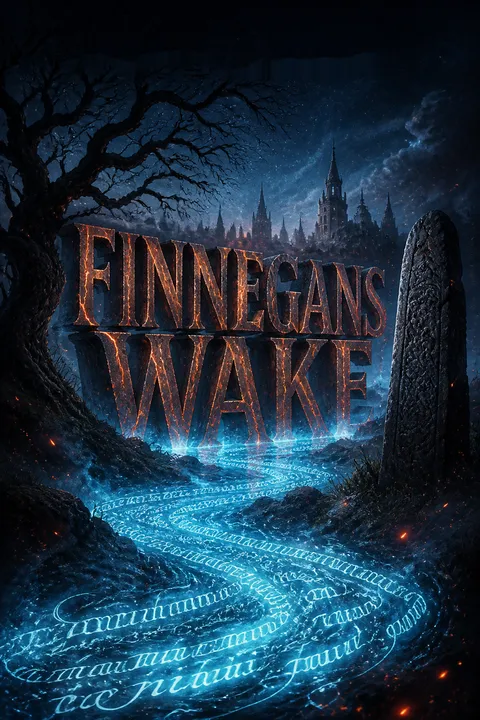
The famous "Anna Livia Plurabelle" section unfolds as a lyrical dialogue between two washerwomen gossiping on the banks of the Liffey. Their conversation weaves together the city's stories, the river's history, and the cycles of nature. As night falls, the women are transformed into a tree and a stone, becoming part of the landscape they have been describing. The chapter is a celebration of feminine energy, transformation, and the river's power to carry and renew all things.
Children's Games and Nightfall
The narrative turns to the Earwicker children—Shem, Shaun, and Issy—playing games that mirror the adult world's conflicts and alliances. Their play is innocent and yet charged with rivalry, desire, and the shadow of the family's secret. As night falls, the children are called to prayer and bed, and the world of order and law reasserts itself. The transition from play to discipline echoes the book's larger movement between chaos and structure, freedom and repression.
Lessons, Letters, and Law
The children's nightlessons become a parody of education, as they are drilled in grammar, history, and mathematics. The narrative mocks the pretensions of knowledge and the arbitrariness of authority, while also celebrating the inventiveness of language and the resilience of the imagination. The children write a nightletter to their parents, blending affection, rebellion, and confusion. The chapter is a comic meditation on learning, discipline, and the ways in which language both shapes and resists power.
Pub Tales and Betrayals
HCE, now a publican, tells tales in his pub that are both confessional and evasive. The stories—of a tailor and a sailor, of Buckley shooting the Russian general—are parables of shame, violence, and the impossibility of truth. The pub becomes a microcosm of the city, a place where stories are told, retold, and distorted. The chapter explores the links between sexuality, violence, and the need to hide from oneself and others.
Historians and Lovers Spied
The narrative shifts to a group of four old men—historians, chroniclers, and witnesses—who spy on the love-making of Tristan and Iseult. Their attempts to record and interpret what they see are comic and futile, as the lovers' passion eludes their categories. The chapter is a meditation on history, myth, and the limits of knowledge, as well as a parody of scholarly pedantry. The tension between love and betrayal, youth and age, is played out in a scene that is both farcical and poignant.
Shaun's Sermons and Trials
Shaun, the "good" son, emerges as a figure of authority, order, and conventional wisdom. He delivers sermons, judges his brother Shem, and seeks to impose meaning on the chaos around him. Yet his confidence is undermined by self-doubt, desire, and the recognition that he is not the true author of the family's story. Shaun's journey is both a quest for power and a confrontation with his own limitations, as he struggles to reconcile law and love, tradition and change.
Jaun's Journey and Farewells
Jaun, a later incarnation of Shaun, embarks on a journey through the city and the world, delivering advice, farewells, and comic wisdom. His sermons to the girls of St. Bride's are both earnest and absurd, blending moral instruction with sexual innuendo. Jaun's journey is a parody of the hero's quest, as he encounters obstacles, offers blessings, and ultimately prepares to depart. The chapter is a meditation on departure, loss, and the hope of return.
Yawn's Dream and Interrogation
Yawn, a figure of sleep and unconsciousness, is interrogated by the four old men, who seek to extract from him the secrets of the past. Voices speak through Yawn, including Anna Livia and HCE, as the boundaries between self and other, dream and reality, dissolve. The chapter is a seance, a confession, and a trial, as the family's history is recounted, denied, and transformed. The narrative becomes increasingly fragmented and hallucinatory, reflecting the instability of memory and identity.
The Parents' Bed and Fourfold Love
The focus returns to HCE and Anna Livia, now in their marital bed, as they enact the four positions of love-making. The scene is both comic and tender, a celebration of the body and a ritual of renewal. The four old men reappear as witnesses, chroniclers, and participants, blurring the lines between history and myth, public and private. The chapter is a meditation on love, marriage, and the cycles of birth, death, and rebirth.
Dawn, Disputes, and Renewal
As dawn breaks, the narrative recapitulates the disputes between St. Patrick and the Archdruid, between masculine order and feminine multiplicity. The city awakens, the river flows, and the cycle begins anew. The family's story is retold, reinterpreted, and renewed, as the possibility of forgiveness, reconciliation, and transformation is held out. The chapter is both an ending and a beginning, as the book's circular structure brings the reader back to the threshold of the story.
Anna Livia's Soliloquy
In the book's final, lyrical pages, Anna Livia delivers a soliloquy as she descends into the sea, longing for reunion with her beloved and for the renewal of the cycle. Her voice is intimate, musical, and filled with longing, as she recalls the joys and sorrows of her life, the beauty of the world, and the hope of return. The narrative dissolves into the river's flow, ending mid-sentence, ready to begin again. The book closes with a sense of peace, possibility, and the endlessness of story.
Analysis
Finnegans Wake is a radical experiment in narrative, language, and consciousness—a book that seeks to encompass the whole of human experience in the form of a dream. Its meaning is not fixed or singular, but emerges from the interplay of voices, stories, and symbols. At its heart, the book is about cycles: the cycles of history, family, nature, and language. It explores the ways in which we are shaped by the stories we tell and the stories told about us, and the impossibility of ever fully escaping the past. The book's circular structure, polyglot language, and dream logic challenge the reader to let go of conventional expectations and surrender to the flow. Finnegans Wake is both a celebration and a critique of tradition, authority, and the search for meaning. It invites us to embrace ambiguity, multiplicity, and the endless play of difference. In a modern context, the book can be read as a meditation on the fragmentation of identity, the instability of truth, and the possibility of renewal through art, love, and community. Its lessons are both joyful and sobering: that life is a wake, a river, a story always in motion, and that our task is not to find final answers, but to keep the conversation going.
Review Summary
Finnegans Wake polarizes readers dramatically. Critics praise it as Joyce's masterpiece—a revolutionary, multilingual linguistic experiment featuring portmanteau words, puns, and circular narrative structure. Enthusiasts celebrate its musicality, humor, and innovative dream language, recommending reading aloud. However, detractors find it incomprehensible, pretentious gibberish lacking plot or characters. Many admit not finishing despite high ratings. The book combines 60-70 languages, contains neologisms, and defies conventional understanding. Its 17-year composition created what some call modernism's pinnacle, others an elaborate joke. Readers either love its experimental brilliance or despise its inaccessibility, with few neutral opinions existing.
People Also Read

Characters
H.C.E. (Here Comes Everybody)
H.C.E. is the central figure around whom the book's rumors, scandals, and stories swirl. He is at once an individual—publican, father, husband—and a universal archetype, embodying the hopes, fears, and failings of humanity. Psychoanalytically, HCE is the ego beset by guilt, repression, and the projections of others. His "crime" is never fully revealed, making him a blank screen for the city's anxieties. Throughout the book, HCE is accused, judged, buried, and resurrected, reflecting the cyclical nature of history and the impossibility of final judgment. His relationships—with Anna Livia, his children, and the community—are fraught with misunderstanding, desire, and the longing for redemption.
Anna Livia Plurabelle (ALP)
Anna Livia is both a character and a symbol: the wife of HCE, the mother of Shem, Shaun, and Issy, and the personification of the river Liffey. She embodies femininity, nature, and the power of transformation. Her voice is fluid, musical, and multilingual, offering a counterpoint to the book's patriarchal structures. Psychoanalytically, ALP represents the unconscious, the maternal, and the possibility of renewal. She is both nurturing and elusive, defending her family while also challenging their certainties. Her soliloquy at the book's end is a profound meditation on love, loss, and the cycles of life.
Shem the Penman
Shem is the black sheep of the family, a figure of exile, filth, and creativity. He is a forger, a scribbler, and a self-mocking portrait of the artist as outsider. Shem's relationship with his brother Shaun is one of rivalry and opposition, mirroring the book's larger themes of duality and division. Psychoanalytically, Shem is the id, the source of disruptive energy and creative potential. His exile is both a punishment and a source of power, as he transforms waste into art and challenges the boundaries of language and identity.
Shaun the Post
Shaun is the "good" son, a figure of order, law, and conventional wisdom. He delivers sermons, judges his brother, and seeks to impose meaning on the chaos around him. Yet Shaun is also plagued by self-doubt, desire, and the recognition that he is not the true author of the family's story. Psychoanalytically, Shaun is the superego, the voice of conscience and authority, but also of repression and anxiety. His journey is a quest for power and a confrontation with his own limitations.
Issy (Isobel)
Issy is the daughter of HCE and ALP, a figure of innocence, desire, and transformation. She is both a child and a young woman, the object of her brothers' rivalry and the embodiment of feminine multiplicity. Psychoanalytically, Issy represents the anima, the source of creativity and renewal, but also of confusion and longing. Her presence in the narrative is often elusive, shifting between roles and identities, reflecting the book's fascination with the instability of self.
The Four Old Men (Mamalujo)
The four old men—variously identified as Matthew, Mark, Luke, and John, or as the Four Masters of Irish history—are comic, pedantic, and ultimately impotent witnesses to the family's story. They spy, record, and interpret, but their efforts are always frustrated by the elusiveness of truth and the multiplicity of perspectives. Psychoanalytically, they represent the superego's attempt to impose order, but also the futility of such efforts in the face of desire and change.
Jaun
Jaun is a later incarnation of Shaun, a figure of journey, advice, and comic wisdom. He delivers sermons, farewells, and blessings, parodying the hero's quest and the authority of tradition. Jaun's journey is both a departure and a return, a meditation on loss, hope, and the possibility of renewal. Psychoanalytically, Jaun is the ego in motion, seeking meaning in a world of uncertainty.
Yawn
Yawn is a figure of sleep, dream, and the unconscious. He is interrogated by the four old men, who seek to extract from him the secrets of the past. Voices speak through Yawn, blurring the boundaries between self and other, dream and reality. Psychoanalytically, Yawn represents the deep unconscious, the source of memory, desire, and transformation.
The Washerwomen
The two washerwomen who gossip on the banks of the Liffey are both individuals and archetypes, embodying the city's collective voice and the river's eternal flow. Their conversation weaves together history, rumor, and myth, and their transformation into a tree and a stone symbolizes the merging of human and natural cycles.
The City of Dublin (as Character)
Dublin itself is a character in the book, a living, breathing entity composed of its people, stories, and history. The city is both setting and participant, a chorus of voices that shape and are shaped by the narrative. Psychoanalytically, the city is the collective unconscious, the repository of memory, desire, and possibility.
Plot Devices
Cyclical Narrative Structure
The book's structure is famously circular, beginning mid-sentence and ending in a way that leads directly back to the start. This device reflects the cycles of history, nature, and consciousness, and challenges the reader's expectations of linear plot and resolution. The cyclical structure is reinforced by motifs of rivers, wakes, and recurrences, suggesting that every ending is a new beginning, and that meaning is always provisional and in motion.
Polyglot Language and Wordplay
Joyce's language is a dense, playful amalgam of English, Irish, Latin, French, and dozens of other languages, filled with puns, neologisms, and double meanings. This device both delights and confounds the reader, reflecting the book's themes of multiplicity, ambiguity, and the instability of meaning. Language itself becomes a character, a source of both liberation and confusion.
Dream Logic and Unconscious Flow
The narrative often follows the logic of dreams rather than waking reason, with abrupt shifts in perspective, time, and identity. This device allows the book to explore the depths of the unconscious, the interplay of desire and repression, and the ways in which memory and fantasy shape experience.
Parody and Allusion
The book is filled with parodies of literary forms—courtroom drama, sermons, love letters, historical chronicles—as well as allusions to myth, religion, and world literature. These devices both celebrate and subvert tradition, inviting the reader to question the authority of any single narrative or perspective.
Multiplicity of Voices and Perspectives
The story is told by a chorus of voices—gossips, historians, children, lovers—each with their own biases, desires, and limitations. This device reflects the book's skepticism about truth and the impossibility of final meaning, as well as its celebration of diversity and difference.
Foreshadowing and Recurrence
Images, phrases, and events recur throughout the book, often in transformed or distorted forms. These recurrences create a sense of foreshadowing and resonance, suggesting that the past is never fully past, and that every story is haunted by its own retelling.
About the Author
Other books by James Joyce
Download PDF
Download EPUB
.epub digital book format is ideal for reading ebooks on phones, tablets, and e-readers.








































