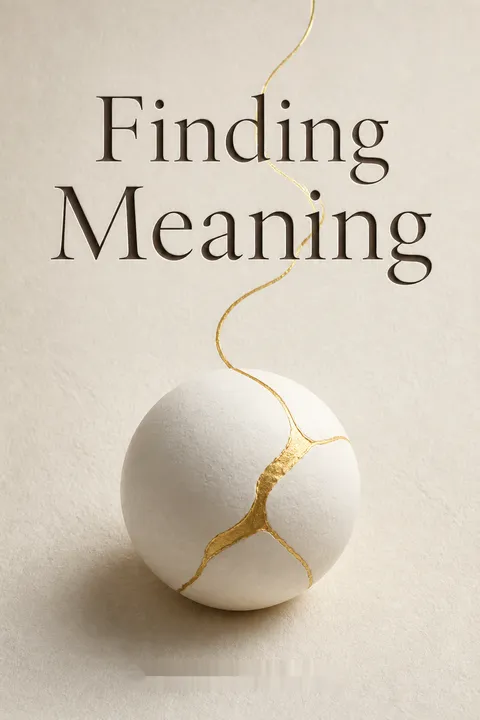

Key Takeaways
1. Meaning is the Crucial Sixth Stage of Grief
But if we allow ourselves to move fully into this crucial and profound sixth stage—meaning—it will allow us to transform grief into something else, something rich and fulfilling.
Beyond acceptance. Elisabeth Kübler-Ross's groundbreaking work identified five stages of dying, later adapted to grief: denial, anger, bargaining, depression, and acceptance. However, acceptance was never intended as a finality, leaving a crucial gap in the healing process. The author, a protégé of Kübler-Ross, introduces a vital sixth stage: meaning.
Transforming pain. This stage acknowledges that while grief's intensity may lessen, it never truly ends. Instead, meaning offers a path to transform enduring pain into something rich and fulfilling. It's not about being "okay" with the loss, but about finding purpose and a way forward, as seen in individuals like Candy Lightner (MADD) and John Walsh (America's Most Wanted).
Personal journey. Meaning is deeply personal and can manifest in various forms, from gratitude for shared time to commemorating loved ones or making significant life changes. It helps prevent individuals from getting stuck in earlier stages of grief, which can lead to destructive behaviors like addiction or unresolved anger. The search for meaning empowers us to grow, even in the worst circumstances.
2. Grief Demands to Be Witnessed and Acknowledged
The need is for someone to be fully present to the magnitude of their loss without trying to point out the silver lining.
Universal need. Each person's grief is unique, yet all share a fundamental need for their pain to be witnessed. This means having someone truly present, acknowledging the depth of their loss without attempting to minimize it, reframe it, or offer premature comfort. This mirroring of emotion is hardwired in us, essential for survival and connection.
Societal disconnect. In modern society, grief is often minimized and sanitized, with limited time and rituals allotted for mourning. This can lead to isolation, as mourners feel their world has shattered while everyone else's continues unchanged. Communities, like indigenous Australian villages moving furniture after a death, traditionally made loss visible, uniting in shared sorrow.
No judgment zone. Grief is an internal process with no prescribed timeline or "right" way to experience it. Attempts to rush or alter someone's grieving style—whether they are expressive or practical grievers—are unhelpful and disrespectful. True witnessing involves accepting grief as it is, allowing individuals to feel their emotions fully, and offering presence rather than platitudes.
3. Death Shapes Grief, but Life's Value Endures
Without suffering and death, human life cannot be complete.
Perception matters. The way we perceive death profoundly shapes our grief. A death viewed as meaningful, even if painful, can lead to growth, while a problematic death can lead to complicated, prolonged suffering. The author's personal experience with his mother's death, and later his son's, illustrates how revisiting and reframing the narrative of death can transform trauma into meaning.
Beyond failure. Modern society often frames death as a "failure," using language like "succumbed to illness" or "lost the battle." This perspective denies the natural inevitability of mortality and can strip life's final chapter of meaning. Instead, embracing death as a natural part of life, as Jennifer did with her cancer diagnosis, can create urgency and a heightened appreciation for every moment.
Meaningful endings. We often neglect the "last chapter" of life, focusing on medical battles rather than completing relationships or expressing love. Asking "What can we do to make the last chapter of life meaningful?" can transform these final moments. Even in the absence of loved ones, as in the story of the police officer comforting a mother whose daughter died in an accident, meaning can be found in knowing they were not alone.
4. Acceptance: The Essential First Step to Meaning
To find that peace, we cannot skip over the challenging stages of acceptance.
Foundation for healing. Acceptance, the fifth stage of grief, is not about being "okay" with loss, but acknowledging its brutal reality. It's a gradual process, often cycling back and forth with other emotions, and is the crucial first step before meaning can firmly take root. Premature attempts to find meaning, such as starting a foundation too soon, can lead to renewed overwhelm and a need to revisit earlier stages.
Feeling the pain. Fully experiencing the depths of pain is necessary for acceptance. Many fear the "gang of feelings"—anger, sadness, numbness—believing they will be overwhelmed. However, allowing oneself to feel these emotions completely, without judgment or distraction, allows them to move through and eventually subside, paving the way for peace.
Challenging negative narratives. The mind can be cruel in grief, whispering that pain will never end or that happiness is impossible. Challenging words like "never" and "always" and actively choosing to focus on positive memories can reshape one's internal narrative. This involves consciously "watering" thoughts of love and good times, rather than endlessly replaying painful moments, to cultivate a future beyond suffering.
5. Shift from "Why Did This Happen?" to "Why Live?"
The why you must answer is not why your loved one died, but why you lived.
The futility of "why." Many grievers are tormented by the "why" question: Why did my loved one die? Why me? This search for a definitive reason often leads to endless suffering, as there are no satisfying answers to life's cruel randomness. Instead, the focus should shift from the unanswerable "why" of death to the profound "why" of one's own continued existence.
Universal suffering. Recognizing that everyone experiences loss and pain helps to depersonalize suffering, moving from "Why me?" to "Why not me?" This collective understanding can foster compassion and reduce feelings of isolation. The author's work with the Red Cross aviation disaster team highlights how survivors grapple with the "why me?" of living, prompting a deeper appreciation for life itself.
Finding purpose in living. Every day we wake up is an opportunity to create meaning. This doesn't require grand gestures like Jonas Salk's polio vaccine; it can be found in small acts of kindness, presence, and connection. The author's memory of Tally, the insurance agent, illustrates how simply being oneself can create profoundly meaningful moments for others, often without realizing it.
6. Confronting Stigma in Suicide, Addiction, and Mental Illness
Suicide is not a blot on anyone’s name; it is a tragedy.
Illnesses, not choices. Deaths from suicide, addiction, or mental illness are often met with judgment and stigma, unlike physical diseases. Society wrongly blames sufferers, telling them to "get over it" or "take responsibility." The author argues these are progressive illnesses, not moral failings or choices, and that the mind, the very organ needed for recovery, is compromised.
Challenging language and blame. Terms like "committed suicide" (implying crime) or "successful suicide attempt" (implying achievement) perpetuate harmful stigma. Blaming the individual or family for not preventing these deaths ignores the complex interplay of factors, including societal influences (e.g., pharmaceutical companies in the opioid crisis) and the profound pain that drives these actions.
Path to meaning and advocacy. Finding meaning in these losses often involves fighting the stigma. Survivors can find purpose by:
- Separating pain from suffering, recognizing the mind's cruel narratives.
- Advocating for mental health awareness and suicide prevention, as seen in Lisa Klein's documentary "The S Word."
- Understanding the underlying trauma and illness, as Miranda did with her veteran husband's addiction, allowing for compassion and honoring their true character.
7. Navigating Complicated Relationships and the Power of Forgiveness
Forgiveness opens our hearts when we are stuck in the prison of resentment.
Grieving in character. Relationships, especially complicated ones, don't magically resolve or improve with death. People tend to grieve "in character," meaning their existing personality traits—both good and bad—are often magnified. Expecting others to change or to grieve in a specific way only leads to further disappointment and turmoil.
Unfinished business. Death often leaves us with "unfinished business"—unresolved arguments, unexpressed love, or long-standing estrangements. While these cannot be resolved with the deceased, the living can choose how to respond. Lisa, who cared for her estranged sister, exemplified taking responsibility for her own actions without judging her sister's, finding peace in playing her "part."
Forgiveness as liberation. Forgiveness, or "letting go," is a powerful tool for the grieving, not to condone harmful actions, but to free oneself from the prison of resentment and bitterness. It can be indirect, internal work, or involve "living amends"—taking the action you wish had occurred and applying it to future relationships. This allows the heart to open and move forward.
8. Child Loss: An Unspeakable Grief, Enduring Parenthood
There is no word for a parent who loses a child. Lose your child and you’re… nothing.
The ultimate devastation. The death of a child is an unparalleled tragedy, often leaving parents feeling "nothing" and questioning the very fabric of life. The author's personal experience of losing his son, David, underscored the profound depth of this pain, leading him to acknowledge that he "had no idea how much this hurts" to his previous clients.
Beyond fault and blame. Parents often grapple with immense guilt, replaying "if only" scenarios and blaming themselves. However, most parents are stellar, and early deaths often happen despite best efforts. It's crucial to accept that some deaths are random and not anyone's fault. The story of Ann, whose son's heart was donated, illustrates finding meaning in the continuation of life, even amidst profound loss.
Parenthood never ends. The connection with a deceased child endures, making questions like "How many children do you have?" deeply complex. Parents remain parents, continuing to "raise" their children in their hearts, remembering milestones and cherishing memories. Support groups like Compassionate Friends provide a vital space for bereaved parents to share their ongoing grief and connection without judgment.
9. Love Endures Beyond Pain, Transforming Grief
The love didn’t die when the person we love died. It didn’t disappear. It remains.
Love's persistence. While grief is undeniably painful, it is also a testament to the love that remains. The pain is not an absence of love, but its other face. The challenge is to learn to remember the person with more love than pain, recognizing that love was present even in the darkest moments and continues to exist.
Feeling fully. Healing requires feeling emotions fully, not just partially. We often have "emotions about our emotions," cutting off sadness with guilt or anger with self-recrimination. Allowing oneself to "stay with the first generation of emotions" and cry them out, like buffalo running into a storm, allows the pain to move through, rather than being prolonged by avoidance.
Cultivating positive memories. Our brains are wired to prioritize negative experiences ("Velcro for the bad, Teflon for the good"). To shift towards love, we must proactively "install the good" by:
- Identifying positive memories with the loved one.
- Enriching and savoring these memories for 20-30 seconds, recalling sensory details.
- Absorbing the experience, letting it sink into body and mind.
This conscious effort helps integrate love into the grief experience, allowing it to flower.
10. You Are the Living Legacy of Your Loved Ones
You are unique in all the world for having known that person. You are the living, breathing evidence that the person lived.
Beyond material possessions. A legacy encompasses more than just material wealth or public achievements; it includes the profound impact a person has on others. Like George Bailey in "It's a Wonderful Life," each life touches many, leaving an "awful hole" but also a lasting imprint on friends, family, and community.
Honoring through action. We honor loved ones by carrying forward their qualities and values into our own lives. Bonnie MacBird, inspired by her one-armed father's resilience, embodies his spirit when facing challenges. Billie Lourd continues her mother Carrie Fisher's legacy by "finding the funny." This personal continuation is perhaps the most meaningful legacy of all.
The legacy of things. While letting go of a loved one's possessions can be agonizing, these items are physical evidence of their life. Photographing cherished items before donating or sharing them can help. Ultimately, the most significant "possession" is the living memory within us. As the author sits at Truman Capote's desk, the object gains meaning through its history and the connection it fosters.
11. Continuing Bonds and the Comfort of the Afterlife
Death does not end a relationship, she insisted. It changes it.
Evolving connections. The concept of "continuing bonds" posits that healthy grieving involves retaining, rather than relinquishing, connections with the deceased. This means the relationship doesn't end with death; it transforms. Many bereaved individuals report feeling their loved one's presence, smelling familiar scents, or hearing their voice, finding comfort in these ongoing connections.
Beyond closure. The idea of "closure" in grief is often a societal burden, implying an end to the relationship. Instead, the author advocates for opening the door to a different relationship with the deceased, one that continues to evolve and gain meaning. This perspective validates the common experience of feeling connected to loved ones long after their physical death.
Perspectives on the afterlife. Whether one believes in an afterlife or not, the imperative to live fully remains. Different views offer different comforts:
- Aware afterlife: Loved ones witness our grief and would want us to live again.
- Unaware afterlife: Loved ones have moved on, and our task is to grieve and live fully.
- Atheist view: Consciousness ends, but the comfort can be in the cessation of suffering, and the living must still grieve and live fully.
Regardless of belief, the preciousness of our own remaining life is a universal truth to embrace.
12. The Active Decision to Live Fully After Loss
Each of us has a decision to make about how to heal from a loss.
Choosing life. Healing from loss is an active, not passive, process that requires a conscious decision to live again. "Living" is distinct from merely "being alive." This decision, often subtle but powerful, is about casting a vote for life to continue, even amidst profound pain, as the author did after his son's death by getting a new puppy.
Overcoming learned helplessness. Past wounds and traumas can lead to "learned helplessness," making it seem impossible to move forward. However, like the dogs in experiments who needed a gentle push to escape shocks, small, incremental steps can break this cycle. The decision to live again may manifest in simple joys, gradually expanding one's engagement with the world.
Loyalty and new beginnings. Many fear that living fully or finding new love after loss is disloyal to the deceased. However, true loyalty means honoring the loved one by embracing the life they would have wanted for you. As the "Shattered Vase" analogy suggests, life may be broken, but the pieces can be used to create something new and beautiful. The future is a blank page, waiting for us to write a new story, enriched by past love and lessons.
Review Summary
Finding Meaning receives mostly positive reviews (4.43/5 average), with readers praising its compassionate approach to grief and the concept of meaning as a sixth stage. Many found it healing, especially those experiencing personal loss. Critics note repetitive content, excessive name-dropping, typos, and occasional lack of depth. Several reviewers mention Kessler's personal experience losing his son adds authenticity. The book helps readers understand that grief doesn't shrink—we grow larger around it. While some felt it recycled material, most recommend it for those navigating loss, particularly praising chapters on complicated relationships and specific types of loss.
People Also Read


About the Author
Other books by David Kessler

Download PDF
Download EPUB
.epub digital book format is ideal for reading ebooks on phones, tablets, and e-readers.








































