
Plot Summary
Childhood Gifts and Scars
Kohen and Blaze's childhood is marked by violence, neglect, and a strange, magnetic connection. Kohen, the privileged but troubled boy, tries to impress Blaze, the neglected girl from the wrong side of the tracks, with a bat engraved with their names. But their attempts at friendship are marred by misunderstanding and pain. Blaze's home is a place of chaos and addiction, while Kohen's is cold and competitive. Their early years are a crucible, forging a bond of rivalry and obsession, with each child learning to fight for survival in their own way. The scars of these years—both physical and emotional—set the stage for a relationship defined by violence, longing, and the desperate need to be seen.
Enemies on the Same Path
As teenagers, Blaze and Kohen are forced together at school, their mutual hatred simmering beneath every interaction. Their banter is sharp, their pranks cruel, but beneath it all is a shared sense of alienation. Both are outcasts in their own families, both are haunted by trauma and addiction—Blaze to stealing and drugs, Kohen to fire and destruction. Their rivalry is a twisted form of intimacy, each knowing how to hurt the other best. Yet, even as they lash out, they are drawn together, unable to escape the gravitational pull of their shared history and pain.
Home Is a Battlefield
Blaze's home life is a daily struggle. Her mother is an addict, her father absent, and her grandfather's support is conditional and manipulative. Food and safety are never guaranteed. Blaze survives by stealing, fighting, and numbing herself with substances. Kohen's family is wealthy but toxic, with a brother who manipulates and a father who demands perfection. Both teens are shaped by their environments, learning to trust no one and to expect betrayal. Their homes are battlegrounds, and every day is a fight to maintain a sense of self.
Addictions and Escapes
Blaze's need for escape leads her into a spiral of substance abuse and risky behavior. Parties, drugs, and meaningless sex are her ways of coping with pain and emptiness. Kohen's addiction is fire—he finds solace in destruction, in the chaos of flames. Their addictions are both a symptom and a cause of their suffering, driving them further from the possibility of real connection. Yet, even in their lowest moments, they are aware of each other, their rivalry a constant reminder that they are not alone in their misery.
The Fire That Changes Everything
A devastating fire destroys Blaze's home, erasing the only place she's ever known. She is left with nothing but suspicion and rage, convinced that Kohen is responsible. The loss is total—her memories, her security, her sense of self. In her grief, Blaze seeks revenge, lashing out at Kohen and his family. The fire becomes a symbol of everything she has lost and everything she wants to destroy. The event cements their enmity, but also binds them together in a cycle of retaliation and pain.
Retaliation and Ruin
Blaze's response to the fire is swift and brutal. She breaks into Kohen's home, destroying his most prized possessions and leaving a trail of chaos. The act is both cathartic and hollow, offering no real relief from her pain. The consequences are severe—Blaze is arrested and sent to a reform school for troubled youth, her future hanging by a thread. Kohen, too, is drawn into the fallout, his own family's dysfunction and his brother's manipulations pulling him deeper into darkness. Their war escalates, with each act of violence pushing them closer to the edge.
Reform School, New Hells
Seraphic Hills, the reform school, is a microcosm of the world's cruelty. Abuse, manipulation, and violence are the norm. Blaze and Kohen are forced into proximity, their rivalry intensifying even as they are made to rely on each other for survival. The school's staff are corrupt and sadistic, using therapy and punishment as tools of control. New friendships are formed, but trust is always tentative. The institution becomes another battlefield, with Blaze and Kohen fighting not just each other, but the system that seeks to break them.
Violence, Therapy, and Survival
Blaze endures brutal punishments—solitary confinement, forced therapy, and even medical torture. Kohen, too, is subjected to the school's cruelty, but his focus remains on Blaze. Their relationship shifts from open hostility to a dangerous, obsessive attraction. Violence and desire become intertwined, with each encounter blurring the line between hate and love. Therapy sessions become battlegrounds, and every act of rebellion is a fight for autonomy. Survival means embracing the darkness within, even as it threatens to consume them both.
Allies, Betrayals, and Blood
Alliances are formed and broken as Blaze and Kohen navigate the treacherous world of Seraphic Hills. Friends become enemies, and enemies become lovers. Betrayals are inevitable, and the cost is often blood. Blaze is forced to confront the reality of her own capacity for violence, while Kohen's obsession with her grows ever more consuming. Together, they commit acts that can never be undone, crossing lines that leave them forever changed. The reform school becomes a crucible, forging them into something new—something dangerous.
The Game of Power
Outside the school, the machinations of their families continue. Kohen's brother, Kiervan, manipulates him into doing his bidding, using secrets and blackmail to maintain control. Blaze's grandfather pulls strings from afar, ensuring her continued suffering. The game of power is relentless, with every move calculated to maintain dominance. Blaze and Kohen learn to play the game themselves, using manipulation and violence to carve out a space for themselves. The stakes are life and death, and the only rule is survival.
Love in the Ashes
Amidst the chaos, Blaze and Kohen's relationship transforms. Their hatred gives way to a fierce, desperate love, forged in the fires of their shared suffering. Intimacy becomes a form of rebellion, a way to reclaim agency in a world determined to break them. Their love is messy, violent, and all-consuming, but it offers a glimmer of hope—a reason to keep fighting. Together, they dream of a future free from the chains of their past, even as the world conspires to keep them apart.
Vengeance and Consequence
The quest for vengeance reaches its climax as Blaze and Kohen take justice into their own hands. They kill those who have tormented them—school staff, family members, anyone who stands in their way. Each act of violence is both a liberation and a loss, costing them pieces of their souls. The consequences are severe, but they are willing to pay the price for freedom. Their actions are both a reckoning and a declaration: they will not be victims any longer.
The Final Inferno
The final confrontation with Blaze's grandfather is brutal and cathartic. In a bloody showdown, Blaze kills the man who has haunted her life, but not before Kohen is gravely wounded. The house is set ablaze, a fitting end to the legacy of pain and control. As the flames consume the past, Blaze and Kohen escape—wounded, traumatized, but finally free. The fire is both an ending and a beginning, a purging of old ghosts and the birth of something new.
Aftermath and Freedom
In the aftermath, Blaze and Kohen struggle to heal. The scars—physical and emotional—are deep, but they are no longer alone. They build a life together, haunted by the past but determined to create a future on their own terms. The world is still dangerous, and the threat of relapse and retribution is ever-present. But for the first time, they have hope. Their love, forged in fire and blood, becomes the foundation for a new existence.
Building a New World
Blaze and Kohen's final act of vengeance is the destruction of the Osman family empire. With careful planning and ruthless execution, they bring down the pharmaceutical dynasty that has caused so much suffering. The act is both a reckoning and a release, allowing them to finally move forward. In the ashes of their old lives, they build something new—a partnership based on equality, trust, and the hard-won knowledge that they are stronger together. Their story ends not with a happily ever after, but with the promise of a future they will fight for, side by side.
Analysis
Fiery Little Thing is a raw, unflinching exploration of trauma, survival, and the search for agency in a world defined by cruelty. Through the intertwined stories of Blaze and Kohen, the novel examines the ways in which pain is inherited, perpetuated, and—sometimes—transcended. The narrative refuses easy answers, embracing the messiness of love, the allure of violence, and the complexity of healing. At its core, the book is a meditation on power: who wields it, who suffers under it, and how it can be reclaimed. The relationship between Blaze and Kohen is both a cautionary tale and a testament to resilience, showing that even in the ashes of destruction, something new can be built. The novel's dark romance, brutal honesty, and refusal to flinch from the realities of abuse and addiction make it a powerful statement about the costs and possibilities of survival. In the end, Fiery Little Thing is less about redemption than about the hard-won freedom to define one's own fate, no matter how scarred or broken.
Review Summary
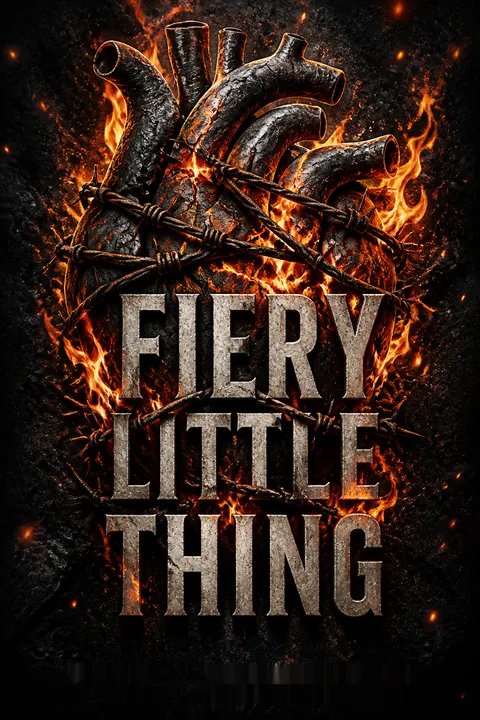
Fiery Little Thing by Avina St. Graves follows pyromaniac Kohen and kleptomaniac Blaze in an unhinged dark romance. With a 3.64/5 rating, readers are divided. Many praise the obsessive, enemies-to-lovers dynamic, explosive chemistry, and dark humor, calling it addictive with top-tier banter and spice. Fans appreciate both deeply broken, chaotic characters. Critics cite weak plot development, an annoying FMC, excessive length, and early other-man content. Common themes include childhood obsession, reform school setting, toxic relationships, and morally grey protagonists. Reviewers recommend checking trigger warnings for violence, addiction, and abuse.
Characters
Blaze Whitlock
Blaze is a product of neglect, addiction, and generational trauma. Her life is a constant battle for survival, marked by poverty, abuse, and the need to steal—both for necessity and for the thrill. She is fiercely independent, quick-witted, and unafraid to fight for what she wants, but her bravado masks deep wounds. Blaze's relationship with Kohen is both toxic and redemptive, a cycle of violence and intimacy that forces her to confront her own darkness. Over the course of the story, she transforms from a victim into an avenger, taking control of her fate and refusing to be defined by her past. Her journey is one of self-destruction and rebirth, as she learns to trust, to love, and ultimately, to forgive herself.
Kohen Osman
Kohen is the golden boy with a dark core—a privileged youth whose family is a nest of vipers. His obsession with fire is both a coping mechanism and a form of rebellion, a way to assert control in a world that constantly undermines him. Kohen's relationship with Blaze is the axis around which his life turns; he is both her tormentor and her savior, unable to let her go even as he hurts her. His rivalry with his brother and the expectations of his family drive him to acts of violence and sacrifice. Kohen's journey is one of self-discovery, as he learns to channel his destructive impulses into something redemptive. His love for Blaze is both his greatest weakness and his salvation, pushing him to become the man he wants to be.
Kiervan Osman
Kiervan is Kohen's older brother and lifelong antagonist. Charismatic and cunning, he wields power through manipulation and blackmail, using Kohen as a pawn in his schemes. Kiervan's relationship with Kohen is defined by rivalry and cruelty, a constant reminder of the toxic dynamics of their family. He is both a product and a perpetuator of generational trauma, embodying the worst aspects of the Osman legacy. His downfall is engineered by Kohen and Blaze, a fitting end for a man who has caused so much suffering.
Jonathan Whitlock Sr.
Blaze's grandfather is the embodiment of cold, calculating power. His support is always conditional, his love a weapon. He manipulates Blaze's life from afar, using money and influence to control her fate. Jonathan's cruelty is both personal and systemic, a reflection of the generational cycles of abuse that define the Whitlock family. His death at Blaze's hands is both a personal reckoning and a symbolic end to the legacy of pain he has created.
Blaze's Mother
Blaze's mother is a ghost in her daughter's life, present only in her absence. Her addiction and neglect shape Blaze's worldview, teaching her that love is conditional and unreliable. She is both a victim and a perpetrator, trapped in her own cycle of pain. Her relationship with Blaze is a source of longing and resentment, a wound that never fully heals.
Boris
Boris is the sadistic security guard at Seraphic Hills, a man who takes pleasure in the suffering of others. He is a tool of the institution's cruelty, using violence and intimidation to maintain control. His death at Blaze's hands is an act of justice, a reversal of the power dynamics that have defined her life.
Dr. Van der Merwe
Dr. Van der Merwe is the school's psychiatrist, a man who uses therapy and medical procedures as tools of control. His methods are brutal and dehumanizing, more concerned with obedience than healing. He represents the failure of institutions to protect the vulnerable, and his eventual downfall is a small victory in Blaze's quest for justice.
McGill
McGill is the headmaster of Seraphic Hills, a man whose authority is built on fear and manipulation. He is both a perpetrator and a victim, caught in the web of power spun by Blaze's grandfather. His death is a turning point, marking the moment when Blaze and Kohen seize control of their own destinies.
Charlie
Charlie is Blaze's closest friend at Seraphic Hills, a fellow outcast with her own history of trauma and violence. Her loyalty and humor provide a rare source of comfort in an otherwise hostile world. Charlie's presence is a reminder that even in the darkest places, connection is possible.
Elijah
Elijah is a minor antagonist, a drug dealer and user whose relationship with Blaze is transactional and exploitative. He represents the dangers of addiction and the ways in which trauma can lead to self-destruction. His fate is a warning, a glimpse of what could happen to Blaze if she does not break the cycle.
Plot Devices
Dual Protagonist Structure
The story is told in alternating chapters from Blaze and Kohen's points of view, allowing readers to experience both the external events and the internal struggles of each character. This structure deepens empathy, revealing the ways in which their actions are shaped by trauma and longing. The dual perspective also heightens narrative tension, as misunderstandings and secrets drive the plot forward.
Cycles of Violence and Revenge
The narrative is structured around cycles of violence and revenge, with each act of aggression prompting a response. This escalation mirrors the generational trauma that defines both families, showing how pain is passed down and perpetuated. The plot is driven by the characters' attempts to break free from these cycles, even as they are drawn back in.
Symbolism of Fire and Theft
Fire is a central symbol, representing both destruction and the possibility of rebirth. For Kohen, fire is a way to assert control; for Blaze, theft is both survival and rebellion. These motifs are woven throughout the narrative, reflecting the characters' internal struggles and their quest for agency.
Institutional Critique
Seraphic Hills is more than a setting—it is a microcosm of the world's cruelty. The institution's abuse, manipulation, and violence reflect broader societal failures to protect the vulnerable. The plot uses the school as a stage for exploring themes of power, control, and resistance.
Foreshadowing and Flashbacks
The narrative is rich with foreshadowing, hinting at the violence and betrayal to come. Flashbacks reveal the roots of the characters' pain, deepening the emotional impact of their present struggles. These devices create a sense of inevitability, as if the characters are trapped in a story that has already been written.
Cathartic Violence and Moral Ambiguity
Violence is both a tool of oppression and a means of liberation. The story does not shy away from the moral ambiguity of its characters' actions, forcing readers to grapple with questions of justice, revenge, and the price of freedom. The catharsis of violence is always tempered by its consequences, leaving scars that may never fully heal.
About the Author
Other books by Avina St. Graves


Download PDF
Download EPUB
.epub digital book format is ideal for reading ebooks on phones, tablets, and e-readers.








































