
Plot Summary
Daughter of Odin's Bargain
Rey Stjerne, daughter of the ruthless Odin, is sent on a mission she never wanted: infiltrate Endir University, find the legendary hammer Mjölnir, and destroy the rival Erikson family—especially Aric, the Giant heir. Odin's threats are real: Rey's beloved stepmother Laufey's life hangs in the balance. Rey's childhood has been shaped by manipulation, trauma, and the knowledge that her only worth is as a pawn in her father's endless war. On her eighteenth birthday, she's given one week to succeed or lose everything. The weight of expectation and the curse of her Aethercall—her ability to charm and influence—make her both weapon and prisoner. As she leaves for Endir, Rey steels herself for a battle that feels unwinnable, haunted by the knowledge that she's being forced to betray the only people who ever cared for her.
Arrival at Endir University
Rey's arrival at Endir is marked by tension and dread. The Erikson family's legacy is everywhere, and her presence is both a threat and a reminder of old wounds. She's greeted by Reeve, Aric's charming but sharp-tongued brother, who immediately sets the tone for their antagonistic relationship. The campus itself is steeped in Norse myth, with runes carved into every stone and ancient secrets lurking beneath the surface. Rey's Aethercall draws attention, but she's painfully aware that any misstep could expose her true purpose. Her only ally, Rowen, is forced to keep his distance, and Rey is left to navigate a world where every smile could be a trap and every friendship a liability. The sense of being watched, judged, and tested is suffocating, and Rey realizes that survival will require more than just cunning—it will demand sacrifice.
Enemies, Exes, and Runes
Rey's past with Aric is a festering wound. Once betrothed in a failed alliance, their history is fraught with betrayal and heartbreak. Aric, haunted by the loss of his parents and the burden of his Giant heritage, is cold and distant, yet their chemistry is undeniable. The campus is a minefield of secrets: runes that hint at ancient protections, a student body oblivious to the divine war raging beneath their feet, and professors who know more than they reveal. Rey's mission is complicated by her growing fascination with Aric and the realization that the lines between enemy and ally are blurring. As she investigates the runes and the legends surrounding Mjölnir, she uncovers hints that the truth is far more complex—and dangerous—than Odin ever let on.
The Giant Next Door
Living next door to Aric is both a blessing and a curse. The walls between their rooms are thin, and every interaction crackles with unresolved tension. Aric is a storm barely contained, his Giant powers simmering beneath the surface. Rey's attempts to keep her distance are undermined by their forced proximity and the undeniable pull between them. Their banter is sharp, their silences loaded, and every accidental touch threatens to ignite something uncontrollable. As Rey searches for clues to Mjölnir's location, she realizes that Aric may be the key—not just to the hammer, but to her own freedom. Yet trusting him could mean betraying her father, her mission, and possibly her own heart.
Secrets in the Shadows
Rey's investigation leads her to uncover layers of deception at Endir. Rowen, her loyal friend, is hiding scars both physical and emotional, and his loyalty to Odin is more complicated than she realized. Reeve's playful exterior masks a dangerous cunning, and even the professors seem to be playing their own games. Rey's stepmother Laufey sends her a cryptic note written in runes, hinting at a deeper plan and urging her to trust her instincts. As Rey delves deeper, she discovers that the war between Gods and Giants was not as black-and-white as she was taught. The runes scattered across campus are more than decoration—they are wards, locks, and possibly a map. Every revelation brings her closer to the truth, but also closer to danger.
The Ice Between Us
The tension between Rey and Aric reaches a breaking point. A shared moment in the ice caves nearly turns deadly, but also cracks open the walls they've built around themselves. Aric's powers begin to awaken in Rey's presence, manifesting as frost, storms, and visions of a past he can't remember. Their connection is electric, both a source of strength and a potential weakness. Rey is torn between her mission and her feelings, knowing that intimacy with Aric could be her undoing. As they grow closer, the boundaries between love and loyalty, duty and desire, blur. The awakening of Aric's Giant heritage is both exhilarating and terrifying, and Rey realizes that the fate of the hammer—and perhaps the world—rests on their ability to trust each other.
Runes and Revelations
Guided by Laufey's note and the runes scattered across Endir, Rey and Aric embark on a quest to unlock the secrets of Mjölnir. Each rune represents a trial, a memory, or a sacrifice. As Aric's powers grow, so does the danger—both from Odin's agents and from the awakening Giants and Gods hidden among the students. Betrayals come from unexpected places: Rowen's loyalty is tested, Reeve's true identity is revealed, and even Rey's own blood becomes a weapon. The past bleeds into the present as visions of the ancient war resurface, forcing Rey and Aric to confront the truth about their families, their destinies, and the cost of power. The realization that Mjölnir is not just a weapon but a living legacy changes everything.
The Awakening Storm
As the final runes are unlocked, Aric's transformation is complete. The storm inside him breaks free, and the boundaries between man and monster dissolve. The Wild Hunt—a campus tradition—becomes the stage for a true reckoning as Odin arrives, Laufey is taken hostage, and the wards protecting Endir fall. Loyalties are tested as Rowen's true nature is revealed and Reeve's betrayal comes to light. The battle for Mjölnir is not just a fight for power, but for the right to define the future. Rey must choose between saving the people she loves and stopping her father's reign of terror. The storm that has been building finally erupts, and nothing will ever be the same.
Nightfrost and Betrayal
The search for Mjölnir leads to a devastating twist: the artifact Rey retrieves is not the hammer, but Nightfrost—the lost ring of Thor, hidden in plain sight. Rowen's true identity as Thor is revealed, and his betrayal cuts deeper than any wound. Odin's plan is laid bare: he never wanted just the hammer, but both Nightfrost and Mjölnir, the twin relics of power. As Rowen claims the ring and transforms, the balance of power shifts violently. Reeve's (Loki's) duplicity is exposed, and the lines between friend and foe blur beyond recognition. Rey is forced to confront the reality that the people she trusted most have been playing their own games all along.
The Wild Hunt Begins
The Wild Hunt, once a harmless tradition, becomes a battleground as Odin, Sigurd, and the awakened Gods and Giants converge. The wards are down, the campus is in chaos, and the fate of the realms hangs in the balance. Rey, armed with Mjölnir's location and the knowledge of her own worth, must face her father in a final showdown. Aric, now fully awakened and wielding the hammer, stands as both weapon and shield. The battle is brutal, with sacrifices on all sides. Laufey's fate, Rowen's transformation, and Reeve's machinations all come to a head. The cost of victory is steep, and the world will never be the same.
Chains, Choices, and Sacrifice
In the aftermath of the battle, Rey is forced to make an impossible choice: save Laufey, the only mother she's ever known, or save the world from Odin's tyranny. The true meaning of sacrifice is laid bare as Rey and Aric confront the consequences of their actions. The hammer recognizes both their blood and their worth, binding them together in a legacy that transcends war. The surviving Gods and Giants must choose between vengeance and peace, and Rey realizes that true power lies not in domination, but in the willingness to let go. The chains that bound them—literal and metaphorical—are broken, but the scars remain.
Mjölnir's True Heir
With Odin defeated and the hammer reclaimed, Rey and Aric stand at the threshold of a new era. The hammer chooses them both, recognizing Rey's blood and Aric's worth. Together, they must decide what to do with the power they've inherited: restore the Bifrost and risk unleashing old enemies, or forge a new path for Gods, Giants, and mortals alike. The campus is forever changed as the sleeping awaken, memories return, and the balance of power shifts. Rey and Aric's love, forged in fire and ice, becomes the foundation for a fragile peace. The legacy of the fallen is honored, and the future is theirs to shape.
The Fall of Gods
Odin's defeat marks the end of an age. The Gods who once ruled through fear and violence are forced to reckon with their own mortality. The Giants, long oppressed and forgotten, rise to claim their place in the world. The survivors—Rey, Aric, Laufey, and even Reeve—must navigate a landscape forever altered by war, betrayal, and loss. The cost of victory is high, and the wounds of the past will take time to heal. Yet in the ashes of the old world, the seeds of something new are sown. The cycle of violence is broken, if only for a moment, and the possibility of peace flickers on the horizon.
The Rise of Giants
With the hammer in their possession and the old powers broken, Rey and Aric become the architects of a new world. The Bifrost can be restored, but only if they choose to share power rather than hoard it. The awakened Gods and Giants must learn to coexist, and the mortals of Endir are forever changed by the revelation of the divine among them. Rey, once a pawn, becomes a queen in her own right, and Aric, once a monster, becomes a hero. Together, they face the challenges of leadership, love, and legacy, determined to build a future where no one is forced to choose between survival and freedom.
After the Storm
In the quiet after the storm, Rey and Aric find solace in each other. The scars of war remain, but so does hope. They honor the fallen, cherish the survivors, and look to the future with cautious optimism. The world is still dangerous, still uncertain, but for the first time, they have the power to shape it. Their love, born of conflict and forged in sacrifice, becomes the foundation for a new era. As they walk hand in hand into the unknown, they know that whatever comes next, they will face it together.
Analysis
Fallen Gods is a masterful reimagining of Norse myth, blending the epic scale of divine conflict with the intimate struggles of trauma, love, and self-determination. At its heart, the novel is about breaking cycles—of violence, of abuse, of inherited destiny. Rey and Aric's journey from pawns to partners, from enemies to lovers, is a testament to the power of choice and the possibility of redemption. The story interrogates the nature of worth: who deserves power, who is worthy of love, and what it means to be chosen. By centering the narrative on characters who are both victims and agents of change, Van Dyken challenges the reader to question the stories we inherit and the roles we are forced to play. The novel's use of runes, living artifacts, and hidden identities creates a rich tapestry of symbolism and suspense, while its emotional core—anchored in the fierce, flawed love between Rey and Aric—ensures that the stakes are always deeply personal. In the end, Fallen Gods is a story about forging a new path, not by erasing the past, but by learning from it, honoring the fallen, and daring to hope for something better.
Review Summary
Fallen Gods receives mixed reviews, averaging 3.64/5. Fans praise its creative Norse mythology spin, enemies-to-lovers dynamic, fast-paced action, and unique magic system. Critics cite poor world-building, shallow characterization, overly short sentences, excessive modern slang, and a rushed romance compressed into a single week. Many readers felt the fantasy elements conflicted awkwardly with the contemporary college setting. Plot twists in the final chapters impressed some while others found them predictable. Side character Reeve was frequently highlighted as a standout. Overall, readers either devoured it or abandoned it entirely.
Characters
Rey Stjerne
Rey is the unwilling pawn in her father Odin's war, forced to infiltrate Endir University and retrieve Mjölnir at any cost. Raised in a world of manipulation and violence, she's both fiercely independent and deeply wounded. Her Aethercall—a power to charm and influence—makes her both irresistible and isolated, never sure if affection is real. Rey's relationship with her stepmother Laufey is her only source of unconditional love, and her loyalty to those she cares for is absolute. Throughout the story, Rey is torn between duty and desire, forced to choose between saving the world and saving the people she loves. Her journey is one of self-discovery, learning to trust, and ultimately, to claim her own destiny rather than be defined by her bloodline.
Aric Erikson
Aric is the heir to the Erikson family and the last of the Giants, burdened by the trauma of his parents' deaths and the weight of expectations. Cold, brooding, and fiercely protective, he keeps everyone at arm's length—especially Rey, whose presence reawakens old wounds and dangerous powers. Aric's journey is one of awakening: as his Giant heritage and the power of Mjölnir emerge, he must confront the monster within and decide whether to embrace or resist his destiny. His love for Rey is both his greatest strength and his deepest vulnerability, forcing him to choose between vengeance and hope. Aric's transformation from weapon to protector, from monster to man, is the emotional core of the story.
Odin (Odinfather)
Odin is the architect of the war, a master of manipulation who sees everyone—including his own daughter—as pieces on a chessboard. His love is conditional, his cruelty legendary, and his thirst for power insatiable. Odin's psychological hold over Rey and Laufey is absolute, using threats, violence, and emotional abuse to maintain control. He is both a symbol of the old world's brutality and a cautionary tale about the cost of unchecked ambition. Odin's downfall is both tragic and inevitable, the result of his inability to see the value in anything but power.
Laufey
Laufey is Rey's stepmother and the only source of unconditional love in her life. A Giant with the power to heal, Laufey is both victim and survivor, enduring Odin's abuse to protect Rey. Her wisdom, patience, and quiet strength are a guiding force for Rey, and her cryptic note—written in runes—sets the true quest in motion. Laufey's willingness to sacrifice herself for Rey's freedom is the emotional heart of the story, and her legacy is one of hope, resilience, and the belief that love can endure even in the darkest times.
Rowen (Thor)
Rowen is Rey's closest friend and confidant, a loyal protector with secrets of his own. His scars—both physical and emotional—hint at a past filled with loss and sacrifice. The revelation that Rowen is actually Thor, hiding in plain sight, is a devastating twist. Torn between loyalty to Odin and his own sense of honor, Rowen's betrayal is both heartbreaking and inevitable. His transformation from friend to foe forces Rey to confront the reality that trust is a luxury in a world built on lies. Rowen's arc is one of tragedy, a reminder that even the greatest heroes can fall.
Reeve (Loki)
Reeve is Aric's brother and the embodiment of chaos. Charming, witty, and unpredictable, he hides his true identity as Loki behind a veneer of humor and mischief. Reeve's duplicity is both a survival mechanism and a weapon, allowing him to manipulate events from the shadows. His loyalty is to himself, and his actions are driven by a desire for freedom and revenge. Reeve's relationship with Aric is complex, marked by both genuine affection and deep-seated rivalry. As Loki, he is both ally and adversary, a wild card whose true motives are never entirely clear.
Sigurd
Sigurd is the patriarch of the Erikson family and the last of the ancient Giants. Wise, ruthless, and enigmatic, he is both protector and manipulator, guiding Aric with a firm but often inscrutable hand. Sigurd's knowledge of the runes, the wards protecting Endir, and the true history of the war makes him a formidable force. His willingness to use Aric and Rey as pawns in his own quest for vengeance is both pragmatic and cold. Sigurd represents the old world's wisdom and its inability to let go of the past.
Ziva
Ziva is Rey's first true friend at Endir, a whirlwind of energy, humor, and compassion. Immune to Rey's Aethercall, Ziva offers genuine connection and support, grounding Rey in a world where trust is scarce. Her presence is a reminder that not all relationships are transactional, and her loyalty is unwavering. Ziva's role as confidante and comic relief provides much-needed levity and perspective, helping Rey navigate the complexities of love, loyalty, and identity.
Eira
Eira is a fellow student at Endir, the daughter of one of Odin's allies. Ambitious, entitled, and often oblivious to the struggles of those around her, Eira represents the privileged class that benefits from the old order. Her interactions with Rey and the others highlight the social hierarchies and power dynamics at play, and her eventual involvement in the final battle forces her to confront the reality of the world she's inherited.
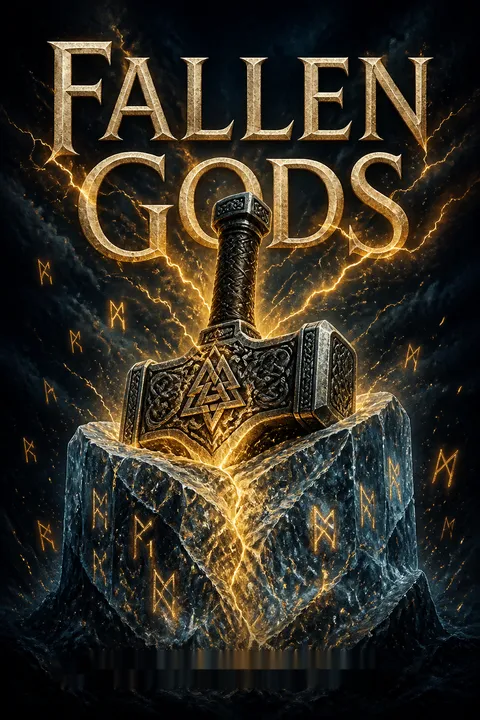
Mjölnir (The Hammer)
Mjölnir is more than a weapon—it is a living artifact, imbued with the memories, power, and will of its creators. It responds not just to blood, but to worth, choosing its wielder based on sacrifice, courage, and intent. The hammer's journey from Asgard to Endir, its role in the destruction of the Bifrost, and its final choice between Rey and Aric are central to the story's themes of legacy, destiny, and the true meaning of power.
Plot Devices
Runes as Map and Key
The runes scattered across Endir are more than decorative—they are a living map, a series of locks and keys that guide Rey and Aric toward Mjölnir. Each rune represents a trial, a memory, or a sacrifice, and unlocking them requires both blood and worth. Laufey's note, written in runes, is both a blessing and a final goodbye, setting Rey on the true path. The runes also serve as wards, protecting the campus and suppressing the powers of the sleeping Gods and Giants. Their gradual awakening mirrors the characters' own journeys, and their final unlocking is both a literal and metaphorical breaking of chains.
Dual Protagonists and Alternating POV
The story alternates between Rey and Aric's points of view, allowing readers to experience the emotional and psychological complexity of both characters. This dual perspective heightens the tension, as each is forced to confront their own biases, fears, and desires. The alternating POV also allows for dramatic irony, as the reader is often aware of secrets and betrayals before the characters themselves, increasing the emotional stakes.
Betrayal and Hidden Identity
The revelation that Rowen is Thor and Reeve is Loki is a masterstroke of narrative misdirection. These twists force the protagonists to reevaluate their relationships, their trust, and their own identities. The theme of hidden identity runs throughout the story, with characters wearing literal and metaphorical masks to survive. Betrayal is both a plot device and a psychological weapon, driving the characters toward their ultimate confrontation.
The Wild Hunt as Climax
The Wild Hunt, a campus tradition, is transformed into the stage for the final battle. The lowering of the wards, the arrival of Odin and Sigurd, and the awakening of the sleeping Gods and Giants all converge in a night of chaos and reckoning. The Hunt serves as both a literal and symbolic crossing of thresholds, forcing the characters to choose sides, make sacrifices, and claim their destinies.
Living Artifact and Worthiness
Mjölnir is not just a weapon, but a living legacy that chooses its wielder based on worth, not just blood. The hammer's refusal to respond to Odin or Thor, and its ultimate acceptance of both Rey and Aric, underscores the story's central theme: true power is earned, not inherited. The artifact's sentience adds a layer of complexity to the quest, making the final victory as much about character as about strength.
Download PDF
Download EPUB
.epub digital book format is ideal for reading ebooks on phones, tablets, and e-readers.








































