
Key Takeaways
1. American Exceptionalism: A Unique Divide, Not Just Superiority.
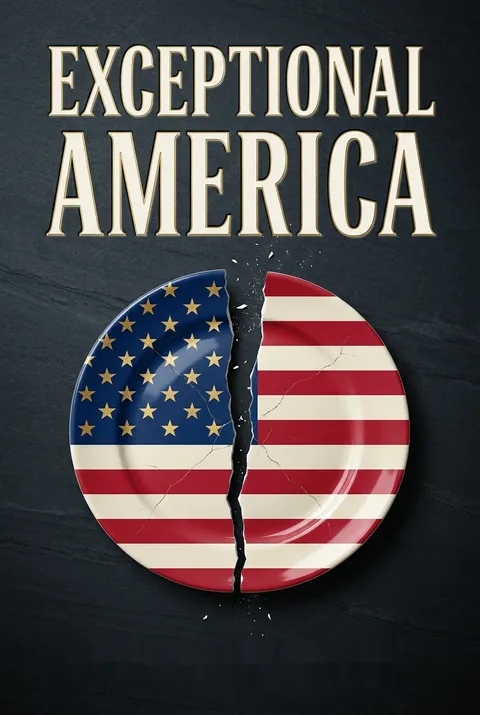
American exceptionalism means that America is an exception compared to other countries, for better or worse.
Misunderstood concept. The term "American exceptionalism" has been politically hijacked, especially during the Obama presidency, to imply inherent superiority or divine blessing. This redefinition served as a rhetorical weapon, accusing President Obama of lacking patriotism and seeking to transform the U.S. into "socialist" Europe. However, its original academic meaning simply denotes America's uniqueness or difference from other nations, for both positive and negative reasons.
Beyond superiority. Academics use "exceptionalism" to identify distinct American traits, such as a more capitalistic economy without universal healthcare, a punitive penal system, lax gun control, and a unilateral foreign policy. These features are not inherently superior but rather make the U.S. an outlier among Western democracies. The political distortion of the term obscures its true analytical value, which is to understand America's unique characteristics.
Sources of conflict. Ironically, some aspects of American exceptionalism, far from signifying greatness, contribute to national decline and intense internal conflict. The book argues that the increasing polarization within American society itself is a key dimension of this exceptionalism. This internal division over fundamental values is more pronounced in the U.S. than in other Western nations, leading to gridlock and profound consequences.
2. Profound Polarization: America's Deep Internal Rifts Are Unparalleled in the West.
Compared to other Westerners, Americans are far more polarized over fundamental questions regarding the purpose of government, socioeconomic equality, the literal veracity of the Bible, sexual morality, science, human rights, and foreign policy.
Unprecedented divide. American society is experiencing an intense and growing polarization, particularly between conservative and liberal citizens, which is unparalleled in the modern Western world. This divide extends beyond political elites to the general public, encompassing deeply divergent worldviews, values, and even factual understandings. The Obama years, contrary to hopes for unity, saw Congress reach its worst degree of partisan polarization since the post-Civil War Reconstruction period.
Two distinct Americas. Liberal America's worldview often aligns more closely with that of other Western nations (Europe, Canada, Australia, New Zealand) than with conservative America. Issues like universal healthcare, financial regulation, climate change, and reproductive rights, which are largely settled or less contentious in other developed countries, remain explosive battlegrounds in the U.S. This suggests that "conservatism" in America holds a deeply different meaning than elsewhere in the West.
Beyond gerrymandering. While partisan gerrymandering is often blamed for polarization, the evidence suggests it's a minor factor. The core issue is genuinely different worldviews, exacerbated by the Republican Party's sharp shift to the far right since the 1960s. This ideological hardening, coupled with the Democratic Party's more modest leftward shift, has created a political landscape where compromise is increasingly difficult, leading to governmental gridlock and social fragmentation.
3. The Cult of Ignorance: Anti-Intellectualism's Grip on American Politics.
A cult of ignorance in America has promoted 'the false notion that democracy means that 'my ignorance is just as good as your knowledge.'
Historical roots. Anti-intellectualism, a peculiar mindset characterized by skepticism or hostility towards education and intellectuals, has deep roots in American history. Ironically, it stems from an unusual conception of equality born during the American Enlightenment. Early American democracy fostered a populist creed that viewed extensive learning as elitist, suggesting that "common sense" was sufficient for understanding complex issues and achieving success.
Fueling disinformation. This anti-intellectual subculture has created fertile ground for disinformation and conspiracy theories in American politics. Politicians, from George W. Bush's lack of geopolitical knowledge to Donald Trump's fact-free claims about Obama's birth certificate or climate change, have exploited this mindset. The normalization of propaganda, often amplified by partisan media like Fox News, thrives on irrationality, gullibility, and a distrust of expert knowledge, hindering rational debate and problem-solving.
Contradictory landscape. Despite this pervasive anti-intellectualism, America also boasts some of the world's finest universities and has made immense contributions to science, literature, and art. This coexistence of a vibrant intellectual life with widespread disdain for intellectual pursuits highlights a profound contradiction. Unlike in many European nations where a broad education is valued for civic participation, parts of America perceive intellectualism as pretentious, leading to a citizenry often less informed about public affairs than their European counterparts.
4. Christian Fundamentalism: An Exceptional Force Shaping American Values.
Conservative America is the sole part of the modern Western world where Christian fundamentalism is widespread.
Uniquely influential faith. Religion retains an extraordinary influence in America, unlike most other developed nations where it often inspires indifference or skepticism. This is largely due to the widespread presence of Christian fundamentalism, an absolutist faith characterized by biblical literalism, anti-intellectualism, and ultratraditionalism. While liberal and moderate Christianity exists, fundamentalism's prevalence, particularly in conservative America, makes the U.S. an outlier in the Western world.
Dogma over reason. The historical separation of church and state in the U.S., while preventing religious strife, paradoxically allowed organized religion to flourish largely unchecked by critical scrutiny. This fostered a distinctive approach to faith where dogma is often shielded from analysis, and questioning religious beliefs is conflated with intolerance. Consequently, many Americans, including a significant portion of the educated, embrace creationism, apocalyptic prophecies, and other views that contradict scientific consensus or historical scholarship.
Far-reaching impact. Christian fundamentalism's influence extends beyond purely religious matters, shaping views on education, science, climate change, economics, crime, and foreign policy. It fosters rigid, black-and-white, and authoritarian mindsets, often leading to a rejection of compassion and a preference for retribution. This ideological purity helps explain why many evangelicals supported figures like Donald Trump, despite his personal irreligiosity, and why fundamentalist views contribute to America's unique stances on issues like the death penalty and climate change.
5. Culture Wars: Faith, Sex, and Gender as Battlegrounds.
In almost no other developed country are issues such as abortion, contraception, homosexuality, and sexual education as controversial as in America.
Deeply contested morality. America's "culture wars" are intense conflicts over faith, sex, and gender roles, reflecting sharply divergent worldviews between modernists and ultratraditionalists. While modernists in liberal America generally support reproductive rights, LGBTQ+ equality, and secular government, ultratraditionalists in conservative America, often driven by Christian fundamentalism, vehemently oppose these advancements. This profound moral schism is far more pronounced in the U.S. than in other Western nations.
Patriarchy vs. equality. The debate over gender roles is central, with traditionalists often advocating for patriarchal family structures where men lead and women are submissive, contrasting with modernist ideals of gender equality. Issues like the Equal Rights Amendment and the U.N. Convention on the Elimination of All Forms of Discrimination against Women have faced fierce opposition from traditionalists fearing the erosion of "family values." This clash is evident in political rhetoric and policy battles, such as efforts to defund Planned Parenthood or restrict access to contraception.
Sexual politics. Sexual morality remains a battleground, from the interminable abortion war to debates over abstinence-only education and LGBTQ+ rights. While many European nations have largely settled these issues, American conservatives continue to fight for policies that reflect ultratraditional views, often citing biblical literalism. The rapid progress of gay rights in the U.S., culminating in marriage equality, has been met with fierce resistance, highlighting how these cultural battles are deeply intertwined with religious beliefs and a unique conception of individual liberty.
6. Plutocracy and Inequality: The Winner-Take-All Economy.
Compared to other Western democracies, modern America has the worst degree of wealth inequality and the worst human rights record.
Economic divergence. America has transitioned from a relatively middle-class society, shaped by the New Deal era, to a winner-take-all economy since the 1980s. This has resulted in wealth inequality far more acute than in other Western nations. The bulk of income growth has disproportionately benefited the richest 1%, while ordinary Americans have seen their incomes stagnate. This economic shift is a stark contrast to the post-WWII era when a bipartisan consensus supported a more equitable distribution of wealth.
Market fundamentalism's rise. The Republican Party's embrace of market fundamentalism, advocating minimal taxation, deregulation, and reduced public assistance, has been a key driver of this inequality. This ideology, often intertwined with Christian fundamentalism, assumes markets are self-correcting and that wealth redistribution is illegitimate. The 2008 financial crisis, rather than prompting a reevaluation, led to even greater hostility towards financial regulation among conservatives, further cementing policies that favor the wealthy.
Money in politics. America's political system has increasingly become a plutocracy, heavily influenced by campaign donations and lobbying from tycoons and corporations. The Supreme Court's Citizens United decision, by curtailing campaign finance regulations, exacerbated this trend, allowing unlimited spending by moneyed interests. This disproportionate influence ensures that the interests of the rich remain central to the political agenda, often at the expense of average citizens, who have minimal political sway on policy issues.
7. Voting Against Self-Interest: The Puzzling Choices of Ordinary Americans.
Millions of common people stand against their own economic interest by defending policies that heavily benefit the richest of the rich.
Counterintuitive voting patterns. A significant portion of non-affluent Americans, particularly working-class whites, consistently vote for Republican policies that primarily benefit the wealthy and often harm their own economic well-being. This phenomenon, exemplified by support for figures like Donald Trump despite his pro-rich policies, is a puzzling aspect of American politics. It suggests that voting decisions are not solely driven by immediate economic self-interest.
Intertwined influences. Several factors contribute to this counterintuitive voting behavior.
- Myopia and anti-intellectualism: A lack of awareness about the true extent of wealth inequality and a distrust of expert analysis make voters susceptible to disinformation.
- Racial divisions: Historically, racial resentment has hindered economic solidarity, leading some whites to oppose government assistance programs they perceive as primarily benefiting minorities, even if those programs would help them.
- American Dream myth: An unbridled faith in the American Dream, the belief that anyone can become rich through hard work alone, leads many to oppose wealth redistribution and public assistance, viewing them as undermining individual initiative.
Beyond economic logic. This complex interplay of ideological purity (market and religious fundamentalism), racial animus, and a romanticized view of individual achievement often overrides rational economic considerations. While other Western nations also have non-affluent conservative voters, the intensity of these underlying factors in America leads to a unique degree of voting against one's own economic interest, perpetuating a system that exacerbates inequality.
8. Harsh Justice: Mass Incarceration and the Death Penalty as American Anomalies.
America has approximately 25 percent of the world’s prisoners despite having 5 percent of the world’s population.
Uniquely punitive system. The U.S. criminal justice system is an extreme outlier in the modern Western world, characterized by mass incarceration, draconian sentences, and the continued use of the death penalty. While other Western democracies have incarceration rates significantly lower (e.g., 5-10 times less), America's prison population surged dramatically from the 1970s, driven by a "tough on crime" movement that largely abandoned rehabilitation in favor of retribution.
Systemic injustices. This harshness is deeply intertwined with racial discrimination and wealth inequality. Minorities are disproportionately arrested, convicted, and sentenced, reflecting systemic biases. The mass incarceration of the poor, including low-income whites, parallels the rise of winner-take-all economics, with states having higher wealth inequality also tending to have higher incarceration rates and to retain capital punishment. The lack of adequate legal representation for the poor further exacerbates these disparities.
Cultural and political drivers. Anti-intellectualism, which dismisses expert insights from criminology or sociology, and Christian fundamentalism's black-and-white moralism, which views offenders as simply "evil," fuel this punitive approach. Elected judges and prosecutors, incentivized by "tough on crime" rhetoric, contribute to the problem. Despite this repressiveness, America has the highest murder rate and gun violence in the West, highlighting the ineffectiveness of its brutal system and its indifference to international human rights standards.
9. Unilateralism and Insularity: America's Distinct Global Stance.
The United States has long been far more inclined than other Western democracies to defy norms of diplomacy, international law, and human rights deemed against its interests.
A unique global role. America's foreign policy is marked by a distinctive blend of global influence and internal insularity, unparalleled in the West. While some Americans are global citizens, many exhibit limited knowledge of foreign nations and a suspicion of international cooperation. This parochialism, often intertwined with nationalistic pride and anti-intellectualism, fuels a preference for unilateral action and a distrust of international institutions like the United Nations or international law.
Defiance of international norms. The U.S. has a history of exempting itself from international legal frameworks, notably refusing to ratify numerous human rights treaties that other Western democracies support. Examples include the U.N. Convention on the Elimination of All Forms of Discrimination against Women and the Convention on the Rights of the Child. This stance, often driven by conservative opposition and a unique constitutional requirement for treaty ratification, undermines America's credibility as a global leader in human rights.
The "War on Terror" and its lessons. The 2003 invasion of Iraq, based on dubious intelligence and against widespread international opposition, exemplifies this unilateral approach. Fueled by a black-and-white "good versus evil" moralism and a peculiar interpretation of biblical prophecies, the war destabilized the Middle East and exacerbated terrorism. Despite its immense military power and global reach, America's foreign policy often draws peculiar lessons from history, leading to counterproductive actions and a cycle of violence, as seen in the "War on Terror" and the rise of ISIS.
10. Cycles of Contradiction: Progress and Reaction in American History.
Modern America’s acute social conflicts and injustices appear to be part of a historical cycle, as they have old roots even as they take on new forms.
Recurring patterns. American history is not a linear progression but a series of cycles marked by both remarkable progress and persistent reactionarism. Issues like wealth inequality, anti-intellectualism, and social injustices have deep historical roots, resurfacing in new forms across generations. The election of Donald Trump, following the historic presidency of Barack Obama, epitomizes this cyclical nature, demonstrating how periods of advancement can be met with powerful counter-movements.
Enduring exceptionalism. The peculiar ideological nexus of anti-intellectualism, Christian fundamentalism, visceral anti-governmentalism, and racial resentment, deeply embedded in conservative America, continues to drive these cycles. These mindsets, shaped by America's unique historical circumstances, resist change and perpetuate divisions. While demographic shifts may eventually weaken the influence of staunchly conservative voters, the resilience of these exceptional American traits suggests that the nation's internal conflicts are far from resolved.
A double-edged future. American decline is not inevitable, and the nation possesses immense strengths and potential for reform. However, its superpower status and nationalistic pride often hinder self-reflection and the adoption of sensible policies from other democracies. While a reduction in U.S. global power might not necessarily worsen living standards, the rise of authoritarian powers like China underscores the importance of America reclaiming its role as a credible standard-bearer for democracy and human rights, by addressing its internal contradictions and leading by example.
Download PDF
Download EPUB
.epub digital book format is ideal for reading ebooks on phones, tablets, and e-readers.








































