
Key Takeaways
1. Relationships are often built on fear of being alone, not genuine connection.
If your other half completes you, why on earth didn’t you try to fill that void yourself first?
Societal pressure. The author argues that many people rush into relationships or stay in bad ones because society tells them they must be with someone to be complete or happy. This pressure starts young, leading people to view partners as glorified Pokémon they just need to "catch." The desire to emulate others or fit a perceived norm drives this behavior.
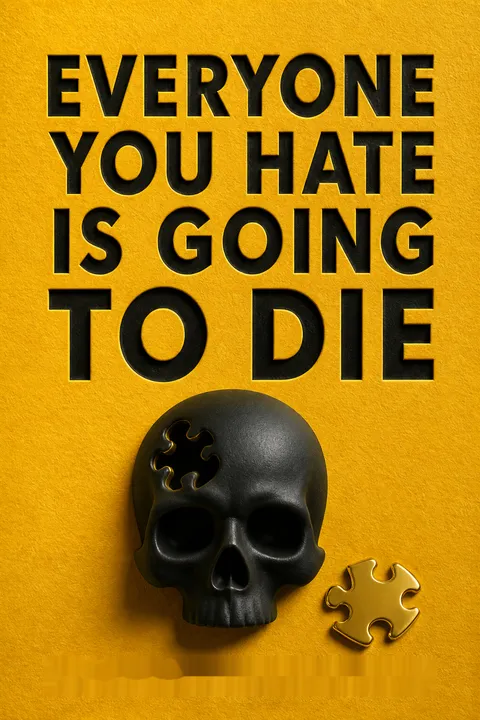
The "Jigsaw" analogy. The author's stand-up special, Jigsaw, famously led to thousands of breakups by making people question if their partner truly fit them, or if they were just forcing pieces together out of fear of being incomplete. This highlights how many relationships are built on the idea of finding a missing piece rather than two whole people choosing to be together.
Settling for less. This fear of being alone leads people to settle for partners who are "the ninth best thing" or simply the first person who showed interest. The author suggests this is a primary cause of divorce and unhappiness, as curiosity about what else is out there eventually surfaces, often years into a marriage.
2. Breakups are necessary, even if they suck.
It’s waaaaay crueler to not dump that person.
Cruelty of staying. The author vehemently argues that staying in a relationship you don't want to be in is monstrously selfish. Every moment spent with someone you don't truly want is time stolen from them – time they could use to find someone who genuinely likes them and offers a future.
Breakups always suck. There's no easy way to break up. It's always painful, even if mutual. It's an ending, a chapter closing, and it's natural to feel sadness for the loss of that person from your life, even if the relationship wasn't right.
Cutting ties is crucial. To heal and move on, you must completely cut the person out of your life initially. This includes:
- Deleting photos and texts
- Unfollowing on social media
- Avoiding contact, even "just being friends" immediately
This drastic separation, while painful, is presented as necessary for both parties to truly recover and move forward.
3. Sex is important for personal development and shouldn't be overly romanticized.
Have as much consensual sex as you possibly can, get good at it, find out what you like, and have a bloody good exploration of yourself and your body.
Sex as exploration. The author views virginity not as something precious to be "lost," but like baby teeth – something you eventually move past. He advocates for young people having plenty of consensual sex to learn about themselves, their bodies, and what they enjoy, free from the pressure of it being a "special" or life-changing event.
"Making love" vs. "Fucking". The book distinguishes between these two forms of sex:
- Making love: Deeply emotional, intimate, requires connection.
- Fucking: Carnal, instinctive, fun, can be purely physical.
Both are presented as valuable and necessary. If everything is "making love," nothing is special.
Challenging shame and jealousy. The author criticizes slut-shaming and partners who are jealous of past sexual experiences. He argues that a healthy relationship with sex involves accepting one's own and a partner's past, viewing it as experience rather than something that diminishes value.
4. Friends, especially of the opposite sex, offer unique perspectives and support.
I think having friends of the opposite sex is very important.
Different perspectives. Friends of the opposite sex offer insights into how the other gender thinks and experiences the world, which can be invaluable, especially in navigating romantic relationships. They can act as "emotional mentors" or provide a reality check on dating behaviors.
Navigating romantic assumptions. Society often assumes that opposite-sex friends must secretly want to be together ("Ross and Rachel" trope). The author argues this is often untrue and that these friendships are valuable precisely because they are not romantic, offering a different kind of deep bond.
Challenges with partners. Introducing a romantic partner to an opposite-sex best friend can be difficult due to jealousy and insecurity. The author stresses that loyalty lies with the friend in such situations, especially if the partner demands the friendship end, viewing it as a sign the partner is insecure or possessive.
5. Family bonds are complex; chosen family can be stronger than blood.
“Blood is thicker than water” is not only wrong as a sentiment, it’s also wrongly quoted.
Reinterpreting proverbs. The author challenges the common understanding of "blood is thicker than water," citing the full proverb ("The blood of the covenant is thicker than the water of the womb") to argue that chosen bonds (covenant) are stronger than biological ones (womb).
Impact of upbringing. Parents are the first significant relationships and shape who we become, for better or worse. The author reflects on his own parents' influence and contrasts it with parents who do a "shit job," arguing that not everyone should have kids.
Siblings and loss. The experience of having siblings, including a deceased sister, taught lessons about protection, forced love, and dealing with grief. While biological siblings are important, the author suggests that chosen friends can fulfill similar roles and provide equally, if not more, meaningful connections.
6. Nationalism is often absurd, but local identity and banter are powerful.
I fucking hate England.
Banter-fueled identity. The author expresses a deep, often humorous, hatred for England, which he frames as a core part of Scottish identity and banter, despite having English friends and family. This highlights how national identity can be built on shared grievances and playful antagonism rather than genuine malice towards individuals.
Political frustrations. This "hate" is fueled by perceived political disrespect and power imbalances within the UK, particularly concerning Scotland's vote on independence and being pulled out of the EU against its will. The author feels Scotland's voice doesn't matter to the larger English population.
Cultural pride. Despite the political frustrations, the author expresses immense pride in Scottish culture, from its history and cities (Edinburgh) to its food (haggis, Irn-Bru) and traditions (kilts, country dancing). This local pride is presented as a more meaningful form of identity than broad nationalism.
7. Americans are uniquely kind but also uniquely frustrating.
Most Americans are truly kind people.
Kindness vs. Sensitivity. The author finds Americans genuinely kind and friendly, noting their willingness to engage in conversation and care about strangers' well-being, unlike the more reserved British. However, this kindness is contrasted with an extreme sensitivity to criticism, especially about their country, often requiring the preface "I love America, but..."
Cultural quirks. Specific American behaviors are highlighted as baffling or frustrating to outsiders:
- Clapping when planes land
- Talking loudly in cinemas or elevators
- Lack of self-deprecation or understanding of banter
- Extreme reactions to minor issues ("Can I speak to the manager?")
Ignorance and propaganda. The author observes a willful ignorance in some Americans, fueled by propaganda (like Fox News), leading them to believe easily disproven lies (e.g., Trump's inauguration crowd size, Biden's "dementia"). He finds this level of deliberate stupidity terrifying and unique.
8. Toxic relationships are emotionally damaging and exploit empathy.
Emotional abuse is tough because it takes you ages to realize what’s going on.
Insidious nature. Unlike physical abuse, emotional abuse leaves no visible bruises, making it hard to recognize and prove. Manipulative partners can gaslight victims into believing they are imagining the abuse or that it's their own fault.
Exploiting empathy. Toxic partners often exploit a victim's kindness, trust, and empathy, using these positive traits against them. They isolate the victim from friends and family, break down their self-worth, and then present themselves as the only person who could possibly love someone so flawed.
Long-lasting impact. Escaping a toxic relationship is difficult because the victim's self-esteem is at an all-time low. The psychological damage can be profound, leading to difficulty trusting future partners and lingering self-doubt, even years later.
9. Being comfortable alone is crucial to avoid settling for toxic relationships.
People hate being alone so much that they’ll take something bad over nothing at all.
Fear of loneliness. The author posits that a deep-seated fear of being alone drives many people into and keeps them in unhealthy relationships. They settle for "something awful" rather than facing the perceived emptiness of being single.
Practicing solitude. Learning to be comfortable and even enjoy being alone is presented as a vital skill. It allows individuals to understand themselves better and raises their standards for potential partners – a relationship must be better than being single to be worth pursuing.
Challenging Hollywood narratives. The author criticizes movies and TV for rarely portraying single life positively, instead focusing on lonely, incomplete characters who only find happiness through romance. This perpetuates the myth that being alone is inherently undesirable.
10. Mental health struggles are universal, and seeking help (like therapy) is essential.
I think the fact of the matter is that we all have mental health problems.
Universality of struggle. The author argues that mental health is not a black-and-white issue where some people have problems and others don't. Everyone experiences struggles, anxiety, and sadness; the difference lies in severity and how well equipped one is to cope.
Impact of external pressure. The pandemic exacerbated mental health issues by removing external validation (like performing) and forcing introspection, leading to self-criticism and guilt over not being productive. The pressure to constantly "do more" contributes to this struggle.
Value of seeking help. Therapy is presented as a crucial tool for navigating mental health challenges. Using the analogy of a house fire, the author explains that a therapist helps identify the source of the problem and provides tools to manage it, even if the "fire" can't be completely extinguished. He advocates for free, compulsory therapy for everyone.
Review Summary
Everyone You Hate is Going to Die received mixed reviews, with an average rating of 3.93 out of 5. Many readers found the book hilarious and insightful, praising Sloss's dark humor and clever analogies. However, some felt it was repetitive, lacking structure, and relied too heavily on crude language. Fans of Sloss's stand-up comedy generally enjoyed the book more, while others found it less engaging in written form. The book's content covers relationships, death, mental health, and cultural observations, often with a comedic twist that resonated with many readers.
People Also Read

FAQ
1. What’s "Everyone You Hate is Going to Die" by Daniel Sloss about?
- Comedian’s Take on Relationships: The book is a comedic exploration of relationships—romantic, familial, platonic, and even national—through the irreverent, brutally honest lens of Scottish comedian Daniel Sloss.
- Humor and Dark Honesty: Sloss uses dark humor and personal anecdotes to dissect the absurdities, challenges, and joys of human connection, including love, sex, friendship, and loss.
- Breaking Societal Norms: The book challenges conventional wisdom about love, happiness, and societal expectations, encouraging readers to question what they’ve been taught about relationships.
- Inspired by Stand-Up: Much of the book expands on themes from Sloss’s stand-up specials, especially "Jigsaw," which is infamous for causing thousands of breakups and divorces.
2. Why should I read "Everyone You Hate is Going to Die" by Daniel Sloss?
- Unique Comedic Voice: Sloss offers a refreshingly candid, often outrageous perspective on topics most people are too polite to discuss openly.
- Relatable and Cathartic: The book resonates with anyone who’s struggled with relationships, breakups, or societal pressure to conform.
- Encourages Self-Reflection: Readers are prompted to examine their own lives, relationships, and beliefs, often with a mix of laughter and discomfort.
- Not Just for Comedy Fans: While fans of Sloss’s stand-up will appreciate the book, its insights and humor are accessible to anyone interested in human behavior and modern life.
3. What are the key takeaways from "Everyone You Hate is Going to Die"?
- Self-Love Comes First: Sloss argues that happiness and fulfillment start with loving and understanding yourself, not relying on others to complete you.
- Question Relationship Norms: The book challenges the idea that being in a relationship is inherently better than being single, and warns against settling for mediocrity.
- Embrace Honesty and Humor: Facing life’s darkest or most awkward moments with honesty and humor can be liberating and healing.
- Toxicity and Boundaries: Recognizing and escaping toxic relationships—romantic or otherwise—is crucial for personal well-being.
4. How does Daniel Sloss define and approach relationships in "Everyone You Hate is Going to Die"?
- Relationships Are Not Obligations: Sloss rejects the notion that you must love or stay loyal to people just because of blood or history.
- Love Should Be Inconvenient: He believes true love is disruptive and inconvenient, not just a source of comfort or validation.
- Breakups Are Necessary: The book normalizes breakups and even celebrates them as acts of self-respect and growth.
- Friendship and Chosen Family: Sloss values chosen bonds over biological ones, emphasizing the importance of friends who challenge and support you.
5. What is the "Jigsaw" method or advice mentioned in "Everyone You Hate is Going to Die"?
- Jigsaw Analogy: Sloss’s "Jigsaw" is a metaphor for how people try to fit others into their lives to complete themselves, often forcing pieces that don’t belong.
- Breakup Catalyst: The "Jigsaw" stand-up special (and its philosophy) has inspired over 120,000 breakups and 300 divorces, as people realize they’re settling.
- Self-Completion: The core advice is to become a complete person on your own, rather than seeking someone else to fill your gaps.
- Wait for the Right Fit: Don’t settle for someone who only partially fits; wait for a relationship that genuinely complements your life.
6. How does Daniel Sloss address toxic relationships and emotional abuse in "Everyone You Hate is Going to Die"?
- Personal Experience: Sloss shares his own story of being in a toxic, emotionally abusive relationship, highlighting how subtle and damaging such dynamics can be.
- Manipulation Tactics: He describes common tactics of emotional abusers, such as isolation, gaslighting, and eroding self-worth.
- Escaping Toxicity: The book encourages readers to leave relationships that diminish them, regardless of guilt or fear.
- Not Your Responsibility: Sloss stresses that you are not responsible for fixing or saving toxic partners, especially if they threaten self-harm to manipulate you.
7. What does "Everyone You Hate is Going to Die" say about family, siblings, and childhood?
- Family Isn’t Sacred: Sloss challenges the idea that family bonds are unbreakable or always positive, advocating for boundaries with toxic relatives.
- Sibling Dynamics: He shares both heartfelt and darkly funny stories about his siblings, including the loss of his disabled sister, to explore grief and forced love.
- Only Children and Empathy: The book humorously claims only children are less empathetic, using sibling rivalry and protection as a lens for understanding love and loss.
- Parental Influence: Sloss credits his parents for shaping his worldview, but also pokes fun at the randomness and flaws of parenting.
8. How does Daniel Sloss discuss sex, gender, and modern dating in "Everyone You Hate is Going to Die"?
- Sex Positivity: Sloss advocates for a healthy, shame-free approach to sex, encouraging exploration and rejecting slut-shaming.
- Gender Stereotypes: He mocks outdated gender roles and highlights the importance of understanding the opposite sex, especially through friendships.
- Dating Apps and Hookup Culture: The book offers a comedic but insightful look at Tinder and the differences in dating experiences for men and women.
- Virginity and Experience: Sloss dismisses the idea that your "first time" is sacred, arguing that sexual experience is valuable for personal growth.
9. What are Daniel Sloss’s views on friendship, especially with the opposite sex, in "Everyone You Hate is Going to Die"?
- Value of Opposite-Sex Friends: Sloss believes having close friends of the opposite sex is crucial for personal development and empathy.
- Platonic Relationships: He debunks the myth that men and women can’t be just friends, using his friendship with Jean as a central example.
- Jealousy and Boundaries: The book discusses how romantic partners often feel threatened by these friendships, and why that’s a sign of insecurity.
- Chosen Family: Sloss elevates the importance of friends who challenge, support, and call you out, sometimes more than family.
10. How does "Everyone You Hate is Going to Die" use humor to address serious topics like death, grief, and mental health?
- Laughing at Darkness: Sloss uses dark, sometimes shocking humor to make taboo subjects like death and grief more approachable and less isolating.
- Personal Loss: He shares the story of his sister’s death and his own struggles with mental health, using jokes to process pain and connect with readers.
- Therapy and Self-Reflection: The book normalizes therapy and self-examination, often making fun of his own resistance and breakthroughs.
- Breaking Taboos: By joking about topics people usually avoid, Sloss encourages open conversations and emotional honesty.
11. What are the best quotes from "Everyone You Hate is Going to Die" and what do they mean?
- “Everyone you hate is going to die. But so will everyone you love, so maybe it’s not as comforting as I thought!” — Highlights the universality of death and the futility of holding grudges.
- “If your other half completes you, why on earth didn’t you try to fill that void yourself first?” — Challenges the idea of needing someone else to be whole.
- “You are not responsible for the happiness of other human beings.” — Emphasizes personal boundaries and self-care in relationships.
- “Love should be the most inconvenient thing in the world.” — Suggests that true love disrupts your life in profound, unexpected ways.
- “If you’re in a relationship with someone you don’t want to be with, allow me to try and inspire you to get out of it.” — Encourages readers to leave unfulfilling relationships for their own well-being.
12. How does "Everyone You Hate is Going to Die" address cultural and societal issues, including nationalism, America, and masculinity?
- National Identity and Banter: Sloss humorously explores Scottish identity, the love-hate relationship with England, and the absurdity of nationalism.
- Critique of America: He offers both affectionate and scathing observations about American culture, politics, and the myth of American exceptionalism.
- Masculinity and "Lads": The book examines male friendships, toxic masculinity, and the importance of emotional vulnerability among men.
- Societal Conditioning: Sloss critiques how society pressures people into relationships, marriage, and conformity, urging readers to question these norms and find their own path.
Download PDF
Download EPUB
.epub digital book format is ideal for reading ebooks on phones, tablets, and e-readers.








































