
Key Takeaways
1. Male Entitlement, Himpathy, and Misogyny Form a System of Social Control.
America did not pass the test.
Systemic forces. Male entitlement, himpathy, and misogyny are not isolated incidents but interconnected social forces that uphold patriarchy. The Brett Kavanaugh hearings, where credible sexual assault allegations were dismissed to confirm a privileged man to the Supreme Court, starkly illustrated this. Kavanaugh's "aggrieved, belligerent, and, at times, borderline unhinged conduct" contrasted sharply with Dr. Christine Blasey Ford's calm demeanor, yet he received disproportionate sympathy.
Defining terms. Misogyny is conceptualized as the "law enforcement" branch of patriarchy, policing gendered norms and expectations by subjecting women to hostile treatment. Himpathy is the "disproportionate or inappropriate sympathy extended to a male perpetrator over his similarly or less privileged female targets or victims." Sexism, in contrast, is the ideological branch, rationalizing patriarchal norms.
- Misogyny: Hostile treatment of women for violating gender norms.
- Himpathy: Sympathy for male perpetrators over female victims.
- Sexism: Beliefs that rationalize male dominance.
Focus on impact. This framework shifts focus from perpetrators' internal hatred to the hostile social environments women navigate. It acknowledges that misogyny can be structural, perpetuated by institutions and cultural mores, and that even women can enable it by dismissing other women or blaming victims. This approach avoids the "psychological inscrutability" of trying to discern individual motivations, instead focusing on observable hostile treatment.
2. The "Incel" Phenomenon Reveals a Toxic Entitlement to Women's Admiration and Sex.
I don’t know why you girls aren’t attracted to me, but I will punish you all for it.
Aggrieved entitlement. The "incel" (involuntary celibate) subculture, exemplified by figures like Elliot Rodger, highlights a dangerous sense of male entitlement to women's sexual and emotional attention. Incels believe they are owed sex and admiration, and when denied, they feel "betrayed" and "resentful," often leading to violent revenge fantasies and acts against women and "alpha males" (Chads).
- Elliot Rodger: Murdered women after being denied entry to a sorority house, fueled by rage over perceived rejection.
- Scott Beierle: Yoga studio shooter, inspired by Rodger, with a history of unwanted touching.
- Alek Minassian: Van attacker, hailed Rodger as "Supreme Gentleman."
Beyond sex. While incels express a desire for sex, it's often instrumental—a means to gain status in masculine hierarchies and soothe inferiority complexes. Their self-reports of low status are often inaccurate, with some undergoing extensive plastic surgery to appear more "masculine." The term "involuntary celibate" itself is revealing, implying celibacy is imposed, rather than a result of women's voluntary choices.
Victimhood and dehumanization. Incels frequently perceive themselves as the "true victims," even as they plan and commit violence. Their use of dehumanizing language like "femoids" is not due to a literal belief that women are nonhuman, but rather an expression of rage and a desire to insult and put women down within a perceived social hierarchy. This self-pity and distorted victimhood often precede violent outbursts.
3. Systemic Himpathy Undermines Justice for Rape Victims.
It didn’t matter in this case—nor does it matter in many cases like it—that it wasn’t a he said–she said scenario in reality.
Impunity for perpetrators. The case of Rae Florek, whose boyfriend Randy Vanett admitted to raping her while she was unconscious, yet faced no arrest or prosecution, exemplifies how himpathy pervades the legal system. Despite clear evidence, law enforcement and prosecutors found excuses not to act, prioritizing the perpetrator's comfort over the victim's justice. This is not an isolated incident but a systemic failure.
Herasure and victim-blaming. Himpathy often manifests as "herasure," where victims are erased from the narrative, and victim-blaming, where their actions are scrutinized to excuse the perpetrator. Brock Turner's case, where his swimming prowess and "bright future" were emphasized over Chanel Miller's trauma, and her alcohol consumption was cited as a "decisive factor," is a prime example.
- Brock Turner: Received a minimal sentence despite being caught in the act, with his father lamenting the impact on his son's appetite.
- Austin Rollins: Headline described him as "lovesick teen" after murdering his ex-girlfriend.
- Rowan Baxter: Initial headlines framed his murder of his family as a "tragedy" for the "fun-loving father."
Broken system. The widespread practice of "exceptional clearance" in rape cases, where police close cases without arrest despite sufficient evidence, further illustrates systemic failures. Additionally, hundreds of thousands of untested rape kits nationwide, disproportionately belonging to women of color, reveal a profound indifference to victims' suffering. This negligence suggests a societal belief that certain men are entitled to take sex from certain women, rendering their pleas for justice inconsequential.
4. Women Are Socially Conditioned to Grant Unwanted Consent.
The question thus becomes: Why, and how, do we regard many men’s potentially hurt feelings as so important, so sacrosanct?
The performance of consent. "Cat Person" and the Aziz Ansari incident highlight a subtle but pervasive form of sexual coercion where women grant consent not out of genuine desire, but to avoid social discomfort, rudeness, or male anger. Margot in "Cat Person" goes through with unwanted sex to avoid seeming "spoiled and capricious," illustrating how patriarchal social scripts pressure women to prioritize male feelings over their own bodily autonomy.
Milgram's shadow. The Milgram experiments, where participants inflicted pain on others to avoid being "rude" to an authority figure, serve as a powerful analogy. Women are often socialized to maintain peace and nurture others, creating a "spurious but overriding, conflicting sense of duty" to comply with male desires, even when it goes against their will. This pressure makes it difficult for women to assert their sexual autonomy without fear of backlash.
Internalized obligation. This dynamic extends into marriage, where women may internalize a "duty to satisfy my husband, regardless of my own feelings." One anonymous humanities professor recounted enduring years of unwanted sex, feeling "sexually violated" but blaming herself for not asserting agency. This demonstrates how deeply ingrained male sexual entitlement can be, making women feel intense guilt and shame for rejecting a man, even when they know intellectually they have the right to refuse.
5. Male-Centric Biases Lead to Inadequate Healthcare for Women.
The healthcare machine could not imagine me as competent and so it neglected and ignored me until I was incompetent.
Misogynoir in medicine. Tressie McMillan Cottom's harrowing experience of being denied pain medication and dismissed during a life-threatening pregnancy, culminating in the death of her baby, exposes the severe racial and gender biases in healthcare. Black women are three to four times more likely to die from pregnancy-related causes than white women, often due to medical professionals dismissing their pain and competence.
Dismissal of female pain. Research consistently shows that women's pain is taken less seriously than men's.
- Less medication: Women receive less pain medication than men for similar procedures, often given sedatives or mild analgesics instead of opioids.
- Psychologized pain: Women are more likely to be diagnosed with psychosomatic illnesses or perceived as "hysterical" or "emotional."
- Delayed diagnosis: Conditions predominantly affecting women, like fibromyalgia, are often met with skepticism and require extensive effort to be taken seriously.
Andronormativity in research. Medical research and training often treat the male body as the default, leading to inadequate understanding and treatment for women.
- "Typical 70kg man": Medical education focuses on a male "norm," making female physiology "atypical."
- Underrepresentation in trials: Women are underrepresented in drug trials and device studies, leading to suboptimal recommendations (e.g., cardiac resynchronization therapy).
- "Yentl syndrome": Women may need to present with typical male symptoms to receive appropriate treatment.
Consequences of negligence. This systemic negligence has dire consequences, from misdiagnosed heart attacks (women are 50% more likely to be misdiagnosed in the UK) to unsafe car crash outcomes (women are 73% more likely to be killed or seriously injured due to male-modeled crash test dummies). The lack of funding for women's health issues, even for life-saving treatments like baking soda for uterine failure, underscores a profound indifference to women's well-being.
6. Anti-Abortion and Anti-Trans Movements Enforce Bodily Control.
The state policing of pregnant bodies is a form of misogynistic social control, one whose effects will be most deeply felt by the most vulnerable girls and women.
Control, not life. Anti-abortion legislation, often spearheaded by white Republican men and conservative white women, is fundamentally about controlling women's bodies and enforcing gendered norms, not protecting life. The Alabama ban, criminalizing abortion even in cases of rape and incest, and "heartbeat bills" that ban abortions before many know they are pregnant, demonstrate a "monstrous, heartless, and immoral" disregard for pregnant individuals.
- Medical misinformation: Lawmakers propose absurd medical interventions (swallowing cameras for pregnancy, reimplanting ectopic pregnancies).
- Hypocrisy: Supporters of abortion bans often simultaneously support the death penalty, oppose child support, and ignore high maternal mortality rates, especially for women of color.
- Political manipulation: The anti-abortion movement's religious ties were deliberately cultivated for political gain, drawing on anti-feminist sentiment.
Transmisogyny and "bathroom bills." A parallel form of bodily control is seen in anti-trans movements, particularly "bathroom bills." These laws, which force trans people to use restrooms not matching their gender identity, are rooted in transmisogyny—the intersection of misogyny and transphobia. They rely on the false premise of predatory trans women or cis men pretending to be trans women, despite minimal evidence of such threats.
- False threat: Actual attacks by cis men in restrooms are far more common than those by trans women.
- "Sexual deception": Trans women are often perceived as "evil deceivers" or "faulty simulacrum of femininity," fueling violence.
- Entitlement to know: There's a pervasive male entitlement to instantly know a woman's genital arrangements, and to react violently when expectations are challenged, as seen in the murder of Gwen Araujo.
Human givers. Both movements position women not as autonomous human beings, but as "human givers" of reproductive labor, care, and sex, to which privileged men are tacitly deemed entitled. This framework explains why women are punished for "bad" behavior (seeking abortion) and why women of color and poor women disproportionately bear the brunt of reproductive oppression.
7. Men's Entitlement Perpetuates Unequal Domestic and Emotional Labor.
Men simply feel entitled to our labor.
The "second shift" persists. Despite the image of the modern, involved father, mothers with male partners continue to perform a disproportionate share of domestic labor and child-rerearing. Studies show that first-time parenthood increases a woman's workload by approximately twenty hours per week, double that of men, with women still doing more physical childcare and emotional labor.
- Time-use studies: Women globally average 2-10 times more unpaid care work than men.
- Overestimation: Men tend to overestimate their contributions to household work.
- Elusive equality: Parity is only approached when the woman works full-time and the man is unemployed, and even then, she still does more.
Emotional labor's burden. Emotional labor encompasses the invisible, anticipatory work of managing household logistics (calendars, shopping lists, packing) and the feelings around these tasks. Women face a double bind:
- Don't ask: Be saddled with the burden.
- Do ask: Risk being perceived as "nagging" or "demanding," violating social codes to keep the peace.
Leisure over care. Men often feel entitled to more leisure time, even when their female partners work comparable hours. Studies show that "fathers who work long hours have wives who do more child care, while mothers who work long hours have husbands who sleep more and watch lots of television." This preference for leisure over care work, even when unemployed, contributes to a "crisis in meaning" for some men, yet they resist traditionally feminine care jobs.
Internalized guilt. Women often internalize this male entitlement, feeling guilty for holding male partners accountable or even grateful for minimal "help." Jancee Dunn's struggle to insist on fairness, even eating broken crackers to save whole ones for her family, illustrates this. This misplaced pity and gratitude prevent women from claiming their genuine entitlement to equitable domestic arrangements and leisure time.
8. Male Epistemic Entitlement Manifests as Mansplaining and Gaslighting.
That I was indeed the author of the very important book it turned out he hadn’t read, just read about in the The New York Times Book Review a few months earlier, so confused the neat categories into which his world was sorted that he was stunned speechless—for a moment, before he began holding forth again.
Unwarranted authority. Mansplaining, as exemplified by "Doktor Paul Bullen" correcting a woman about the term "vulva," stems from an unwarranted male epistemic entitlement—a default assumption of authority to dispense information, offer corrections, and issue explanations, even to more expert female speakers. This often leads to testimonial injustice, where a woman's credibility is unfairly dismissed.
Silencing and domination. This entitlement can lead to "testimonial smothering," where women self-silence to avoid being perceived as rude or risking an "unsafe or risky" situation. Rebecca Solnit's experience of a man explaining her own book to her, despite her friend's repeated attempts to correct him, highlights how deeply ingrained this dynamic is, making it difficult for women to assert their knowledge without causing social disruption.
Gaslighting's insidious control. Gaslighting, named after the play "Gas Light," is a darker manifestation of epistemic entitlement. It involves a perpetrator systematically undermining a victim's perceptions, memories, and beliefs, making them doubt their own sanity or moral standing. John Meehan, "Dirty John," used this to convince Debra Newell that his fabricated past and abusive accusations were true, appealing to her sense of loyalty and making her feel guilty for questioning him.
- Tactics: Hiding belongings, constant corrections, impugning anxiety, fabricating stories.
- Goal: Epistemic domination, making the victim unable to challenge the gaslighter's narrative.
- Consequences: Victim feels crazy, guilty, isolated, and loses the ability to name the harm done.
Violent outrage. This entitlement to knowledge can escalate to violent outrage when women express views that challenge male authority. Alan Jones's call to "shove a sock down her throat" of New Zealand Prime Minister Jacinda Ardern for her climate change comments exemplifies this. Such reactions aim to silence women and deny their legitimate epistemic entitlement to speak out, often rooted in a belief that women are not entitled to hold opinions that threaten male interests.
9. Women in Power Face Systemic Penalties and "Electability" Traps.
How could a woman win, given the prevalence of these biases?
The competence-likability bind. Women seeking leadership roles, especially in male-dominated fields like politics, face a pervasive "penalties for success." Studies show that while competent men are liked, competent women are often disliked and perceived as "interpersonally hostile" (conniving, pushy, selfish). This bias holds true for both men and women evaluating female leaders.
- Hypothetical leaders: "James" (male) was judged more competent than "Andrea" (female) when competence was equivocal.
- Unambiguous competence: "Andrea" was judged less likable and more "interpersonally hostile" than "James."
The "communal" imperative. To be tolerated in power, women are often expected to demonstrate exceptional "communality"—nurturing, pro-social, and concerned for others. While this trait is inconsequential for men, it's an imperative for women. Amy Klobuchar's "salad-fork" incident, which garnered disproportionate outrage compared to similar reports about male politicians like Joe Biden or Bernie Sanders, illustrates this double standard. Kirsten Gillibrand's perceived disloyalty to Al Franken also damaged her "communal" image.
The "electability" myth. The narrative that women are "unelectable" is a self-fulfilling prophecy and a convenient rationalization for underlying biases. Voters, including women, may hesitate to vote for a female candidate they prefer due to fears that "other voters won't vote for her." This collective action problem, combined with gendered double standards for "steadfastness" and "purity," disproportionately harms female candidates like Elizabeth Warren.
- Warren's downfall: Despite being highly qualified and communal (personal calls, selfies, caring for Sanders' staff), she was condemned for perceived "backpedaling" on Medicare for All and accepting super-PAC money, while male rivals faced less scrutiny for similar or worse lapses.
- Sanders conflict: Warren's challenge to Sanders' claim that a woman couldn't win was framed as "whiney" and "attacking," leading to a "snake" meme.
Unfair expectations. Society expects perfection from female leaders, punishing minor disappointments with disproportionate severity, while male rivals are often forgiven for greater flaws. This systemic bias ensures that women are not entitled to make mistakes, challenge male narratives, or actively seek power without facing significant backlash.
10. Cultivating Genuine Entitlement in Girls is Key to a Just Future.
Entitlement, as I’ve written about it in these pages, has most often referred to some people’s undue sense of what they deserve or are owed by others. But, for all that, entitlement is not a dirty word: entitlements can be genuine, valid, justified.
A shift from despair. While acknowledging the persistent challenges, the author moves from despair to a commitment to fight for a better world, especially as a parent raising a daughter. This involves recognizing that genuine entitlements are valid and necessary for human flourishing, particularly for girls and women who are often socialized to feel less deserving.
Empowering future generations. The goal is to empower girls to understand and assert their rightful entitlements, tempered by an awareness of their own privileges and obligations to others. This forward-looking approach focuses on moral development, teaching children what they are owed and what they owe to others, fostering lucid anger at injustice, and pushing for structural change.
- Bodily autonomy: Entitlement to choose who touches them, when, and how, without guilt or shame.
- Reproductive control: Full control over reproductive capacities, free from state policing.
- Gender identity: Freedom to define their own gender, with full support for trans and non-binary identities.
- Support and equity: Entitlement to equitable domestic labor and leisure time, challenging the "second shift."
- Emotional expression: Freedom to feel and express pain, anger, sadness, or uncertainty without being dismissed or gaslighted.
- Knowledge and voice: Entitlement to speak their minds, be believed, and explain things without backlash or mansplaining.
- Power and forgiveness: Entitlement to be powerful, compete, make mistakes, and be lovable and forgivable even when they falter.
Collective fight. These individual entitlements are inextricably linked to collective moral obligations. The fight is for a world where girls and women are valued, cared for, and believed within social, legal, and medical institutions. It's a fight against the routine control, sexualization, harassment, assault, and destruction of women's bodies, and for a world where every person is safe and free to be their own, whole self, rather than merely a "human giver" for others.
Review Summary
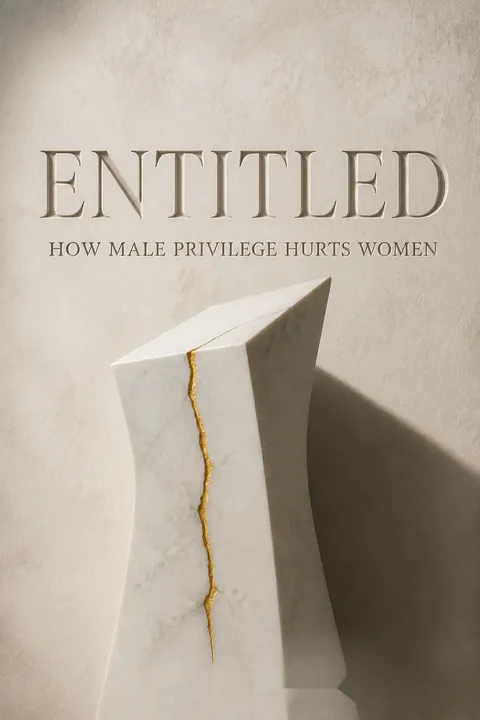
Entitled: How Male Privilege Hurts Women explores male entitlement and its impact on society, particularly women. Reviewers praise Manne's clear writing and organization, finding the book accessible and thought-provoking. Some critics argue it lacks depth or originality, while others consider it essential reading. The book covers topics like sexual entitlement, medical care, and power dynamics. Many readers found it infuriating yet important, highlighting ongoing gender inequalities. The final chapter offers a hopeful perspective, though some felt the overall tone was depressing.
People Also Read



Download PDF
Download EPUB
.epub digital book format is ideal for reading ebooks on phones, tablets, and e-readers.








































