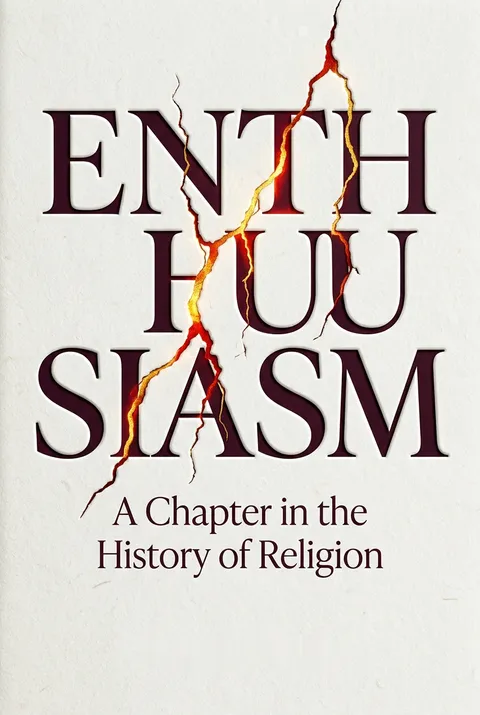

Key Takeaways
1. Enthusiasm: Ultrasupernaturalism's Recurrent Pattern
For that is the real character of the enthusiast; he expects more evident results from the grace of God than we others.
Defining the phenomenon. Enthusiasm, in its historical religious sense, describes a recurring tendency where an excess of spiritual fervor threatens unity. It manifests as a clique or elite seeking a less worldly life, often feeling direct guidance from the Holy Spirit, and inevitably drawing apart from mainstream co-religionists. This "ultrasupernaturalism" expects more tangible and immediate divine intervention in human affairs.
Common characteristics. Enthusiastic movements, though diverse, share striking similarities. They often denounce existing structures as corrupt, claiming to restore primitive Church discipline. They face opposition from both traditional believers and secular worldlings. Internally, they are prone to schism, with initial fervor often giving way to institutionalization as prophecy wanes.
Core tenets. At its root, enthusiasm posits that grace has not merely perfected nature but replaced it, granting believers new faculties and a new status. This often leads to:
- Rejection of human reason in religious truth.
- Reliance on direct divine indications or sortilege.
- A yearning for theocracy, where the righteous openly rule.
- Antinomian tendencies, where actions deemed sinful in others are excused in the "children of light."
2. Early Christian Echoes: Enthusiasm in Corinth and Montanism
As Gnosticism is Christianity perverted by learning and speculation, Montanism is Christianity perverted by fear of learning and speculation.
Corinthian precursors. St. Paul's First Epistle to the Corinthians reveals early "enthusiastic" symptoms. Sectarianism ("I am for Christ") challenged apostolic authority, while antinomianism excused sexual immorality by misinterpreting Christian liberty. Rigorism, such as forbidding marriage, also appeared, alongside a disregard for traditional sacraments and an unregulated use of spiritual gifts like glossolaly.
Montanist challenge. The 2nd-century Montanist movement in Phrygia, a region known for ecstatic pagan cults, brought these tendencies to the forefront. Montanus and his prophetesses, Priscilla and Maximilla, claimed a "new prophecy" characterized by unconscious, convulsive utterances, distinct from traditional Christian prophecy. They asserted a new dispensation of the Paraclete, superseding earlier revelations.
Rigorism and schism. Montanism's rigorist stance condemned second marriages as adulterous and denied absolution for certain grave sins, contrasting with the Church's more lenient policies. This, combined with their claim of a "pneumatic" (spiritual) Church versus a "psychic" (carnal) one, led to schism. Tertullian, the great apologist, famously joined them, lending intellectual weight to their otherwise "barbaric" and ecstatic movement.
3. Medieval Heresy: A Subterranean Stream of Radical Ideas
Schism and heresy have almost always, for their point of departure, a regret for the past, the claim or the dream of going back to the fountain-source of a religious idea, to the discipline or the faith of an apostolic age.
Persistent dissent. Medieval Europe harbored a "subterranean cult" of heresy, often furtive but widespread, challenging the Catholic system. These movements, like the Waldenses and Catharists, were not isolated phenomena but often interconnected, sharing common traits and influencing each other. They represented a continuous protest against perceived ecclesiastical worldliness and corruption.
Key doctrinal patterns:
- Dualism and Docetism: Catharism, influenced by Manichean ideas from the East, posited matter as evil, leading to the belief that Christ's body was a phantom and denying his true birth from the Virgin Mary.
- Anti-sacramentalism: Many groups rejected Catholic sacraments, viewing matter as incapable of conveying grace.
- Rigorism and Antinomianism: While some, like the Waldenses, emphasized apostolic poverty and strict morals, others, like the Brethren of the Free Spirit, pushed perfectionism to antinomian extremes, claiming sinlessness and moral immunity.
- "Unworthiness of the Minister": A widespread belief that a sinful priest could not validly administer sacraments, undermining the institutional clergy.
- Invisible Church: The idea that the true Church consisted only of the elect, often leading to claims of a "new dispensation" of the Holy Spirit (Joachimism).
Anti-intellectualism. These movements often expressed a distrust of human learning and reason, appealing instead to the "plain man's" interpretation of scripture. This anti-intellectual stance, particularly evident in Lollardy, foreshadowed later Protestant tendencies to bypass scholastic theology in favor of direct spiritual insight.
4. The Anabaptist Catalyst: Reformation's Unruly Offspring
The Anabaptists, in perfectly consistent accordance with their Biblical-Christian theory of things, would admit no break in the conditions of revelation between Biblical and primitive times and the year of grace in which they found themselves.
Continuity with the past. The Anabaptist movement, emerging abruptly with the Reformation, inherited many doctrines from medieval heresies, suggesting a continuous "underworld" tradition. They denied infant baptism, advocated for an "invisible Church" of true saints, and rejected state authority, believing dominion was founded on grace.
Luther's dilemma. Anabaptists, like Munzer, challenged Luther's authority by claiming direct divine inspiration and interpreting the Bible individually. Luther, initially relying on personal "experience," was forced to repudiate them, fearing chaos. This led him to emphasize the "absolute authority of Scripture" as interpreted by scholars, inadvertently laying the groundwork for official Protestantism's anti-enthusiasm stance.
Radical manifestations. Anabaptism was marked by:
- Ecstatic phenomena: Convulsions, visions, and claims of divine revelations.
- Antinomianism: Some groups pushed perfectionism to extremes, believing the "saved" were incapable of sin.
- Theocracy: The Munster episode (1535) saw Anabaptists attempt to establish a "kingdom of God on earth" through violence, leading to brutal suppression.
- Docetism: A curious, inherited belief that Christ's body was not truly human, further linking them to older Manichean strains.
5. Quakerism: The Inner Light's Radical Challenge
It was revealed to him ‘that there was a mystical, but Divine, light in the hearts of men; a light which would, if followed honestly and steadily, infallibly lead to God: and that without the aid of either the Bible or any ordinances’.
A new spiritual landscape. George Fox emerged in 17th-century England amidst a "underworld of discredited sects" (Familists, Ranters, Seekers), offering a message of direct, personal spiritual experience. Quakerism, or the Society of Friends, became a powerful force, rejecting all institutional churches, dogmatic theologies, and external sacraments.
The Inner Light. Fox's central doctrine was the "Inner Light," a divine presence in every human heart, offering infallible guidance. This led to:
- Anti-clericalism: Rejection of ordained ministry and "steeple-houses."
- Eccentric rigorism: Peculiar social customs like refusing oaths, using "thee/thou," and keeping hats on, often rooted in Anabaptist traditions.
- Physical manifestations: Early Quaker meetings saw "tremblings," "vomitings," and other ecstatic behaviors, though these later subsided into silent worship.
- Antinomian dangers: The Nayler incident, where a disciple was apotheosized by followers, highlighted the perils of unchecked personal inspiration.
Beyond theology. Quakerism's strength lay in its experiential nature, bypassing complex theological debates. It appealed to those disillusioned with scholastic disputes, offering a simple, direct path to God. Despite initial persecution and internal divisions, its emphasis on inner guidance and social reform (like non-resistance, though this was a later development for Fox) left a lasting mark.
6. Catholic Enthusiasm: Jansenist Rigorism and Quietist Passivity
There is no mean, for the rational creature, between charity and sinful concupiscence.
Jansenist rigorism. Jansenism, a 17th-century Catholic movement centered at Port Royal, was a "Puritanism" within the Church. Influenced by St. Augustine's theology of grace, it emphasized human depravity and the difficulty of salvation, leading to:
- Extreme moral severity: A demand for heroic virtue, suspicion of "natural" motives, and a pessimistic view of human nature.
- Anti-Jesuit polemic: Fierce opposition to Jesuit moral theology, which they saw as lax.
- Legalism and self-consciousness: Obsessive debates over "fait and droit" (fact and right) and a tendency to dramatize their own suffering and piety.
- Weakness for the miraculous: Despite their intellectualism, they embraced miracles (like the Holy Thorn) as validation.
Quietist passivity. Contemporaneously, Quietism, rooted in mystical traditions, advocated for extreme passivity in prayer and a "disinterested love" of God. Figures like Molinos and Madame Guyon taught:
- Abandonment to God's will: A complete surrender of personal desires, even for salvation.
- Rejection of "active" prayer: Disdain for discursive meditation, affections, and even distinct acts of virtue, favoring a "single, enduring act" of loving attention.
- Distrust of consolations: Viewing sensible spiritual experiences as imperfections or distractions.
- Antinomian dangers: Molinos's condemnation revealed how extreme passivity could lead to moral laxity, excusing sinful acts as diabolical interference rather than personal fault.
Contrasting paths. Despite their shared "ultrasupernaturalism," Jansenists and Quietists were bitter enemies. Jansenists, obsessed with sin and salvation, found Quietism's indifference scandalous. Quietists, seeking direct union with God, saw Jansenist intellectualism and moral striving as obstacles to true spiritual freedom.
7. The Age of Convulsions: French Prophets and Saint-Médard's Miracles
The Convulsions, to those who really believed in them, were nothing less than the outpouring of the Spirit prophesied by Joel.
Camisard ecstasies. The revocation of the Edict of Nantes (1685) fueled fanaticism among French Huguenots, particularly in the Cévennes. Influenced by apocalyptic prophecies (Jurieu), child prophets emerged, exhibiting ecstatic phenomena:
- Physical contortions: Shivering, foaming at the mouth, swelling, and falling into trances.
- Glossolaly: Speaking in "unknown tongues," often unintelligible.
- Invulnerability: Claims of immunity to fire and weapons during prophetic states.
- Apocalyptic violence: Prophets dictated atrocities, believing they were executing divine judgment.
Jansenist convulsions. A generation later, in Catholic France, the Jansenist controversy (Unigenitus Bull) sparked similar phenomena at the tomb of Deacon Paris in Saint-Médard cemetery (1728). These "convulsionaries" displayed:
- Extreme physical feats: Enduring violent blows, trampling, sword thrusts, and even crucifixion without apparent injury or pain.
- Trance states: Unconscious utterances, speaking in unknown languages, and performing acrobatic feats.
- "Secours": Deliberate self-inflicted tortures, initially for pain relief, later as acts of piety.
Shared characteristics. Both movements, though ideologically opposed, shared a belief in imminent apocalyptic events and saw these physical manifestations as divine validation. They illustrate how intense religious fervor, combined with a distrust of conventional authority, could lead to extreme, often bizarre, and sometimes violent expressions of "ultrasupernaturalism."
8. Moravianism: Zinzendorf's Regimented Spirituality
The Count’s family pew in the church was a small gallery or raised box over the vestry; the box had a trap-door in the floor; the pastor, according to the Lutheran custom, retired to the vestry at certain points in the service; and the Count, by opening the aforesaid door, could communicate his wishes to the pastor.
Hussite heritage. The Moravian Brethren, tracing their lineage to the Hussite movement in 15th-century Bohemia, emerged from a tradition of anti-clericalism and strict discipline. Initially a small, ascetic community, they were later revitalized by Count Zinzendorf in the 18th century.
Zinzendorf's vision. A Pietist by background, Zinzendorf established the Herrnhut settlement as a model Christian community. He envisioned Moravianism not as a separate church, but as an "ecclesiola" within existing Protestant denominations, aiming to unite Christendom through a shared, intense spirituality. His leadership was highly autocratic, though often disguised.
Distinctive practices:
- Christocentric piety: An intense, sometimes sentimental, focus on Christ, particularly the "Lambkin" and his wounds.
- Passive justification: Emphasis on a joyful, immediate apprehension of God's love, contrasting with Pietist "struggle" for repentance.
- Sortilege: A unique reliance on casting lots for major and minor decisions, including marriages, reflecting an extreme trust in divine providence over human prudence.
- Regimented life: Communal living, strict discipline, and intensive education, often with a "monastic" feel, though without celibacy as a rule.
The "Sifting Time." A period of extreme antinomianism and childish behavior (1746-1750) at Herrnhaag, where members indulged in "merry-making" and dismissed traditional piety as "snares of the Devil." This scandalous phase, though later purged, highlighted the dangers of unchecked spiritual freedom and Zinzendorf's sometimes "extravagant" sentiments.
9. John Wesley: The Experimentalist of the New Birth
I, who went to America to convert others, was never myself converted to God.
A life of tireless zeal. John Wesley, a figure of immense physical and spiritual energy, traversed England, Wales, Scotland, and Ireland, preaching over 40,000 sermons and traveling 225,000 miles. His methodical approach to evangelism and organization led to the formation of a powerful religious body, Methodism, within the Church of England.
Spiritual journey. Wesley's early life was marked by rigid asceticism and intellectual striving (the Holy Club, William Law's influence). His pivotal "conversion" in Aldersgate Street (1738), influenced by Moravians, brought a "sure confidence" of God's love and a new spiritual equilibrium, though he continued to grapple with its implications.
Methodist characteristics:
- "New Birth" experience: Emphasis on a conscious, often emotional, experience of conversion and forgiveness.
- Physical manifestations: His sermons frequently triggered "paroxysms" – cries, groans, falling down "as thunderstruck" – which Wesley, the "experimentalist," saw as evidence of God's work, even if sometimes mixed with Satan's interference or hysteria.
- Organization and control: A meticulous system of "Societies," "classes," and "bands," with Wesley as the sole, autocratic authority, constantly "taking the lid off" to monitor members' spiritual states.
- "Sinless Perfection": A later doctrine, "renewal in love," which claimed believers could achieve freedom from all sin, leading to both fervent pursuit and controversy.
Contradictions and candor. Despite his logical mind, Wesley exhibited inconsistencies: a lifelong "High Church" loyalty alongside Presbyterian ordinations, a distrust of "mysticism" yet admiration for Catholic contemplatives, and a belief in divine guidance alongside a pragmatic use of lots. His candid Journal reveals a man driven by mission, often isolated, but profoundly shaping English Christianity's focus on felt religious experience.
10. The Parting of Friends: Theological Divides and Personalities
Though the Wesleys should never have existed, Whitefield would have given birth to Methodism.
Evangelical landscape. Wesley was part of a broader Evangelical movement, including figures like George Whitefield, Lady Huntingdon, Venn, Berridge, and Grimshaw. While united in their zeal for the "New Birth," this group was deeply divided by theological loyalties, particularly over predestination.
Calvinist vs. Arminian. The central conflict was between Whitefield's Calvinism (absolute predestination, irresistible grace) and Wesley's Arminianism (free will, universal redemption). This was not an abstract debate but a "burning question" touching the core of the revival's message, leading to:
- Antinomian fears: Wesley genuinely believed Calvinist doctrines could lead to moral laxity, as some "Antinomians" claimed immunity from sin.
- Personal rivalries: Despite mutual respect, the theological divide led to public disputes, accusations of "backbiting," and the "Methodist schism" of 1740 and 1770.
- Lady Huntingdon's influence: A wealthy and devout patroness, she became a rallying point for Calvinist Methodism, often clashing with Wesley's authority and theological stance.
Wesley's isolation. Wesley, with his "obstinate and pugnacious Arminianism," found himself increasingly isolated among his Evangelical peers. His insistence on his own interpretation of "the Law and the Testimony" (the Bible) and his autocratic control over his societies, while ensuring stability, also alienated many. His decision to ordain ministers for America and Scotland, bypassing Anglican bishops, further strained his relationship with the Church of England, foreshadowing Methodism's eventual separation.
11. Modern Revivalism: The Enduring Quest for Felt Experience
All the fanatics I have ever known have been at the same time the most devoted of Christians, and have fallen into their fanaticisms along the paths of the most entire consecration to the Lord, and the most absolute faith in his guidance.
Post-Wesleyan manifestations. Enthusiasm continued into the 19th century, albeit with diminishing returns in England, but flourishing in America. It manifested in various forms, often echoing earlier movements:
- Irvingite Glossolaly: Edward Irving's congregation in 1830s Scotland experienced "tongues of men and angels," ecstatic utterances, and prophecies, reminiscent of the Camisards, emphasizing a direct, non-rational divine communication.
- Shakerism's persistence: Descended from "Shaking Quakers" (a blend of Quakerism and Camisard fanaticism), Shakers established celibate, communal settlements in America. Their "spiritual dancing," convulsions, and later spiritualist phenomena (Mother Ann's messages) illustrate the quest for tangible spiritual experience and a regenerated social order.
- Perfectionism's perils: Movements like Ebel's Muckerism, Henry Prince's Agapemone, and John Noyes's Oneida Creek pushed "sinless perfection" to extremes. They claimed complete immunity from sin, often leading to antinomian behavior, "spiritual marriages," and communal living, believing they had entered a "Resurrection life" on earth.
The core of enthusiasm. These later movements underscore the enduring nature of "ultrasupernaturalism"—the desire to transcend nature entirely through grace. This often leads to:
- Distrust of reason: Prioritizing inner impressions or "signs" over rational thought and prudence.
- Abrogation of moral responsibility: Excusing extreme behaviors as divinely commanded or as manifestations of a "perfect" state.
- Sectarian isolation: Forming exclusive communities that reject external authority and often become insular.
Legacy of experience. The pervasive influence of revivalism, particularly in the English-speaking world, has ingrained a "religion of experience." This emphasizes felt spiritual states and verifiable results, often at the expense of theological depth or historical tradition. While awakening religious fervor, it also leaves individuals vulnerable to psychological urges and susceptible to disillusionment when "heart-work" fails to meet expectations.
Review Summary
Enthusiasm is widely praised as a monumental work of scholarship, earning an average rating of 4.45/5. Readers admire Knox's intellectual rigor, Christian charity, and wit in tracing religious emotionalism across centuries. The final chapters on the philosophy of enthusiasm receive particular acclaim for their theological depth. Critics note the book's heavy use of untranslated French as a barrier, and one reviewer finds the treatment of Anabaptism notably poor. Overall, most consider it essential reading for understanding recurring patterns in Christian revivalist movements.
People Also Read

Download PDF
Download EPUB
.epub digital book format is ideal for reading ebooks on phones, tablets, and e-readers.








































