
Key Takeaways
1. The Quadrant System: Tailoring Strength to Your Sport's Demands
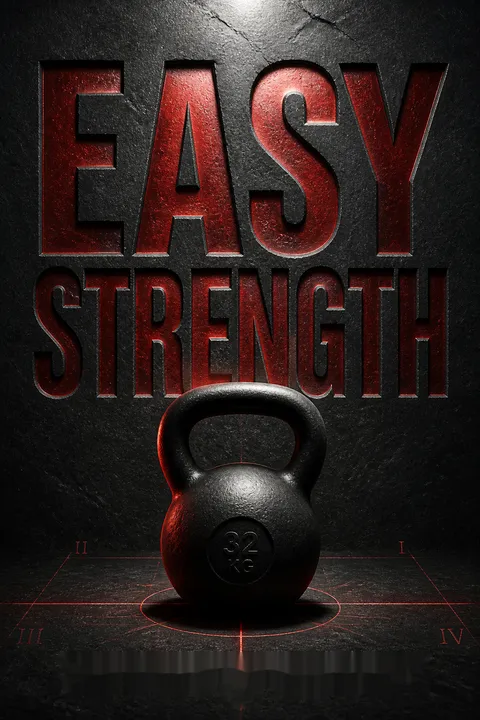
The four quads are determined by two simple concepts: 1. The number of qualities the athlete needs to master the sport 2. The relationship to the Absolute Maximum of each quality
Categorize your sport. The Quadrant System provides a crucial framework for understanding the appropriate role and impact of strength training. It classifies sports and activities based on the number of qualities required (e.g., strength, speed, flexibility) and how close those qualities need to be to an athlete's absolute maximum potential. This prevents the common mistake of applying a "one-size-fits-all" training approach.
Understand the quadrants:
- Quadrant I (QI): Focuses on broad general physical preparation (GPP) with many qualities at a low relative maximum. Think good high school PE classes, introducing diverse movements and sports.
- Quadrant II (QII): Demands many qualities at a high relative maximum, typical of collision sports like football or rugby, requiring massive support systems for athletes.
- Quadrant III (QIII): Where "champions prowl," requiring few qualities at a low or moderate relative maximum. This is the sweet spot for most individual Olympic sports and general fitness, emphasizing balance and efficiency.
- Quadrant IV (QIV): The "rare air" of elite specialization, focusing on one or very few qualities at the absolute highest level, like world-record powerlifting or sprinting.
Optimize your approach. By identifying which quadrant your sport or goal falls into, you can avoid overtraining or undertraining the wrong qualities. For instance, a deadlift specialist (QIV) needs absolute strength, while a football player (QII) needs a compromise of many attributes. Most individuals seeking general fitness or improvement in individual sports will thrive in QIII, focusing on a few key strengths without pushing to extreme, unsustainable limits.
2. Embrace Easy Strength: Lift Heavy, Not Hard for Sustainable Gains
“A workout should give you more than it takes out of you.”
Sustainable progress. The core philosophy of Easy Strength is to "lift heavy, not hard," ensuring that training enhances performance without causing excessive fatigue, soreness, or burnout. This approach prioritizes consistent, high-quality work over exhausting "smoker" workouts that deplete an athlete's reserves. The goal is to leave the gym feeling exhilarated, not exhausted, ready for sport-specific practice.
Key principles of Easy Strength:
- Lift heavy: Use challenging weights, but always within your capacity.
- Low reps and sets: Keep repetitions in the 1-5 range, with total reps around 10 per lift.
- Stop before fatigue: Always leave 1-2 reps "in the bank," never training to failure.
- High frequency: Lift 2-3 times a week, or even more with lighter loads (Even Easier Strength).
- Long rest periods: Allow ample recovery (around 5 minutes) between sets to maintain quality.
Beyond the gym. This philosophy extends beyond the weight room, recognizing that strength training is a means to an end, not the end itself. For competitive athletes, it means preserving energy for skill practice, conditioning, and recovery. For general fitness, it means building durable strength that supports daily life without becoming a source of constant physical drain.
3. General Physical Preparation (GPP): The Indispensable Foundation
Soviet sports science made it clear: Premature overspecialization delivers a quick increase in performance followed by stagnation.
Build a broad base. General Physical Preparation (GPP) is the crucial foundation for any athletic endeavor, especially for youth and beginners. It involves developing a wide range of physical attributes—strength, joint mobility, work capacity, coordination—rather than narrowly focusing on sport-specific skills too early. Premature specialization often leads to short-term gains followed by injuries and plateaus.
GPP is not just "anaerobic smokers." It encompasses diverse physical attributes and aims to enable an individual to "perform any physical work more or less successfully." For young athletes, GPP should constitute the majority of their physical training, exposing them to various sports, games, and activities to build a rich "baggage" of movement skills. This broad exposure makes it easier to master new forms of movement later.
Key GSP (General Strength Preparation) exercises:
- Plank (bracing, midsection strength)
- Pull-up/Chin-up (pulling muscles, abs)
- Push-up (upper body strength, stability)
- Kettlebell Goblet Squat (squat mechanics, hip mobility)
- Kettlebell Get-up (whole-body linkage, stability)
- Kettlebell Swing (dynamic strength, conditioning, hip hinge)
- Farmer's Walk (grip, traps, waist)
These exercises are safe, simple, teach basic movement skills, and offer broad strength carryover, making them ideal for building a solid, all-around physical base.
4. The AIT Formula: A Long-Term Strategy for Athletic Development
The AIT formula works like this: You should accumulate lots of skills and tools and ideas and movements over time. Then, when you decide to focus on a specific goal, you intensify your work in the areas that will support the goal. The T stands for transform, and it can be one of two things: (1) simply having the confidence to allow the work to carry over into performance (or the wedding or the reunion, if it is a body composition goal) or (2) recognizing that it is time to reassess your goals and move in a different direction.
A roadmap for progress. The Accumulation, Intensification, Transformation (AIT) formula offers an elegant, long-term perspective on training. It guides athletes and individuals through phases of broad skill acquisition, focused effort, and performance or reassessment, preventing stagnation and ensuring continuous development. This systematic approach helps navigate the vast array of training options available.
Phases of AIT:
- Accumulation: Actively seek and learn new sports, lifts, moves, and ideas. This phase is about building a wide range of physical literacy and exploring different training modalities. It's crucial for youth and for adults to challenge long-held notions of strengths and weaknesses.
- Intensification: Once a specific goal is identified, focus and intensify work in areas directly supporting that goal. This means prioritizing key lifts and movements, and eliminating "majoring in minors" that drain energy without contributing to the primary objective.
- Transformation: This is the culmination—either confidently allowing the accumulated and intensified work to translate into peak performance, or recognizing that it's time to reassess goals and pivot to a new direction. It's about trusting the process and knowing when to perform or adapt.
Avoid "random acts of variety." The AIT formula provides clarity, reminding parents not to specialize children too soon and guiding elite athletes in integrating new tools. It's a simple yet powerful tool for ensuring that training efforts are purposeful and lead to tangible results over time.
5. Specificity Demystified: Train "Same but Different" for Continuous Progress
“Specificity works, but at a price.”
The dilemma of specificity. While sport-specific training is essential for elite performance, blindly adhering to it can lead to stagnation, injury, and burnout. The challenge lies in balancing the need for exercises that closely mimic the athletic event with the need for variety to keep the nervous system responsive and prevent overspecialization. This is solved through the "same-but-different" approach.
Strategies for "same but different" training:
- Special exercises: These are tailored to the chosen sport, developing specific qualities, teaching technique, or building willpower. They can be performed under loaded, unloaded, or complicated conditions.
- Loaded conditions: Using heavier-than-regulation weights (e.g., throwing a heavier implement) to develop a "sense of lightness" with the standard weight. Caution: excessive or incorrect loading can ruin technique.
- Unloaded conditions: Using lighter-than-regulation weights (e.g., throwing a lighter javelin) to develop super-record speed sensations and improve technique.
- Complicated conditions: Challenging reaction time, tactics, or perception (e.g., playing soccer on a smaller field, or with less visible balls).
Beyond exercise selection. Variety also extends to changing training environments (woods, park, different stadiums) and incorporating music to lower psychological strain and enhance performance. The key is to make variety relevant to your sport, avoiding anything "just for the hell of it." This intelligent variation ensures continuous progress without the high price of rigid hyperspecificity.
6. The "What the Hell?" Effect: Unlocking Unexpected Performance Boosts
You perform better, but you can’t get a handle on why.
Unexpected carryover. The "What the Hell?" (WTH) effect describes the phenomenon where certain training modalities, particularly Hardstyle kettlebell exercises, lead to significant, unexpected improvements in unrelated athletic performance. Athletes find themselves stronger, leaner, and more explosive, often without fully understanding the underlying mechanisms. This effect highlights the hidden specificities and neurological benefits of these drills.
Kettlebell WTH factors:
- Hidden specificity: Hardstyle swings match the dynamics of strikes and power movements (e.g., hip extension in sprinting, throwing).
- Tension-relaxation cycle: Kettlebell ballistics train rapid alternation between muscular tension and relaxation, crucial for speed and power in many sports.
- Power breathing: Swings develop skills in power breathing, matching breath with force.
- Overspeed eccentrics: Forcefully tossing the kettlebell down creates incredible kinetic energy, remarkably improving jumping power and overall explosiveness with minimal joint impact.
- Nervous system disinhibition: Safely performing fast, light snatches can "turn off the brakes," allowing the body to express more power.
Beyond the swing: Other Hardstyle drills like the goblet squat (hip mobility, leg strength), get-up (full-body linkage, midsection strength, shoulder stability), double front squat (full-body tension, upper back strength), and clean and press (total body power, tightness/looseness) also contribute to the WTH effect. These exercises challenge weak links and create a synergistic effect across the body, leading to broad, often surprising, performance enhancements.
7. Armor Building: Functional Hypertrophy for Resilience and Confidence
“Quick guys get tired. Big guys don’t shrink.”
Beyond aesthetics. Hypertrophy, or "armor building," is not just about looking good; it's a crucial quality for many athletes, especially in contact sports. Increased muscle mass provides physical protection against collisions and contributes to sustained power throughout a game. As the saying goes, "I’ve seen athletes slow down in a game, but I’ve never seen one get smaller."
Benefits of armor building:
- Physical protection: Larger muscles act as a shield, reducing the impact of collisions.
- Sustained power: Greater muscle mass can help maintain force output as fatigue sets in during prolonged efforts.
- Confidence: Looking strong can boost an athlete's mental game, though this must be balanced with actual performance.
- Longevity: Maintaining lean body mass is vital for health and quality of life, especially as one ages.
Effective armor-building strategies:
- Basic strength foundation: Most people are too weak to benefit from complex hypertrophy programs; focus on driving up basic lifts first (e.g., 40-Day Workout).
- High-rep back squats: A cornerstone for overall mass and strength, emphasizing loading the body and squatting deeply.
- Complexes: Cycling through a series of exercises without putting the bar down increases time under tension and overall workload efficiently.
- Focus on "unseen" muscles: Prioritize glutes, calves, hamstrings, spinal erectors, traps, and delts—muscles that contribute most to athletic power.
Armor building should be strategically phased into a training year, typically in the off-season, and maintained with lighter work during competitive periods. It's a fight for life, literally, as lean body mass is a key indicator of actual age.
8. Master Repetition Schemes: Quality Over Quantity for Optimal Results
In other words, 10 good reps is far better than dozens of crappy reps.
Control your repetitions. The key to quality training lies in controlling your repetitions, ensuring each rep is performed with perfect technique and appropriate intensity. Chasing high numbers at the expense of form leads to poor motor patterns, increased injury risk, and diminished returns. The focus should always be on quality, not just accumulated volume.
Key repetition principles:
- Whole-Body Movements ("Rule of 10"): For lifts like snatch, clean and jerk, deadlift, and squat variations, around 10 quality reps per workout is optimal for experienced lifters. Examples include 5x2, 2x5, 5-3-2, or 6 singles.
- Grinding Lifts ("Three Ladders and Three Rungs"): For movements like kettlebell presses or bent presses, 15-25 quality reps are effective. A common ladder scheme is (1,2,3) x 3, totaling 18 quality reps, allowing for progressive overload without excessive fatigue.
- Explosive Lifts ("Fast 10 and 20"): For kettlebell swings (20 reps with one bell, 10 with two) and snatches, the focus is on snappy, powerful execution. If technique falters, stop the set or reduce reps.
Repeatable workouts. The goal is to design workouts that are consistently repeatable, allowing for sustained progress over time. Unrepeatable workouts, like a single session of 315x30 back squats, lead to physical and emotional crashes. By controlling reps and prioritizing quality, athletes can avoid burnout and maintain long-term engagement with their training.
9. Simple, Flexible Planning: Outsmarting Complex Periodization
Smaller CNS demands over a longer period of time result in more acceptance and greater improvement, while the rush to get more done leads to uncertainty down the road.
Challenge the dogma. Traditional, overly complex periodization models, often influenced by Soviet "five-year plans," can paralyze athletes with excessive charts and calculations. Instead, a simpler, more flexible approach to training planning is advocated, one that respects the body's natural fluctuations and avoids "exhausting adaptivity." The goal is to build capacity and realize potential without constant redlining.
Key planning principles:
- Keep it simple: Focus on a few core lifts and modalities per session.
- Short sessions: Aim for workouts of one hour or less; multiple shorter sessions are often preferable.
- Prioritize CNS freshness: Train skill, speed, power, and strength first in a workout, ensuring you come to the gym rested.
- Cycle loads: Implement deliberate weekly, monthly, and yearly load variations. Simple two-week blocks alternating different modalities (e.g., Easy Strength and Program Minimum) can be highly effective.
- Listen to your body: Monitor internal load (e.g., resting heart rate, perceived exertion, willingness to train) to make necessary adjustments. Rapidly climbing numbers or sudden drops can indicate premature peaking or overtraining.
Peaking for competition. While complex peaking is often unreliable, a simpler approach involves maintaining CNS excitability at an optimal level, not necessarily the absolute maximum. This means avoiding intense skill practice too close to competition, using light GPP work, and strategically incorporating heavy, non-specific lifts to "spike" the CNS without burning out. The aim is to be fresh and ready, not depleted.
10. Learn from Experience: Mine Your Journal for Personal Truths
“Truth comes out of error more readily than out of confusion.”
Your personal goldmine. The training journal is an athlete's most invaluable tool, offering a rich repository of personal data, insights, and lessons learned. Consistently recording workouts, attitudes, and life events allows for self-reflection and the identification of patterns that reveal what truly makes you tick, rather than relying solely on external advice or generic programs.
Strategies for mining your journal:
- Review seasons: Compare training and performance from different periods to identify effective strategies and detrimental mistakes.
- "Countback" from peak performances: Analyze the weeks leading up to a "hot" performance to uncover forgotten gems or successful sequences.
- Identify recurring errors: Recognize patterns of injury, burnout, or stagnation that often stem from repeating the same training mistakes.
- Track CNS indicators: Note changes in grip strength, vertical jump, or perceived exertion to understand your body's response to load and recovery.
Systematic and systemic education. Combine systematic learning (building knowledge step-by-step) with systemic testing (adding one new variable at a time to your established routine and observing its effects). This allows you to discern what truly works for your unique physiology and goals, rather than being swayed by hype. The ultimate goal is to learn from your own experience, make informed decisions, and continuously refine your path to success.
Review Summary
People Also Read



About the Author
Other books by Dan John

Download PDF
Download EPUB
.epub digital book format is ideal for reading ebooks on phones, tablets, and e-readers.








































