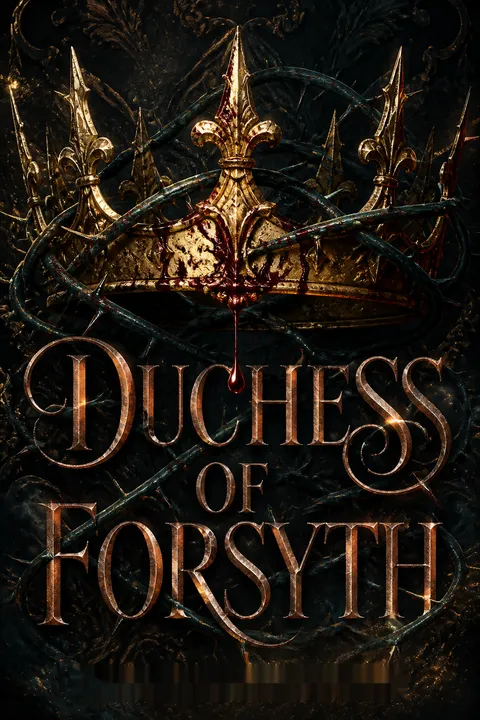

Plot Summary
Motel Prison, Christmas Night
Lavinia, once a privileged heiress, now finds herself imprisoned in a decrepit motel, stripped of freedom and dignity. On Christmas Eve, her only solace is crafting paper snowflakes from a torn Bible, a fragile attempt at reclaiming joy. Her isolation is shattered by Nick Bruin, a dangerous enforcer for the Kings, who arrives bloodied and armed, seeking refuge after a killing. Their tense exchange is laced with threat, desire, and the ever-present surveillance of Daniel Payne, the King. Nick offers escape, but only in exchange for betrayal—information on Leticia. Lavinia refuses, knowing her own vendettas and unfinished business in Forsyth. Their encounter is raw, humiliating, and charged with forbidden attraction, culminating in a twisted exchange of power and vulnerability. Even in captivity, Lavinia clings to agency, her spirit unbroken despite the darkness.
Blood and Power Games
Nick's presence is a reminder of the brutal world Lavinia inhabits—a world where violence is currency and loyalty is always conditional. The motel room becomes a stage for psychological warfare, with Nick oscillating between threat and reluctant protector. Their dynamic is fraught: Lavinia is both objectified and underestimated, yet she wields her wit and defiance as weapons. The power games escalate, blurring lines between captor and captive, desire and disgust. Nick's offer to run away is less about freedom and more about leverage, exposing the transactional nature of relationships in Forsyth. Lavinia's refusal is a declaration of autonomy, even as she is physically overpowered. The encounter leaves both marked—Nick by his wounds, Lavinia by the memory of humiliation and the stubborn ember of hope.
Cat's-Eye View
From the balcony, the Archduke—a regal, self-important cat—watches the human chaos below. Cast out by his "Angry One," he surveys his kingdom with a mix of disdain and longing. The cat's narrative offers a whimsical, detached lens on the violence and sorrow that permeate the household. He observes the "Sad Girl" (Lavinia) and the arrival of new, equally troubled humans. The cat's desire for connection is met with indifference, yet he remains vigilant, a silent guardian. When violence erupts inside, the cat's instincts flare, but he is ultimately powerless, a bystander to the mayhem. His eventual rescue by a new, kindred spirit is a rare moment of warmth, a reminder that even in Forsyth, small acts of kindness persist.
Old Queens, New Deals
At the Forsyth bridge club, Delores Crane, a sharp-tongued matriarch, presides over a table of pills and secrets. The arrival of the Dukes—Nick, Remy, and Simon—turns the gathering into a negotiation for illegal arms. Delores, unflappable and irreverent, matches wits with the young men, exposing their bravado and insecurities. The exchange is laced with dark humor and mutual recognition of the city's rot. Delores's history with the Bruin family adds layers of tension and grudging respect. The deal is struck, but not without reminders of the city's dangers and the necessity of arming its women. Delores's parting advice is both a warning and a benediction: in Forsyth, survival requires cunning, firepower, and the willingness to defy expectations.
Bird, Cat, and Chaos
Remy's day is upended when he's tasked with babysitting Effie, a foul-mouthed, knife-wielding bird belonging to a rival. The ensuing chaos—Effie's escape, a standoff with the Archduke cat, and a series of destructive antics—serves as comic relief and metaphor. The animals' struggle for dominance and freedom echoes the humans' own battles for agency and territory. Remy's attempts at peacekeeping are futile, highlighting the futility of control in a world ruled by chaos. Yet, amidst the mayhem, moments of unexpected tenderness emerge: a sunset shared with Effie, a fleeting sense of connection. The animals, like their human counterparts, are survivors—scrappy, unpredictable, and fiercely alive.
Exile and Inheritance
After a brutal fight, Remy is exiled from the tower, wounded and stripped of status. Vinny, ever loyal, accompanies him into the city's shadows. They take refuge in an abandoned newspaper building, a relic of Forsyth's past and a symbol of hidden legacies. As Remy heals, the couple confronts their histories—absent mothers, abusive fathers, and the scars of survival. The discovery of old newspapers and the story of the Forsyth Carver, a long-dead serial killer, becomes an obsession for Vinny, mirroring her own quest for justice and closure. Their exile is both punishment and opportunity: a chance to redefine home, reclaim agency, and imagine a future beyond violence.
Wounds, Healing, and Home
In the quiet of exile, Remy and Vinny tend to each other's wounds—physical and emotional. Their intimacy is raw, shaped by pain and the need for comfort. As Remy recovers, their conversations turn to family, legacy, and the possibility of building something lasting amid the ruins. The abandoned Gazette becomes a sanctuary, a place to dream of new beginnings: a tattoo parlor, a home, a life not dictated by the sins of their fathers. The return of their friends signals the end of isolation and the start of collective healing. Together, they envision a future where loyalty is chosen, not coerced, and where love is both shield and sword.
The Unstoppable Heart
Nick's near-fatal shooting shakes the foundation of the group. As he recovers, Lavinia's fear and anger surface, exposing the vulnerability beneath her strength. The household becomes a makeshift hospital, a crucible where love is tested and reaffirmed. Nick's impatience to return to life—and to Lavinia's bed—mirrors his refusal to be defined by weakness. The group rallies around him, their bonds deepened by crisis. The threat of violence lingers, but so does the determination to survive and thrive. In the aftermath, the mundane—arguments over kombucha, jokes about sex—becomes a testament to resilience. The heart, battered but unbroken, beats on.
Queenmaker's Challenge
Lavinia, now Queen in all but name, confronts the patriarchal traditions of West End. The ancient pledge book demands a public, physical challenge against the King—her lover, Sy—to earn her crown. The men are reluctant, fearing the optics of a man fighting his woman, but Lavinia insists: respect must be earned, not given. The challenge becomes a crucible for their relationship, exposing insecurities and desires on both sides. Training is both foreplay and preparation for battle. The Queenmaker match is set, not just as spectacle, but as a statement: a woman's place is not beside or behind, but equal, capable of victory.
The Baron's Shadow
The arrival of DK, a Baron with a scarred past and ambiguous motives, unsettles the fragile peace. He brings with him a pregnant feral cat, the result of the Archduke's unchecked virility—a comic but pointed reminder of the consequences of male privilege. DK's history with Remy and the others is fraught, marked by betrayal and shared trauma. The offer to join the new tattoo parlor is both olive branch and strategic move: better to keep enemies close, to force the shadows into the light. The encounter is a microcosm of Forsyth's politics—alliances forged not from trust, but from necessity and the ever-present threat of violence.
Kittens, Kings, and Heirs
The birth of eight kittens becomes a symbol of renewal and the messy, unpredictable nature of legacy. The men debate responsibility, tradition, and the meaning of fatherhood—both feline and human. Remy and Nick reflect on their own upbringings, the scars left by absent or abusive parents, and the fear of repeating old patterns. Sy's desire for an heir surfaces, complicated by Lavinia's ambivalence and the group's unconventional family structure. The kittens, like the next generation of Dukes and Queens, represent hope and the possibility of breaking cycles. The future is uncertain, but for the first time, it feels open.
The Queen's Victory
The Queenmaker match is a spectacle, drawing crowds from every corner of Forsyth. Lavinia faces Sy in the ring, their fight a dance of strategy, strength, and love. She uses every lesson learned—dirty tricks, relentless fury, and the element of surprise—to claim victory. The crowd erupts, and for the first time, a woman is crowned Queen by right of conquest, not by association. Sy, bloodied but proud, raises her hand in acknowledgment. The victory is more than personal—it is a challenge to the city's old order, a promise that women can be victors, not just spoils. The moment is both culmination and beginning.
Spoils and New Beginnings
In the aftermath, bruised and triumphant, Lavinia and Sy tend to each other, their love deepened by mutual respect. The kittens are adopted out, the new tattoo parlor takes shape, and the group looks to the future with cautious optimism. Conversations about children, legacy, and the meaning of victory linger, but the tone is hopeful. The old rules have been rewritten, not just in the ring, but in the hearts of those who fought for change. The story ends not with a final triumph, but with the promise of more battles, more love, and the unbreakable will to claim what is theirs. To the victor, always.
Analysis
A modern feminist reckoning with legacy, power, and survivalDuchess of Forsyth is a raw, unflinching exploration of what it means to claim power in a world built to deny it. Through Lavinia's journey—from captive to Queen—the novella interrogates the structures that perpetuate violence, misogyny, and inherited trauma. The Queenmaker match is both literal and symbolic: a woman's fight for respect, equality, and the right to define her own destiny. The story refuses easy resolutions; victory is hard-won, and the scars of the past linger. Yet, it is also a celebration of chosen family, resilience, and the possibility of change. The animal subplots underscore the messiness of legacy and the unpredictability of the future. Ultimately, the book argues that true power is not given, but seized; that love is both shield and weapon; and that to be a victor is to refuse to be anyone's spoil. In Forsyth, as in life, the only way forward is to fight, to claim, and to reign.
People Also Read



Characters
Lavinia Lucia
Lavinia is the emotional and moral center of the story—a woman forged in the crucible of violence, captivity, and betrayal. Once a pampered heiress, she is stripped of privilege and forced to navigate a world where her body and agency are constantly threatened. Her relationships with the Dukes—Sy, Remy, and Nick—are complex, blending love, rivalry, and shared trauma. Lavinia's journey is one of reclamation: of her body, her power, and her right to define herself. She is fiercely intelligent, unafraid to challenge tradition, and determined to earn respect on her own terms. Her victory in the Queenmaker match is both personal and political, a testament to her resilience and vision for a new Forsyth.
Nick Bruin
Nick is the embodiment of Forsyth's brutal code—a man shaped by violence, loyalty, and the constant threat of betrayal. As an enforcer for the Kings, he is both feared and desired, his physical power matched by a deep-seated vulnerability. His relationship with Lavinia is fraught, oscillating between threat and tenderness, dominance and devotion. Nick's near-death experience exposes his fear of weakness and his desperate need for connection. He is fiercely loyal to his chosen family, willing to kill or die for them, yet haunted by the knowledge that love is both his greatest strength and his Achilles' heel.
Simon "Sy" Perilini
Sy is the anchor of the group—a natural leader thrust into kingship by circumstance and necessity. He is pragmatic, protective, and deeply committed to those he loves. Sy's struggle is with tradition: the weight of expectation, the need for an heir, and the challenge of respecting Lavinia as an equal. His willingness to fight her in the Queenmaker match is both a concession and a declaration of faith in her strength. Sy's journey is one of learning to balance power with vulnerability, to lead not just by force, but by example and partnership.
Remington "Remy" Maddox
Remy is the group's creative force—a man marked by trauma, addiction, and a longing for belonging. His artistry is both escape and expression, a way to make sense of chaos. Remy's relationships are defined by loyalty and a refusal to be defined by his father's sins. He is the first to envision a future beyond violence: a tattoo parlor, a home, a family of choice. Remy's humor and irreverence mask deep wounds, but his capacity for love and forgiveness is boundless. He is the glue that holds the group together, always seeking connection and meaning.
Delores Crane
Delores is a relic of Forsyth's past—a woman who has survived by wit, grit, and an unyielding refusal to be cowed. Her bridge club is a front for criminal dealings, but also a sanctuary for those who know the city's true face. Delores's interactions with the Dukes are laced with history, mutual respect, and a shared understanding of the cost of survival. She is both mentor and warning, a reminder that power is fleeting and must be seized, not inherited.
DK (Damon Kemp)
DK is a shadowy figure, marked by physical and emotional scars. Once a pledge of DKS, now a Baron, he straddles the line between ally and enemy. His actions are driven by a twisted sense of duty—to the Barons, to Remy, and to the city's lost and feral creatures. DK's presence is a reminder of the cost of divided loyalties and the dangers of underestimating those who walk in darkness. His offer to join the new tattoo parlor is both a threat and an opportunity, forcing the group to confront the limits of trust.
The Archduke (Cat)
The Archduke is more than a pet—he is a symbol of Forsyth's resilience and the unpredictable nature of legacy. His escapades, romantic and otherwise, mirror the humans' own struggles for agency and belonging. The birth of his kittens becomes a metaphor for hope, renewal, and the messy, uncontrollable future. The cat's perspective offers both comic relief and a poignant reminder that even in chaos, life persists.
Effie (Bird)
Effie, the knife-wielding, cursing bird, is a force of nature—unruly, unpredictable, and fiercely independent. Her interactions with Remy and the Archduke are a microcosm of Forsyth's larger battles: the fight for freedom, the refusal to be caged, and the joy found in small victories. Effie's presence is a reminder that survival often requires audacity, adaptability, and a willingness to disrupt the status quo.
Verity
Verity is a beacon for Lavinia—a woman who has claimed her throne and used her power to effect real change. Her support and example inspire Lavinia to demand more, to refuse the role of mere consort. Verity's presence at the Queenmaker match is both endorsement and challenge, a signal that the city's women are watching, waiting, and ready to seize their own destinies.
Story
Story is the observer and recorder of Forsyth's upheavals—a friend to Lavinia and a link to the Lords. Her perspective is one of empathy and insight, recognizing the significance of Lavinia's struggle and the broader movement for female agency. Story's encouragement and solidarity are vital, reminding Lavinia that her fight is not just personal, but part of a larger revolution.
Plot Devices
Power, Agency, and Gendered Tradition
The narrative is structured around the tension between tradition and transformation. The Queenmaker match is the central plot device—a ritual that both upholds and subverts Forsyth's patriarchal order. By insisting on her right to fight for her crown, Lavinia exposes the arbitrariness of male power and the necessity of earning respect through action, not association. The use of animal subplots (the cat's kittens, the bird's antics) mirrors the human struggle for agency and legacy, providing both comic relief and symbolic resonance. The story employs foreshadowing through references to past violence (the Forsyth Carver, abusive fathers) and the ever-present threat of betrayal. The narrative structure is cyclical: exile leads to homecoming, defeat to victory, captivity to freedom. Each character's arc is defined by the willingness to confront pain, claim agency, and rewrite the rules.
Download PDF
Download EPUB
.epub digital book format is ideal for reading ebooks on phones, tablets, and e-readers.








































