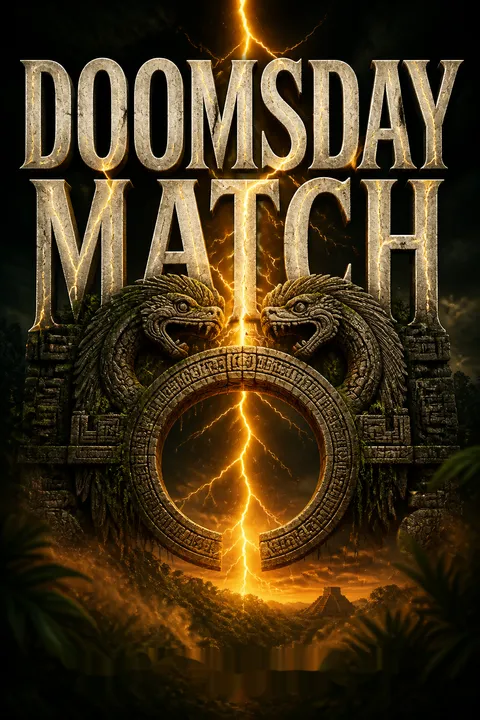

Plot Summary
Forbidden Skies, Hidden Ruins
In the dense jungles of the Yucatán, Dr. Estrada, a Guatemalan archaeologist, pushes his pilot to fly over forbidden Mexican airspace, seeking evidence of a lost Maya pyramid. Their LiDAR scan reveals a hidden city, but a supernatural storm—summoned by unseen forces—nearly brings their plane down. Estrada glimpses a mysterious figure below, dressed as an ancient Maya priest, and realizes some secrets are fiercely protected. The storm's unnatural violence and the pilot's terror foreshadow the power and ruthlessness of those guarding the ruins. Estrada survives, but the message is clear: the past is not only alive, it is dangerous, and those who trespass may not return. The ancient world's reach extends into the present, setting the stage for a deadly game.
Arrival: Paradise or Trap?
Jonny Roth, bestselling author and history professor, arrives in Mexico with his wife Sarina and their three children, invited by their wealthy neighbors, the Beasleys, to a luxury resort on Cozumel. The family's journey is filled with typical travel anxieties, sibling banter, and Roth's attempts to calm his son's fears with stories. Yet, beneath the surface, subtle unease grows: armed guards at the resort's gate, the Beasleys' odd behavior, and the isolation of the compound. The Roths are charmed by the beauty and hospitality, but their daughter Suki senses something is off. The paradise they've entered is laced with secrets, and the family's trust in their hosts will soon be tested in ways they cannot imagine.
The Beasleys' Invitation
The Roths settle into Villa Sara de Calakmul, a lavish, secluded estate owned by the enigmatic Jacob Calakmul. The Beasleys, once friendly, now seem distant and tense. The children's interactions turn sour when Colter Beasley injures Lucas with a heavy rubber ball, hinting at a deeper, more sinister tradition. Suki's unease grows as she explores the resort's eerie decorations and silent staff. Roth and Sarina debate whether their fears are justified or just imagination, but a plan forms: test the boundaries by asking to leave for medical help. The resort's response is unexpectedly accommodating, but the sense of being watched and manipulated only deepens. The Roths begin to suspect that their hosts' generosity masks a dangerous agenda.
Shadows at Villa Sara
Behind the scenes, Jacob Calakmul and his assistant Angélica orchestrate a complex scheme. The Roths' assets are being transferred, their communications cut off, and their every move monitored. The Beasleys are complicit, lured by promises of wealth and status. Jacob's power is not just financial—he wields ancient magic, protecting his ancestral lands and enforcing his will with violence. The Roths' attempt to leave is permitted, but only because it serves Jacob's larger plan. The family's fate is being decided by forces they cannot see, and the true nature of their invitation is far more dangerous than a simple holiday. The stage is set for a confrontation between modern innocence and ancient, ruthless ambition.
The Ball Game's Echo
As the Roths try to escape, they are joined by Jane Louise, the Beasleys' terrified daughter, who reveals the truth: the families are to be pitted against each other in a deadly reenactment of the Maya ball game, with their lives and fortunes at stake. The jungle becomes a labyrinth of danger as the Roths flee, pursued by armed men and supernatural threats. Sarina's diabetes becomes a critical vulnerability, and the family's unity is tested by exhaustion, fear, and betrayal. The echoes of the ancient ball game—where losers were sacrificed—resonate through their ordeal. The Roths realize they are not just guests, but players in a ritual that demands blood, and only cunning, courage, and perhaps something more will allow them to survive.
Escape Attempt
The Roths' flight through the jungle is fraught with peril: helicopters, armed pursuers, and the unforgiving wilderness. They stumble into a cenote, barely escaping capture, and are forced to hide as their enemies close in. Sarina's health deteriorates, and the family's hope wanes. Yet, moments of ingenuity and luck—like using a fallen palm to escape the cenote—keep them alive. The jungle is both a physical and psychological maze, testing their resolve and unity. The Roths' ordeal is not just a fight for survival, but a crucible that forges their determination to resist the roles forced upon them. The ancient game's shadow looms, and the family's fate hangs by a thread.
Jungle Flight
After a harrowing night, the Roths encounter a group from a local orphanage, Huellas de Pan, whose kindness offers a brief sanctuary. The orphanage's director, Jorge, embodies a spirit of generosity and faith, contrasting sharply with the ruthlessness of the Calakmuls. The Roths hide among the orphans, evading police and mercenaries, but Sarina's condition worsens, pushing the family to the brink. The orphanage's willingness to help, despite the danger, highlights the power of compassion in a world ruled by fear and violence. Yet, even this refuge is not safe for long, as the Calakmuls' reach extends everywhere. The Roths must rely on the help of strangers and their own resourcefulness to survive.
The Orphanage Sanctuary
At Huellas de Pan, the Roths experience a rare moment of peace, sharing food and stories with the orphans. Jorge's faith and resilience inspire hope, but the threat of discovery is ever-present. Sarina receives emergency medical care from a sympathetic doctor, but her life hangs in the balance. The family's ordeal is a crucible of love and loss, as they confront the possibility of Sarina's death and the limits of their own strength. The orphanage's selfless aid stands in stark contrast to the Beasleys' betrayal and the Calakmuls' cruelty. Yet, the sanctuary is temporary; the forces hunting them are relentless, and the Roths must prepare for the final confrontation.
Betrayal and Pursuit
The Calakmuls' mercenaries storm the orphanage, capturing the Roths and separating them from Sarina, who remains in a coma. The family is forced onto a private jet and flown to the Jaguar Temple, deep in the Yucatán jungle. Jacob Calakmul reveals the true nature of the death games: a ritual of blood and power, where the winners claim the losers' wealth and the losers' lives are forfeit. The Beasleys, once friends, are now rivals, and the ancient ball game will decide their fates. The Roths are stripped of agency, forced into a contest where the rules are ancient, the stakes are mortal, and the only hope lies in understanding the deeper magic at play.
The Jaguar's Domain
At the Jaguar Temple, the Roths are immersed in a world where ancient Maya traditions are alive and deadly. The arena is a place of spectacle and sacrifice, watched by a secretive elite. The Beasleys, physically superior and prepared, seem destined to win. The Roths struggle to adapt, learning the rules of the game and the history of the Maya's cosmic rituals. Suki, guided by her heritage and a mysterious bracelet, begins to sense a deeper power within herself. The family's unity and ingenuity are their only weapons against overwhelming odds. The city's magic is real, and the line between myth and reality blurs as the death game begins.
The Death Game Begins
The ball game is brutal, demanding not just strength but strategy and endurance. The Beasleys dominate, but the Roths refuse to quit, drawing on their love for each other and the memory of Sarina. Suki's latent abilities begin to manifest, hinting at a connection to the ancient magic of Ix Chel, the Maya moon goddess. The crowd, a mix of Maya descendants and global elites, watches as the Roths defy expectations. The game becomes a test of will, with each family's fate hanging on every point. The ancient rituals of blood and sacrifice are not just history—they are the rules of the present, and only those who understand them can hope to survive.
Blood, Magic, and Sacrifice
As the game nears its end, the Roths are on the brink of defeat. The Beasleys' ruthlessness is matched only by the cruelty of the arena's masters. Yet, Suki's awakening power turns the tide, allowing the Roths to score in ways thought impossible. The magic of the Maya, channeled through Suki's heritage and belief, becomes the key to survival. The cost is high: the Beasleys are sacrificed, and the Roths are forced to leave behind Jane Louise, the innocent daughter, to a fate they cannot prevent. The victory is bittersweet, stained by the blood of friends and the knowledge that mercy is a luxury the powerful do not afford.
Suki's Gift
Suki's journey from anxious outsider to the family's savior is the emotional heart of the story. Guided by her mother's legacy and the spirit of her great-grandmother, she learns to harness the ancient magic that flows through her blood. Her ability to control the game's outcome is not just a matter of skill, but of faith in herself and her heritage. The bracelet, a relic of the Maya, becomes a symbol of the power that lies dormant in forgotten histories. Suki's transformation is both personal and cosmic, as she bridges the gap between past and present, myth and reality, and becomes the key to her family's survival.
The Final Match
The last game is played under the shadow of death, with the Roths and Beasleys locked in a struggle that is as much spiritual as physical. Suki's mastery of the magic allows the Roths to defy the odds, but the victory comes at a terrible cost. The arena becomes a place of revelation, where the true nature of power, sacrifice, and survival is laid bare. Jacob Calakmul, the jaguar priest, enforces the ancient laws with supernatural force, and the Roths are forced to confront the limits of their own morality. The final match is not just a contest of strength, but a reckoning with history, identity, and the price of survival.
Aftermath and Return
The Roths are returned to the modern world, their memories and trauma masked by wealth and secrecy. Sarina remains in a coma, her fate uncertain, while the family struggles to process the horrors they have endured. The Beasleys' estate is transferred to the Roths, a hollow victory that cannot erase the scars of the death game. The world outside is unchanged, oblivious to the blood that has been spilled to maintain its order. The Roths are watched, their every move monitored by the Calakmuls, who warn them to remain silent. The cost of survival is complicity, and the family must decide whether to accept the world as it is or fight to change it.
The Price of Survival
Back in Bozeman, the Roths try to resume their lives, haunted by the knowledge of the death games and the power of the Calakmuls. Their wealth is both a blessing and a curse, a constant reminder of the price paid for survival. Suki's gift remains, a link to a world of magic and danger that cannot be forgotten. The family's safety is precarious, dependent on their silence and obedience. Yet, Roth's resolve to expose the truth grows, even as he is warned that the consequences will be dire. The story ends with the sense that the real game is just beginning, and the struggle between past and present, power and justice, is far from over.
Analysis
Doomsday Match is a high-concept thriller that fuses ancient Maya myth with modern anxieties about power, privilege, and survival. At its core, the novel interrogates the cyclical nature of violence and the ways in which history's traumas are perpetuated by those who refuse to let go of the past. The death game is both a literal contest and a metaphor for the zero-sum logic of power: only one family can win, and the cost of victory is measured in blood and guilt. The story's emotional arc is driven by the Roths' transformation from naive tourists to desperate survivors, forced to confront not only external threats but the limits of their own morality. Suki's journey embodies the possibility of healing and transformation, suggesting that heritage and belief can be sources of strength rather than chains. Yet, the novel refuses easy resolutions: the price of survival is complicity, and the world outside remains unchanged, its order maintained by secrets and silence. Doomsday Match ultimately asks whether it is possible to break the cycle of violence, or whether the games of the past will always shape the future.
Review Summary
People Also Read
Characters
Jonny Roth
Jonny Roth is a bestselling author and former history professor whose curiosity and storytelling instincts both endanger and save his family. His relationship with his wife Sarina is deeply loving, and his devotion to his children—Suki, Brillante, and Lucas—is the emotional core of the story. Roth's psychological journey is one from self-doubt and anxiety to desperate courage and resourcefulness. He is plagued by guilt over the choices he must make, especially when forced to leave others behind. His intellectual curiosity allows him to decipher the ancient game's secrets, but his greatest strength is his refusal to quit, even when hope seems lost. Roth's development is marked by increasing resolve to confront the forces that threaten his family and, ultimately, the world.
Sarina Roth
Sarina is a nurse, mother, and the emotional anchor of the Roth family. Her Mexican heritage connects her to the ancient magic of the Maya, and her struggle with diabetes becomes a central vulnerability that raises the stakes for the family's survival. Sarina's compassion and intuition guide her husband and children, even as she faces her own mortality. Her relationship with Suki is especially poignant, as she passes on both her cultural legacy and her strength. Sarina's coma is a crucible for the family, forcing them to draw on her lessons and love in her absence. Her fate remains uncertain, symbolizing the unresolved trauma and hope that linger after the ordeal.
Suki Roth
Suki, the Roths' teenage daughter, is introverted, perceptive, and initially skeptical of her family's predicament. Her sensitivity to the resort's "vibes" and her connection to her great-grandmother's legacy make her the first to sense the danger. Suki's journey is one of self-discovery, as she learns to trust her instincts and embrace the magical heritage that allows her to turn the tide in the death game. Her relationship with her parents, especially Sarina, is central to her development. Suki's struggle with self-doubt and the burden of responsibility is deeply psychological, and her eventual mastery of the ancient magic is both a personal and cosmic victory.
Brillante (Bryant) Roth
Brillante, one of the Roth twins, is characterized by his energy, curiosity, and deep bond with his brother Lucas. He is quick to volunteer, eager to help, and resilient in the face of danger. Brillante's soccer skills and physicality are assets in the ball game, but his emotional growth is marked by his willingness to support his siblings and accept his own limitations. His relationship with Suki is playful but supportive, and his loyalty to his family is unwavering. Brillante's development is a testament to the power of teamwork and the importance of family unity in the face of overwhelming odds.
Lucas Roth
Lucas, the other twin, is more sensitive and anxious than his brother, often needing reassurance from his parents and siblings. His vulnerability is both a weakness and a source of strength, as it allows him to connect deeply with others and respond with empathy. Lucas's journey is one of overcoming fear, learning to trust himself, and finding courage in the most desperate moments. His relationship with Brillante is central, and his bond with Suki and his parents is a source of comfort and motivation. Lucas's development is marked by moments of unexpected bravery and the realization that survival depends on both strength and compassion.
Jacob Calakmul
Jacob is the enigmatic and ruthless mastermind behind the death games, blending modern wealth with ancient magic. His psychological complexity lies in his belief that he is the instrument of historical justice, seeking revenge for centuries of oppression and genocide. Jacob's relationship with his assistant Angélica is both manipulative and intimate, marked by power dynamics and shared secrets. His ability to wield supernatural forces and his willingness to kill without remorse make him a terrifying antagonist. Yet, his respect for the Roths' ingenuity and his adherence to the ancient rules reveal a code of honor twisted by centuries of trauma and ambition.
Angélica Torres (Malintzin)
Angélica is Jacob's brilliant and loyal assistant, educated in both modern technology and ancient traditions. Her role as Malintzin, the translator and intermediary, places her at the intersection of cultures and loyalties. Angélica's psychological struggle is between ambition and conscience, as she is drawn to Jacob's power but increasingly sympathetic to the Roths. Her actions—sometimes helping, sometimes hindering—are driven by a desire for survival and recognition. Angélica's development is marked by moments of courage and doubt, and her ultimate fate is tied to the outcome of the games and her ability to navigate the dangerous world she inhabits.
Eric Beasley
Eric, the Roths' neighbor and initial friend, is revealed as a willing participant in the death games, motivated by greed, ambition, and a desire for status. His psychological profile is that of a man who justifies betrayal for personal gain, yet is ultimately consumed by the very system he serves. Eric's relationship with his family is transactional, and his treatment of his daughter Jane Louise is callous. His downfall is both a result of his own choices and the merciless logic of the games. Eric's fate serves as a warning about the dangers of complicity and the corrupting influence of power.
Kendall Beasley
Kendall is Eric's wife, whose aloofness and self-interest are evident from the start. Her psychological makeup is shaped by entitlement, insecurity, and a willingness to sacrifice others for her own survival. Kendall's relationship with her children, especially Jane Louise, is marked by emotional distance and control. Her interactions with the Roths reveal a capacity for cruelty and a lack of empathy. Kendall's development is a study in the moral bankruptcy of privilege, and her ultimate fate is a consequence of her choices and the system she upholds.
Jane Louise Beasley
Jane Louise, the Beasleys' youngest daughter, is a figure of innocence and vulnerability. Her fear and honesty are the catalysts that reveal the true nature of the death games to the Roths. Jane Louise's psychological journey is one of terror, hope, and betrayal, as she is caught between loyalty to her family and the desire for safety. Her relationship with the Roths, especially Sarina and Suki, is marked by trust and affection. Jane Louise's fate is the story's most tragic, embodying the cost of survival and the failure of adults to protect the innocent.
Plot Devices
The Maya Ball Game as Deadly Ritual
The central plot device is the transformation of the ancient Maya ball game into a ritualized contest with life-and-death stakes. The game's rules—no hands or feet, heavy rubber ball, points scored by keeping the ball in motion or through stone hoops—mirror historical practices but are weaponized by the Calakmuls to enforce their will. The game serves as both a literal and symbolic battleground, where physical endurance, strategy, and magical heritage determine survival. The use of the game as a plot device allows for the exploration of themes of sacrifice, justice, and the cyclical nature of history. Foreshadowing is employed through early references to the game, the injury to Lucas, and the resort's decorations, building tension and anticipation for the final confrontation.
Magic, Heritage, and Prophecy
Magic in the story is both a literal force—summoning storms, healing wounds, controlling the game—and a metaphor for the power of heritage and belief. Suki's awakening to her abilities is foreshadowed by her sensitivity to the resort's atmosphere and her connection to her great-grandmother. The bracelet, a relic of the Maya, serves as a key to unlocking the ancient magic, and the prophecy of the Jaguar Priests provides a narrative structure that ties personal destiny to cosmic cycles. The interplay between modern technology (surveillance, asset transfers) and ancient magic creates a sense of unease and inevitability, reinforcing the story's themes of power, control, and resistance.
Psychological Manipulation and Isolation
The Roths' ordeal is marked by psychological manipulation: isolation from the outside world, the Beasleys' betrayal, and the constant surveillance by the Calakmuls. The use of modern plot devices—asset transfers, communication blackouts, and legal machinations—grounds the story in contemporary fears of powerlessness and exploitation. The orphanage sanctuary provides a brief respite, highlighting the contrast between genuine compassion and calculated cruelty. The narrative structure employs escalating tension, with each escape attempt leading to greater danger and deeper entanglement in the Calakmuls' web. The story's pacing is driven by the countdown to the death game, the deterioration of Sarina's health, and the relentless pursuit by both human and supernatural forces.
Foreshadowing and Symbolism
Foreshadowing is woven throughout the narrative: the storm that nearly brings down Estrada's plane, the injury to Lucas, the references to the Maya ball game, and the presence of ancient artifacts. Symbolism abounds—the cenote as a portal between worlds, the bracelet as a conduit of power, the jaguar as both predator and priest. The story's structure mirrors the cyclical nature of Maya cosmology, with the death game representing both an end and a beginning. The use of prophecy and myth blurs the line between past and present, suggesting that history is not just remembered but relived, and that the struggle for justice and survival is eternal.
About the Author
Download PDF
Download EPUB
.epub digital book format is ideal for reading ebooks on phones, tablets, and e-readers.








































