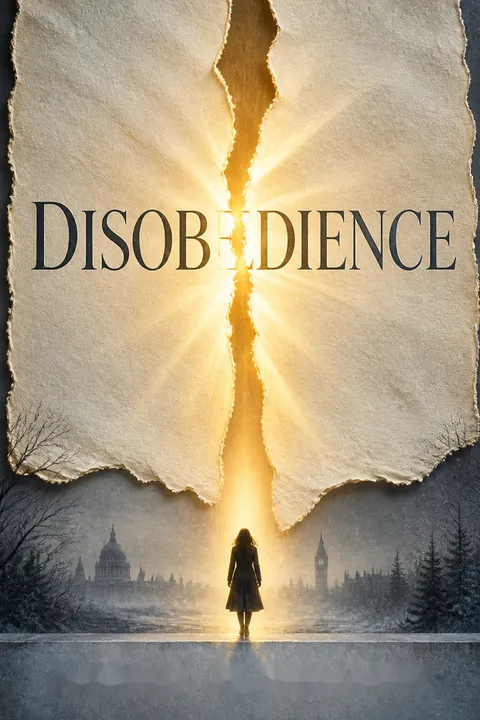

Plot Summary
Rav's Final Days
In the Orthodox Jewish enclave of Hendon, London, the renowned Rav Krushka's health is rapidly fading. His congregation gathers in growing numbers, more to witness his fragile state than to pray, sensing an era ending. The Rav shines as a scholar and a spiritual leader, a father to many though he has only a daughter, Ronit, estranged for years. His nephew, Dovid, dutiful but uninspiring, stands by his side—as much assistant as family, not considered a true successor by the congregation. On the last Shabbat after Simchat Torah, Rav Krushka's collapse during the service shocks all. Even in illness, he leaves them with a powerful meditation on the dangerous and creative force of speech. As the Rav falls, everyone feels the weight of impending change and the burden of choosing what must come next, and word spreads to Ronit in New York.
Silence Beneath the Surface
With the Rav's passing, the community moves with methodical ritual: preparing his body, washing it, dressing him in sacred shrouds. Dovid, challenged by the responsibility of leading the ritual, stumbles but persists. The Chevra Kadisha's duties are solemn but impersonal, yet each gesture for the Rav is weighted with grief and expectation for the future. In the domestic spaces, Esti, Dovid's wife, performs her own hidden rituals, visiting the mikvah—a moment of personal reckoning—which exposes her vulnerabilities and her yearning for some elusive wholeness. The synagogue's board quietly seeds debates about succession, sidestepping Dovid and worrying over Esti's troubled reputation. Underneath the surface, every action—the silent glances, the adherence to ritual—bespeaks anxieties about belonging, identity, and the future.
The Exile's Awakening
In New York, Ronit, the Rav's estranged daughter, receives news of her father's death from Dovid. She is cynical, witty—having left both home and Orthodox observance far behind. As she processes the loss, she is haunted by intrusive questions of faith, her own complicated sexual and familial past, and the rituals of grief that no longer fit her life. Encounters—such as a run-in with a pious street missionary—bring to the surface her unresolved conflicts about tradition and belonging. Ronit's inner voice remains sharp and skeptical, but her memories and her dreams reveal a longing for connection and roots. Grappling with her father's legacy and with her own lack of closure, she chooses to return home to face what she left behind.
Returning Home, Facing Shadows
Ronit's arrival in Hendon is jarring—a collision between cosmopolitan selfhood and the parochial insularity of her old world. Customs, attire, and conversations expose the gulf between her and her past. Dovid's awkward attempts to welcome her cannot mask the unresolved history between them. In a home full of her father's books and memories, Ronit is both alien and heir: a daughter without a place, a woman whose inherited candlesticks become symbols of longing and loss. The encounter with Esti—her childhood friend and once lover, now Dovid's wife—is laced with tension, apology, and the ghosts of their shared secret. Old wounds and unresolved desires simmer just beneath the rituals of hospitality and commemoration, pulling all three—Ronit, Esti, Dovid—into reckoning with what has been broken and what might still be mended.
A Tangle of Grief
The tightly knit community organizes its collective sorrow with order, ritual, and food, but beneath this, there is awkwardness and detachment—especially for Ronit, a mourner estranged from her father and his world. Traditional grief practices feel hollow to her, and her attempts at meaningful mourning are filtered through cynicism and a sense of exile. Shared meals with Dovid and Esti are uncomfortable; their marriage, too, is marked by habit rather than intimacy. The Hartogs—power brokers of the synagogue—arrange a dinner meant to reinforce communal stability, but tensions flare. The dinner degenerates into a spectacle when Ronit, goaded by the discomfort of her hosts and memories of childhood, makes a show of outing herself, temporarily shattering the polite veneer and unleashing consequences that ripple throughout the community.
Old Friendships Rekindled
Under the superficial rituals of Shabbat and family, Ronit, Esti, and Dovid replay old patterns: shared memories, shared silences, and efforts to reclaim what was lost. Esti, haunted by loneliness and self-doubt, both yearns for and dreads Ronit's presence in her home. Their history together remains largely unspoken but powerfully felt—a source of comfort and anxiety alike. Ronit's return probes Dovid's own ambiguous regrets and sense of inadequacy. Attempts at normalcy—dinners, synagogue attendance, school routines—only serve to surface the unresolved tensions between childhood intimacy, adult longing, and the roles that have been forced upon them by faith, family, and communal expectation.
Forbidden Longings
Esti's internal struggle with her sexuality and faith grows acute as Ronit's presence unsettles the careful order of her marriage and daily life. An almost accidental kitchen mishap—a mix of butter and beef—foreshadows the moral and emotional chaos brewing in her psyche: the forbidden longing, the effort at separation, the inevitability of mingling desire and duty. Esti oscillates between moments of routine and flashes of intense, even dangerous, feeling—a schoolgirl's crush matured into a hunger that has nowhere to go. In a moonlit park, she finally kisses Ronit, upending the equilibrium and bringing their shared secret into fresh crisis. Ronit, startled but empathetic, resists; Esti's devastation is private but seismic, exposing the limits and costs of a life built on silence and erasure.
Rumors and Rejection
News of Esti and Ronit's nocturnal encounter ripples swiftly through Hendon's insular web, transformed and amplified by rumor and fear. The women of the congregation—through half-heard confessions and deliberate eavesdropping—piece together the "scandal." Whispered anxieties about forbidden desires blossom into open suspicion and shunning, threatening both Esti's and Dovid's standing in the community. Dovid, caught between loyalty to his wife and the pressure of communal expectation, becomes the target of subtle and not-so-subtle attempts to nudge him into leadership—and into sacrificing Esti for public respectability. The longing for order and purity in the community becomes itself a source of cruelty, framing difference and pain as threats to be exiled. Esti and Ronit are both isolated further, driven by rumors into forced decisions about their futures.
Shabbats and Divisions
As Shabbat returns, the household is once again pressed into anxious, repetitive preparation—a symbol of both faith's comforts and suffocating demands. Esti's nervous routines—the shopping, cooking, rushing—mask a growing sense of alienation and urgency. Meanwhile, Dovid returns from Manchester, battered by gossip and by the community's dangerous hopes for his leadership. Hartog's power play comes into focus—offering Ronit an ultimatum: leave quietly or risk banishment and exclusion. Ronit contemplates flight, but the relentless cycle of ritual, expectation, and rumor traps each of them in a liminal state. The clock of Shabbat becomes the ticking of all their dilemmas, demanding not only rest but reckoning. In the end, each must choose how to answer the question: Who speaks, and who is silenced?
Disclosure and Defiance
As the crescendo of the hesped—his father's memorial—approaches, Dovid is thrust onto the communal stage, expected to embody continuity. But in a moment of refusal, he upends expectations: rather than give the prescribed eulogy, he and Esti appear together, her hand in his, and Esti takes the microphone. Before the entire community, Esti reveals her relationship with Ronit and confesses her struggle—her forbidden desires, her attempts at silence, and her insistence on honesty. She praises the Rav's kindness but denounces his demand for secrecy, insisting on a world in which truth is spoken, and love is not hidden in shame. The room is shocked but held rapt; the cost is high, but the power of Esti's open speech breaks the cycle of silence, even if only for a moment.
Choices and Departures
As the aftershocks settle, each character is left to face what they must now do. Ronit, faced with both expulsion and the offer of her mother's candlesticks, chooses to leave—her exile transformed from grief into a conscious, if painful, choice. Dovid and Esti, too, must decide what comes next: separation, endurance, or transformation. Esti's revelation that she is pregnant brings both grief and hope; Dovid, wounded but compassionate, refuses to either punish her or turn away. Instead, forgiveness and a kind of solidarity emerge, a new honesty based on the acceptance of difference and the limits of what can be known or controlled. The legacy of disobedience is claimed, not as a curse but as a blessing.
New Moons, Old Scars
In the year that follows, time heals—and reveals. Esti's pregnancy becomes a living future, a child fathered by Dovid but bearing the ambiguity of their union. Ronit, returned to New York, comes to terms with her past—faith, identity, and loss—through a montage of reverie and acceptance. The rituals of lighting candles and setting tombstones, of naming the new baby, become moments of reconciliation and change. Silence, once a prison, is reframed as a choice, and both Esti and Ronit claim the right to both speak and to remain silent. The community moves forward, shaken but unchanged in some ways, transformed in others, and the cycle of desire, doubt, and faith continues, now with new forms of honesty.
Speaking Truths Aloud
Esti and Ronit both reflect on their journeys, admitting the power—and price—of speech in a world structured by silence. The text evokes the Talmudic story of debate with God: that ultimate disobedience—arguing with Heaven—might provoke divine joy, not wrath. The right to choose, to speak, to create with words, is revealed as both a burden and a privilege. The narrative's final moments show each character—Ronit, Dovid, Esti—finding new ways of belonging and new ways of living with their contradictions. The old wounds become part of the legacy that must be claimed for oneself, rather than inherited in silence or shame.
Wrestling Becomes Legacy
The story closes with a vision of modest, earned happiness: Esti and Dovid, together with their child, carving out a life that is neither perfect nor tragic, but deeply human. Ronit, now truly an exile, embraces her contradictions: neither Orthodox nor not, both Jewish and queer. The struggle was never about resolution but about the right to wrestle, to answer the demands of family, faith, and selfhood with one's own voice. The book's last blessing is disobedience itself—the audacity to remake rituals in one's own image, to argue with God and family alike, to claim faith not as certainty or conformity, but as the willingness to risk speech and to live honestly.
Analysis
Disobedience is a bracing, compassionate excavation of the tensions between tradition and individuality, faith and sexuality, silence and speech. Naomi Alderman's novel reimagines the Orthodox community not as monolithic, but as a site of ongoing struggle: its rituals and rules both oppress and sustain, its silences both shield and wound. Through the intertwined stories of Ronit, Esti, and Dovid, the book exposes how legacies of obedience—familial, communal, religious—can become prisons, and how breaking silence, though costly, can be a form of faith as much as rebellion. Importantly, Alderman's treatment of sexuality and gender is neither polemic nor self-congratulatory; rather, it acknowledges the real dangers and the incremental nature of change. The claim that "disobedience" might itself be sacred—an inheritance to be negotiated, not eradicated—renders the book's lesson both radical and humble. Ultimately, Disobedience advances the proposition that genuine tradition is not the erasure of difference, but the ever-renewed courage to wrestle honestly with both God and one's own desires, trusting, as Alderman writes, that "at least they are still willing to listen."
Review Summary
Reviews for Disobedience are mixed, averaging 3.68/5. Many readers praise the rich portrayal of Orthodox Jewish community life and thoughtful exploration of faith, identity, and choice. The writing style draws both admiration and criticism, with some finding it lyrical and others repetitive. A recurring complaint is that the book disappoints as LGBTQ+ representation, with the ending—where Esti remains married to a man despite identifying as a lesbian—widely criticized as lesbophobic or clichéd. Several readers noted the film adaptation was superior in its handling of the romantic storyline.
People Also Read






Characters
Ronit Krushka
Ronit, the estranged only child of the Rav, is the stubborn core of the novel: fiercely intelligent, sarcastic, and wounded. Living in New York, she has renounced Orthodox observance and her father's world, but the return to England for her father's funeral propels her into a reckoning with her past. Ronit is haunted by her childhood—her mother's early death, her fraught sexuality, and her broken relationship with her father and Esti. Her wit masks deep longing for connection and acceptance, and behind her bravado lies profound insecurity. Ronit's journey is not one of reconciliation with tradition, but with herself: learning to mourn a parent she cannot idealize; to affirm love that cannot be made simple; and to accept the inescapability of belonging, however fractured. Her development is a slow acceptance of ambiguity, the right not to fit, and the power of speaking even unwelcome truths.
Esti Kuperman
Esti is at once the book's most enigmatic and most heart-wrenching figure. Married dutifully to Dovid, she embodies the costs of conformity, living a life of quiet order, routine, and repression. Yet beneath her placid exterior is a churning sea of desire, guilt, and self-questioning: her love for Ronit—never extinguished, always forbidden—is both her greatest joy and her deepest shame. Esti's coping mechanisms—ritual, silence, detachment—are as much survival strategies as expressions of religious devotion. The reappearance of Ronit pushes Esti into crisis, forcing her to confront the impossibility of reconciling her sexuality with her faith and marriage. Her journey toward self-acceptance is painful but unsparing: her public confession, her discovery of pregnancy, and her ultimate insistence on both selfhood and speech mark her emergence as a figure of disobedient, creative faith.
Dovid Kuperman
Dovid, nephew to the Rav and Esti's husband, is repeatedly underestimated—by his community and by himself. Mild, uncharismatic, but deeply compassionate, he carries the burden of others' expectations without the fire to oppose them nor the arrogance to fulfill them blindly. His particular sensitivity—manifested in debilitating headaches with quasi-mystical overtones—marks him as both seer and sufferer, never fully at home in his own role. Dovid loves Esti with a patience that is poignant and powerless: he knows he cannot be what she truly desires and is willing, if not eager, to release her. His journey is one of self-surrender, humility, and a gradual assertion of leadership defined by mercy, not authority. Ultimately, Dovid chooses Esti over communal purity, embodying a new, more forgiving idea of tradition.
Rav Krushka
The Rav looms over the story more as absence than presence: a pillar of learning and spiritual rigor, an emblem of authority, but ultimately a man who failed to bridge the gap between law and compassion, between public role and personal relationship. His relationship with Ronit is marked by silence and mutual disappointment, his demands for obedience and secrecy sowing the seeds of rebellion and shame in both Esti and Dovid's lives. Yet his wisdom is genuine, and his kindness as a Rav is remembered—if ultimately limited by an inability to see his child, or his congregation, in full complexity.
Dr. Hartog
Hartog, the president of the synagogue board, is both bureaucratic adversary and symbol of the community's deep-rooted reflexes toward order, reputation, and control. Calculating, paternalistic, and ultimately unscrupulous, Hartog orchestrates the attempted silencing and exile of Ronit, marshaling rules and money to protect appearances at the expense of truth. His antagonism is less personal than systemic—a function of a tradition that, for all its strengths, ultimately privileges form over conscience, and punishes those who break silence.
Fruma Hartog
Fruma is both Hartog's wife and an amplifier of communal norms and expectations, especially regarding the roles of women. Her impeccable household and outward hospitality mask fear, cunning, and a sharp, controlling tongue. Yet she responds with particular violence to breaches of decorum—not out of malice, but terror of instability—and is herself wounded by the consequences of exposed secrets. Fruma's character illustrates how women can collude in silencing other women, not out of inherent antagonism, but out of internalized shame.
Hinda Rochel
Hinda Rochel represents the communal grapevine, her smiling warmth a cover for the machinery by which news becomes rumor and rumor becomes action. Her inquisitiveness, and her role in relaying and amplifying whispers about Ronit and Esti, demonstrate how intimate surveillance is inseparable from communal care in tightly-knit societies.
Scott
Scott, Ronit's married American boss and on-again, off-again lover, represents the imagined freedom and emotional dysfunctions of Ronit's exile. Their relationship is casual, unsatisfying, and ultimately doomed by his inability to risk public consequence. Scott functions as a foil to Dovid—not as an alternative, but as a further stage in Ronit's journey toward accepting herself on her own terms, rather than through the eyes of a lover or father.
Mrs. Stone / Mrs. Abramson / Mrs. Berditcher
The women of the synagogue, collectively, provide the background chorus of both care and control in the text. Individually and together, they personify the community's contradictory impulses: to protect the vulnerable, to shame the deviant, to preserve order, and to police its boundaries. Their gossipy concern for Esti's well-being, and their appetite for rumor, catalyze both crisis and, indirectly, transformation.
Esti's Child (Moshe)
The baby born to Esti and Dovid is both the fruit of compromise and the marker of hope: ambiguous in lineage, a living connection between past pain and future possibility. The child's existence—named for the Rav, yet raised in a family transformed by truth and honesty—offers a future less haunted by silence, embodying the gradual and uncertain possibilities of change within living tradition.
Plot Devices
Dual Narrative Voices / Alternating Perspectives
The novel alternates between an omniscient, almost rabbinic voice grounded in religious texts, and first-person confessions by Ronit, providing irony, skepticism, and emotional rawness. This duality—between law and longing, commentary and confessional—echoes the book's core conflicts and enables the reader to inhabit both the security of tradition and the pain of breach. It also foregrounds the centrality of interpretation—the endless commentary, argument, and revisiting that defines both Torah and selfhood—and the impossibility of any simple, uncontested truth.
Halakhic Interludes and Parables
Each chapter opens (and is interspersed with) meditative interludes—mini-essays or parables drawn from Torah, Talmud, and Jewish law—which function as both commentary on, and ironic counterpoint to, the action. These textual glosses simultaneously universalize the struggles faced by the characters and heighten the sense that their dilemmas are neither new nor unique, but are wrestled with anew by each generation.
Foreshadowing through Ritual and Dream
Ritual scenes—mikvah, taharah, Shabbat candle lighting, the reading of the Haftarah about David and Jonathan—double as moments of psychological revelation and premonition. Recurring dreams (Ronit's, especially) anchor the plot's movement: dreams of books, keys, hydrangeas, and lost rooms signal the unreconciled past and the hope of new beginnings.
Gossip as Social Mechanism and Menace
The community's system of rumor is both survival mechanism and instrument of punishment: what is whispered is as real as what is witnessed. Unspoken truths—sexuality, difference, ambition—metastasize into collective anxieties that drive the need for confession, scapegoating, and ultimately, the possibility of change.
Irony and Repetition
The symbols—candlesticks, head coverings, food laws—enforce both the comforts and the traps of Hebrew tradition, exposing the limits of both obedience and transgression. Irony, especially Ronit's, undercuts and questions every easy resolution, even as it carves out space for new honesty.
Demands of Public Ritual vs. Private Truth
The story's key turning points—funeral, hesped, Shabbat dinners—are communal rituals, moments at which the private pain and "unspeakable" truths threaten to break into view. The attempt to suppress scandal ultimately makes outspokenness necessary and transformative, exposing the cost of enforced silence for all.
The Talmudic Device of Argument / Disobedience Refashioned as Virtue
This dialectical approach is both narrative method and ethical core: the willingness to "argue with Heaven" becomes the ultimate act of faith, and disobedience is reclaimed as an inheritance, not a curse. The final chapters literalize this device with Esti's and Dovid's mutual concessions: "I don't want you to stay if you want to go," creating a living Talmudic debate over meaning, happiness, and the permissible boundaries for selfhood.


Download PDF
Download EPUB
.epub digital book format is ideal for reading ebooks on phones, tablets, and e-readers.








































