
Key Takeaways
1. Modern Culture's Managed Death: A Terrifying Illusion
I saw far too many people with well-controlled pain and symptoms die in an unarticulated, low-grade, grinding, and unspectacular terror anyway.
The death trade's dilemma. Modern Western culture, particularly in North America, has transformed dying into a "managed death" through burgeoning medical technology and a pervasive death phobia. This system, driven by the creed "If you can, you should," aims to control pain and symptoms, but often leaves dying people in a state of profound, unarticulated terror. The focus on technological intervention, born from post-WWII military-industrial complex innovation, has created a new religion where medical solutions dictate the understanding of death.
Iatrogenic nightmare. This medicalization of dying often extends life, but paradoxically, it extends the process of dying, creating an "iatrogenic nightmare"—a malady caused by the cure. Patients are given "More Time," which they often gamble for, but this "More Time" is rarely its own reward. Instead, it means more dying, more symptoms, and more drugs, leading to a prolonged, wakeful, and often terrifying experience of diminishment and dependence.
Unintended consequences. The relentless pursuit of comfort and the belief that "more" and "better" are always desirable have led to a culture unwilling to accept natural limits. This approach, while seemingly compassionate, inadvertently fosters a deep spiritual and ecological debt. We prioritize individual needs without considering the cost to the world or future generations, leading to a profound disconnect from the natural cycles of life and death.
2. Hope as an Anesthetic: Preventing True Dying
Hope is a mortgaging of the present, for the sake of some possible future that might come to pass and just as likely might not.
Hope's deceptive comfort. In the face of terminal illness, hope is often presented as an inherently good and necessary virtue, a "siren song" of compassion. However, in a death-phobic culture, hope functions as an anesthetic, numbing individuals to the reality of their dying. It encourages a focus on a hypothetical future, preventing engagement with the present moment and the profound lessons that dying offers.
The "More Time" paradox. Patients and their caregivers often cling to the hope of "More Time," believing it to be its own reward. Yet, when granted, this extended period is often lived in the palpable presence of death, a reality for which they are unprepared. This leads to a "new nightmare" where controlled pain is accompanied by an unexpected wish to die, a desire often misdiagnosed as depression rather than a natural response to prolonged dying.
Hope's true cost. Hope, when unexamined, can be an "obscenity," preventing dying people from learning how to die well. It fosters a refusal to know what is true and to live as if the present is enough. This cultural insistence on hope contributes to the widespread use of sedatives and antidepressants, effectively compromising a person's capacity to suffer and, by extension, their capacity to truly live their dying.
3. The Tyranny of "Quality of Life" Over "Quality of Death"
Quality of Life is hostile in principle to the realities of a dying body and a dying heart and a dying self.
Adolescent script for dying. The concept of "Quality of Life" has become the undisputed goal of care for dying people, often serving as the definition of a "good death." However, this framework, rooted in adolescent ideals of autonomy, mastery, and competence, is fundamentally at odds with the realities of physical diminishment and dependence that accompany dying. It measures success by resistance to dying, not by engagement with it.
Competence addiction. Our culture's "competence addiction" extends to dying, where individuals are expected to maintain control and mastery even as their bodies fail. This leads to a "Dying, Not Dying" approach, where the focus is on forestalling the end of life rather than embracing it. The inability to maintain control, such as losing bowel function, becomes a profound source of suffering and perceived loss of dignity.
A methadone approach. "Quality of Life" acts as a "methadone approach" to the dilemmas of dying, offering a temporary fix that avoids addressing the underlying cultural issues. It sells the illusion of control and mastery, perpetuating the idea that dying is a failure to thrive rather than a natural part of life. This prevents both dying individuals and caregivers from developing a "Quality of Death" – a conscious, purposeful engagement with life's ending.
4. Dying is an Active Process, Not a Passive Event
Dying is what you do. It is not what is done to you.
Grammar as teacher. The English language, through its grammatical structure, subtly reveals a profound truth: the verb "to die" cannot be used in the passive voice. This suggests that dying is not something that passively happens to us, but rather an active process that we do. This challenges the common perception of dying as an affliction or victimization.
Beyond the disease trajectory. While disease processes are often predictable, how one faces that inevitability is not. Dying is an active engagement with one's mortality, a choice to either "die" or "be killed" by the disease or circumstances. Most people, however, spend their dying time "not dying," refusing to engage with the active work of their own end.
Wrestling the angel. Instead of fighting death as an executioner, we are called to "wrestle the angel of our dying." This implies a choreographed, intimate engagement with death, not an adversarial battle. Wrestling, unlike fighting, has choreography and intimacy; it's a dance that makes meaning from the inevitable, transforming dying from a loss into a purposeful act of living.
5. Ancestral Homelessness Fuels Our Fear of Disappearing
Our fear of dying came into the world before we did. It was conjured every time those we descend from ran, every time they left their capacity for being at home behind, every time they were unable to visit the old bones, every time they forgot where those bones were.
The root of death phobia. Our pervasive fear of dying is not inherent to being human or a natural response to finitude. Instead, it is an "inherited trauma" stemming from ancestral homelessness and the loss of connection to our dead. When cultures are driven from their lands, their dead are left behind, severing the vital link between the living and the ancestral "bone yard" that nourishes a sense of belonging.
Homelessness as anti-culture. This historical displacement, particularly evident in the European flight to the "New World," led to a profound "unculture" where home became a state of mind rather than a rooted place. This trauma of dispossession, often institutionalized through monotheistic religions that preach homeless Gods, created a society where the dead are "gone" and the living feel no reciprocal obligation to them.
The fear of disappearing. Dying people often fear disappearing from memory, a dread rooted in this ancestral amnesia. They realize that their presence after death depends on the living's willingness to carry them, a task often neglected in a culture that "loses" its dead. This fear drives the creation of home movies and other attempts to choreograph one's legacy, highlighting a profound lack of trust in the living to remember.
6. The Poverty of Language: Muting the Truth of Dying
Without that language, we cannot die well. It is that fundamental to the great last project of our lives.
Language shapes reality. Our culture suffers from a profound "poverty of language" when it comes to dying. Euphemisms, technical jargon, and vague metaphors replace honest, direct speech, effectively banishing dying from the dying room. This linguistic deficit prevents both dying individuals and their loved ones from truly seeing, understanding, and engaging with the reality of death.
The "breaking bad news" dilemma. The language used in medical settings, such as "breaking bad news" or "living with a life-threatening illness," is often designed to be kind, hopeful, and problem-solving, but it ultimately obscures the truth. This language, born from exhaustion and a reluctance to be direct, fails to provide dying people with a vocabulary to articulate their experience, leaving them isolated and questioning their sanity.
Dying-centered language. We need a language that is "faithful to what is going on," one that allows dying people to recognize their reality and speak truthfully about it. This means moving beyond generic counseling mantras and embracing a "dying-centered care" that acknowledges death as a present, active process. Without such a language, dying people remain invisible to themselves and others, perpetuating a profound indignity.
7. Grief as a Skill: Learning to Be Heartbroken
Grief is not a felt thing at all, though we seem to have many feelings about it.
Beyond emotion. Grief is often misunderstood as merely an inner feeling, a synonym for misery or loss, with a prescribed shelf life. However, grief is not just something that happens to us; it is something we do. It is an active skill, a recognition of how life is and must be, and a profound act of understanding.
The "on the take" realization. True grief often arises from the belated realization that our lives have been "on the take"—a continuous process of consuming from the world and from relationships without reciprocal giving. This awakening, though painful, is a necessary step towards understanding our indebtedness and fostering a more conscious way of living and dying.
Cultivating sadness. In a culture that pathologizes prolonged sadness, learning to be heartbroken is a vital skill. It means allowing sorrow to be a teacher, not an affliction to be managed or resolved. Grief, when embraced as a capacity, allows us to bear faithful witness to the whole story of life, including its endings, and to love the world "anyhow," even in its brokenness.
8. Children Deserve Honest Encounter with Death
The news of your death brings the rest of your life toward you, it forges kinship to go along with identity, and it is news that young people deserve as a part of their adolescence.
Shielding children, harming them. Our culture often shields children from death, believing that knowing about dying will cause unnecessary pain or destroy their childhood. This approach, however, deprives them of a crucial initiation into personhood and a realistic understanding of life's cycles. Children intuitively sense death's presence and are often left to navigate it alone.
Death as initiation. In intact cultures, the end of childhood is marked by deliberate exposure to death, making it a lifelong companion. This initiation teaches that death is not an enemy but a part of life, forging kinship and identity. It prepares young people to love fully, understanding that love and death are intertwined, and that one's own death is a purposeful act.
The "rock face" metaphor. Children's acts of writing their names on rock faces by the highway, seeking permanence and visibility, reflect a deep yearning for meaning and a recognition of finitude. Their fascination with death and self-harm is often a desperate plea for initiation, for guidance in understanding life's edges. Denying them this honest encounter leaves them adrift and unprepared for their own inevitable dying.
9. Caregivers Must Cultivate "Knowing Death Well"
Knowing death well is not preparation for doing the job of caring for a dying person: It is the job.
Beyond competence and comfort. Caregivers in the death trade often focus on technical competence, problem-solving, and providing comfort, but these approaches fall short. The true "job" is to "know death well"—not as a philosophical concept, but as a profound, nonhuman mystery that demands a different kind of engagement. This means shedding preconceived notions and being willing to be transformed by the experience.
The cost of witness. Knowing death well requires a willingness to be a "faithful witness" to suffering, even when it's hard and doesn't align with expectations of comfort or resolution. It means challenging the cultural death phobia and the "death-phobic social milieu" that dictates how dying people are treated. This often puts caregivers in a position of subverting established norms and risking their professional standing.
A new job description. Caregivers must learn to love someone who is leaving, not someone who is staying. This involves untying the knots of attachment and allowing the dying person to move towards their end. It means recognizing that dying people are not just "patients" or "symptom bundles," but individuals engaged in the profound labor of their own ending, deserving of a deep, human presence.
10. Love in Reverse: Untying the Knots of Life's End
It is a new way of loving our life, by obeying its way of ending. A love affair, in reverse.
Dying as untying. As dying people approach their end, they naturally begin to untie the knots that bind them to life—physical strength, competence, and even relationships. This process is not an annihilation of love but a "love affair in reverse," a new way of loving life by obeying its way of ending. The living must learn to support this untying, rather than clinging or feeling abandoned.
The courage to stop trying. It takes immense courage for dying people to stop "trying not to die" in a culture obsessed with endurance and fighting. Similarly, loved ones must find the courage to allow this cessation of effort, even when it means letting go. This involves recognizing "enough already" and understanding that physical strength can make dying harder, not easier.
A legacy of presence. Instead of trying to choreograph how they will be remembered through home movies or last words, dying people should focus on "dying remembering." This means actively recalling and honoring their own ancestors and the web of life that sustained them, thereby creating a legacy of presence for future generations. This act of remembering, rather than being remembered, is a profound gift that counters the cultural fear of disappearing.
Review Summary
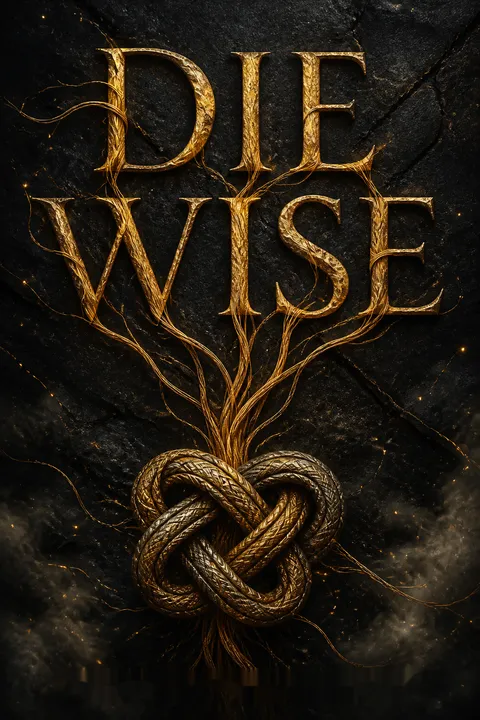
Reviews for Die Wise are largely positive, averaging 4.34 out of 5. Many readers praise Jenkinson's poetic, lyrical writing style and profound insights on death-phobic culture, with several calling it among the best books they've ever read. The audiobook, narrated by the author, receives particular acclaim. Common criticisms include the book being excessively long, overly verbose, and spending too much time identifying problems without offering concrete solutions. Despite its challenges, most readers found meaningful wisdom within its pages.
People Also Read





About the Author
Other books by Stephen Jenkinson
Download PDF
Download EPUB
.epub digital book format is ideal for reading ebooks on phones, tablets, and e-readers.








































