
Plot Summary
Arrival in the Shattered City
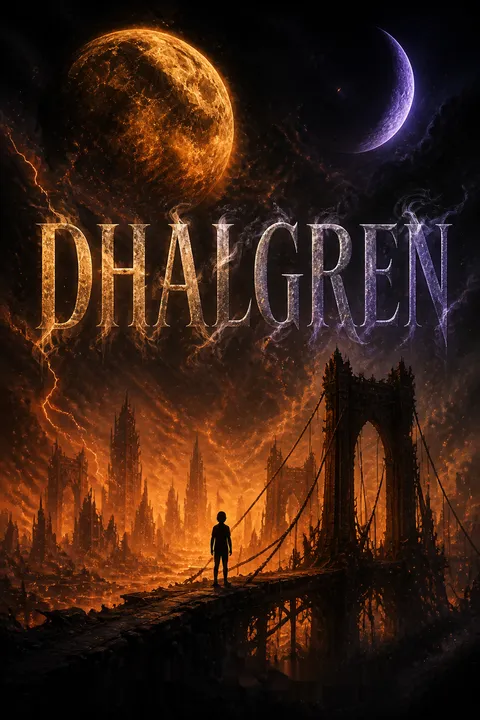
The protagonist, a young man with no memory of his name, arrives in the mysterious, ruined city of Bellona. The city is cut off from the rest of the world, shrouded in smoke and chaos, its streets empty and its buildings scarred by fire and disaster. He is both drawn to and unsettled by the city's strangeness, feeling as if he is entering a dream or hallucination. Early encounters—an enigmatic woman, a strange chain of prisms and lenses, and a group of women fleeing the city—set the tone of uncertainty and transformation. The city's rules are unclear, and the protagonist's own identity is as fractured as the landscape he traverses.
Chains, Names, and Nightmares
The protagonist is given a weapon called an "orchid" and a chain of prisms, mirrors, and lenses, symbolic objects that will recur throughout his journey. He meets Tak Loufer, who dubs him "the Kid," a name that both empowers and haunts him. The Kid is introduced to the city's social structure: the commune, the scorpions (a gang with light-shield technology), and the ambiguous, shifting alliances between groups. The city's violence and freedom are intoxicating, and the Kid's own past—his mental illness, his lost name—echoes the city's instability. The sense of being remade, of identity as something provisional, is established.
The Commune and the Scorpions
The Kid is brought to a park commune led by John and Milly, who try to maintain order and mutual aid amid the city's collapse. The commune is contrasted with the scorpions, a gang whose members use light-shields to project animalistic holograms and enforce their own chaotic order. The Kid is both attracted to and wary of both groups, refusing to fully commit to either. He witnesses the uneasy peace, the barter of food and protection, and the ever-present threat of violence. The city's social fabric is revealed as a patchwork of temporary alliances, with the Kid always on the margins.
The City's Shifting Reality
The Kid explores Bellona, discovering that its geography and even the direction of sunrise seem to change from day to day. Time is unmoored; newspapers bear random dates, and the city's clocks are broken. The city is a labyrinth, a hall of mirrors, where memory and perception are unreliable. The Kid's own sense of self is similarly unstable—he forgets days, loses track of events, and is haunted by déjà vu. The city's unreality is both liberating and terrifying, and the Kid's journey becomes a search for meaning in a world where meaning is always deferred.
Encounters: Lovers, Fighters, Friends
The Kid forms relationships with several key figures: Tak, his first friend and lover; Lanya, a harmonica-playing woman who becomes his lover and confidante; and Denny, a teenage scorpion with whom he shares a complex, sexual bond. These relationships are fluid, crossing boundaries of gender, race, and sexuality. The Kid's encounters are marked by violence and tenderness, by the constant negotiation of power and vulnerability. Sex, love, and friendship are all means of survival and self-definition in Bellona, but they are also fraught with ambiguity and risk.
The Mirror and the Mask
The Kid finds a burned notebook filled with someone else's writing and begins to use the blank pages for his own poems and journal entries. The act of writing becomes a way to anchor himself, to create meaning amid chaos. Mirrors and reflections recur as motifs—the Kid is often unsure whether he is seeing himself or someone else, whether he is the author or the character. The city itself is a palimpsest, layered with stories, rumors, and dreams. The Kid's struggle to remember his name, to claim authorship of his own story, is mirrored by the city's refusal to yield a single, stable reality.
The Burning of Bellona
Fires rage through Bellona, destroying homes and forcing the inhabitants to move again and again. The city's destruction is both literal and symbolic—a purging of the old order, a clearing of space for something new. The Kid participates in the rescue of children from a burning building, an act that is later mythologized in the city's newspaper. The boundaries between heroism and accident, between agency and fate, blur. The city's violence is relentless, but it is also generative, creating new possibilities for identity and community.
The Book of the Kid
The Kid's poems, written in the found notebook, are published as Brass Orchids, making him a minor celebrity in Bellona. The process of publication is fraught with questions of authorship, authenticity, and meaning—did he write the poems, or did he steal them? The city's hunger for art, for stories that make sense of chaos, is palpable. The Kid is both celebrated and doubted, his work both praised and dismissed. The act of writing becomes a form of survival, a way to assert selfhood in a world that constantly threatens to erase it.
The Gangs and the Gardens
The scorpions, under the Kid's reluctant leadership, become a force in the city, staging "runs" and asserting their presence. The gardens of Calkins' estate, the commune's park, and the city's ruined spaces are sites of both violence and beauty. Parties, dances, and sexual encounters are interwoven with fights, betrayals, and deaths. The city's social order is always provisional, always on the verge of collapse. The Kid's role as leader is ambiguous—he is both empowered and burdened by it, both actor and acted upon.
The Double Moons and the Sun
Bellona's sky is marked by impossible phenomena: two moons, a second sun, lightning that moves too slowly. These cosmic events are interpreted as omens, as signs of the city's special status or impending doom. The city's inhabitants respond with awe, fear, and ritual. The Kid, like the city, is caught between worlds, between the ordinary and the extraordinary. The city's singularity is both a curse and a gift—a space where anything can happen, but nothing is certain.
The School, the Children, the Fire
Lanya starts a school for the city's children, with the Kid and Denny helping. The attempt to create order, to care for the vulnerable, is constantly threatened by the city's violence and instability. A fire destroys the school, and the children are scattered. The Kid is forced to confront the limits of his power to protect or save others. The city's cycles of destruction and renewal continue, indifferent to individual effort or desire.
Madness, Memory, and Meaning
The Kid undergoes a therapy session with Madame Brown, exploring his fears of madness, his lost memory, and the meaning of his dream of the woman who turns into a tree. The session is both comforting and unsettling—there are no easy answers, no final truths. The Kid's struggle to make sense of his experience, to find meaning in chaos, is mirrored by the city's refusal to yield to interpretation. The boundaries between dream and reality, sanity and madness, are porous.
The Party at Calkins'
Calkins, the city's enigmatic governor, throws a party for the Kid to celebrate the publication of his book. The event brings together the city's disparate groups—scorpions, commune members, house guests, and outsiders. The party is a microcosm of Bellona: beautiful, chaotic, and fraught with tension. The Kid is both guest of honor and outsider, both celebrated and doubted. The party is a performance, a ritual of inclusion and exclusion, of power and vulnerability.
Violence, Sex, and Survival
The Kid's life in the nest is marked by cycles of violence and sex—fights, orgies, betrayals, and moments of tenderness. The body is both a site of pleasure and a target of harm. The boundaries between love and violence, between self and other, are constantly negotiated. The Kid's relationships with Lanya and Denny, with the scorpions and the commune, are always provisional, always at risk. Survival in Bellona requires both hardness and openness, both aggression and care.
The Monastery and the Governor
The Kid visits the city's monastery, seeking answers from the Father and from Calkins, who is in retreat there. Their conversation is a meditation on power, art, and the possibility of goodness. The city's politics are revealed as a game of masks and mirrors, of roles played and abandoned. The Kid's own search for meaning is both echoed and mocked by the city's leaders. The possibility of escape, of leaving Bellona, is raised but never realized.
The End of the Notebook
The Kid's second collection of poems is destroyed in a fire, and the page in his notebook listing possible names is lost. The act of writing, of making meaning, is always threatened by loss and erasure. The city's cycles of destruction and renewal continue, indifferent to individual effort or desire. The Kid's struggle to remember, to claim a name, to assert selfhood, is ongoing. The city's refusal to yield a final meaning is both a wound and a source of freedom.
The City in Ashes
Bellona is consumed by riot and fire. Buildings collapse, people flee, and the city's fragile order dissolves. The Kid and his companions join the exodus, crossing the bridge out of the city. The city's destruction is both an ending and a beginning—a clearing of space for something new. The Kid's own survival is uncertain, his identity still provisional. The city's ashes are both a grave and a seedbed.
The Circle Unbroken
The novel ends as it began, with the Kid entering the city, nameless and searching. The circle is unbroken; the story is both complete and unfinished. The city's mysteries remain unresolved, its meanings always deferred. The Kid's journey is both a quest and a wandering, both a search for self and a surrender to the city's endless transformations. The final image is one of return, of the circle closing and opening again.
Analysis
Dhalgren is a labyrinthine meditation on identity, reality, and the search for meaning in a world that has lost its center. Samuel R. Delany's novel is both a post-apocalyptic epic and a radical experiment in narrative form, immersing the reader in the disorientation and possibility of a city—and a self—unmoored from history and certainty. The Kid's journey through Bellona is a quest for selfhood, for connection, and for art, but it is also a surrender to the city's endless transformations, its refusal to yield a single, stable meaning. The novel's fragmented structure, its use of metafiction and unreliable narration, and its rich symbolism all serve to destabilize the reader's expectations, forcing us to confront the limits of knowledge and the persistence of desire. Dhalgren is a novel about survival, about the costs and possibilities of freedom, and about the ways in which we make—and unmake—ourselves in the stories we tell. Its lessons are both existential and political: that meaning is always provisional, that identity is always in flux, and that the only certainty is change. In a world as unstable as Bellona, the act of writing, of loving, of surviving, becomes both a defiance and an embrace of the unknown.
Review Summary
Dhalgren is a deeply polarizing novel that readers either love or despise. Admirers praise its ambitious experimental structure, rich mythological allusions, postmodern narrative loops, and profound explorations of race, sexuality, and art within a hauntingly realized post-apocalyptic city. Critics condemn its sprawling, plotless nature, graphic and repetitive sex scenes, and self-indulgent obscurity. Many acknowledge its technical brilliance while finding it an exhausting, unrewarding read. The mysterious city of Bellona and its amnesiac protagonist, Kid, leave lasting impressions, though the journey through nearly 900 pages tests even the most devoted literary adventurers.
People Also Read

Characters
The Kid
The Kid is the novel's protagonist, a young man who arrives in Bellona with no memory of his name or past. He is both a blank slate and a palimpsest, shaped by the city's violence, freedom, and instability. The Kid is a poet, a lover, a fighter, and a reluctant leader. His relationships—with Tak, Lanya, Denny, and others—are marked by fluidity and ambiguity, crossing boundaries of gender, race, and sexuality. Psychologically, the Kid is fragmented, haunted by memory loss, déjà vu, and fears of madness. His journey is a search for meaning, identity, and connection in a world that constantly threatens to erase them. Over time, he becomes both more self-aware and more accepting of uncertainty, embracing the city's chaos as his own.
Lanya
Lanya is one of the Kid's primary lovers and confidantes. She is intelligent, independent, and emotionally complex, with a sharp wit and a deep capacity for care. Lanya teaches at a school for the city's children, seeking to create order and meaning amid chaos. Her relationship with the Kid is marked by both intimacy and distance—she is both a source of comfort and a challenge to his self-understanding. Lanya's own past is ambiguous, and she is as much a wanderer as the Kid. Psychologically, she is both nurturing and self-protective, wary of being consumed by others' needs. Her music, her teaching, and her sexuality are all means of asserting selfhood in a world that constantly threatens to dissolve it.
Denny
Denny is a fifteen-year-old member of the scorpions, with whom the Kid forms a complex, sexual relationship. Denny is both vulnerable and tough, eager for love and approval but also capable of cruelty and self-destruction. His relationship with the Kid is marked by both tenderness and competition, by the constant negotiation of power and desire. Denny's own past is marked by abandonment and trauma, and he seeks in the nest a sense of belonging and safety. Psychologically, Denny is impulsive, needy, and often self-sabotaging, but he is also capable of surprising insight and loyalty. His development is a struggle between dependence and autonomy, between the desire to be cared for and the need to assert his own will.
Tak Loufer
Tak is one of the first people the Kid meets in Bellona, and he becomes both a guide and a lover. Tak is practical, intelligent, and emotionally guarded, with a dry sense of humor and a deep ambivalence about the city's freedom. He is both attracted to and wary of the Kid, seeing in him both a kindred spirit and a potential threat. Tak's own past is marked by imprisonment and marginalization, and he seeks in Bellona a space of possibility and self-definition. Psychologically, Tak is both self-reliant and lonely, struggling to balance the desire for connection with the need for autonomy. His relationship with the Kid is a site of both intimacy and rivalry, of mutual recognition and difference.
John
John is one of the leaders of the park commune, striving to maintain order and mutual aid amid the city's collapse. He is practical, optimistic, and sometimes naive, committed to the ideals of community and cooperation. John's relationship with the Kid is marked by both admiration and frustration—he sees in the Kid both a potential ally and a disruptive force. Psychologically, John is both resilient and vulnerable, struggling to hold the commune together in the face of violence and entropy. His development is a struggle between hope and disillusionment, between the desire to build and the reality of destruction.
Milly (Mildred)
Milly is John's partner and the emotional center of the commune. She is nurturing, diplomatic, and deeply committed to the well-being of others. Milly's relationship with the Kid is marked by both care and disappointment—she wants to help him, but is often frustrated by his refusal to commit. Psychologically, Milly is both strong and exhausted, carrying the burdens of others while struggling to maintain her own sense of self. Her development is a struggle between care and self-preservation, between the desire to help and the need to survive.
Nightmare
Nightmare is one of the leaders of the scorpions, a gang marked by violence, charisma, and a complex code of loyalty. He is both a protector and a predator, capable of both tenderness and brutality. Nightmare's relationship with the Kid is marked by both rivalry and respect—he sees in the Kid both a threat and a successor. Psychologically, Nightmare is both hardened and wounded, shaped by trauma and the need to assert dominance. His development is a struggle between power and vulnerability, between the desire to control and the inevitability of loss.
Dragon Lady
Dragon Lady is Nightmare's counterpart, a powerful and enigmatic figure among the scorpions. She is both feared and admired, capable of both violence and care. Her relationship with the Kid is marked by both competition and recognition—she sees in him both a rival and a kindred spirit. Psychologically, Dragon Lady is both self-possessed and haunted, struggling to maintain her authority in a world that constantly threatens to undermine it. Her development is a struggle between strength and isolation, between the desire to lead and the cost of leadership.
George Harrison
George is a black man who becomes a mythic figure in Bellona, both feared and revered. He is at the center of the city's racial tensions, both a victim and a perpetrator of violence. George's relationship with the Kid is marked by both distance and recognition—he is both a symbol and a person, both a god and a man. Psychologically, George is both resilient and embittered, shaped by the city's violence and his own survival. His development is a struggle between self-assertion and objectification, between the desire to be seen and the burden of being a symbol.
Roger Calkins
Calkins is the city's enigmatic governor, a figure of power, privilege, and ambiguity. He is both a patron of the arts and a manipulator of people, both generous and self-serving. Calkins' relationship with the Kid is marked by both fascination and distance—he sees in the Kid both a tool and a threat. Psychologically, Calkins is both self-assured and haunted, struggling to maintain control in a city that constantly resists it. His development is a struggle between power and impotence, between the desire to shape the city and the reality of its uncontrollability.
Plot Devices
Fragmented Narrative and Nonlinear Time
Dhalgren's narrative is famously fragmented, looping, and nonlinear, reflecting both the protagonist's amnesia and the city's own temporal instability. Chapters begin and end in medias res, events are repeated or contradicted, and time is unmoored—newspapers bear random dates, and days are lost or repeated. This structure immerses the reader in the Kid's disorientation, making the act of reading itself a journey through uncertainty. The city's shifting geography and mutable reality are mirrored by the novel's refusal to offer a single, stable perspective.
Metafiction and the Unreliable Narrator
The Kid's use of a found notebook, filled with someone else's writing, foregrounds questions of authorship, authenticity, and meaning. The act of writing—of making sense of chaos—is both a survival strategy and a source of anxiety. The novel is filled with mirrors, doubles, and palimpsests, constantly questioning who is telling the story and whose story is being told. The reader is implicated in the act of interpretation, forced to navigate a text that resists closure and certainty.
Symbolic Objects and Recurring Motifs
The novel is rich in symbolic objects: the chain of prisms and lenses, the orchid weapon, the light-shields of the scorpions. These objects are both tools and fetishes, markers of belonging and difference, of power and vulnerability. They recur throughout the narrative, shifting in meaning as the Kid's own identity shifts. The city itself is a labyrinth, a hall of mirrors, a palimpsest of stories and ruins.
Social Microcosm and Urban Apocalypse
The city of Bellona is both a microcosm of American society and a space of radical possibility. Its collapse allows for new forms of community, new experiments in love, sex, and power—but also new forms of violence and exclusion. The city's social order is always provisional, always on the verge of collapse or renewal. The novel explores the limits of community, the costs of freedom, and the persistence of desire amid destruction.
Cosmic and Mystical Elements
The city's sky is marked by impossible phenomena—double moons, a second sun, slow lightning—interpreted as omens or signs of the city's special status. These cosmic events are both literal and symbolic, marking Bellona as a space outside ordinary reality. The novel is haunted by questions of fate, prophecy, and the possibility of transcendence. The search for meaning is both a spiritual quest and a psychological struggle.
About the Author
Other books by Samuel R. Delany
Download PDF
Download EPUB
.epub digital book format is ideal for reading ebooks on phones, tablets, and e-readers.








































