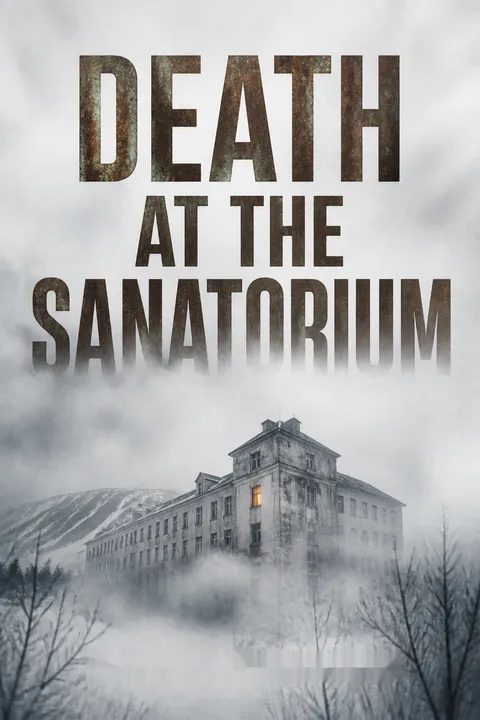

Plot Summary
Midnight Disturbance
Helgi, a young criminologist and former police temp, is interrupted from his evening routine by a loud knock at his door. Expecting a nosy neighbor, he instead finds two police officers responding to a complaint of a violent argument. Helgi, calm and composed, deflects their questions, leveraging his own police background. The encounter unsettles him, but he tries to return to his detective novel, a comfort inherited from his late father. Yet, a small bloodstain on his shirt sleeve hints at deeper troubles beneath the surface, setting the tone for a story where personal and professional boundaries blur, and the past refuses to stay buried.
Rain and Shadows
Tinna, a young nurse in Akureyri, Iceland, braves a relentless rain to reach her job at the old sanatorium. The building, steeped in the history of tuberculosis and death, feels haunted and oppressive. Tinna's routine is disrupted when she finds the door unlocked and the lights on. The sense of unease grows as she discovers her colleague Yrsa's office door ajar. Inside, she finds Yrsa dead, her fingers gruesomely amputated. The shock is immediate and visceral, and Tinna's fear is compounded by the realization that she might be in danger herself. Alone in the building, she calls the police, her world forever changed.
Death in the Office
The police arrive, and Tinna is questioned about the murder. The investigation begins with suspicion falling on those with access to the building. Tinna, still in shock, tries to process the horror she witnessed. The staff at the sanatorium—doctors, nurses, and the caretaker Broddi—are all scrutinized. The atmosphere is tense, with everyone a potential suspect. Tinna's mind races through possible motives and suspects, but the brutality of the crime and the mutilation of Yrsa's body suggest a deeply personal vendetta. The old sanatorium, once a place of healing, is now a crime scene haunted by secrets.
Ghosts of the Sanatorium
Flashbacks to the 1950s reveal the sanatorium's grim legacy. Ásta, a nurse from that era, reflects on the suffering and death she witnessed during the tuberculosis epidemic. The institution's history is marked by loss, isolation, and the struggle for hope. The narrative draws connections between past and present, suggesting that the traumas of earlier generations still echo in the lives of those who work there. The sanatorium's walls have absorbed decades of pain, and its ghosts linger, shaping the destinies of the living.
The Puzzle Unfolds
In 2012, Helgi, now back in Iceland and working on his criminology dissertation, becomes obsessed with the unsolved deaths at the sanatorium. He interviews Broddi, the former caretaker, and other surviving staff, seeking to understand the case's complexities. Helgi's own life is fraught with tension—his relationship with Bergthóra is strained, and his career is at a crossroads. The cold case becomes a mirror for his own uncertainties, and as he delves deeper, he senses that the official story may be incomplete. The mystery of the sanatorium deaths becomes a personal quest for truth and closure.
Suspicions and Scapegoats
The original investigation in 1983 is plagued by suspicion and prejudice. Broddi, the caretaker, becomes the prime suspect, largely because of his outsider status and social awkwardness. Tinna, traumatized by her discovery, inadvertently fuels suspicion against him. The police, under pressure to solve the case, arrest Broddi despite a lack of concrete evidence. The staff's relationships are strained, and the atmosphere at the sanatorium grows increasingly toxic. The real killer remains hidden, protected by the chaos and the community's willingness to scapegoat the vulnerable.
The Past Resurfaces
As Helgi interviews the surviving staff, he uncovers long-buried secrets and resentments. Elísabet, another nurse, reveals her own discontent and complicated history with her colleagues. Thorri, the doctor, is evasive about his past and his reasons for leaving previous positions. The narrative weaves between past and present, showing how unresolved traumas and hidden guilt continue to shape the lives of those involved. The sense of menace that haunted the sanatorium in 1983 returns, as Helgi's probing threatens to expose truths that some would kill to keep hidden.
The Second Body
Shortly after Yrsa's murder, the sanatorium's director, Fridjón, is found dead, apparently having thrown himself from a balcony. The staff and police are quick to interpret this as a confession—Fridjón, wracked by guilt, killed Yrsa and then himself. The case is closed, but doubts linger. Tinna, who discovered both bodies, is left with unresolved fears, especially after being stalked and receiving threatening phone calls. The convenient resolution leaves the real questions unanswered, and the true killer remains at large, their motives obscured by the passage of time.
Stalked by Fear
Tinna's life is upended by the trauma of the murders and the sense that she is being watched. Her fear is not unfounded—someone is stalking her, entering her home, and making silent phone calls. The psychological toll is immense, and Tinna becomes increasingly isolated. Her relationships with colleagues deteriorate, and she contemplates leaving Akureyri for Reykjavík. The narrative explores the lasting impact of violence and the ways in which victims are haunted long after the crime itself. The threat is both external and internal, as Tinna struggles to reclaim a sense of safety.
Unraveling Old Wounds
In the present, Helgi's investigation intensifies. He uncovers inconsistencies in the original case files and interviews with the surviving staff. Thorri's past drug abuse and the circumstances of his employment at the sanatorium come to light. Elísabet's personal grievances and Broddi's deep-seated pain are revealed. Helgi's own life mirrors the chaos of the case—his relationship with Bergthóra is marred by cycles of violence and reconciliation. The boundaries between investigator and victim blur, as Helgi becomes emotionally entangled in the lives of those he is investigating.
Confessions and Consequences
Helgi's persistence pays off when he confronts Broddi with the evidence he has gathered. Broddi confesses to the murders of Yrsa and Fridjón, revealing a motive rooted in the tragic death of his younger brother at the sanatorium decades earlier. The boy, the illegitimate son of a powerful man, was infected with tuberculosis while in the hospital's care—a crime covered up by the staff. Broddi's quest for justice and revenge led him to kill those he held responsible. The confession is both cathartic and devastating, exposing the long shadow of institutional betrayal.
The Final Reckoning
Broddi is arrested, and the case is finally solved after nearly thirty years. Yet, the resolution brings little comfort to those involved. The deaths at the sanatorium were the result of systemic failures, personal vendettas, and the corrosive effects of secrecy and shame. Tinna, who survived the original ordeal, is ultimately murdered in the present, a victim of the same forces that claimed her colleagues decades earlier. Helgi, though successful in his investigation, is left to grapple with the emotional fallout and the realization that some wounds never fully heal.
Cycles of Violence
The narrative draws parallels between the violence at the sanatorium and the cycles of abuse in Helgi's own life. His relationship with Bergthóra is marked by emotional and physical turmoil, echoing the unresolved pain of the past. The story suggests that violence, once unleashed, perpetuates itself across generations and relationships. The characters are trapped by their histories, unable to break free from patterns of harm and retribution. The sanatorium, both as a physical space and a symbol, embodies the persistence of suffering and the difficulty of achieving true healing.
Truths in the Shadows
Even after the case is closed, questions remain. The official narrative is tidy, but the reality is messier—complicated by personal biases, institutional failures, and the limitations of memory. Hulda, the detective who assisted in the original investigation, reflects on the mistakes made and the truths left unspoken. The story acknowledges the ambiguity inherent in all investigations, the impossibility of ever knowing the full truth. The shadows of the past continue to loom, and the characters must live with the consequences of what they did—and failed to do.
The Case Reopened
Helgi's involvement in the case is both professional and personal. His academic pursuit of the truth becomes a real-world investigation with life-and-death stakes. The reopening of the case brings old wounds to the surface, forcing the surviving characters to confront their past actions. The process is painful but necessary, as the community seeks to reckon with its history. The narrative suggests that justice is not a single event but an ongoing process, requiring courage, honesty, and a willingness to face uncomfortable truths.
The Weight of Memory
The story ends with the characters—survivors, investigators, and perpetrators alike—struggling to come to terms with what has happened. Memory is both a burden and a source of meaning, shaping identities and relationships. The sanatorium, once a place of healing, is now a monument to suffering and resilience. The final chapters emphasize the importance of remembrance, not as a means of dwelling on pain, but as a way of honoring those who were lost and learning from the mistakes of the past.
Justice and Aftermath
The arrest of Broddi brings a measure of justice, but the damage done cannot be undone. The survivors must find ways to move forward, carrying the scars of their experiences. Helgi, now a police officer, reflects on the limits of the law and the complexities of human nature. The story ends on a note of ambiguity, acknowledging that some questions will never be fully answered, and that the search for truth is ongoing. The legacy of the sanatorium lingers, a reminder of the costs of silence and the necessity of confronting the darkness within and without.
Analysis
A meditation on trauma, justice, and the persistence of the past"Death at the Sanatorium" is more than a conventional whodunnit; it is a layered exploration of how personal and collective traumas echo across generations. The novel interrogates the nature of justice, exposing the inadequacies of institutional responses and the dangers of scapegoating the vulnerable. Through its dual timelines, the story reveals how secrets, guilt, and unresolved pain fester, leading to cycles of violence and retribution. The characters are psychologically rich, their motivations shaped by loss, shame, and the longing for closure. The sanatorium itself is a powerful symbol—a place meant for healing that becomes a site of suffering and death, its legacy haunting all who pass through its doors. Ultimately, the novel suggests that true healing requires confronting uncomfortable truths, acknowledging the complexity of human motives, and breaking the silence that allows injustice to persist. In a modern context, the book resonates as a cautionary tale about the costs of denial and the necessity of empathy, both in personal relationships and in the pursuit of justice.
Review Summary
Death at the Sanatorium receives generally positive reviews, averaging 3.64/5 stars. Readers praise the atmospheric Nordic noir setting in an abandoned Icelandic TB sanatorium and the triple-timeline structure (1950, 1983, 2012). The mystery follows Helgi investigating decades-old murders while writing his criminology dissertation. Reviewers appreciate the Agatha Christie-inspired whodunit style, strong characterization, and dark atmosphere. Many note the slow-burn pacing works well. However, a common criticism is the abrupt, cliffhanger ending that leaves loose threads. Some found it forgettable or overly plodding. Fans appreciate connections to the author's Hulda series and the exploration of mental health themes.
People Also Read

Characters
Helgi Reykdal
Helgi is a young criminologist and former police temp, caught between his academic ambitions and the pull of his Icelandic roots. His relationship with Bergthóra is fraught with conflict, mirroring the unresolved tensions of the case he investigates. Helgi is methodical, empathetic, and driven by a need to understand the past, both for his dissertation and for personal closure. His journey is as much about self-discovery as it is about solving a crime. Helgi's psychological depth is revealed through his struggles with guilt, responsibility, and the cyclical nature of violence in his own life.
Tinna Einarsdóttír
Tinna is a young nurse whose discovery of two bodies at the sanatorium marks her as both a key witness and a target. Her initial composure masks deep-seated fears and vulnerabilities, which are exacerbated by stalking and threats. Tinna's relationships with her colleagues are complex, shaped by ambition, insecurity, and the trauma of her experiences. Her eventual murder in the present underscores the enduring impact of past violence and the dangers of unresolved secrets. Tinna embodies the psychological toll of being caught between innocence and suspicion.
Broddi
Broddi, the sanatorium's caretaker, is socially awkward and marginalized, making him an easy target for suspicion. His life is defined by loss—most notably the death of his younger brother, which becomes the catalyst for his later actions. Broddi's confession reveals a psyche shaped by grief, resentment, and a desperate need for justice. He is both victim and perpetrator, his crimes rooted in the institutional betrayals of the past. Broddi's character challenges simplistic notions of guilt and innocence, highlighting the complexities of trauma and retribution.
Yrsa
Yrsa is a long-serving nurse at the sanatorium, known for her strictness and dedication. Her murder is the inciting event of the story, and her mutilation suggests a deeply personal motive. Yrsa's relationships with her colleagues are distant, and she is ultimately revealed to have been complicit, albeit unwittingly, in the events that led to Broddi's brother's death. Her character represents the burdens of responsibility and the unintended consequences of institutional actions.
Fridjón
Fridjón is the sanatorium's director, a figure of authority whose apparent suicide is interpreted as a confession. In reality, he is a key player in the cover-up of Broddi's brother's death, acting to protect his own family's reputation. Fridjón's actions are driven by a mixture of guilt, self-preservation, and the pressures of his position. His death is both a resolution and an evasion, leaving the true story hidden until Helgi's investigation brings it to light.
Elísabet
Elísabet is a nurse whose personal unhappiness colors her perceptions of her colleagues and the events at the sanatorium. Her relationships are marked by envy, resentment, and unfulfilled desires, particularly regarding Thorri. Elísabet's testimony is shaped by her own biases, and she is both a source of information and a red herring in the investigation. Her character illustrates the ways in which personal grievances can distort the search for truth.
Thorri
Thorri is a doctor whose career is marked by ambition and a willingness to conceal uncomfortable truths. His past drug abuse and the circumstances of his employment at the sanatorium are central to the mystery. Thorri's interactions with his colleagues are manipulative, and he is adept at deflecting suspicion. His involvement in the cover-up of Broddi's brother's death is motivated by self-interest and fear of exposure. Thorri embodies the moral ambiguities of professional life and the dangers of unchecked ambition.
Hulda
Hulda is a police detective who assists in the original investigation but is marginalized by her male colleagues. She is perceptive, methodical, and unafraid to challenge authority. Hulda's insights are often ignored, leading to mistakes and missed opportunities. Her later reflections on the case highlight the limitations of institutional justice and the importance of persistence and empathy in detective work. Hulda's character is a commentary on gender dynamics and the value of experience.
Bergthóra
Bergthóra is Helgi's partner, whose relationship with him is marked by emotional volatility and violence. Her struggles with alcohol and unresolved trauma mirror the larger themes of the novel. Bergthóra's actions are both a source of pain and a catalyst for Helgi's self-examination. Her character illustrates the ways in which personal and generational traumas intersect, and the difficulties of breaking free from destructive patterns.
Ásta
Ásta is a nurse from the sanatorium's early days, whose actions inadvertently lead to the infection and death of Broddi's brother. Her kindness and dedication are overshadowed by a tragic mistake, and she becomes a symbol of the unintended consequences of institutional care. Ásta's legacy haunts the present, her story a reminder of the fragility of good intentions and the lasting impact of error.
Plot Devices
Dual Timelines and Interwoven Narratives
The novel employs a dual timeline structure, alternating between the events of 1983 and the present day. This device allows the reader to see how the past shapes the present, and how unresolved traumas continue to influence the lives of the characters. The interweaving of narratives creates suspense and deepens the psychological complexity of the story. Foreshadowing is used to hint at connections between characters and events, while red herrings and shifting perspectives keep the reader guessing. The use of detective fiction as a motif—through Helgi's reading and the structure of the investigation—reinforces the themes of truth-seeking and the limitations of knowledge.
Download PDF
Download EPUB
.epub digital book format is ideal for reading ebooks on phones, tablets, and e-readers.








































