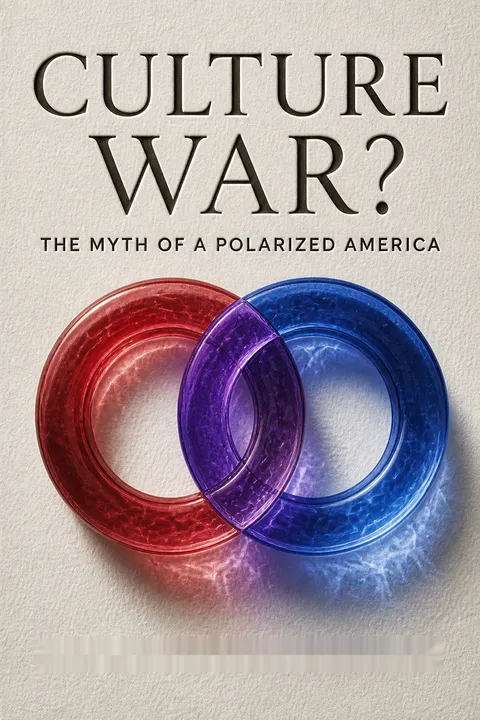

Key Takeaways
1. The "Culture War" in America is a Pervasive Myth, Not a Reality
The simple truth is that there is no culture war in the United States—no battle for the soul of America rages, at least none that most Americans are aware of.
Distorted debate. The prevailing narrative of a "culture war" in America, fueled by politicians, interest groups, and the media, presents a deeply divided nation. This book argues that this portrayal is a significant distortion of reality, based on half-truths and exaggerated claims. The idea of a bitter, fundamental clash over moral and religious issues is largely a construct of the political class.
Elite vs. mass. While a "culture war" might exist among a small, vocal segment of political elites—officeholders, activists, and commentators—it does not reflect the sentiments of the vast majority of ordinary Americans. These elites, often operating in echo chambers, project their own polarization onto a public that is far more moderate and ambivalent. The media, prioritizing conflict for "news value," further amplifies these elite divisions, creating a self-fululling prophecy.
Misleading narratives. The constant drumbeat of division risks making the distorted picture a reality, as a polarized political class abandons efforts to reach the broad middle ground. This book aims to provide a more accurate reflection of American politics, one that most citizens would recognize as closer to their social surroundings, where extreme views are rare and compromise is often preferred.
2. America is Closely Divided, Not Deeply Polarized
Americans are closely divided, but we are not deeply divided, and we are closely divided because many of us are ambivalent and uncertain, and consequently reluctant to make firm commitments to parties, politicians, or policies.
Ambivalence, not animosity. Close national election results, like the 50:50 outcomes of the late 1990s and early 2000s, are often misinterpreted as evidence of a deeply polarized electorate. However, these tight divisions more accurately reflect a public that is ambivalent, uncertain, or even indifferent, rather than one composed of two fiercely opposed blocs. Voters often seek the center, while parties and candidates gravitate towards the extremes.
Two scenarios. A 50:50 election can arise from two very different scenarios:
- A polarized electorate with two large, evenly matched blocs of deeply committed partisans (U-shaped distribution).
- A centrist electorate where most people hold moderate positions, but the parties position themselves equidistant from the center on opposite sides (bell-shaped distribution).
The latter, the book argues, better describes the American public.
Loss of information. Reducing complex voter attitudes to a simple Republican or Democratic victory loses crucial information. Just as an individual voter might be 50:50 about candidates due to liking both, disliking both, or not caring, the aggregate outcome can mask a nuanced, rather than deeply divided, public. A detailed look at public opinion reveals a populace that is closely divided by choice, not by deep ideological chasms.
3. The Red State/Blue State Divide Grossly Exaggerates Differences
Vast areas of the southern and midwestern heartland emerged from the election as Republican red. But the huge expanses of red territory contained relatively few people per square mile. The much smaller areas of Democratic blue contained the more populous cosmopolitan states of the east and west coasts and the Great Lakes.
Superficial coloring. The iconic red and blue maps of presidential elections, popularized after 2000, create a misleading visual of a nation deeply split along geographical lines. While these maps show distinct voting patterns, they grossly exaggerate the actual differences in opinions and values among the residents of these states. Many states are "marginal," not securely in one camp, reflecting ambivalence rather than deep commitment.
Minimal policy divergence. A detailed analysis of public opinion data from the Pew Research Center and National Election Studies reveals surprisingly small differences between red and blue state residents across a wide range of issues.
- Political identity: While voting intentions differ, underlying partisan and ideological self-identification are much less distinct, with moderates forming the largest group in both.
- Group evaluations: Favorable views of both Republican and Democratic parties, as well as religious groups, are common in both red and blue states.
- Policy preferences: On issues from tax cuts and government spending to school vouchers and environmental protection, red and blue state residents often show insignificant differences.
Journalistic exaggeration. The media often contributes to this myth by highlighting extreme examples, such as contrasting a liberal New Jersey town with a conservative Tennessee town, rather than conducting comprehensive, representative surveys. These vivid, unrepresentative contrasts are more memorable than the nuanced reality of national polls, leading to a widespread, but inaccurate, belief in a deep cultural divide.
4. Public Opinion Shows Depolarization Across Key Demographics
The evidence, then, points to dramatic depolarization in intergroup differences.
Contrary to claims. Extensive academic research, particularly by DiMaggio, Evans, and Bryson, analyzing public opinion from 1972 to 2002, directly contradicts the notion of growing polarization. Their exhaustive statistical analysis across 35 opinion scales found a consistent trend of depolarization across most demographic categories.
Convergence, not divergence:
- Age: Older and younger Americans grew more alike in their views.
- Education: More and less-educated Americans converged.
- Race: Black and white Americans became more similar.
- Religion: Americans of different religious denominations converged.
- Region: Residents of different regions grew more alike.
- Gender: Men and women showed no significant change in similarity.
- Ideology: Self-identified liberals and conservatives were no further apart, except for a debated finding on abortion.
Partisan sorting. The only category showing increased polarization was partisan affiliation, meaning self-identified Democrats and Republicans are further apart in their views than in past decades. This is attributed to "sorting," where individuals align with the party that better reflects their views, rather than a fundamental shift in the public's overall ideological distribution. This "partisan polarization" is distinct from "popular polarization."
5. Abortion Attitudes are Nuanced, Rejecting Extreme Positions
The great majority of the American citizenry rejects extreme positions and could be content with compromise laws, but such compromises are hard to achieve given the current state of American electoral politics.
Complex views. Public attitudes toward abortion are far more nuanced than the "pro-life" vs. "pro-choice" rhetoric suggests. While many Americans are troubled by abortion and some believe it is "murder," a consistent majority also supports the principle of a woman's right to choose, as embodied in Roe v. Wade. This indicates that a significant number of people who personally believe abortion is wrong are unwilling to impose that view legally on others.
Stable and conditional. After an initial liberalization in the early 1970s, public opinion on abortion has remained remarkably stable for decades. Americans generally support legal abortion in "traumatic" circumstances (e.g., rape, health risk, fetal defect) but are divided or opposed in "elective" circumstances (e.g., low income, unmarried, not wanting more children).
- Regional/Religious differences: While present, these differences are smaller than often assumed. Even in "red" states or among Catholics and Evangelicals, support for legal abortion in some circumstances is substantial.
- Partisan divide: Self-identified Democrats are only slightly more pro-choice than Republicans, a difference far less pronounced than the positions of party elites.
Gender gap myth. The widely held belief that abortion drives the gender gap in voting is false. Men and women do not significantly differ on abortion attitudes. The gender gap stems from differences on issues of violence/use of force and protecting the vulnerable, where women tend to favor more pacifistic policies and an activist government.
6. Tolerance for Homosexuality is Rapidly Increasing, Especially Among the Young
If commandants on the “orthodox” side intend to fight a culture war over homosexuality, they had better do it soon—their potential ranks are being thinned by mortality.
Shifting landscape. Public opinion on homosexuality is undergoing rapid change, moving towards greater acceptance and tolerance. While historically, gays and lesbians received low "feeling thermometer" ratings, extreme dislike has steadily declined, and average ratings have climbed significantly. A majority of Americans now reject the idea that homosexual relations should be illegal.
Support for rights. Despite continued moral reservations by some, there is overwhelming support for equal job opportunities for homosexuals, even in sensitive professions like teaching. This indicates a clear distinction in public sentiment between personal moral disapproval and support for civil liberties.
Gay marriage divide. While a majority of Americans currently oppose gay marriage, opposition to civil unions or domestic partnerships is slightly lower. Crucially, there was no significant popular backlash after the Supreme Court's Lawrence v. Texas decision, and a majority believes amending the Constitution to ban gay marriage is "not worth" the effort.
Generational shift. The most significant factor driving increased acceptance is age: younger Americans are consistently more tolerant of homosexuals and supportive of gay rights than older generations. As older cohorts are replaced by more tolerant younger ones, the trend towards greater acceptance is likely to continue, making any "culture war" on this issue a losing battle for the "orthodox" side in the long run.
7. Economic Cleavages Remain Strong, Not Replaced by Religion
Anyone whose time horizon is longer than the last presidential election can continue to believe that the divide between the working class and Wall Street is deeper today than it was at mid-century.
Enduring economic divide. Contrary to claims that "culture wars" have eclipsed traditional economic conflicts, economic cleavages remain a powerful force in American elections. Academic research indicates that the link between income and both party identification and presidential vote has strengthened since 1972, not weakened.
Income's importance. The voting gap between low- and high-income voters has been significantly larger in recent decades (1976-1996) than in earlier periods (pre-1972). The 2000 election, where the economic gap was relatively small, appears to be an anomaly rather than the start of a new trend, likely due to a booming economy and minimal national security concerns at the time.
Religion's rise, but not dominance. While religiosity (church attendance/commitment) has indeed become a more important correlate of presidential voting since 1992, its influence does not necessarily eclipse that of economics. The difference in Democratic presidential vote between regular churchgoers and non-attenders is roughly comparable to the income-based voting gap in many elections.
Dual importance. Both religiosity and economics are significant cleavages in contemporary American politics. The narrative of economics being "dead" as a political driver is a misinterpretation, often stemming from a narrow focus on specific election cycles or an overemphasis on the rhetoric of cultural issues.
8. Elite Polarization Creates the Illusion of a Polarized Electorate
A polarized political class makes the citizenry appear polarized, but it is only that—an appearance.
The disconnect. The stark contrast between the moderate views of ordinary Americans and the highly polarized nature of national politics can be reconciled by understanding the role of elite polarization. While voters remain largely centrist, the candidates they choose from and the issues they debate are shaped by a political class that is far more extreme.
Spatial model explanation. Using spatial models, the book illustrates how unchanging voters can appear to change when candidates shift their positions. If candidates diverge on a "moral" dimension, even if voters' underlying preferences haven't changed, statistical analyses will show that moral issues have become more important determinants of the vote, and economic issues less so. This is an "identification problem" in electoral studies.
Candidate-driven perception. The dramatic rise in the relationship between religiosity and voting, for instance, likely reflects the emergence of candidates like Bill Clinton, who signaled a "progressive" stance on moral issues, rather than a sudden shift in voters' priorities. When candidates offer distinct choices on a new dimension, voters respond to those choices, creating the appearance of a shift in voter attitudes or issue salience.
Misattributing change. Many electoral analyses mistakenly attribute changes in voting correlations to shifts in voter attitudes, when they may simply reflect changes in the positions of the candidates, parties, and groups being evaluated. This confounding effect perpetuates the myth of a polarized public, even when the mass electorate remains largely centrist and ambivalent.
9. "Purists" and Issue Activists Drive Political Extremism
Issue activists—Wildavsky’s purists—largely define the party images today.
Rise of the ideologues. A significant shift in American politics has been the ascendance of "purists" or "amateur Democrats" (and Republicans), who are primarily motivated by ideological and issue commitments rather than material rewards or winning elections. Unlike the "professionals" of old who prioritized compromise and broad appeal, purists reject compromise, emphasize internal consistency, and focus on the purity of their principles.
Decline of material incentives. The weakening of traditional party machines, due to civil service reforms, public sector unionization, and ethics laws, diminished material incentives for political participation. This left the field open to those with strong policy or ideological motivations, who are often more extreme in their views.
Money and media. The increased importance of campaign finance has pushed parties to cultivate middle-class issue activists who have money to contribute. For Republicans, this meant allying with the religious right; for Democrats, it meant embracing lifestyle liberalism. The media further amplifies purists by giving disproportionate coverage to their loud chants and strident rhetoric, as conflict makes for good news.
Tail wags the dog. These issue activists, though small minorities within their parties, now largely define party images and agendas. Their deep commitments and willingness to work and contribute mean that parties often cater to their extreme views, even if it means alienating the moderate majority.
10. Government Expansion and Participatory Reforms Empower Intense Minorities
The expansion of the scope of government created myriad new opportunities for those with particular issue concerns to become active in politics.
New avenues for activism. The vast expansion of government into previously private spheres of life since the mid-20th century—from civil rights and environmental protection to social regulation—created countless new opportunities for citizens to engage politically. What were once considered private matters or local squabbles now fall under government jurisdiction, inviting activism.
Participatory turn. Concurrently, the United States experienced a "participatory turn," with reforms designed to make democracy more open:
- Presidential primaries: Replaced smoke-filled rooms, empowering activists.
- Candidate-centered politics: Shifted focus from party to individual.
- Open government: Legislatures, boards, and councils opened proceedings and recorded votes.
- Liberalized standing rules: Allowed citizens to sue on broader grounds.
- "Maximum feasible participation": Federal initiatives encouraged local activism.
- Advocacy explosion: Thousands of new interest groups formed.
Unintended consequences. While seemingly making democracy "more democratic," these changes primarily benefited those with intense issue commitments. Most ordinary Americans, busy with daily life, do not take advantage of these numerous opportunities for participation. This leaves the political arena disproportionately influenced by "purists" who care deeply and hold extreme views.
Local level impact. This biased participation is particularly evident at the local level, where small groups of committed activists can push agendas far outside mainstream community sentiment, often leading to conflicts when the broader public eventually becomes aware.
11. American Democracy is "Hijacked" by Unrepresentative Extremes
There is a disconnect between the world of contemporary Americans and the political order that purports to represent them.
Bias in participation. The combination of rising purist influence, expanded government scope, and increased participatory opportunities has led to a systemic bias in who participates in American politics. Those with intense, often extreme, views are overrepresented, while the moderate center is underrepresented. This means that the political agenda and discourse are often shaped by unrepresentative minorities.
Misplaced priorities. Issues that deeply motivate these purists—such as abortion, gun control, or specific environmental regulations—often receive disproportionate attention in the political arena, even if they are not among the most pressing concerns for the majority of citizens. For example, abortion rarely appears on lists of "most important problems" for the average American.
Toxic discourse. Purists, certain of their views, often reject compromise and engage in angry, vitriolic attacks rather than reasoned discussion. This confrontational style alienates most Americans, who are accustomed to civility and negotiation in their daily lives. The political class's behavior often resembles "squabbling children," contributing to public dislike of politics.
Government as "them." The cumulative effect is a political order that debates extreme proposals, focuses on niche issues, and is dominated by a political class whose behavior is unacceptable elsewhere. Citizens increasingly perceive government as something "done to them" rather than "for them," leading to disengagement and a sense of alienation from their own democracy.
12. Reforming Primaries and Redistricting Can Foster Moderation
The chorus of this 1973 pop hit could well serve as the anthem of the American people. How might we diminish the influence of the clowns and jokers and expand the influence of the middle?
Limited optimism. While the author is not overly optimistic about immediate change, given the entrenched interests of the political class and media, several reforms could help moderate American politics and empower the centrist majority. These reforms aim to dilute the influence of extreme voices and increase the representativeness of electoral outcomes.
Primary reform. The current primary system often forces candidates to appeal to the extreme wings of their parties to win nominations, leading to polarized general election choices. Reforms like the "blanket primary" (where all voters choose from all candidates, with top vote-getters from each party advancing) or "nonpartisan run-off primaries" (where all candidates are listed, and the top two advance to a runoff) could encourage more moderate candidates by requiring broader appeal.
- California example: California's experience with a blanket primary, though overturned by the Supreme Court, showed its potential to empower moderate voters.
Redistricting reform. Gerrymandering, particularly bipartisan gerrymandering, creates "safe" legislative districts where incumbents fear only primary challenges from their party's extremes. Removing redistricting from partisan legislatures and placing it in the hands of nonpartisan commissions, ideally with popular referendum approval, could lead to more competitive districts.
- Increased competition: More competitive districts would force candidates to appeal to the middle ground, rather than just their partisan base, fostering moderation in legislative bodies.
Increasing participation. Since political participation correlates with intensity and extremity, increasing overall voter turnout would bring in less intense, more moderate citizens. Reforms to make voter registration and voting easier could boost turnout by 8-15 percentage points. While compulsory voting is a radical idea for Americans, it could significantly alter the composition of the active electorate, forcing parties to address mainstream concerns.
People Also Read


Download PDF
Download EPUB
.epub digital book format is ideal for reading ebooks on phones, tablets, and e-readers.








































