
Key Takeaways
1. The Christian Life: A Divine Calling to Know, Love, and Serve God
We must strive to know, love, and serve Him in this life, so to be happy with Him forever in the next.
A supernatural gift. Being a Christian, incorporated into Christ's Mystical Body through baptism, is a profound grace. This divine gift elevates humanity, making us adopted children of God the Father, brethren of the Eternal Son, and living temples of the Holy Spirit. This bestows upon us immense dignity and a clear purpose.
Threefold duties. This exalted status comes with essential duties:
- To God: Love Him with all our heart, soul, and mind, seeking to please Him above all.
- To ourselves: "Put on the Lord Jesus Christ" by shedding sin, error, and disordered attachments, conforming to God's grace.
- To our neighbor: Love them as ourselves, working for their good and, most importantly, their eternal salvation, as Christ loved us.
The sign of the Cross. The Cross symbolizes our dignity and duties, reminding us of Christ's sacrifice and its power to draw down blessings, cast out evil, and weaken temptation. It should be made with attentive faith, gratitude, and love, invoking the Blessed Trinity, especially at the start and end of significant actions or in moments of danger.
2. Divine Truth: Revealed in Scripture, Tradition, and the Church's Magisterium
This one sacred deposit of the word of God is found in both Sacred Scripture, called the written word of God, and Sacred Tradition, called the “handed-on” or unwritten word of God.
God's self-revelation. Christian doctrine is divine because its author, Jesus Christ, is God. It contains the entirety of divine revelation, which is God's supernatural communication of Himself and what man must know, believe, and do for salvation. This revelation concluded with the death of St. John, forming a fixed "deposit of faith."
Two primary sources. This deposit is preserved in:
- Sacred Scripture: The inspired word of God, written under the Holy Spirit's guidance, contained in the 73 books of the Holy Bible (Old and New Testaments). It is "divinely inspired and has its use for teaching the truth and refuting error."
- Sacred Tradition: The word of God not written in the Bible, but transmitted in unbroken succession from the apostles. It clarifies Scripture and enriches revelation (e.g., infant baptism, Marian dogmas).
Magisterium's role. The infallible teaching authority of the Catholic Church (the Pope alone or with bishops) authoritatively interprets both Scripture and Tradition. The Magisterium is a servant and guardian of revelation, not its author, and cannot change the Deposit of Faith. True doctrinal development means greater clarity of the same changeless content, never contradiction.
3. God's Nature: The Central Mystery of the Blessed Trinity
The Blessed Trinity is the mystery of one God in three distinct but coequal Persons: Father, Son, and Holy Spirit.
One God, three Persons. This is the principal mystery of religion, known only by divine revelation. Each Person is truly God, coequal in eternity, omnipotence, and perfection, yet distinct only in their relations:
- The Father proceeds from no principle but is the principle of the other two.
- The Son is eternally begotten of the Father.
- The Holy Spirit proceeds eternally from both the Father and the Son.
Unified in action. While distinct, the three divine Persons concur equally in all external actions. Creation is fittingly ascribed to the Father, Redemption to the Son, and Sanctification to the Holy Spirit. The Incarnation and Redemption are the personal work of the Son in execution.
Beyond reason, not against it. This mystery is suprarational, not irrational. We can form some idea through analogy, such as St. Augustine's comparison to the unity of man's memory, intelligence, and will. Errors like Arianism (denying the Son's divinity) or Islam (rejecting the Trinity) are condemned as they deny God's self-revelation.
4. Creation and Fall: Man's Dignity, Original Sin, and the Promise of Redemption
Error with regard to the nature of creation begets a false knowledge of God.
God's free act. Creation is God's free act of bringing beings into existence "out of nothing" (ex nihilo), solely to reveal His goodness and perfection. It is distinct from God, not a part of Him, countering pantheistic and environmental idolatry. Man, created in God's image, is not willed for his own sake but to glorify God.
Man's original state. God created the first man and woman, Adam and Eve, in justice and holiness, with sanctifying grace and extraordinary gifts:
- Soul: Infused knowledge, perfect order of passions.
- Body: Incorruptibility and immortality (exemption from sickness and death).
They received these gifts for themselves and all descendants, destined for supernatural happiness.
The Fall and its consequences. Tempted by the devil, Adam and Eve disobeyed God out of pride, committing original sin. This resulted in:
- Loss of grace and supernatural gifts.
- Subjection to ignorance, concupiscence, suffering, and death.
- Estrangement from God, transmitted to all descendants (except Mary).
This state requires a supernatural remedy, which God mercifully promised immediately: a Redeemer.
5. Jesus Christ: The Incarnate Son, Our Redeemer, King, and Judge
True God was born in the complete and perfect nature of true man; completely human and completely divine.
The Incarnation. Jesus Christ is the eternal and only Son of God, who united a complete human nature (body and soul) to His divine Person. This "hypostatic union" makes Him true God and true man, one divine Person. He is "Jesus" (God saves), "Christ" (anointed King, High Priest, Prophet), and "Our Lord" (divine Master).
Redemption through Passion. Christ proved His divinity through His holy life, doctrine, miracles (especially Resurrection), and fulfilled prophecies. His sorrowful Passion—from the agony in Gethsemane to His death on the Cross—was a voluntary, infinite, superabundant, and universal satisfaction for all sins, freeing us from:
- Slavery to sin and Satan.
- Eternal death.
- Opening the gates of heaven.
Resurrection and Kingship. On the third day, Christ rose with a glorified body (brightness, impassibility, agility, subtlety), the foundation of our faith and pledge of our own resurrection. His Ascension to heaven signifies His triumph and eternal Kingship over all men and nations, demanding individual and collective acknowledgment. He will return in glory to judge all, separating the just from the wicked.
6. The Holy Spirit: The Soul of the Church and Source of Sanctifying Grace
As Christ is the Head of the Church, so is the Holy Ghost her soul.
Third Person of the Trinity. The Holy Spirit is truly God, proceeding from the Father and the Son, adored and glorified with them. He is the "Spirit of grace, and of prayers," the animating principle of all true prayer and supernatural life.
Mission of the Spirit. The Holy Spirit's mission is to reveal, confirm, and further the Son's work. He descended visibly at Christ's baptism and Pentecost, transforming the apostles into zealous martyrs. His invisible mission in the Church includes:
- Unifying and governing the Church.
- Making the Church infallible in definitive teaching.
- Distributing charisms for building up the Church.
- Making the Church indestructible.
Gifts and Fruits. In the individual soul, the Holy Spirit is the principle of supernatural life, conferring sanctifying grace and seven gifts:
- Wisdom, Understanding, Counsel, Knowledge, Piety, Fortitude, and Fear of the Lord.
These gifts produce twelve fruits: Charity, Joy, Peace, Patience, Benignity, Goodness, Longanimity, Mildness, Fidelity, Modesty, Continency, and Chastity. These virtues are inseparable and lost with mortal sin.
7. The Catholic Church: Christ's Unique and Necessary Ark of Salvation
The Church . . . was established immediately and directly by the true and historic Christ, while He lived among us.
Christ's Mystical Body. The Catholic Church is the divinely founded society of all who profess Christ's true Faith, united by sacraments and governed by legitimate pastors under the Pope. It is called the Mystical Body of Christ, superior to all other human societies, born from Christ's side on the Cross and manifested at Pentecost.
Necessity for salvation. "Outside the Church there is no salvation" (extra Ecclesiam nulla salus). Salvation is only in Jesus Christ, who is the Head of the Church. While God can save those in "invincible ignorance" through extraordinary means (baptism of desire/blood), this is not the ordinary path, and evangelization remains a divine command and duty of charity.
Marks and attributes. The true Church is identified by four marks:
- One: United in worship, doctrine, sacraments, and governance.
- Holy: Founded by God, animated by the Spirit, leading to virtue and sanctity.
- Catholic: Universal, suited to all, capable of worldwide spread, filled with all truth.
- Apostolic: Doctrine, mission, and authority from Christ through the apostles.
The Church is also visible, perpetual, indefectible (unchangeable in dogma, morals, sacraments), and infallible (preserved from error in definitive teaching).
8. Moral Living: Aligning Actions with God's Eternal Law and Virtues
It is not enough to do good works; they need to be done well. For our works to be good and perfect, they must be done for the sole purpose of pleasing God.
Christian morality. This practical science regulates our actions by right reason and revealed truth to attain our supernatural end: Beatific Vision. It is divine, complete, and immutable, guarded by the Church. Every morally good act requires goodness in its object, circumstances, and end; a defect in any makes the act evil.
Conscience and law. Conscience is a practical judgment of reason, discerning good from evil. It must be properly formed by God's law (natural and divine revelation) and wise counsel. The moral law originates in God's eternal law, manifested as:
- Natural Law: Imprinted in rational creatures, known by reason, universal, immutable, absolute.
- Positive Divine Law: Directly revealed by God (Old and New Law), perfected in Christ.
- Human Law: Derived from God's authority, for the common good, but mutable and subordinate to divine law.
Virtues for holiness. Virtues are habits of goodness, firm inclinations to do right.
- Theological virtues: Faith, Hope, Charity (infused by God, object is God).
- Moral virtues: Prudence, Justice, Fortitude, Temperance (regulate appetites and actions).
These virtues, especially when infused by grace, enable us to choose good with ease and grow in holiness.
9. Sin's Gravity: Understanding Offense Against God and Need for Reparation
One mortal sin is a more dreadful calamity than the death of all mankind.
Definition and types. Sin is any voluntary violation of God's law in thought, word, deed, or omission. It is divided into:
- Original Sin: Inherited estrangement from God due to Adam's disobedience, leading to concupiscence, suffering, and death.
- Personal Sin: Originating in individual will, either mortal (grave offense, destroys grace, merits eternal punishment) or venial (less grave, weakens charity, merits temporal punishment).
Mortal sin conditions. A sin is mortal if it involves:
- Grave matter: Serious violation of a divine law (e.g., Ten Commandments).
- Full knowledge: Awareness of the action's moral value.
- Full consent: Free choice of the action.
Mortal sin is a complete turning away from God, inflicting spiritual death.
Sins of malice. Some sins are especially grievous:
- Crying to heaven for vengeance: Willful murder, sodomy, oppression of the poor, defrauding workers.
- Against the Holy Spirit: Despair, presumption, rejecting known truth, envy of spiritual good, obstinacy in sin, final impenitence. These are unpardonable because they resist grace and repentance.
All sin requires repentance and, often, reparation for the damage caused.
10. Grace and Merit: God's Supernatural Gifts for Holiness and Eternal Life
Grace is a supernatural gift which God freely bestows on us, through the merits of Jesus Christ, for our salvation or to accomplish some task.
God's free gift. Grace is supernatural, elevating us above our nature to commune with God. It is freely given through Christ's merits, not earned. Errors like Pelagianism (grace unnecessary) or Jansenism (man's cooperation impossible) are condemned. God gives everyone sufficient grace for salvation; our free will determines cooperation.
Two kinds of grace:
- Actual grace: Temporary divine assistance to will and act for holiness or others' justification (e.g., preaching, good example, inner enlightenment). Charismatic gifts are a form of this, for building the Church, not personal holiness.
- Sanctifying grace: A permanent gift inhering in the soul, making us just, holy, and pleasing to God ("partakers of the divine nature"). It is also called habitual or justifying grace, incorporating us into the Trinity's inner life.
Justification and merit. Justification is the passage from sin to grace, remitting sins and renewing the soul. It is a greater miracle than creation. While no one can be certain of their justification without special revelation, signs like keeping commandments and seeking spiritual things offer hope. Sanctifying grace can be lost by mortal sin but recovered through penance. Merit is the quality of a good act giving a right to reward. Supernatural merit, gained through acts performed in grace, earns increased grace and eternal glory.
11. Prayer and Sacraments: Pathways to Divine Communion and Sanctification
He who prays is certainly saved. He who prays not is certainly damned.
Prayer: Lifting heart and mind to God. Prayer is essential for salvation, as demonstrated by Christ's example and teaching. It is a lifting of the mind and heart to God to adore, thank, ask pardon, and seek grace. Animated by the Holy Spirit, prayer is a constant growth in union with God. It should be made with attention, humility, faith, confidence, fervor, and perseverance, in Christ's name.
Sacraments: Outward signs of grace. Sacraments are outward signs, instituted by Christ, that both signify and effect grace through His Passion. They are ordinarily necessary for salvation (especially Baptism and Penance) and are seven in number, mirroring our bodily needs:
- Baptism: Spiritual birth, cleanses sin, makes us God's children and Church members.
- Confirmation: Strengthens grace, makes us perfect Christians, soldiers of Christ.
- Eucharist: Perpetuates Christ's sacrifice, His body and blood truly present (transubstantiation), spiritual food, pledge of glory.
- Penance: Forgives post-baptismal sins, restores grace, remits punishment.
- Anointing of the Sick: Spiritual healing and comfort, potential physical healing.
- Holy Orders: Configures men to Christ's priesthood, gives power to discharge sacred duties.
- Matrimony: Sanctifies conjugal union, gives grace for procreation and mutual assistance.
Sacramentals and Liturgy. Sacramentals (blessings, holy objects) are sacred signs instituted by the Church to obtain spiritual effects through her prayer. The Liturgy is the Church's official public worship, primarily for God's glorification, a rule of faith, and a means of sanctification, rooted in apostolic tradition and expressed through sacred rites, spaces, objects, and time.
12. The Last Things: Our Eternal Destiny and the Urgency of Holiness
In all thy works remember thy last end, and thou shalt never sin.
Life everlasting. This dogma encompasses the "four last things": death, judgment, heaven, and hell. Reflecting on these truths helps us abandon sin and practice virtue.
Death and Judgment. Death is the separation of soul and body, fixing our eternal choices. Each person faces a particular judgment at death, determining immediate entry into purgatory, heaven, or hell. At the end of time, Christ will hold a general judgment, publicly confirming these sentences for all humanity.
Purgatory, Heaven, and Hell.
- Purgatory: A place of final preparation for heaven, where souls suffer temporal punishment and are purified of imperfections. Souls there are guaranteed heaven and are helped by the prayers and merits of the faithful on earth.
- Heaven: The supernatural place and condition of perfect, everlasting happiness, freedom from all evil, and blissful union with God in the Beatific Vision. It is a divine gift, not a natural right.
- Hell: The place and condition of eternal condemnation, freely chosen by obstinate rejection of God, suffering everlasting separation from God and the pain of sense (consuming fire) with demons. The Church infallibly teaches its eternity.
Urgency of holiness. Errors like annihilationism, universalism, or an "empty hell" deny these realities. We must prepare for our last end by daily renouncing mortal sin, cooperating with grace, and striving for spiritual perfection, trusting in God's mercy.
Review Summary
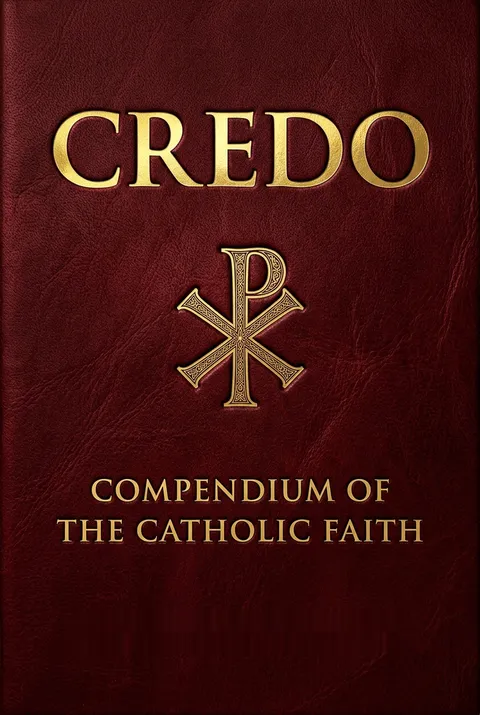
"Credo" receives strong praise from traditionalist Catholics who value its clear, orthodox presentation of Catholic faith, morals, and worship, with many recommending it as an essential home resource. Critics note its rigid, repetitive structure and defensive tone, suggesting it leaves little room for nuanced engagement with contemporary issues. Some readers find its scriptural justifications opinion-based rather than definitive, while others appreciate its grounding in perennial Church teaching. Overall, it resonates most with readers seeking a conservative, traditionally focused compendium of Catholic doctrine.
People Also Read
About the Author
Other books by Athanasius Schneider
Download PDF
Download EPUB
.epub digital book format is ideal for reading ebooks on phones, tablets, and e-readers.








































