
Key Takeaways
1. God Reveals Himself: Scripture as His Authoritative Word
If Scripture is indeed God himself preaching and teaching, as the great body of the church has always held, then the first mark of good theology is that it seeks to echo the divine Word as faithfully as it can.
Divine instruction. Christianity rests on God's self-disclosure, primarily through the sixty-six books of the Bible. These Scriptures are God's own testimony and teaching, authored divinely through human agency, and authenticated by Jesus Christ and the Holy Spirit. They are the ultimate source of truth about God and godliness.
Universal knowledge. God also reveals himself generally through creation, kindly providences, and the human conscience, making his power, praiseworthiness, and moral law evident to all. This universal revelation leaves humanity without excuse for failing to worship and serve the Creator. However, special revelation in Christ, embodied in Scripture, is necessary for salvation.
Spirit's witness. While external arguments for Scripture's divinity are strong, ultimate assurance comes from the Holy Spirit's inward witness. The Spirit illuminates darkened minds, enabling believers to discern and embrace biblical teaching as God's authoritative instruction for faith and life. This makes Scripture the governing authority for all Christians.
2. The Triune God: One Being, Three Persons
The basic assertion of this doctrine is that the unity of the one God is complex.
One God, three persons. The Old Testament insists on one God, while the New Testament reveals three distinct persons—Father, Son, and Holy Spirit—cooperating in salvation. This mystery, the Trinity, affirms that these three are coequal, coeternal centers of self-awareness, each partaking of the full divine essence. They are not three roles or three gods, but one God in complex unity.
Divine attributes. God is self-existent, eternal, and transcendent, not bound by space or time. He is immutable in character, perfectly consistent, and impassible, meaning his emotions are always under his deliberate control. All his thoughts and actions involve the whole of his integrated being.
Holiness and goodness. God's holiness encompasses his transcendent greatness and moral perfection, setting him apart and making him an object of awe. His justice is an expression of this holiness, always doing what is right. His goodness is his glorious kindness, mercy, and faithfulness, supremely expressed in his redemptive love for sinners.
3. God as Creator and Sustainer of All
“In the beginning God created the heavens and the earth” (Gen. 1:1).
Creation by fiat. God created the universe from nothing by his word, involving Father, Son, and Holy Spirit. This act is a mystery, demonstrating his power and wisdom, and establishing space and time as dimensions of the created order, not limits on God himself. All creation depends on his constant upholding.
Providential governance. God's providence is his holy, wise, and powerful preservation and governance of all creatures and their actions. He is completely in charge, directing all things to their appointed end, even overruling human actions for his good purposes without violating free agency. This assures believers that all events are divinely planned for their good.
Miracles and spiritual forces. God's world remains open to his creative power, as seen in miracles—wonders, mighty works, and signs that reveal his presence and power. He also employs supernatural agents: holy angels who serve him and believers, and fallen angels (demons) led by Satan, who oppose God but are ultimately defeated and limited by his sovereignty.
4. Humanity's Fallen State: Image-Bearers in Sin
The Fall diminished God’s image not only in Adam and Eve but in all their descendants, that is, the whole human race.
Created in God's image. Humans were created in God's image, reflecting his personal, rational, creative, and moral qualities, and given dominion over creation. This dignity includes our spiritual self (soul/spirit) and our body, designed for experience and expression. We were made for grateful obedience and highest happiness.
The Fall into sin. The first human couple, Adam and Eve, defied God by eating the forbidden fruit, introducing sin into human nature. Adam, as humanity's representative, involved all his posterity in the consequences: an anti-God mindset, pollution, guilt, and the curse of pain and death. This narrative uniquely explains human perversity.
Original sin and depravity. Sin is a universal deformity, a rebellious energy against God, rooted in pride and enmity. Original sin means sinfulness marks everyone from birth, prior to actual sins, as a twisted heart inherited from Adam. Total depravity signifies that no part of us is untouched by sin, leading to total inability to respond to God without divine grace.
5. Christ's Redemptive Work: Incarnation, Atonement, Resurrection
The Incarnation, this mysterious miracle at the heart of historic Christianity, is central in the New Testament witness.
God became man. The Incarnation declares that the divine Jesus is truly human, one divine-human person in two natures, without mixture or confusion. He experienced human limitations and pain, yet was entirely sinless, fulfilling his Father's redemptive will through humble obedience. His virgin birth underscores his unique entry into humanity.
Atoning sacrifice. Jesus' death on the cross was a perfect, sinless sacrifice, our redemption by ransom, reconciling us to God. He propitiated God's wrath by enduring the curse due to us as our substitute, making amends for our sins. This definite redemption secured salvation for God's elect, ratifying the new covenant.
Victory over death. Jesus' resurrection was a divine act transforming his humanity, enabling him to appear and vanish, and guaranteeing believers' forgiveness and new life. His ascension and session at the Father's right hand establish his personal ascendancy, spiritual omnipresence, and ongoing heavenly ministry as King and High Priest.
6. Salvation by Grace Through Faith: Justification and Adoption
“Salvation comes from the Lord” (Jon. 2:9).
God's rescue. Salvation is God's work of rescuing believers from sin's jeopardy and misery into safety. It is by grace through faith, not by human effort, saving us from God's wrath, sin's dominion, and death's power. This involves Christ dying for us and living in us, uniting us with him.
Divine election. Before creation, God chose those he would redeem, bring to faith, justify, and glorify in Christ. This unconditional choice is an expression of free, sovereign grace, bringing humility, confidence, and joy to believers. Election is known by its fruits: faith, hope, and love transforming lives.
Effectual calling. God effectually calls the elect out of spiritual death to grace and salvation through his Word and Spirit. This monergistic work of regeneration enlightens minds, renews wills, and draws sinners to Christ, enabling them to respond freely in faith and repentance.
7. The Transformed Life: Sanctification, Love, and Good Works
You see that a person is justified by what he does and not by faith alone.
New life in Christ. Justifying faith is never alone; it produces good works—activities of serving God and others, done from love and for God's glory. Repentance, a radical change of mind and life, is inseparable from faith, turning from sin to God and his commandments.
Growing in grace. Sanctification is God's ongoing work of renewing believers in his image, enabling them to die to sin and live to righteousness. It is a character change, freeing from sinful habits and forming Christlike virtues through the Holy Spirit's indwelling power. This is a cooperative process of God-dependent effort.
Freedom and purpose. Salvation brings freedom from the law as a system of salvation, from sin's domination, and from superstition. Christians are liberated to live for God, pleasing him in all things, expressing grateful love through obedience, and pursuing holiness as their deepest desire. Legalism, seeking to earn God's favor, and antinomianism, disregarding God's law, both distort this freedom.
8. The Church and Kingdom: God's People in the World
The church (Greek: ecclesia, meaning “assembly”) exists in, through, and because of Jesus Christ.
God's new community. The church is a distinctive New Testament reality, a continuation of Israel, God's covenant people, redefined in Christ. It is the family and flock of God, the body and bride of Christ, and the temple of the Holy Spirit, comprising believers from all nations.
Kingdom manifestation. The kingdom of God, God's rule over people's lives, came with Jesus the Messiah. It is a present spiritual reality, growing wherever Christ's lordship is acknowledged, and will be fully realized in a reconstructed universe. The church's task is to make this invisible kingdom visible through faithful living and witness.
Ordinances and mission. A genuine church is identified by the faithful preaching of God's Word and the right use of the two sacraments: baptism (signifying union with Christ and new life) and the Lord's Supper (remembering Christ's death and celebrating new covenant communion). The church is sent into the world to make disciples, plant churches, and practice deeds of mercy, equipped by the Holy Spirit with spiritual gifts for service.
9. Future Hope: Christ's Return and Eternal Glory
For to me, to live is Christ and to die is gain.
Preservation to the end. God preserves his people, ensuring they persevere in faith and obedience to the end. This eternal security is guaranteed by Christ's promise and intercession, and God's sovereign plan. While believers may backslide, they will ultimately be restored, demonstrating their regenerate nature.
Death and intermediate state. Physical death, a consequence of sin, is abolished as a terror for Christians. At death, believers' souls are perfected in holiness and enter conscious worship in heaven, a state of glory. This intermediate state is better than earthly life, but not the ultimate hope.
Christ's glorious return. Jesus Christ will return personally, physically, visibly, and triumphantly to end history, raise the dead, judge the world, and impart final glory to his children. This general resurrection will bring glorious re-embodiment for believers and sentencing for the lost. The time is unknown, urging constant preparedness and faithful service.
Review Summary
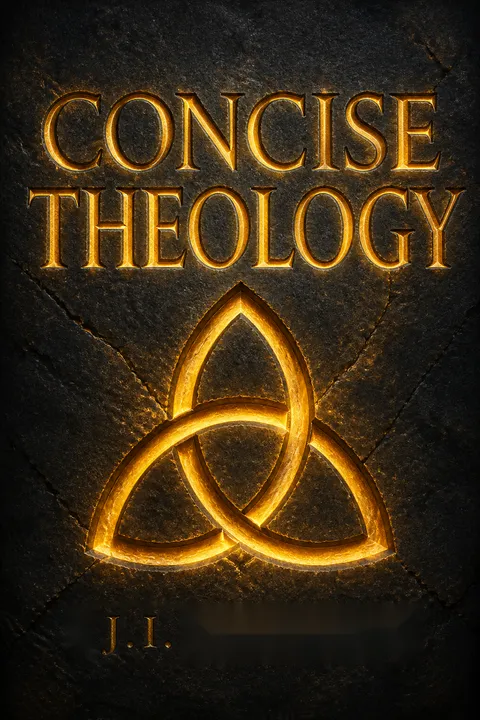
Concise Theology receives overwhelmingly positive reviews (4.34/5 stars) for successfully delivering on its promise of brevity without sacrificing depth. Readers appreciate Packer's ability to condense complex theological concepts into 2-4 page chapters packed with Scripture references. The book covers 94 topics from a Reformed perspective, making it ideal as both a reference guide and devotional resource. Reviewers consistently praise its accessibility for laypeople while maintaining theological rigor, noting it's more manageable than lengthy systematic theologies like Grudem's. Most recommend reading it slowly with an open Bible nearby.
People Also Read


About the Author
Other books by J.I. Packer
Download PDF
Download EPUB
.epub digital book format is ideal for reading ebooks on phones, tablets, and e-readers.








































