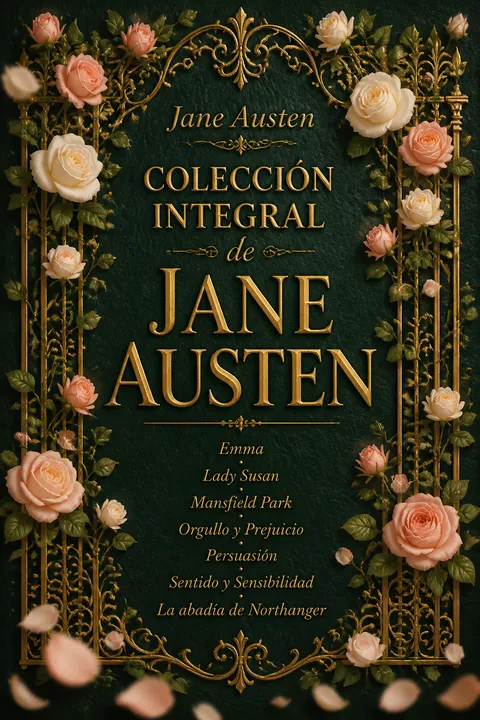

Summary Unavailable
This book is not suitable for a summary (it may be a textbook, workbook, cookbook, reference book, or collection). However, you can still explore the FAQs, about author, and other metadata below!
Resumen de la trama
1. Inheritance and Intrigue Begin
The world of Jane Austen opens with families of the English gentry, their fortunes, and their ambitions. The Dashwoods, Bennets, Elliots, and Bertrams all face the pressures of inheritance, marriage, and social standing. The loss of a patriarch or the entailment of an estate sets off a chain of events, as daughters and widows must navigate a society that values wealth, connections, and reputation above all. The arrival of new neighbors, the return of long-absent relatives, and the introduction of eligible bachelors and scheming women set the stage for a series of entanglements, misunderstandings, and rivalries that will test the characters' values and hearts.
2. The Art of Persuasion
In this world, advice is both a blessing and a curse. Well-meaning friends and relatives—Lady Russell, Mrs. Allen, Lady Susan—offer guidance that can shape or shatter lives. Young women like Anne Elliot and Catherine Morland are persuaded to accept or reject suitors, often against their own inclinations. The art of persuasion is wielded by the wise and the cunning alike, and the consequences of yielding to or resisting such influence ripple through families and friendships. The tension between duty and desire, between prudence and passion, becomes a central struggle for many.
3. Pride, Prejudice, and Proposals
Balls, assemblies, and country walks provide the backdrop for first meetings and first impressions. Elizabeth Bennet and Mr. Darcy, Emma Woodhouse and Mr. Knightley, Elinor and Marianne Dashwood, and Fanny Price and Edmund Bertram all encounter misunderstandings, pride, and prejudice. Social blunders, hasty judgments, and the interference of others—be it the scheming Lady Susan or the meddling Mrs. Norris—complicate budding romances. The characters must learn to see beyond appearances and to question their own assumptions.
4. Sense, Sensibility, and Scandal
The contrast between sense and sensibility, between reason and emotion, is played out in the lives of the Dashwood sisters and others. Marianne's passionate attachment and Elinor's quiet suffering highlight the dangers of both extremes. Scandals—real and imagined—threaten reputations: secret engagements, elopements, and flirtations become the talk of the town. The threat of disgrace looms over families, and the consequences of a single misstep can be dire, especially for women.
5. The Perils of Persuasion
Anne Elliot's story exemplifies the pain of persuasion and the cost of lost love. Yielding to Lady Russell's advice, she breaks off her engagement to Captain Wentworth, only to regret it for years. Across Austen's novels, characters are separated by misunderstandings, pride, or circumstance. Yet time, reflection, and the trials of life offer the possibility of second chances. The return of old lovers, the reformation of the proud, and the endurance of true affection provide hope for reconciliation and happiness.
6. Secrets, Letters, and Lies
Letters play a crucial role in Austen's world, revealing secrets, exposing lies, and clarifying intentions. The truth about Mr. Wickham, the duplicity of Willoughby, the schemes of Lady Susan, and the hidden feelings of Darcy and Wentworth all come to light through written words. Confessions—whether in person or on paper—force characters to confront their own failings and the reality of those around them. The power of communication, and the danger of miscommunication, is ever-present.
7. The Power of First Impressions
As the stories unfold, characters are forced to reconsider their first impressions and to recognize their own errors. Elizabeth Bennet's realization of her misjudgment of Darcy, Emma's awakening to her own blindness, and Anne's understanding of her own constancy all mark turning points. Humility, self-knowledge, and the willingness to change become the keys to personal growth and future happiness.
8. The Cost of Reputation
The threat of social ruin hangs over many: Lydia Bennet's elopement, Maria Bertram's disgrace, Lady Susan's manipulations, and the rumors that swirl around Bath and London. The cost of a damaged reputation is high, especially for women, and forgiveness is hard-won. Yet, through the intervention of friends, the generosity of lovers, and the passage of time, some are able to restore their good name and find acceptance.
9. Love, Loss, and Longing
Unrequited love, lost opportunities, and the longing for what might have been haunt many of Austen's heroines and heroes. Anne Elliot's silent suffering, Fanny Price's steadfast devotion, Elinor Dashwood's quiet endurance, and Catherine Morland's romantic dreams all speak to the pain of loving in vain. Yet, through patience, resilience, and the support of true friends, hope endures, and love may yet be rewarded.
10. The Triumph of Constancy
Constancy and faithfulness are ultimately rewarded. The steadfastness of Anne Elliot, the integrity of Darcy, the loyalty of Fanny Price, and the patience of Elinor Dashwood all lead to reunion and happiness. The return of lost lovers, the overcoming of obstacles, and the recognition of true worth bring about the long-awaited unions. The triumph of constancy over time, distance, and adversity is celebrated.
11. The Return of Happiness
With misunderstandings cleared and obstacles overcome, the stories move toward reconciliation and marriage. Families are reunited, old wounds are healed, and new beginnings are celebrated. The marriages of Anne and Wentworth, Elizabeth and Darcy, Emma and Knightley, and others mark the restoration of happiness and the promise of a brighter future.
12. The Wisdom of the Heart
The characters emerge from their trials wiser and more mature. They have learned the value of humility, the importance of self-knowledge, and the necessity of balancing sense and sensibility. The wisdom of the heart—tempered by experience and reflection—guides them toward better choices and deeper happiness.
13. The Enduring Power of Love
Love, in all its forms—romantic, familial, and platonic—proves to be the most enduring and transformative force. It survives misunderstanding, separation, and even scandal. The power of love to redeem, to heal, and to inspire change is at the heart of every story, and its triumph is the ultimate reward for those who remain true to themselves and to each other.
14. The Price of Self-Deceit
Vanity, pride, and self-deceit are exposed as the root of much suffering. Sir Walter Elliot's obsession with status, Lady Susan's manipulations, and Emma's self-importance all lead to pain and regret. Only by confronting their own flaws and embracing humility can the characters find peace and happiness.
15. The Restoration of Order
Order is restored as justice is done, forgiveness is granted, and social harmony is reestablished. The guilty are punished or reformed, the innocent are vindicated, and the deserving are rewarded. The balance of society is maintained, and the values of integrity, kindness, and constancy are upheld.
16. The Lessons of Experience
In the end, the lessons of experience are clear. The characters have grown through adversity, learned from their mistakes, and are better prepared for the future. The promise of continued happiness, grounded in self-knowledge and true affection, is the final gift of Austen's world—a world where wit, wisdom, and the heart's deepest desires are in perfect harmony.
Analysis
Jane Austen's complete novels endure because they offer a masterful blend of wit, irony, and psychological insight, set within the constraints and conventions of Regency England. Her stories are at once deeply personal and broadly social, exploring the tensions between individual desire and social expectation, between the heart and the head. Through her heroines—Anne, Elizabeth, Elinor, Marianne, Emma, Fanny, and even Lady Susan—Austen examines the challenges faced by women in a patriarchal society, the dangers of persuasion and self-deceit, and the redemptive power of love and self-knowledge.
Austen's lessons are as relevant today as they were two centuries ago: humility, integrity, and constancy are the foundations of happiness; pride, vanity, and self-delusion are the sources of suffering. Her novels critique the limitations placed on women, the absurdities of class and status, and the perils of judging by first impressions. Yet, they also celebrate the joys of friendship, the pleasures of conversation, and the possibility of personal growth.
In a modern context, Austen's work invites us to reflect on our own values, relationships, and choices. Her characters' journeys from ignorance to understanding, from isolation to connection, mirror our own struggles to find meaning and fulfillment. The enduring power of love, the necessity of self-knowledge, and the wisdom gained through experience are the gifts Austen offers her readers—a legacy as vital and transformative now as it was in her own time.
Última actualización:
Report IssueResumen de reseñas
Pride and Prejudice is often cited as readers' favorite, with Persuasion and Emma also popular. Many praise Austen's wit, social commentary, and character development. Some find the romance plots predictable but appreciate the historical context and dialogue. Lady Susan stands out as uniquely epistolary and darkly humorous. Readers note Austen's growth as a writer across her works. While some struggle with the language or pacing, most find enduring value in Austen's novels, rereading them at different life stages for new insights.

Characters
Anne Elliot
Anne Elliot is the embodiment of constancy, patience, and quiet intelligence. Overlooked by her vain father and self-important sister, Anne's true worth is revealed through her steadfast love for Captain Wentworth and her ability to endure disappointment with grace. Her journey from regret and self-doubt to self-assertion and happiness is a testament to the power of reflection, humility, and hope. Anne's relationships—with Lady Russell, her family, and her friends—highlight the tension between duty and desire, and her ultimate reward is the result of her unwavering integrity and the wisdom gained through experience.
Elizabeth Bennet
Elizabeth Bennet is celebrated for her lively wit, independent spirit, and keen sense of irony. Her initial misjudgments—of Darcy, of Wickham, and of herself—lead her on a journey of self-discovery and humility. Elizabeth's courage to speak her mind, her loyalty to her family, and her ability to laugh at herself make her one of Austen's most beloved heroines. Her romance with Darcy is a dance of pride and prejudice, ultimately resolved through mutual understanding and growth.
Elinor Dashwood
Elinor Dashwood represents sense, self-command, and emotional resilience. She bears the burdens of her family's reduced circumstances and her own unrequited love for Edward Ferrars with dignity and strength. Elinor's ability to balance reason and feeling, to support her impulsive sister Marianne, and to act with kindness and discretion, marks her as a model of maturity and wisdom.
Marianne Dashwood
Marianne Dashwood is the embodiment of sensibility—romantic, impulsive, and deeply feeling. Her passionate attachment to Willoughby and her subsequent heartbreak illustrate the dangers of unchecked emotion and the necessity of self-control. Marianne's journey from youthful excess to mature understanding is both painful and redemptive, and her eventual happiness is hard-won.
Emma Woodhouse
Emma Woodhouse is clever, rich, and confident—too confident in her own judgment and abilities as a matchmaker. Her meddling in the lives of others, her blindness to her own heart, and her gradual awakening to humility and self-knowledge form the core of her story. Emma's relationship with Mr. Knightley, her growth through error, and her eventual embrace of true love and friendship make her transformation one of Austen's most satisfying.
Fanny Price
Fanny Price is gentle, timid, and often overlooked, but her moral strength and steadfastness are unshakable. Raised in the shadow of her wealthier cousins at Mansfield Park, Fanny endures neglect and criticism with quiet fortitude. Her unwavering principles, her loyalty to Edmund Bertram, and her resistance to the temptations of wealth and status mark her as a heroine of rare integrity and depth.
Lady Susan Vernon
Lady Susan is Austen's most accomplished coquette—a woman of wit, beauty, and dangerous charm. Her manipulations, her disregard for the feelings of others, and her pursuit of self-interest at any cost make her both fascinating and formidable. Lady Susan's ability to deceive, to seduce, and to survive in a world that judges women harshly is both a critique and a celebration of female agency.
Captain Frederick Wentworth
Captain Wentworth is a self-made man, proud, ambitious, and deeply feeling. His early disappointment in love, his rise through the navy, and his eventual return to Anne Elliot's side showcase his resilience and constancy. Wentworth's struggle to forgive, to hope, and to trust again is at the heart of his character, and his ultimate happiness is a reward for his steadfastness and growth.
Mr. Fitzwilliam Darcy
Mr. Darcy is proud, reserved, and initially misunderstood. His journey from arrogance to humility, from self-absorption to self-awareness, is mirrored in his relationship with Elizabeth Bennet. Darcy's willingness to change, to act with generosity, and to value character over status make him the ideal romantic hero.
Mrs. Vernon
Mrs. Vernon is the voice of reason and kindness in Lady Susan's world. Her practical wisdom, her concern for her family, and her ability to see through Lady Susan's manipulations make her a steadying presence. Mrs. Vernon's loyalty, her sense of justice, and her quiet strength are essential to the restoration of order and happiness.
Plot Devices
Letters and Miscommunication
Letters are a central device in Austen's novels, serving as vehicles for confession, revelation, and misunderstanding. The written word exposes secrets, clarifies intentions, and sometimes deepens confusion. Miscommunication—whether through letters, gossip, or overheard conversations—drives much of the plot, creating obstacles and opportunities for the characters. The tension between what is said and what is meant, between appearance and reality, is a constant source of drama and irony.
Social Satire and Irony
Austen's narrative structure is built on social satire and irony. The omniscient, often ironic narrator comments on the follies, vanities, and pretensions of the gentry, exposing the absurdities of class, gender, and reputation. Foreshadowing, dramatic irony, and the subversion of expectations keep the reader engaged and the characters on their toes.
Courtship and Marriage Plots
The marriage plot is the engine of Austen's fiction. Courtship, proposals, and the obstacles to union—be they pride, prejudice, persuasion, or poverty—provide the framework for character development and social commentary. The resolution of these plots, through reconciliation, forgiveness, and self-knowledge, affirms the values of love, integrity, and mutual respect.
The Power of Persuasion
Persuasion—both as a theme and a device—shapes the destinies of Austen's characters. The influence of friends, family, and society can lead to happiness or regret, depending on the wisdom and strength of the individual. The struggle to balance duty and desire, to assert one's own judgment in the face of pressure, is a recurring motif.
The Restoration of Order
Austen's novels move from disorder—caused by pride, deceit, or misunderstanding—to the restoration of order through justice, forgiveness, and the recognition of true worth. The guilty are punished or reformed, the innocent are vindicated, and social harmony is reestablished. The narrative structure ensures that virtue is rewarded and vice exposed.
Sobre el autor
Jane Austen was an English novelist known for six major works exploring marriage, social status, and women's economic dependence in early 19th century England. Her novels critique sensibility literature while transitioning to realism, earning acclaim for social commentary and irony. Published anonymously during her lifetime, Austen's works gained wider recognition after her death, especially following an 1833 republication and her nephew's 1869 memoir. Her novels have rarely been out of print since, inspiring critical essays, literary anthologies, and numerous film adaptations. Austen's enduring popularity stems from her astute observations of human nature and society, delivered with wit and narrative skill.
Descargar PDF
Descargar EPUB
.epub digital book format is ideal for reading ebooks on phones, tablets, and e-readers.








































