
Plot Summary
Exile Beyond Agora's Walls
Lily and Mark, cast out from the city of Agora, find themselves in a world that is both terrifying and awe-inspiring. The city's walls, once the limits of their universe, are now behind them, and the vastness of the mountains and forests ahead is overwhelming. Their relationship is strained by secrets and regrets—Lily's hope to find her parents and Mark's longing for the home he's lost. The silence of the wild is a stark contrast to Agora's constant noise, and the two must rely on each other for survival, even as trust between them falters. The emotional weight of exile, the uncertainty of their purpose, and the pain of leaving everything familiar behind set the tone for their journey into the unknown.
Fractures in the Forest
As Lily and Mark attempt to navigate the forest, their internal rifts mirror the dangers lurking in the wild. Mark's anger and sense of betrayal boil over, leading him to run off alone, only to be confronted by the perils of the night and the predatory creatures that inhabit the woods. When Lily is attacked, a mysterious stranger intervenes, saving her life but leaving more questions than answers. The trauma of the attack and the near loss force the two to confront their dependence on each other, but the wounds—both physical and emotional—run deep. The forest becomes a crucible, testing their resilience and the fragile bond that holds them together.
The Secret of the Last
Back in Agora, secrets swirl among those left behind. Verity, the Director's secretary, is haunted by memories and clandestine meetings, hinting at a deeper web of intrigue. The story of the Last—an ancestor who knew the city's true origins—emerges, suggesting that the foundations of Agora and the surrounding lands are built on deliberate forgetting and loss. The past is not dead; it is a force that shapes the present, and the characters' fates are entwined with mysteries that reach back to the city's founding. The theme of memory—what is kept, what is traded, and what is lost—echoes through every action.
Nightmares and New Villages
Rescued by villagers from the land of Giseth, Lily and Mark are brought to Aecer, a place that seems at first a utopia of equality and kindness. Here, possessions are unknown, and the community cares for its own. Yet beneath the surface, rituals and conformity suppress individuality, and the threat of the Nightmare—a mysterious force that preys on suppressed desires—haunts the people. Lily is both comforted and unsettled by the villagers' selflessness, while Mark chafes at the loss of autonomy. The village is a mirror to Agora, offering a different kind of captivity, and the seeds of rebellion are sown.
The Gift of Sanctuary
As Lily recovers from her wounds, she is cared for by Freya and the enigmatic Father Wolfram, whose vow of silence and healing skills inspire both trust and wariness. The villagers' generosity is genuine, but their refusal to ask for anything in return is alien to the Agoran mindset. Lily is drawn to the idea of a community built on mutual aid, but Mark remains skeptical, seeing hidden costs and dangers. The contrast between Agora's transactional world and Giseth's communal ethos becomes a source of tension, and the question of what it means to belong is ever-present.
Rituals and Rebellion
The rituals that bind Aecer together—daily prayers, communal work, and the suppression of individual desires—begin to show their cracks. The arrival of spring brings festivals and celebrations, but also jealousy, heartbreak, and the first signs of dissent. When forbidden love between villagers is discovered, the community's unity shatters, and the Nightmare's influence grows stronger. Lily and Mark, outsiders who cannot fully conform, become both witnesses and catalysts to the village's unraveling. The cost of enforced harmony is revealed, and the dangers of collective rage are unleashed.
The Nightmare's True Face
The Nightmare, once thought to be a supernatural curse, is revealed as the product of suppressed emotion and communal denial. When the villagers' anger erupts, it is not just the outsiders who suffer, but the entire community. The violence that follows is both cathartic and devastating, leaving the village in ruins and the survivors traumatized. Lily's attempt to intervene only redirects the mob's fury, and the lesson is clear: true harmony cannot be imposed by force. The aftermath is a landscape of loss, and the journey must continue.
The Wheel of Change
Back in Agora, the city is in turmoil. Crede, a charismatic agitator, stirs the masses with promises of change and justice, while the old order clings to power through manipulation and violence. The Almshouse, once a beacon of hope, is caught between competing visions of charity and control. The city's elite, the receivers, and the common people are all swept up in a tide of unrest, and the boundaries between right and wrong blur. The struggle for a better world is fraught with compromise, betrayal, and the ever-present risk of becoming what one opposes.
The Marshes and the Madness
Lily's quest to find Mark and the truth about her origins leads her into the treacherous marshes beyond Giseth. Accompanied by Wulfric, a former monk haunted by his own demons, she faces not only physical dangers but the psychological assault of the Nightmare, which is strongest here. The journey is a test of endurance and will, as the landscape itself seems to conspire against her. The line between reality and hallucination blurs, and the cost of seeking the truth becomes ever more apparent.
The Cathedral of the Lost
At last, Lily reaches the Cathedral of the Lost, a place of breathtaking beauty and profound melancholy. Here, the monks guard the secrets of the past, and the Bishop—long dead—sits in silent judgment. The Cathedral is both a tomb and a library, a monument to all that has been forgotten or deliberately hidden. Lily's reunion with her dying father is bittersweet, offering answers that only deepen the mystery. The truth, it seems, is as much a burden as a liberation.
The Truth Below the Seal
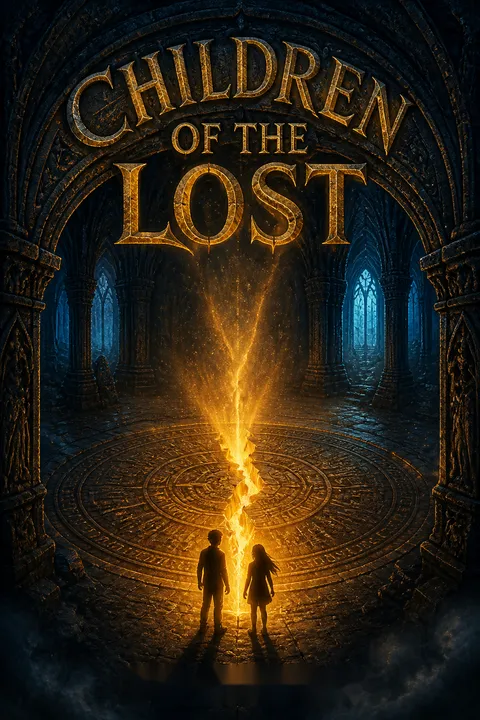
In the crypts beneath the Cathedral, Lily discovers the Great Seal—a tomb that holds the final secret of Agora and Giseth. Her father's letter reveals that the city's history is a lie, its people the children of the lost, cut off from the world beyond. The seal is both a literal and symbolic barrier, and breaking it is an act of defiance against centuries of enforced ignorance. The truth is dangerous, and the choice to pursue it is both an act of courage and a leap into the unknown.
The Children of the Lost
Lily's journey is not just a search for her father, but for herself and her place in a world built on loss. The revelation that everyone in Agora and Giseth is a child of the lost—descended from those who fled a vanished world—reshapes her understanding of home, family, and destiny. The struggle to reclaim agency, to choose one's own path in the face of overwhelming history, becomes the central challenge. The past cannot be undone, but it can be confronted.
The Power of Stories
Throughout the tale, the power of stories—those told, those hidden, those believed—emerges as the true engine of change. The Midnight Charter, the legends of the Judges, the lies of the Libran Society, and the personal myths each character tells themselves all shape the world as much as any law or ritual. The struggle for control is a struggle over narrative, and the ability to rewrite the story is the ultimate form of power. In the end, it is not prophecy but choice that determines the future.
Judgement Approaches
As the Day of Judgement nears, the forces that have shaped Agora and Giseth converge. The Director's machinations, Snutworth's ambition, and the hopes of the common people all come to a head. Lily and Mark, the Protagonist and Antagonist, are not just witnesses but participants in the city's reckoning. The question of what kind of world will emerge from the ruins is left open, and the responsibility for that future rests with those who dare to choose.
Breaking the Chains
Lily's decision to break the seal and descend into the darkness is an act of rebellion against all that has kept her and her people captive. The journey is perilous, and the outcome uncertain, but it is a refusal to accept the limits imposed by others. The act of breaking the chains—literal and metaphorical—is both a liberation and a risk, and the consequences will echo through the lives of all the children of the lost.
Reunion and Revelation
In the aftermath of loss and revelation, Lily finds a measure of peace in forgiving her father and accepting the complexity of her own story. Mark, too, is reunited with those he loves, and together they face the future with renewed purpose. The journey has changed them, and the world they return to is not the one they left. The possibility of new beginnings, built on truth rather than illusion, is both daunting and hopeful.
The Descent into Darkness
Lily's final descent into the darkness beneath the Cathedral is a metaphor for the willingness to confront the unknown, to seek truth even when it is painful or dangerous. The echoes of the past, the voices of the lost, and the promise of light ahead drive her onward. The journey is not just personal, but collective—a step towards breaking the cycle of loss and forging a new story for all who have been kept in the dark.
The Light and the Choice
As Mark emerges into the light of reunion and Lily steps into the darkness of discovery, the story ends on the cusp of transformation. The light is not just illumination, but the possibility of change, of a world remade by those who dare to seek and to choose. The children of the lost are no longer passive victims of history, but agents of their own fate. The future is uncertain, but it is theirs to write.
Analysis
Children of the Lost is a profound meditation on the nature of memory, identity, and the stories we tell to make sense of our world. At its heart, the novel is about the costs and possibilities of loss—personal, communal, and historical. Through the journeys of Lily and Mark, the book explores the dangers of both forgetting and remembering, the perils of enforced harmony and unchecked rebellion, and the necessity of confronting the shadows within and without. The Nightmare, as a manifestation of collective repression, is a powerful metaphor for the consequences of denying pain and difference. The book's structure, built on dualities and mirrored journeys, invites readers to question the boundaries between self and other, past and present, fate and choice. Ultimately, the lesson is that true freedom comes not from the absence of loss, but from the courage to face it, to seek the truth even when it is painful, and to claim the power to write one's own story. The children of the lost are not doomed to wander forever; they are the authors of the future, and the light they seek is the one they kindle themselves.
Characters
Lily d'Annain
Lily is the heart of the story—a girl driven by a longing for truth, belonging, and justice. Her journey from exile to self-discovery is marked by courage, compassion, and a refusal to accept easy answers. She is haunted by loss—of her parents, her home, her illusions—but transforms that pain into determination. Her relationships, especially with Mark, are complex, blending friendship, rivalry, and deep mutual reliance. Psychologically, Lily is both idealistic and pragmatic, able to adapt to new realities without losing her core values. Her greatest strength is her willingness to question, to challenge authority, and to risk everything for the possibility of a better world. Her arc is one of growth from a child shaped by others' stories to a young woman who claims the power to write her own.
Mark
Mark is Lily's counterpart and foil—the Antagonist to her Protagonist, but also her closest ally. Mark's journey is one of loss and adaptation: from privileged Agoran to exile, from cynic to reluctant hero. He is fiercely loyal, quick-witted, and resourceful, but struggles with anger, resentment, and a deep-seated fear of abandonment. His skepticism protects him but also isolates him, and his arc is about learning to trust, to forgive, and to find meaning beyond self-preservation. Mark's psychological complexity lies in his oscillation between vulnerability and bravado, and his ultimate willingness to risk himself for others. His relationship with Lily is the emotional core of the narrative, a partnership forged in adversity and mutual respect.
Father Wolfram
Father Wolfram is the embodiment of the Order's ideals—discipline, tradition, and the suppression of individual desire for the sake of communal harmony. His vow of silence and healing skills make him both a figure of awe and fear. Beneath his stoic exterior lies a man haunted by guilt, loss, and the betrayal of his brother, Wulfric. Wolfram's psychological rigidity is both his strength and his downfall; he cannot adapt to change, and his attempts to enforce order ultimately lead to violence and tragedy. His arc is one of tragic inevitability, a warning against the dangers of unyielding authority.
Wulfric
Wulfric is Wolfram's shadow—driven by resentment, pain, and a desperate need for agency. His exile from the Order and life in the wild have made him both dangerous and pitiable. Wulfric's relationship with violence, especially his use of the flintlocks, is a metaphor for the destructive potential of suppressed rage. Psychologically, he is a man at war with himself, torn between longing for acceptance and the compulsion to destroy. His interactions with Lily and Mark are fraught with tension, and his ultimate fate is a testament to the costs of unresolved trauma.
Verity
Verity is a figure of quiet strength and sorrow, burdened by the secrets she keeps for the Director and her own family. Her love for Lily is both protective and complicit, as she enables the systems that keep the truth hidden. Psychologically, Verity is torn between duty and conscience, and her arc is one of gradual awakening to the costs of silence. Her role as a surrogate mother to Lily is both a comfort and a source of guilt, as she cannot shield her from the world's pain.
The Director
The Director is the unseen hand behind much of the story's conflict—a man who believes in the necessity of control, secrecy, and sacrifice for the greater good. His psychological profile is that of a classic Machiavellian: calculating, detached, and convinced of his own righteousness. He is both a father figure and a tyrant, shaping the destinies of others while remaining emotionally distant. His downfall is a result of his inability to adapt, to recognize the limits of power, and to see the humanity in those he seeks to rule.
Snutworth
Snutworth is a study in emptiness—a man who rises from servitude to power by mimicking the desires and fears of those around him. He is a master of appearances, but beneath the surface is a void, a lack of true self. Psychologically, Snutworth is a mirror, reflecting the ambitions and anxieties of others, but never forming his own identity. His relationship with Cherubina is one of possession rather than love, and his ultimate fate is a warning against the dangers of ambition without purpose.
Cherubina (Mrs. Snutworth)
Cherubina is a tragic figure, trapped in a marriage that erases her identity and agency. Her psychological journey is one of gradual reclamation—of her name, her desires, and her right to choose. She is both victim and agent, and her reunion with Mark is a moment of bittersweet liberation. Her arc is about the struggle to become real in a world that treats her as a doll, and her ultimate escape is a testament to the power of memory and self-assertion.
Crede
Crede is the embodiment of revolutionary energy—able to channel the frustrations of the masses into action, but also prone to the same abuses of power he opposes. Psychologically, he is driven by a need for recognition and a belief in the transformative power of vision, but lacks the self-awareness to avoid becoming what he fights. His arc is a cautionary tale about the dangers of unchecked charisma and the seductions of violence.
The Nightmare
The Nightmare is not a character in the traditional sense, but a force that shapes the lives of all the others. It is the product of suppressed emotion, communal denial, and the refusal to confront pain. Psychologically, it is the shadow of the collective unconscious, a reminder that what is denied will return with a vengeance. Its power lies in its ability to exploit weakness, but it can also be confronted and transformed by those who dare to face it.
Plot Devices
Duality and Mirroring
The narrative structure of Children of the Lost is built on dualities: city and village, memory and forgetting, self and community, order and chaos. Lily and Mark's journeys mirror each other, as do the societies of Agora and Giseth. The use of parallel plotlines—one in the wild, one in the city—allows for a rich exploration of how different systems respond to the same fundamental human needs. The mirroring extends to the psychological, as characters confront their own shadows and the parts of themselves they would rather deny.
The Power of Memory and Story
Memory is both a literal and metaphorical currency in the world of Agora, traded and hoarded, lost and found. The plot is driven by the search for lost memories—personal, familial, and collective—and the struggle to reclaim agency over one's own story. The Midnight Charter, the legends of the Judges, and the personal myths each character tells themselves are all plot devices that shape reality as much as any action. The act of storytelling is both a means of survival and a tool of control.
The Nightmare as Psychological and Social Force
The Nightmare is a plot device that externalizes the consequences of repression—both individual and communal. It is a force that punishes the denial of emotion, the suppression of desire, and the refusal to confront pain. Its presence is foreshadowed by the rituals and silences of Giseth, and its eruption is a moment of catharsis that brings both destruction and the possibility of renewal. The Nightmare is both a monster and a mirror, reflecting the costs of enforced harmony.
Foreshadowing and Prophecy
The narrative is structured around prophecies and foreshadowing—the Midnight Charter, the roles of Protagonist and Antagonist, the coming Day of Judgement. These devices create a sense of inevitability, but the story ultimately subverts them by emphasizing choice and agency. The prophecies are both a guide and a trap, and the characters' struggle to interpret and transcend them is central to the plot.
The Descent Motif
The motif of descent—into the forest, the marshes, the crypts beneath the Cathedral—serves as both a literal and symbolic journey into the unknown. Each descent is a confrontation with the past, with loss, and with the possibility of transformation. The structure of the plot, moving from exile to revelation, is mirrored in the physical movement downward, culminating in the final step into darkness in search of the light.
Download PDF
Download EPUB
.epub digital book format is ideal for reading ebooks on phones, tablets, and e-readers.








































