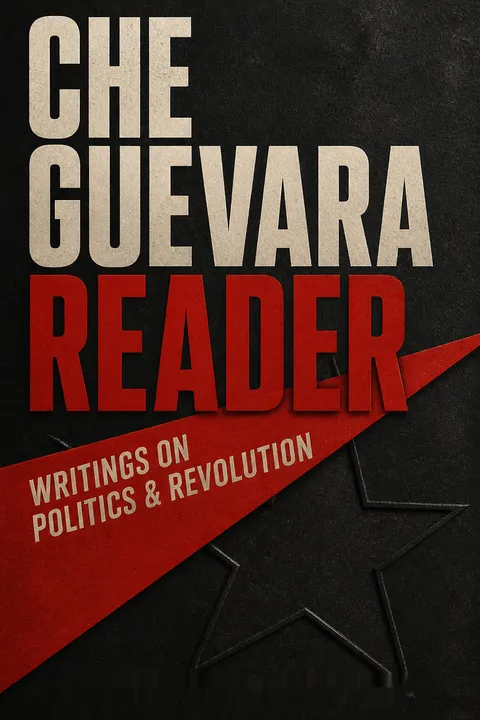

Key Takeaways
1. The Genesis of the Cuban Revolution: From Defeat to Guerrilla Triumph
History showed us it was far more difficult to overthrow a government backed and partnered by an army of murderers, and backed by the greatest colonial power on earth.
Early struggles. The Cuban Revolution, ignited by the 1953 Moncada Barracks attack, faced immediate setbacks, including the near-annihilation of the Granma expeditionaries at Alegría de Pío in 1956. This initial defeat, however, served as a crucible, forging a hardened core of revolutionaries who learned crucial lessons about the nature of their struggle. It underscored the formidable power of the Batista dictatorship, which was deeply entrenched and supported by U.S. imperialism.
Learning from experience. The survivors, including Che Guevara and Fidel Castro, regrouped in the Sierra Maestra mountains, transforming from urban-centric idealists into a peasant-based guerrilla force. This period was marked by a profound shift in understanding:
- The need for a long, sustained struggle, not a spontaneous uprising.
- The indispensable role of peasant support, gained through respect and addressing their yearning for land.
- The realization that the enemy's brutality against civilians would drive more people to the rebel cause.
Turning the tide. Victories like the battle of La Plata in 1957, though small, were electrifying, proving the Rebel Army's existence and capacity to fight. This qualitative change in the Sierra Maestra led to the establishment of liberated territories, the expansion of guerrilla columns, and the eventual defeat of Batista's large-scale offensive in 1958. The revolution's triumph on January 1, 1959, was a testament to the resilience and adaptability of a people determined to be free.
2. Guerrilla Warfare: A Scientific Method for Popular Liberation
Popular forces can win a war against the army.
Challenging old dogmas. The Cuban Revolution fundamentally altered traditional views on revolutionary movements, particularly in Latin America. It demonstrated that a professional army, even one backed by a global power, could be defeated by popular forces employing guerrilla tactics. This challenged the passive stance of many revolutionaries who believed such a feat impossible.
Key contributions: Che identified three core lessons from Cuba's experience:
- Popular victory: Ordinary people can defeat a professional army.
- Conditions can be created: Revolution doesn't require all conditions to be perfectly ripe; an insurrectional core can generate them.
- Rural focus: In underdeveloped Latin America, the countryside is the primary arena for armed struggle, leveraging peasant support and the army's weakness in dispersed terrain.
Essence of the struggle. Guerrilla warfare, for Che, was a mass struggle, with the armed nucleus acting as the vanguard. Its success hinged on absolute popular support, distinguishing it from mere banditry. The guerrilla fighter is fundamentally an agrarian revolutionary, interpreting the peasants' desire for land ownership. This method, characterized by "hit and run," ambush, and constant mobility, vigilance, and distrust, aims not just to harass but to annihilate the enemy, eventually evolving into a regular army capable of decisive blows.
3. Political Sovereignty Demands Economic Independence
All these concepts of political sovereignty, of national sovereignty, are fictitious if there is no economic independence to go along with them.
Beyond formal independence. Che argued that true political sovereignty, the right of a nation to self-determination without external interference, is meaningless without economic independence. Many Latin American nations, though formally independent, remained economic colonies, their destinies dictated by foreign monopolies. The Cuban Revolution, having achieved political power, immediately embarked on the more profound struggle for economic liberation.
Confronting monopolies. The revolution's strategic objective shifted from overthrowing Batista to dismantling the economic structures that perpetuated Cuba's dependence. This meant directly challenging U.S. monopolies that controlled key sectors like sugar, oil, and mining. Measures included:
- Agrarian reform, breaking up large landholdings.
- Nationalization of basic industries and foreign trade.
- Diversification of trade partners, notably with the Soviet Union and socialist countries.
A new model. Cuba's trade agreements, like the one with the Soviet Union for sugar and oil, demonstrated that a small nation could assert its economic will, securing fair prices and credit terms previously unimaginable under imperialist domination. This "bad example," as Che called it, showed that economic liberation was not only possible but essential for genuine national sovereignty, inspiring other underdeveloped nations to question their own dependencies.
4. Building the New Society: Agrarian Reform and Industrialization
Agrarian reform was the spearhead with which the Rebel Army advanced.
Foundation of change. The agrarian reform was not merely a policy but the very essence of the Cuban Revolution's social ideals, born from the deep-seated desires of the peasantry. It was the first major economic measure, transforming land ownership from feudal and capitalist monopolies to the hands of those who worked it, either individually or through cooperatives. This act directly challenged imperialist interests and laid the groundwork for broader social and economic transformations.
Industrialization as destiny. Beyond land redistribution, the revolution recognized industrialization as crucial for true development and breaking the cycle of a single-crop economy. This required:
- Diversification: Moving beyond sugar to a broader agricultural and industrial base.
- Resource control: Rescuing minerals and other natural resources from foreign exploitation.
- Infrastructure development: Investing in electricity, transportation, and new industries like steel and chemicals.
People's participation. The ambitious goals of industrialization and agricultural diversification were to be achieved through conscious planning and the active participation of the masses. This involved:
- Worker contributions: Encouraging financial contributions and voluntary labor.
- Technical training: Rapidly educating a new generation of technicians and skilled workers.
- Social welfare: Ensuring that economic progress translated into improved living standards, education, and healthcare for all.
5. The New Man: Consciousness as the Engine of Socialism
One must have a large dose of humanity, a large dose of a sense of justice and truth in order to avoid dogmatic extremes, cold scholasticism, or an isolation from the masses.
Beyond material incentives. Che believed that building socialism required not just new economic structures but, fundamentally, the creation of a "new man" – a human being liberated from alienation and driven by moral rather than purely material incentives. While acknowledging the temporary necessity of material incentives, he saw them as contradictory to the development of socialist consciousness and destined to disappear.
Conscious transformation. This new consciousness would be forged through a two-sided process:
- Societal education: Direct and indirect education by the state and party, promoting new values and collective responsibility.
- Self-education: Individuals consciously striving to align themselves with the new social norms and overcome vestiges of capitalist individualism.
Work as fulfillment. In this new society, work would cease to be a tedious necessity for survival and become a "pleasant social duty," a creative expression of one's human condition and a contribution to the common good. This required:
- New status for labor: Elevating work to a moral necessity, not just a material one.
- Voluntary effort: Encouraging voluntary work as a means of self-realization.
- Continuous learning: Integrating study and technical training with daily labor.
6. Combating Bureaucratism and Fostering Discipline
Bureaucratism, obviously, is not the offspring of socialist society, nor is it a necessary component of it.
The "guerrillaism" of administration. Following the revolution's triumph, the initial state administration was characterized by a "guerrillaism" of methods, leading to disorganization, conflicting orders, and a lack of central coordination. This necessitated a shift towards rationalizing the state apparatus and adopting planning techniques from fraternal socialist countries.
Roots of bureaucracy. However, this swing towards centralization inadvertently fostered a new form of bureaucracy, which Che identified as stemming from three main causes:
- Lack of inner motivation: A deficit in revolutionary consciousness or a sense of despair, leading individuals to shirk responsibility and hide behind paperwork.
- Lack of organization: Inadequate administrative experience, poor communication channels, and inefficient methods, resulting in bottlenecks and absurd instructions.
- Lack of technical knowledge: Insufficient expertise to make timely and correct decisions, leading to endless meetings and delayed actions.
A call to action. To overcome bureaucracy, Che advocated for a multi-pronged approach:
- Streamlining: Rationalizing the state apparatus, defining clear responsibilities, and establishing precise interrelationships between economic units.
- Political work: Continuous education, clear explanations of tasks, and the exemplary conduct of vanguard workers to instill revolutionary consciousness.
- Training: Massive investment in technical and ideological education at all levels to fill skill gaps and foster a culture of continuous learning.
7. Proletarian Internationalism: Global Solidarity Against Imperialism
The practice of proletarian internationalism is not only a duty for the peoples struggling for a better future, it is also an inescapable necessity.
No borders in struggle. Che firmly believed that the struggle against imperialism transcended national borders. A victory against imperialism anywhere was a victory for all, and a defeat for one was a defeat for all. This principle of proletarian internationalism was not merely an ideological stance but a practical necessity for the survival and advancement of liberation movements.
Socialist duty. He argued that socialist countries had a moral duty to support the development of newly liberated nations, not through "mutually beneficial trade" based on exploitative world market prices, but through genuine aid and equitable exchange. This meant:
- Fair prices: Establishing prices for raw materials that allowed underdeveloped countries to develop.
- Investment without exploitation: Direct state investments in underdeveloped countries, with sovereign ownership for the recipient, and repayment in products, not hard currency.
- Technology transfer: Providing technical education and cadres, unhampered by patents, to enable rapid technological leaps.
Alliance against the common enemy. The common enemy, imperialism (primarily U.S. imperialism), necessitated a strong alliance between underdeveloped nations and the socialist camp. This alliance, though sometimes fraught with internal disagreements, was crucial for resisting imperialist aggression and building a new world order based on justice and fraternity.
8. Latin America's Inevitable Revolutionary Path
In many Latin American countries revolution is inevitable.
A continent in ferment. Che viewed Latin America as a "volcano" on the verge of eruption, driven by centuries of exploitation, feudal agrarian systems, and absolute dependence on U.S. monopoly capital. The Cuban Revolution served as a "beacon," demonstrating the possibility of liberation and accelerating the maturation of revolutionary consciousness across the continent.
Peaceful transition: an illusion. For Che, the possibility of a peaceful transition to socialism in Latin America was "almost nonexistent." Imperialism and its local bourgeois allies would use all means, including force, to prevent genuine social change. Any attempt at formal power through elections would be met with violent repression or co-optation, as the ruling classes would never willingly surrender their privileges.
The role of armed struggle. Therefore, armed struggle was deemed the primary, almost inevitable, path to power. This struggle would be:
- Peasant-based: Leveraging the immense revolutionary potential of the rural population, driven by hunger for land.
- Continental in scope: Recognizing that isolated national struggles would be vulnerable to imperialist intervention, necessitating a unified, continent-wide confrontation.
- Total annihilation: Aiming not just to overthrow a government but to completely destroy the oppressor army and the entire exploitative social system.
9. The Imperative to Create "Many Vietnams"
Attack hard and without let-up at every point of confrontation — that must be the general tactic of the peoples.
Vietnam's tragic lesson. Che saw Vietnam as a stark example of a poor, backward country enduring the full might of U.S. imperialist technology, yet resisting heroically. Its isolation, caught between quarreling socialist powers, underscored the urgent need for global solidarity. Vietnam's struggle demonstrated that fear of war should not deter liberation, but rather intensify the fight.
Global strategy against imperialism. To defeat imperialism, a world system, it must be attacked globally. The strategic objective was the "destruction of imperialism," with the United States as its head. The tactical aim was to draw the enemy out of its comfort zone, forcing it to fight in multiple, hostile environments where its technological superiority would be blunted by ideological motivation and popular resistance.
Sacrifice for liberation. This strategy, encapsulated in the call to "create two, three, many Vietnams," demanded immense sacrifices from the peoples. Che argued that these sacrifices, though painful, would be less than the perpetual suffering under imperialist domination. The goal was to undermine the enemy's morale through constant defeats and suffering, making it feel like a "hunted animal" everywhere. This would also expose the class struggle within imperialist nations.
10. The Vanguard Party and Cadres: Architects of the Future
The cadres of our party must be first in study, first in work, first in revolutionary enthusiasm, first in sacrifice.
Leading the revolution. Che emphasized the critical role of the vanguard party and its cadres in guiding the revolutionary process. The party, as the "ideological motor" and "dynamic gear," must be intimately linked to the masses, translating their aspirations into concrete guidelines and leading by example. This leadership was essential for navigating the complex stages of national liberation and socialist construction.
Qualities of a cadre. A cadre, for Che, was an exemplary human being embodying:
- Political development: Deep understanding of Marxist theory and the revolution's objectives.
- Discipline and initiative: Adherence to democratic centralism while exercising creative initiative.
- Loyalty and courage: Unwavering commitment to the revolution, willing to sacrifice even life.
- Humanity: Deep sensitivity to injustice and love for humanity, translated into action.
Continuous development. The formation of cadres was a non-postponable task, achieved through systematic education, practical experience, and rigorous selection from the masses. This included political, military, economic, and technical cadres, all united by "political clarity" and a capacity for dialectical analysis. The party's role was to ensure that the revolutionary spirit was not dissipated, that work became a moral necessity, and that the new society was built on a foundation of conscious, collective effort.
Review Summary
The Che Guevara Reader receives praise for presenting Che's ideas directly through his speeches, letters, and writings. Reviewers appreciate his blunt honesty about violence and mistakes, his passionate advocacy for the oppressed, and his condemnation of imperialism. Many note the repetitive nature of his speeches on communism and revolution. Readers value insights into his roles as soldier, economist, and government official, though some find economic sections tedious. Most recommend reading alongside a biography for context. The collection effectively humanizes the revolutionary icon while showcasing his unwavering commitment to socialist ideals and international solidarity.
People Also Read




About the Author
Other books by Ernesto Che Guevara

Download PDF
Download EPUB
.epub digital book format is ideal for reading ebooks on phones, tablets, and e-readers.








































