

Key Takeaways
35 Mossad field agents outperform the CIA's 25,000 using volunteers
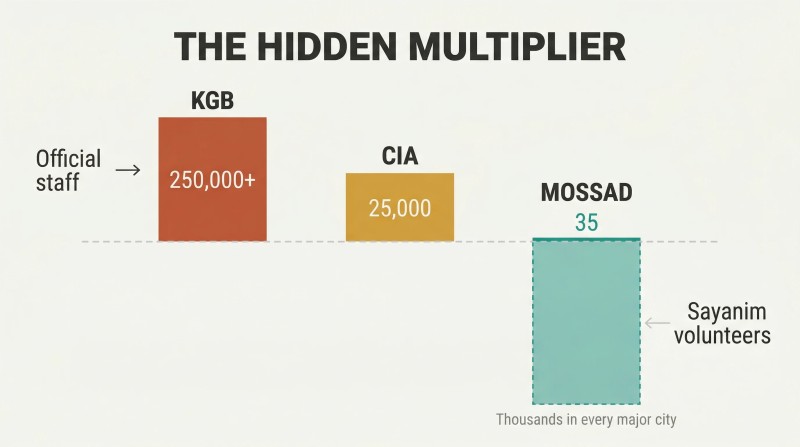
A skeleton crew with global reach. The entire Mossad has barely 1,200 employees, including secretaries and janitors. Only 30 to 35 katsas — field intelligence officers — operate worldwide at any time, compared to the CIA's 25,000 staff and the KGB's 250,000+. The secret weapon: sayanim, volunteer Jewish helpers in every major city. London alone has about 2,000 active sayanim and 5,000 on standby.
Unpaid infrastructure, unmatched leverage. A car sayan at a rental agency provides untraceable vehicles. A bank sayan produces emergency cash at 2 a.m. A doctor sayan treats a bullet wound without reporting it. They're paid only expenses, motivated by loyalty to Israel. This system lets a single Mossad station of six or seven people match a KGB station of 100.
Recruit through patience and personas — targets never know they're caught
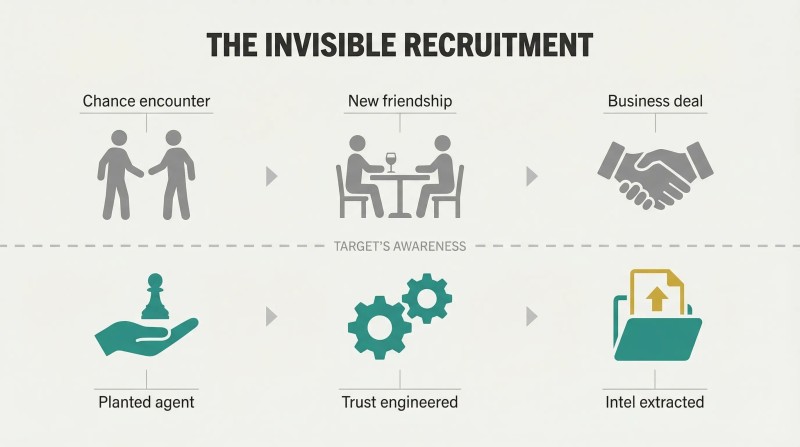
Five months to catch one scientist. In Operation Sphinx, a beautiful blonde appeared daily at Iraqi nuclear scientist Butrus Halim's bus stop, always picked up by a man in a red Ferrari. When a staged 'accident' delayed Halim's bus, the Ferrari driver offered a ride. Over weeks, katsa Ran S. — posing as wealthy Englishman 'Jack Donovan' — wined and dined Halim, introduced him to hookers, and engineered a business scenario where Halim revealed his real occupation.
The subject recruited himself. An Israeli nuclear physicist, posing as a German businessman, then got Halim to provide Iraqi reactor plans — all while Halim believed he was making a secret side deal his 'friend' Donovan didn't know about. The intelligence helped Israel destroy Iraq's Osirak nuclear reactor in June 1981.
'By way of deception' isn't rhetoric — it's the Mossad's daily protocol
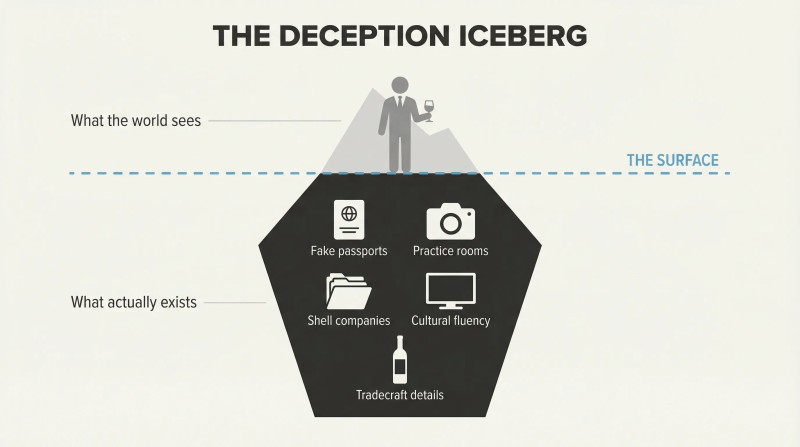
The Mossad's formal motto permeates everything. Cadets spend months building fake identities, practicing covers in camera-rigged rooms, and brutally dismantling each other's performances. A passport factory in the Academy basement manufactures papers for most nations using chemically replicated paper. Hundreds of shell companies sit ready on shelves — complete with tax returns, logos, and business histories — waiting to come to life.
Even wine knowledge is tradecraft. Cover training includes ordering from international restaurant menus, recognizing fine wines, and memorizing TV theme songs from target countries. If you pose as a Canadian but can't identify a 'loonie,' you're dead. The Academy maintained a television running 24/7 with North American and European programming to keep cadets culturally fluent.
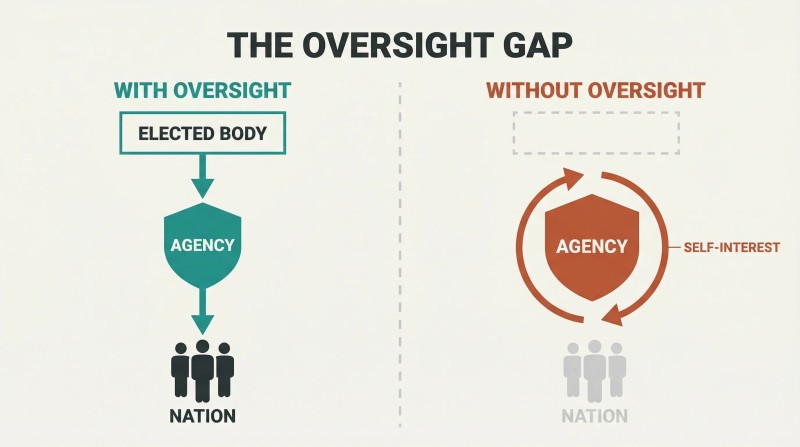
Without oversight, spy agencies serve themselves, not their nations
No budget line, no public hearings, no accountability. Unlike the CIA, which answers to the Senate Intelligence Committee, the Mossad answers to no elected body. Its budget appears nowhere in Israeli records. The name of its head is never publicly revealed while serving. Even the prime minister is frequently manipulated or kept ignorant of operations until after they've occurred.
Self-interest replaces national interest. The Mossad fed selective intelligence to push Israel into the disastrous 1982 Lebanon war, ran massive arms deals enriching individuals, and made foreign-affairs decisions unilaterally. One question governed every decision: 'Is it good for the Jews or not?' But who decided what qualified was the Mossad itself — an organization optimizing for its own survival and power rather than Israeli security.
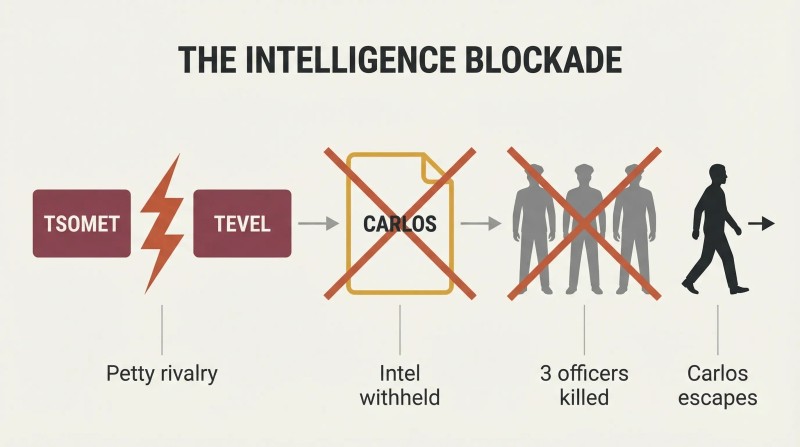
Departmental turf wars inside the Mossad killed innocent bystanders
A bureaucratic grudge, three dead police officers. When katsa Oren Riff identified Venezuelan terrorist Carlos through agent Moukharbel, he begged headquarters to share Carlos's file with French police. Two departments — Tsomet (recruiting) and Tevel (liaison) — fought over the request. Tevel blocked the information out of petty revenge, because Tsomet had previously blocked theirs.
Carlos walked free; three cops didn't. Without knowing who they were confronting, French police sent three officers to Carlos's apartment. Carlos grabbed a submachine gun, killed two on the spot, shot the third in the neck, then executed Moukharbel with four bullets. He walked out shouting 'I am Carlos!' and became the world's most wanted terrorist — because two Mossad departments were settling a score.
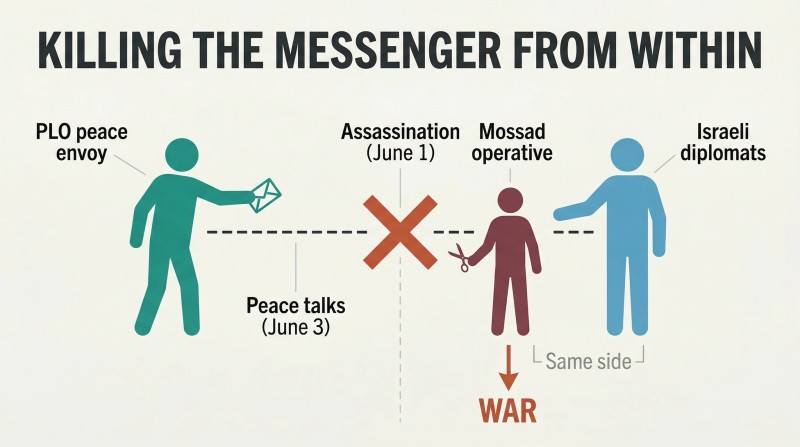
The Mossad assassinated a peace envoy to block its own diplomats' talks
Arafat wanted peace; the Mossad wanted war. In early 1981, PLO chairman Arafat asked his Belgian representative Naim Khader to approach the Israeli foreign office about starting peace negotiations. The Mossad — which wanted a war in Lebanon — was terrified talks might succeed. On June 1, Khader telephoned an Israeli foreign office official in Brussels and arranged a meeting for June 3.
He never made it. On his way to work, a dark-complexioned man walked up to Khader, shot him five times in the heart and once in the head, climbed into a passing taxi, and vanished. The killing was staged to blame Abu Nidal's faction. Meanwhile, the Mossad's psychological warfare department fabricated evidence to convince the CIA that the PLO was preparing for war — the opposite of Arafat's frantic peace efforts.
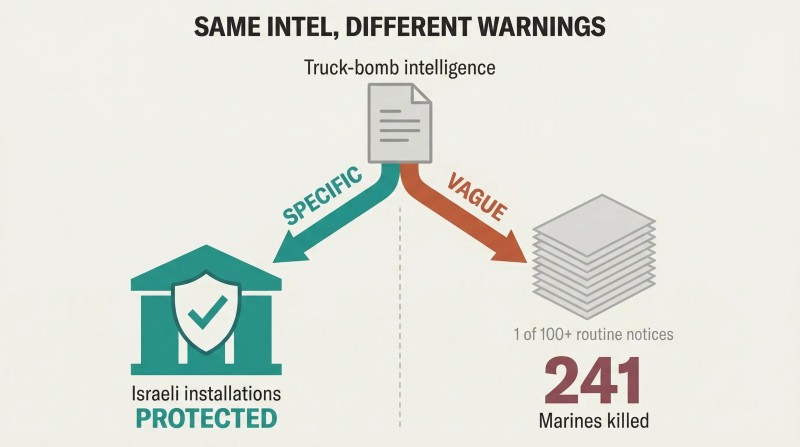
241 Marines died because Mossad withheld specific truck-bomb intel
They knew which truck, which target. In summer 1983, a Mossad informant in Beirut reported that Shi'ite Muslims were fitting a large Mercedes truck with unusually spacious bomb compartments — clearly intended for a major target. The Mossad recognized the U.S. Marine compound as one of the few targets large enough to match. Chief Nahum Admony chose to send only a vague, routine warning — one of over 100 similar notices in six months, guaranteed to prompt no special precautions.
All Israeli installations received the specific description. On October 23, 1983, the Mercedes crashed through barriers and exploded at Marine headquarters, killing 241 Americans — the highest single-day U.S. death toll since Vietnam's Tet offensive. The Mossad then helpfully provided the CIA with names of 13 people connected to the bombing.
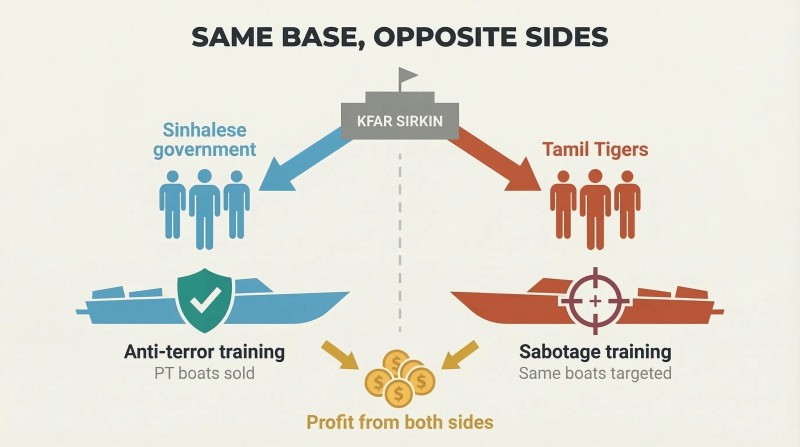
Israel trained both sides of Sri Lanka's war on the same base
Sinhalese learned anti-terror; Tamils learned to fight them. Through liaison officer Amy Yaar, the Mossad sold military training and Israeli-made PT boats to Sri Lanka's Sinhalese government. At the same Kfar Sirkin military base, Tamil Tiger fighters learned how to sabotage those exact PT boats. The two groups once jogged within yards of each other; constant schedule manipulation kept them apart.
The scam ran deeper than weapons. Yaar dreamed up the 'Mahaweli Project,' a $2.5 billion river-diversion scheme that existed largely on paper. The World Bank, Sweden, Canada, Japan, and the U.S. all invested. When World Bank inspectors visited, they were driven in circles back to the same small construction site. Israeli academics wrote scholarly papers legitimizing the fraud.
A secret Mossad unit in America manufactured political scandals
Al exists despite every official denial. A super-secret Mossad division called Al — Hebrew for 'on top' — operates 24 to 27 veteran personnel inside the United States, including three active katsas. They are the only Mossad agents permitted to carry American passports. Al doesn't work from the Israeli embassy; its stations occupy safe houses across New York and Washington.
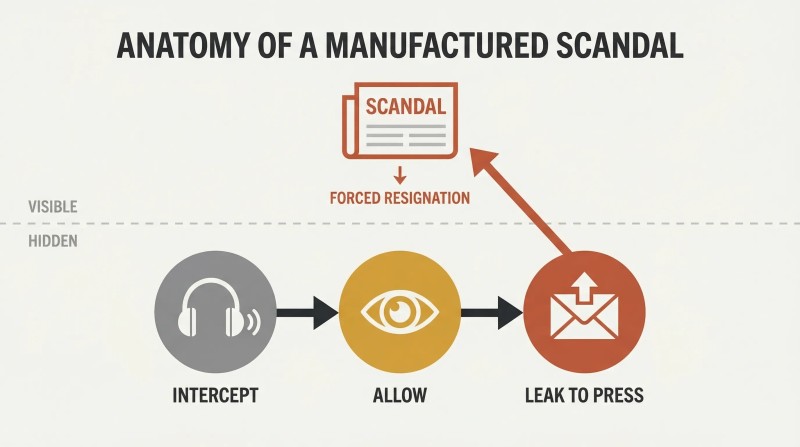
They toppled a UN ambassador. In 1979, Al bugged Kuwaiti Ambassador Bishara's phone and overheard that UN Ambassador Andrew Young planned to meet PLO representative Zehdi Terzi. Rather than prevent the meeting, the Mossad let it happen, then leaked the story to Newsweek. Young was forced to resign — ending one of the most promising channels for Palestinian-American diplomatic contact and igniting ugly tensions between American Jews and blacks.
Ostrovsky warned headquarters of a PLO trick — then was scapegoated
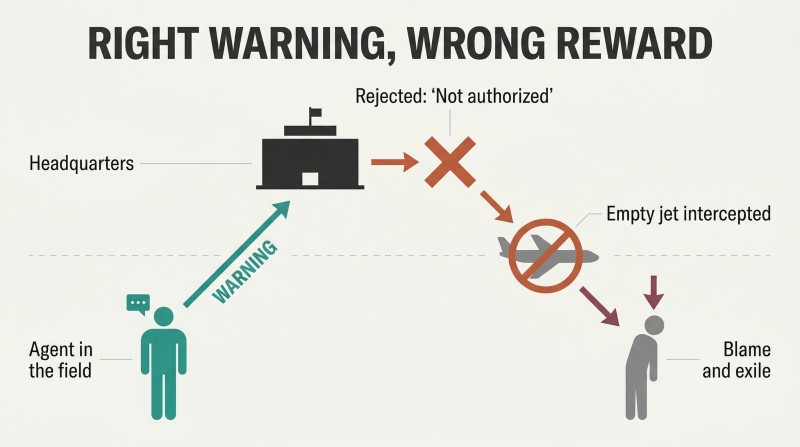
He called it right; they punished him anyway. During a 1986 operation in Cyprus, Ostrovsky befriended a Palestinian who revealed that a planned interception of PLO leaders on a Libyan jet was a decoy — the leaders would deplane before takeoff. Ostrovsky urgently warned headquarters. He was told: 'This sounds like psychological warfare. You weren't authorized to make contact.'
The embarrassment needed a scapegoat. Israel intercepted the jet anyway. Nine minor officials were aboard; the PLO leaders had never been on the plane. International humiliation followed. Ostrovsky's return was deliberately delayed — his PT boat captain was ordered to fake engine trouble — and blame was dumped on him. Within weeks he was pushed out, his military file transferred to a dangerous assignment tantamount to a death warrant. He fled to Canada.
Analysis
Victor Ostrovsky's 'By Way of Deception' remains the most consequential insider account of the Mossad ever published — and one of the few books a government tried to suppress through American courts before a single copy was sold. Israel's emergency injunction attempt in 1990 backfired spectacularly, vaulting an obscure memoir onto bestseller lists and lending it the credibility that comes only from an adversary's panic.
The book operates on two levels that reinforce each other. As memoir, it traces a familiar disillusionment arc: idealist joins elite institution, discovers rot beneath the polish. As institutional exposé, it delivers something rarer — a structural analysis of how secrecy, combined with zero accountability, produces organizations that inevitably serve their own interests over those they claim to protect.
Ostrovsky's most enduring contribution is his documentation of the sayanim system — arguably the most significant asymmetric intelligence advantage any nation has ever possessed. The ethical implications of mobilizing diaspora communities as unpaid intelligence assets remain profoundly uncomfortable, touching questions of dual loyalty that most Western democracies prefer not to examine.
Critics rightly note that Ostrovsky served barely two years as a katsa and held no senior position. His account necessarily reflects a junior officer's perspective, and some operations he describes were learned secondhand through Academy training exercises rather than direct participation. Yet operational details have been substantially corroborated by subsequent revelations, and the Israeli government's panicked legal response suggests his account struck dangerously close to truth.
The book's deepest warning — that institutions exempt from external scrutiny inevitably drift from serving their stated mission to serving themselves — transcends espionage entirely. It is a cautionary tale for any organization that operates behind closed doors while claiming its secrecy serves the public good.
Review Summary
By Way of Deception is a controversial exposé of Mossad operations by former agent Victor Ostrovsky. Reviews are mixed, with some praising its insider revelations and others questioning its credibility. Many find the training details fascinating but lose interest in later chapters. The book is seen as outdated but still relevant, offering insights into intelligence agencies' tactics. Critics argue it may be self-serving or propaganda. Overall, readers find it a gripping yet potentially biased account of Mossad's secretive world, raising ethical questions about intelligence operations.
People Also Read





Glossary
Katsa
Mossad field intelligence officerA Mossad 'gathering officer' or case officer who recruits and handles agents abroad. Only 30 to 35 katsas operate worldwide at any given time. They work under diplomatic or business cover in foreign countries, are forbidden from entering most Arab nations directly, and are considered the Mossad's most valuable human assets — the 'property of the Mossad' they must protect above all else.
Sayanim
Volunteer Jewish helpers abroadDiaspora Jews worldwide who assist the Mossad with practical logistics — providing rental cars, apartments, banking access, medical treatment, or business fronts — without formal employment. They must be 100 percent Jewish, are paid only expenses, and are never given classified information or put at risk. London alone maintained about 2,000 active sayanim with 5,000 more on standby.
APAM
Operational security system and trainingShort for Avtahat Paylut Modienit, meaning 'securing intelligence activity.' The Mossad's rigorous system for detecting and evading surveillance. Includes route planning, counter-surveillance techniques, and procedures for verifying whether one is being followed. Described as 'infallible' by instructors. Failure to pass APAM training means automatic dismissal from the course, and no katsa can work abroad without mastering it.
Kidon
Mossad assassination unitHebrew for 'bayonet.' The operational arm within Komemiute responsible for targeted killings and kidnappings. Consists of three teams of approximately 12 operatives each, with typically two teams training in Israel and one deployed abroad. Members know nothing about the broader Mossad and do not know each other's real names. Targets must appear on a formal execution list approved by the Israeli prime minister.
Komemiute
Deep-cover operations departmentFormerly called Metsada, this department operates as a highly secretive 'Mossad within the Mossad.' It handles combatants — Israelis sent under deep cover to Arab countries — and contains the kidon assassination unit. The name translates as 'independence with head erect.' About 70 percent of its base-country business fronts operate out of Canada.
Al
Secret US operations unitHebrew for 'above' or 'on top.' A super-secret Mossad division of 24 to 27 veteran personnel operating clandestinely inside the United States, including three active katsas. Reports directly to the Mossad chief rather than through normal channels. Unlike all other Mossad officers, Al katsas are permitted to use American passports. Its stations are in safe houses, not the Israeli embassy.
Neviot
Break-in and surveillance teamsSpecialists trained in obtaining information from 'still objects' — breaking into buildings, photographing documents, and installing listening devices without leaving a trace. Organized into three teams that rotate between overseas operations and Israeli training. They possess master keys for most major European hotels and continually develop methods for defeating new lock technologies, including thumbprint and card-key systems.
LAP
Psychological warfare departmentShort for Lohamah Psichlogit, meaning psychological warfare. Develops cover stories, disinformation campaigns, and fabricated intelligence designed to manipulate foreign governments and media. LAP created the false narrative blaming Egypt and Libya for Strella missiles that actually originated from Yugoslavia, and fabricated evidence that the PLO was preparing for war when Arafat was actually seeking peace talks.
Combatants
Deep-cover Israeli spies abroadIsraelis recruited from civilian life — doctors, lawyers, engineers — who commit to four-year stints living under false identities in or near Arab countries. They operate real businesses (usually import/export) that allow travel on short notice. They work in pairs: one 'target-country combatant' enters hostile nations while a 'base-country combatant' acts as lifeline. They gather 'fiber intelligence' — economics, rumors, morale — rather than direct military observations.
Oter
Arab recruitment go-betweenAn Arab paid by the Mossad to initiate contact with other Arabs targeted for recruitment. Used because there are very few Arabic-speaking katsas, and it is far easier for one Arab to approach another without arousing suspicion. The oter 'breaks the ice' before handing the target off to a katsa. Typically paid $3,000 to $5,000 per month plus expenses. Their use carries risk, as they cannot always be fully controlled.
Tsafririm
Jewish community defense departmentHebrew for 'morning breeze.' The Mossad department responsible for organizing Jewish self-defense groups called 'frames' (misgarot) worldwide, and for rescue operations to save endangered Jewish communities. Ran Operation Moses, the covert rescue of Ethiopian Falashas through a fake Red Sea tourist resort. Also operates paramilitary youth training camps where diaspora teenagers learn security skills including firearms use.
FAQ
What is By Way of Deception by Victor Ostrovsky about?
- Insider’s account of Mossad: The book is a firsthand exposé by Victor Ostrovsky, a former Mossad officer, revealing the inner workings, recruitment, training, and operations of Israel’s secret intelligence agency.
- Focus on covert operations: It details Mossad’s espionage, sabotage, and assassination missions, including high-profile operations like the campaign against Iraq’s nuclear program and retaliation for the Munich massacre.
- Personal journey and critique: Ostrovsky shares his own experiences, highlighting the psychological and moral challenges faced by agents, and offers a critical perspective on Mossad’s internal culture and ethics.
- Historical and political context: The narrative intertwines Mossad’s activities with major Middle Eastern and global events, providing context for Israel’s security concerns and covert actions.
Why should I read By Way of Deception by Victor Ostrovsky?
- Rare insider perspective: The book offers unprecedented access to the secretive world of Mossad, with details unavailable in most other sources.
- Understanding intelligence work: Readers gain insight into espionage techniques, recruitment, and the realities of covert operations, challenging popular myths about intelligence agencies.
- Critical ethical reflection: Ostrovsky encourages readers to question the morality and consequences of intelligence work, especially regarding accountability and oversight.
- Historical significance: The book provides valuable context on how Mossad’s actions have shaped Middle Eastern politics and global security.
What are the key takeaways from By Way of Deception by Victor Ostrovsky?
- Mossad’s power and secrecy: The agency operates with little oversight, wielding significant influence both within Israel and internationally.
- Moral ambiguity of espionage: Intelligence work often involves deception, manipulation, and violence, raising complex ethical questions.
- Internal politics and rivalries: Mossad’s effectiveness can be undermined by internal power struggles and resistance to questioning authority.
- Impact on global events: Mossad’s covert actions have had far-reaching effects on international relations, security, and the perception of Israel.
How does Victor Ostrovsky describe Mossad recruitment and training in By Way of Deception?
- Rigorous selection process: Candidates undergo psychological testing, medical exams, polygraphs, and interviews to identify those suited for intelligence work.
- Intense training academy: Trainees face a multi-year program covering surveillance, security, weapons, cover stories, and operational tactics, often through harsh simulations.
- Emphasis on deception: Mastery of cover identities and the art of deception is central, preparing agents for work in hostile environments.
- Psychological conditioning: Training includes stress tests and indoctrination to foster loyalty, adaptability, and the ability to handle moral ambiguities.
What are the main Mossad operations detailed in By Way of Deception by Victor Ostrovsky?
- Operation Sphinx: Mossad’s campaign to sabotage Iraq’s nuclear program, involving espionage, recruitment of scientists, and sabotage leading to the Osirak reactor airstrike.
- Black September retaliation: Targeted assassinations and psychological warfare against terrorists responsible for the Munich massacre.
- Operation Moses: The covert rescue of Ethiopian Jews from Sudan, using a secret diving resort and airlifts.
- Other notable missions: Foiled assassination attempts, sabotage of PLO arms shipments, and technical espionage like the “Belgian Table” operation.
How does By Way of Deception by Victor Ostrovsky portray Mossad’s internal culture and ethics?
- Moral ambiguity and ruthlessness: Loyalty to the mission often overrides personal ethics, with agents engaging in manipulation, blackmail, and even sexual exploitation.
- Sexual politics and exploitation: Sexual relationships are used as tools for recruitment and control, with widespread affairs among staff.
- Lack of accountability: Mossad operates with minimal oversight, leading to unchecked power and internal corruption.
- Survival mentality: Agents are trained to prioritize their own survival and the agency’s goals, sometimes at the expense of innocents.
What are the key methods of espionage and recruitment in By Way of Deception by Victor Ostrovsky?
- Use of sayanim: Mossad relies on Jewish volunteers worldwide for logistical support, such as housing and document procurement, without making them formal agents.
- Psychological manipulation: Recruitment exploits money, ideology, sex, and emotional vulnerabilities, often gradually increasing a recruit’s complicity.
- Elaborate cover stories: Agents develop detailed identities supported by forged documents and business fronts to operate undetected.
- Advanced surveillance: Techniques include bugs, dead-letter boxes, and motionless following to ensure operational security.
What are the main departments and roles within Mossad according to By Way of Deception by Victor Ostrovsky?
- Tsomet (Recruitment): Handles agent recruitment and human intelligence gathering.
- Komemiute (Combatants): Manages deep-cover operatives and assassination teams (kidon) for covert operations.
- Kaisarut (Liaison): Maintains relationships with foreign intelligence agencies and manages arms deals.
- PAHA (Hostile Sabotage): Focuses on counter-terrorism and monitoring hostile organizations.
- Yarid and Neviot: Specialize in security, surveillance, and technical operations like break-ins and bug installations.
What is the significance of Operation Sphinx in By Way of Deception by Victor Ostrovsky?
- Targeting Iraqi nuclear ambitions: Operation Sphinx aimed to sabotage Iraq’s nuclear reactor project through espionage and sabotage.
- Recruitment of key scientists: Mossad used elaborate deception to recruit Iraqi nuclear scientist Butrus Eben Halim.
- Sabotage and assassinations: The operation included planting explosives, stealing documents, and assassinating figures involved in the nuclear program.
- Culmination in airstrike: Intelligence and sabotage efforts led to the 1981 Israeli airstrike that destroyed the Osirak reactor.
How does By Way of Deception by Victor Ostrovsky describe Mossad’s use of technology and computers?
- Centralized intelligence database: Mossad maintains a vast computerized system tracking over 1.5 million individuals and their global contacts.
- Advanced coding and security: Communications use complex double coding to prevent interception and decoding by adversaries.
- Operational support: Computers assist in recruitment, surveillance, and planning, but agents must still rely on field skills and judgment.
- Limitations and vulnerabilities: The system can be overloaded or compromised, as illustrated by a trainee’s query that crashed the database.
What is the “Al” unit in Mossad, and what role does it play according to By Way of Deception by Victor Ostrovsky?
- Secret U.S.-based division: The Al unit operates mainly within the United States, unknown to most Mossad employees.
- Espionage and recruitment: It gathers intelligence on Arab countries, the PLO, and U.S. political figures, often using American passports.
- High-risk operations: Al katsas work without diplomatic immunity, making their missions especially dangerous.
- Controversial activities: The unit’s existence contradicts official claims that Mossad does not operate in the U.S.
What are the best quotes from By Way of Deception by Victor Ostrovsky and what do they mean?
- “By way of deception, thou shalt do war.” This Mossad motto encapsulates the agency’s reliance on deception as a fundamental tool.
- “May I read about you in the paper.” A curse among agents, reflecting the danger and disgrace of public exposure.
- “No one will escape the long arm of Israeli justice.” Quoted from Golda Meir, symbolizing Mossad’s relentless pursuit of enemies.
- “The Mossad is destroying Israel by manipulating power.” Ostrovsky’s warning about the dangers of unchecked intelligence operations.
- “No detail is too small.” Emphasizes the critical importance of meticulousness in intelligence work.
Download PDF
Download EPUB
.epub digital book format is ideal for reading ebooks on phones, tablets, and e-readers.








































