
Plot Summary
Prologue: Fire and Ashes
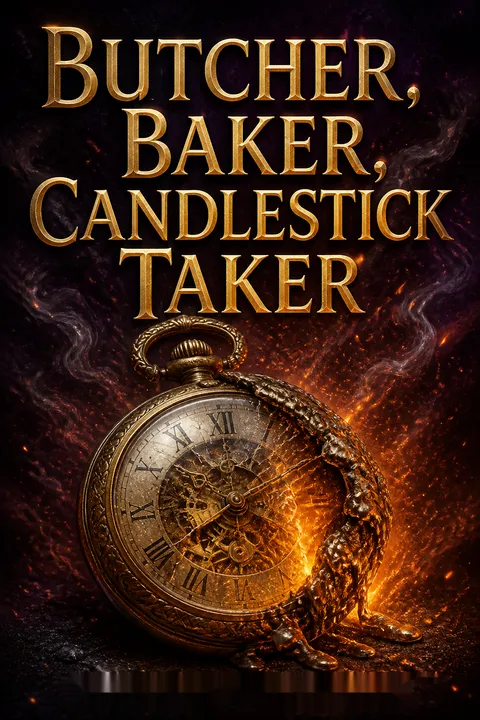
The story opens with a visceral meditation on fire—its beauty, destruction, and the way it reduces all to ash. This prologue sets the tone for a tale where the past's conflagrations, both literal and metaphorical, shape the present. The Great Spokane Fire of 1889 lingers in memory, a symbol of both devastation and rebirth. The narrative hints at the darkness lurking beneath Spokane's new prosperity, foreshadowing the violence and secrets that will soon surface. The reader is invited to consider the seductive, consuming nature of fire, and how it mirrors the passions and crimes that will ignite the plot.
Sleepless Detective's Lament
Detective Bernard Carew, newly promoted and eager to prove himself, struggles with insomnia and self-doubt. Haunted by the legacy of his police family and the shadow of Sherlock Holmes, Bernard feels isolated among his colleagues and frustrated by the lack of challenging cases. His introspection reveals a longing for a more rational, just world—one where logic triumphs over brutality. Bernard's personal life, marked by love for his wife Roslyn and the comforts of modernity, contrasts with his professional anxieties. This chapter establishes Bernard as a thoughtful, methodical detective, setting the stage for his role in the coming investigation.
The Red Rogue Strikes
Under cover of night, the enigmatic Red Rogue infiltrates a wealthy home, deftly bypassing security and succumbing to the hypnotic chimes of a peculiar clock. The thief's movements are described with almost balletic grace, revealing a mind both clever and whimsical. The Red Rogue's haul includes exotic Japanese artifacts and a distinctive fox mask, but the true prize is the thrill of the act itself. The chapter immerses the reader in the Rogue's perspective, blending suspense with a sense of playful rebellion. The theft sets off a chain of events that will entangle all the main characters.
Clocks, Chimes, and Chance
Archibald Prescot, a gentle, self-effacing clockmaker from Connecticut, wakes in unfamiliar lodgings, reflecting on his journey west to design Spokane's new clock tower. Archie's fascination with time, sound, and invention is matched by his social awkwardness and longing for acceptance. His unique pocket watch, with its twelve distinct chimes, symbolizes his creative spirit. Archie's chance encounter with Miss Gladys Mitchell, a wealthy patroness, leads to the installation of his experimental clock in her home—a device meant to deter thieves with hypnotic chimes. This chapter introduces Archie's hopes, vulnerabilities, and the technological ambitions that will drive the plot.
House in Mourning
Marian Kenyon, recently returned to Spokane after her grandmother's death, struggles with loneliness and the weight of memory. The family home, shrouded in mourning, becomes a character in itself—its shadows and empty chairs echoing Marian's sense of loss. Marian's internal dialogue, peppered with her grandmother's proverbs, reveals a woman torn between independence and longing for connection. Her reluctance to rejoin society is tempered by a growing resolve to face the future, even as she remains haunted by the past. This chapter grounds Marian's emotional arc and foreshadows her involvement in the unfolding mystery.
Patroness and Her Inventors
Miss Gladys Mitchell, Spokane's progressive and eccentric patroness, gathers inventors and artists in her lavish, Japan-inspired home. The theft of her prized artifacts and the malfunction of Archie's clock bring together Archie, Bernard, and the household staff. Gladys's relationship with her boarders—especially the blind Japanese blacksmith, Hayate Matsumoto—hints at deeper secrets. The staff's varied reactions to the theft, from the anxious maid Eleanor to the aloof butler Jennings, introduce a web of motives and resentments. The chapter sets up the social dynamics and tensions that will explode with the coming murder.
Marian's Return to Spokane
Marian ventures into Spokane, observing its transformation since the fire and her own departure. The city's bustle, the scars of the past, and the ambitions of its citizens mirror Marian's own uncertainties. A chance meeting with the charming but unsettling Cecil Sigmund, and a serendipitous encounter with Archie in Montrose Park, weave Marian into the lives of the other protagonists. Her curiosity about technology and her rapport with Archie hint at a budding partnership—personal and investigative. The chapter deepens the sense of Spokane as a living, changing character in the story.
Shadows Among the Staff
The perspective shifts to the household staff at Miss Mitchell's estate, particularly Eleanor Sigmund, the overworked maid married to the volatile Cecil. Eleanor's daily routines, her fear of her husband, and her ambiguous relationship with the butler Jennings reveal the class tensions and personal traumas simmering beneath the surface. The staff's reactions to the theft and the arrival of the police expose fractures in their solidarity. Eleanor's discovery of incriminating evidence on her husband's jacket, and her growing sense of desperation, foreshadow the violence to come.
A Murder Most Grisly
The narrative reaches its first major climax with the discovery of Gladys Mitchell's decapitated body in the blacksmith's workshop. Bernard and his twin brother Thomas, now working together, are confronted with a scene of ritualistic horror: the body laid out with care, the head severed, blood pooling and spattering the forge. The investigation begins in earnest, with Bernard's methodical approach contrasting with Thomas's irreverent humor. The staff's alibis, the oddities of the crime scene, and the presence of exotic weapons and inventions complicate the case. The murder's brutality shocks the community and propels the story into a classic whodunit.
The Blacksmith's Secret
The blind blacksmith, Matsumoto, becomes a central figure in the investigation. His mastery of sound, his mysterious inventions, and his outsider status make him both a suspect and a source of insight. Archie's growing friendship with Matsumoto, based on their shared fascination with sound and invention, offers a counterpoint to the suspicion swirling around the workshop. The detectives probe Matsumoto's alibi, his relationship with Gladys, and the possibility that his inventions could be weapons. The chapter explores themes of perception, prejudice, and the fine line between genius and danger.
Theories and Red Herrings
Bernard and Thomas sift through a tangle of clues: the missing chauffeur, the fake butler, the staff's shifting stories, and the enigmatic Red Rogue. The investigation is complicated by false leads, personal biases, and the limitations of early forensic science. The brothers' dynamic—Bernard's seriousness and Thomas's levity—provides both comic relief and narrative momentum. The discovery that Gladys was strangled before being beheaded, and the realization that the murderer may have tried to conceal the true cause of death, deepen the mystery. The chapter highlights the challenges of seeking truth in a world of secrets and lies.
The Missing Husband
The focus turns to Eleanor's increasingly fraught marriage. Cecil's absence, his history of abuse and infidelity, and the evidence of blackmail and theft point to him as a prime suspect. Eleanor's emotional turmoil, her interactions with Marian, and her memories of past violence create a portrait of a woman on the edge. The detectives' search for Cecil, their interviews with the staff, and the unraveling of financial records reveal a pattern of exploitation and desperation. The chapter explores the intersection of personal and criminal motives, and the ways in which trauma shapes action.
Bones in the Forge
As Bernard and Thomas sift through the ashes of the forge, they uncover fragments of bone and evidence of a second, hidden body. The realization that someone has been "baked" in the forge—echoing Spokane's fire-haunted past—adds a macabre twist to the case. The detectives piece together the sequence of events: two murders, a staged crime scene, and a killer who is both methodical and desperate. The staff's routines, the use of the bone-cutter, and the disposal of remains in the garden all become crucial clues. The chapter ratchets up the suspense and horror, pushing the investigation toward its climax.
The Red Rogue Unmasked
Archie, through a combination of observation and intuition, discovers that Marian is the Red Rogue—the city's elusive thief. Their confrontation is charged with emotion, as Marian confesses her reasons for stealing and her code of ethics. Archie's struggle to reconcile his feelings for Marian with her criminality mirrors the larger theme of duality and hidden selves. Marian's determination to clear her name and help Eleanor, and Archie's decision to trust her, forge a new alliance. The chapter reframes Marian as both suspect and sleuth, complicating the moral landscape of the story.
Confessions and Consequences
The investigation reaches its denouement as Marian and Archie, following the trail of bones and ash, confront Eleanor in the workshop. Eleanor, pushed to the brink by years of abuse and betrayal, confesses to killing her husband in self-defense and disposing of his body in the forge. Her confession, delivered with a chilling mix of relief and madness, reveals the full extent of her suffering and the lengths to which she was driven. The detectives, Marian, and Archie are left to grapple with the ambiguity of justice and the cost of survival. The chapter delivers both catharsis and tragedy.
Justice and New Beginnings
With the case resolved, the characters face the consequences of their actions and the possibility of redemption. Eleanor's fate is left uncertain, but Marian and Archie, now bound by shared secrets, look toward new opportunities—both personal and professional. The staff, the detectives, and the city itself begin to heal, even as the scars of violence and loss remain. The story closes with a sense of hard-won hope: the promise of new inventions, new relationships, and the enduring resilience of those who survive fire and darkness.
Analysis
A meditation on trauma, justice, and the masks we wearButcher, Baker, Candlestick Taker is more than a historical whodunit; it is a layered exploration of how individuals and communities survive trauma—be it fire, violence, or betrayal. The novel interrogates the boundaries between victim and perpetrator, showing how desperation, abuse, and social constraint can drive ordinary people to extraordinary acts. The use of duality—public and private selves, invention and theft, love and violence—reflects the psychological complexity of both the era and the human condition. The story's resolution, with its ambiguous justice and the survival of those who have suffered most, suggests that healing is possible but never simple. The lessons are clear: empathy is as vital as logic in the pursuit of truth, and the past, like fire, can both destroy and illuminate. The book ultimately asks: What do we owe to those who have been burned, and how do we rebuild from the ashes?
Review Summary
Readers praise Butcher, Baker, Candlestick Taker for its engaging historical mystery set in 1901 Spokane. They commend the well-developed characters, intricate plot, and accurate historical details. Many appreciate the humor, food descriptions, and unexpected twists. The book is described as a cozy mystery with Agatha Christie vibes, featuring a compelling storyline and vivid setting. Reviewers note the author's attention to historical accuracy and her skillful portrayal of diverse characters. Overall, readers find it an enjoyable, immersive experience that keeps them guessing until the end.
Characters
Bernard Carew
Bernard is a man caught between tradition and modernity, haunted by his family's police legacy and the ideals of Sherlock Holmes. His psychological depth is marked by self-doubt, a longing for rational order, and a quiet compassion for the vulnerable. Bernard's relationship with his twin brother Thomas is both competitive and affectionate, grounding him in the messy realities of police work. Over the course of the story, Bernard evolves from an outsider seeking approval to a detective willing to embrace ambiguity and empathy, especially as the case challenges his assumptions about guilt, justice, and the nature of evil.
Thomas Carew
Thomas, Bernard's younger twin, provides comic relief and emotional ballast. His irreverence masks a sharp mind and a deep loyalty to his brother. Thomas's approach to detection is more instinctive and people-oriented, often catching details Bernard misses. He is less burdened by self-doubt, more willing to entertain wild theories, and more attuned to the human cost of crime. Thomas's development is seen in his growing seriousness as the case darkens, and in his willingness to support Bernard even as they clash over methods and conclusions.
Marian Kenyon
Marian is a woman of contradictions: fiercely independent yet longing for connection, haunted by loss yet drawn to risk. Her secret life as the Red Rogue is both a rebellion against societal constraints and a means of survival. Marian's psychological complexity is revealed in her guilt, her code of ethics, and her struggle to reconcile her actions with her desire for love and belonging. Her relationship with Archie is transformative, allowing her to trust and be trusted. Marian's arc is one of self-acceptance and the courage to face both her past and her future.
Archibald Prescot
Archie is defined by his sensitivity, creativity, and social awkwardness. His fascination with clocks and sound is both a passion and a refuge from a world that often misunderstands him. Archie's journey is one of self-discovery: from a timid, overlooked craftsman to a man willing to risk vulnerability and partnership. His friendship with Matsumoto and his romance with Marian draw out his latent courage. Archie's psychoanalysis reveals a man who finds meaning in precision, beauty, and the possibility of making a mark on the world, even as he fears betrayal and failure.
Eleanor Sigmund
Eleanor is the emotional heart of the staff, her life marked by hardship, endurance, and a longing for dignity. Her marriage to Cecil is a source of pain and fear, and her loyalty to her employers is both a survival strategy and a source of pride. Eleanor's psychological unraveling is depicted with empathy: her compulsive cleaning, her oscillation between submission and rage, and her final, tragic act of violence. Eleanor's development is a study in the corrosive effects of abuse and the desperate measures to which it can drive even the most dutiful.
Cecil Sigmund
Cecil is a study in duplicity: outwardly suave and sociable, inwardly cruel and self-serving. His relationships—with Eleanor, with Gladys, with the other staff—are transactional and manipulative. Cecil's psychological profile is that of a narcissist, driven by entitlement, resentment, and a need for control. His disappearance and eventual murder are both a consequence of his actions and a catalyst for the story's climax. Cecil's role is that of both victimizer and victim, embodying the cycle of violence at the story's core.
Hayate Matsumoto
Matsumoto is an outsider in every sense: a Japanese immigrant, a blind craftsman, and a visionary inventor. His mastery of sound and his philosophical approach to life set him apart from the other characters. Matsumoto's psychological resilience is rooted in his ability to adapt, to find beauty in limitation, and to trust selectively. His relationship with Archie is one of mutual respect and creative synergy. Matsumoto's development is seen in his willingness to confront prejudice, to claim ownership of his inventions, and to seek justice without vengeance.
Gladys Mitchell
Gladys is both a benefactor and a thief, her generosity masking a ruthless ambition. Her fascination with invention, her embrace of modernity, and her disregard for social norms make her a force of change—and a target. Gladys's psychological makeup is complex: she is driven by a need for control, a hunger for novelty, and a willingness to exploit others for her own gain. Her murder is both a personal tragedy and a symbol of the dangers of unchecked power and secrecy.
Reginald Jennings
Jennings is a cipher: his references are forged, his loyalties ambiguous, and his motives unclear. He is both protector and potential suspect, his interactions with Eleanor hinting at unspoken feelings and hidden agendas. Jennings's psychological profile is that of a survivor, skilled at adaptation and concealment. His disappearance and possible involvement in the crimes add layers of uncertainty to the investigation.
Roslyn Carew
Roslyn, Bernard's wife, is a stabilizing presence in the detective's life. Her physical limitations (she uses a wheelchair) are contrasted with her emotional strength and wit. Roslyn's role is to provide perspective, encouragement, and a reminder of the world beyond the case. Her psychoanalysis reveals a woman who has made peace with adversity and who supports Bernard's quest for justice without losing sight of compassion.
Plot Devices
Duality and Hidden Selves
The narrative is structured around the theme of duality: public versus private selves, appearance versus reality, victim versus perpetrator. Marian's life as the Red Rogue, Eleanor's transformation into the Baker, Gladys's role as both patroness and thief, and the staff's hidden resentments all exemplify this device. The story uses shifting perspectives, unreliable narrators, and withheld information to keep the reader—and the detectives—off balance. The motif of masks, both literal (the stolen fox mask) and figurative, recurs throughout.
Locked-Room and Country House Mystery
The murder takes place in a secluded, well-staffed mansion, with a limited pool of suspects and a web of interlocking alibis. The narrative employs red herrings, false leads, and multiple plausible motives. The detectives' methodical interviews, the reconstruction of timelines, and the gradual revelation of secrets pay homage to the golden age of detective fiction while incorporating psychological realism and social critique.
Symbolism of Fire and Sound
Fire is both a literal and symbolic force: the Great Spokane Fire, the forge, the act of baking a body, and the emotional conflagrations that drive the characters. Sound—chimes, clocks, footsteps, and the inventions of Archie and Matsumoto—serves as both a clue and a metaphor for communication, perception, and the passage of time. These motifs are woven into the narrative structure, foreshadowing key revelations and underscoring the story's themes.
Social Commentary and Historical Detail
The story uses its 1901 Spokane setting to explore issues of class mobility, gender roles, immigration, and the impact of technological change. The staff's struggles, Marian's defiance of social norms, and the city's transformation after the fire all serve as backdrops for the personal dramas. The meticulous historical detail grounds the plot devices in a believable world, while also critiquing the limitations and injustices of the era.
Download PDF
Download EPUB
.epub digital book format is ideal for reading ebooks on phones, tablets, and e-readers.








































