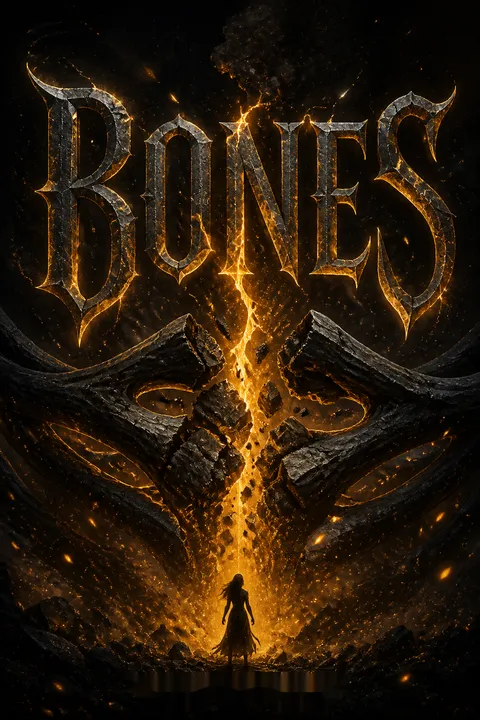

Plot Summary
Desert Angel Awakens
In a brutal, post-apocalyptic desert, a ten-year-old girl, starving and alone, fends off vultures and fate. When a biker gang finds her, she claims to be a healer, hiding her true name and past. The gang's leader, Juck, tests her by shooting one of his own, and she miraculously heals the wound, revealing her supernatural power. Juck names her "Bones," claiming her as his secret weapon. She learns to survive by hiding her gifts and her pain, becoming both a tool and a prisoner in a world where mercy is weakness.
Captured and Rescued
Now twenty-two, Bones is captured by mercenaries and locked in a safe, her fate uncertain. She's rescued by a crew from the Vault, a fortified mountain hold, but her healing powers are exposed when she saves one of them, Trey, from a gunshot wound. The crew—Mac, Griz, Sam, Jax, and Trey—are wary but fascinated. Bones is both asset and threat, and her past with Juck's gang haunts her. She's taken to the Vault, where her power is both a blessing and a curse, and she's forced to navigate new dangers among strangers who want to use her for their own ends.
The Vault's New Healer
In the Vault, Bones is interrogated and tested by Madame, the ruthless leader. Forced to demonstrate her healing on Mac, she's pushed to her limits, healing wounds inflicted for spectacle. The Vault's council debates her fate, but Madame sees only opportunity. Bones is assigned as the Vault's healer, under constant guard, and must prove herself by saving lives while hiding her vulnerabilities. She's haunted by her past, the brand Juck burned into her chest, and the knowledge that her power can be twisted for cruelty.
Branded by Survival
Bones struggles with her role as both healer and prisoner. She's forced to heal during torture sessions in Madame's dungeon, her power used to prolong suffering. The crew—especially Trey—tries to show her kindness, but trust is hard-won. Bones is marked by trauma: the brand on her chest, the scars of starvation, and the guilt of surviving when others did not. She forms uneasy bonds with the crew, especially Trey, whose gentle persistence chips away at her defenses. Yet, every act of healing drains her, and she cannot heal herself.
Crew of Broken Souls
As Bones heals the Vault's people, she witnesses the pain and resilience of those around her. The crew is a patchwork of survivors: Mac, the stoic leader; Griz, the gentle giant; Sam, the joker with hidden wounds; Jax, the eager youth; Lana and Raven, fierce and grieving. Bones is drawn into their orbit, finding moments of comfort and laughter, but also reminders of loss. The Vault is a place of both safety and danger, and Bones must decide if she can belong—or if she's doomed to be used and discarded again.
Madame's Dungeon
Madame's cruelty escalates as she uses Bones to torture prisoners, testing the limits of her power. Bones is forced to heal wounds inflicted for information, her gift twisted into a weapon. The Vault's simmering rebellion grows, with Mac and Trey secretly working to undermine Madame's rule. Bones is caught between survival and conscience, haunted by the people she cannot save and the pain she must inflict. The dungeon becomes a crucible, forging her resolve but also threatening to break her spirit.
The Price of Power
Bones discovers the limits of her healing: she can burn out, falling into fever and delirium when pushed too far. After a brutal session in the dungeon, she collapses, cared for by Trey and Clarity, a brothel worker with her own scars. Bones' vulnerability exposes her to new dangers, but also new connections. She learns that her power is both miracle and curse, and that others—like the fanatic Voiceless—see her as an angel or a weapon. The Vault's politics grow more dangerous, and Bones must choose who to trust.
Healing and Hunger
Bones' past with Juck resurfaces as she struggles with the effects of long-term starvation and abuse. The crew learns of her trauma, and their care—especially Trey's—begins to thaw her defenses. She's haunted by guilt over deaths she couldn't prevent, and by the knowledge that her healing can't save everyone. As she heals the sick and wounded, she also begins to heal herself, finding small moments of joy and comfort in the found family around her. But danger is never far, and trust is a fragile thing.
Blood for Blood
The Vault erupts in violence as old wounds and new betrayals surface. Bones is attacked by those seeking revenge for past deaths, and must defend herself with both power and cunning. The crew rallies around her, but not all wounds can be healed. Blood is spilled, debts are paid, and Bones must confront the reality that survival sometimes means hurting others. She's forced to reckon with her own capacity for violence, and the cost of forgiveness in a world where mercy is rare.
The Hold's Hidden Rebellion
As the Vault's rebellion gains momentum, Bones becomes both symbol and catalyst. She shelters orphans, turning the clinic into a sanctuary, and inspires others to resist Madame's rule. The crew's loyalty deepens, and Bones finds herself drawn to Trey in ways she can no longer deny. But the rebellion is dangerous, and betrayal lurks in every shadow. Bones must navigate shifting alliances, protect those she loves, and decide if she can risk hope in a world built on loss.
The Children's Sanctuary
Bones transforms the clinic into a haven for the Vault's lost children, offering food, shelter, and healing. With the crew's help, she creates a fragile community within the chaos, teaching the children to trust and care for each other. The act of nurturing others begins to heal Bones' own wounds, and she glimpses the possibility of a life beyond survival. But the Vault's peace is precarious, and the threat of violence—both from within and without—remains ever-present.
The Sickness Spreads
A deadly sickness sweeps through the Vault, overwhelming Bones as she heals until the brink of collapse. The crew falls ill, and Bones must choose who to save as her power wanes. She discovers that healing others through another person can drain their life, a terrible price for survival. The sickness exposes the limits of her gift and the depth of her love for the crew, especially Trey. In the aftermath, the Vault is forever changed, and Bones is left to reckon with the cost of her miracles.
Whip and Burnout
After defying Madame, Bones is sentenced to a public whipping, her back flayed as punishment for rebellion. She refuses to heal herself, unwilling to risk another's life, and endures agony and fever. The crew cares for her, and the Vault's people rally in support, but Bones is left scarred—physically and emotionally. The experience hardens her resolve, but also deepens her isolation. She learns that survival sometimes means enduring pain, and that healing is not always possible.
Betrayal and Exile
Bones and Trey flee the Vault, pursued by enemies old and new. Their journey through the wilderness is both ordeal and awakening, as they confront their pasts and the depth of their feelings for each other. They find moments of peace and passion, but danger is never far. The world outside the Vault is as brutal as the one they left behind, and Bones must decide if she can risk love in a world that punishes hope.
The Pit and the Brand
Bones is forced to fight for her life in a brutal pit, her past traumas resurfacing as she battles both enemies and her own guilt. She confesses her darkest secrets to Trey, including the truth about her brothers and the origins of her power. Their bond deepens, but the weight of memory threatens to pull Bones under. She must confront the reality that healing others cannot erase her own pain, and that some wounds never fully close.
The Spark of Revolution
The Vault erupts in open rebellion, the people rising against Madame's tyranny. Bones is caught in the crossfire, healing the wounded as violence consumes the hold. The crew fights to protect her, but not all survive. In the chaos, Bones is forced to choose between vengeance and mercy, and to confront the darkness within herself. The revolution is both liberation and loss, and the price of freedom is paid in blood.
The Cost of Freedom
In the aftermath of the revolution, Bones is left shattered by the death of Trey, executed before her eyes as a warning to others. Grief consumes her, and she withdraws from the world, haunted by guilt and rage. The Vault is free, but the cost is unbearable. Bones must decide if she can go on, if healing is still possible in a world that takes everything from her. The crew and the children try to reach her, but only time—and the return of old ghosts—can determine if she will ever be whole again.
Love and Loss
Bones struggles to find meaning after Trey's death, torn between anger and sorrow. The Vault rebuilds, but she is adrift, unable to heal herself or others. The crew, the children, and the people she saved try to pull her back, but the emptiness inside her is vast. She confronts her own darkness, the legacy of violence and survival, and the possibility of forgiveness. In the end, she must choose whether to let love and hope in again, or to remain lost in the ruins of her past.
The Return of the Wolf
As Bones begins to emerge from her grief, her past catches up with her. Her brother Wolf, the last tie to her old life, returns—bringing with him the threat of old wounds and new dangers. The story ends on the cusp of a new beginning, with Bones facing the ultimate test: can she survive not just the world's brutality, but her own history? The cycle of violence and healing continues, and the future remains unwritten.
Analysis
Bones by K.L. Speer is a raw, unflinching exploration of trauma, survival, and the search for meaning in a world stripped of mercy. Set in a post-apocalyptic landscape that echoes the lawlessness of the Wild West, the novel uses the supernatural as a lens to examine the very real costs of violence and hope. Bones, the protagonist, is both weapon and healer, her power a metaphor for the burdens survivors carry: the inability to heal oneself, the exhaustion of being needed, the guilt of surviving when others do not. The story's emotional arc is one of painful growth: Bones learns, through found family and love, that healing is possible but never easy, and that hope is both risk and reward. The novel interrogates the price of freedom, the dangers of power, and the necessity of connection. In a modern context, Bones resonates as a meditation on trauma, resilience, and the slow, uneven path to recovery. It asks: can we ever truly heal, or do we simply learn to live with our scars? The answer, the book suggests, is both—and that survival, in the end, is an act of defiant hope.
Review Summary
Bones has garnered an overall rating of 4.12/5, with many praising its emotionally devastating story, compelling found-family dynamics, and the fierce, trauma-laden FMC. Readers frequently highlight the slow-burn romance with Trey and the raw portrayal of PTSD as standout elements. Critics, however, cite repetitive pacing, minimal world-building, and the protagonist's cyclical trauma responses as frustrating. The ending—particularly Trey's death—proved divisive, leaving some readers emotionally wrecked and eager for book two, while others felt betrayed and exhausted by the emotional investment.
Characters
Bones (Ember)
Bones is a young woman forged by trauma, gifted with supernatural healing powers she cannot use on herself. Branded and abused by Juck, she learns to survive by hiding her true self, trusting no one. Her journey is one of reluctant hope: she is both weapon and healer, both victim and fighter. Bones' psychological landscape is shaped by guilt, loss, and the desperate need to atone for the deaths she could not prevent. Her relationships—with the crew, the children, and especially Trey—are fraught with fear and longing. Bones' arc is one of painful growth: learning to accept love, to risk hope, and to confront the darkness within herself. Her power is both miracle and curse, and her struggle is to find meaning in a world that punishes mercy.
Trey Mason
Trey is the heart of the Vault's crew, a man whose kindness and patience stand in stark contrast to the world's brutality. He is Bones' first true friend and the one who sees her not as a weapon, but as a person worthy of love. Trey's psychological strength is his optimism and his refusal to give up on others, even when it costs him dearly. His relationship with Bones is transformative for both: he teaches her to trust, to laugh, and to believe in a future. Trey's death is the story's emotional fulcrum, shattering Bones and the crew, and forcing them to reckon with the cost of hope in a broken world.
Mac
Mac is the crew's anchor, a man shaped by loss and responsibility. He carries the scars of rebellion—both literal and emotional—and is haunted by the choices he's made to protect his people. Mac's relationship with Bones is complex: he is both her jailer and her protector, both wary and caring. He struggles with guilt over using Bones for the Vault's cause, and his arc is one of learning to accept vulnerability and to forgive himself. Mac's leadership is tested by the revolution, and his friendship with Bones becomes a lifeline for them both.
Griz
Griz is the crew's emotional ballast, a man of few words but deep loyalty. He is Bones' first real friend in the Vault, offering comfort and protection without expectation. Griz's calm steadies the chaos around him, and his quiet care helps Bones begin to heal. He is haunted by his own losses, but finds purpose in protecting the vulnerable. Griz's arc is one of steadfastness: he is the rock others lean on, and his loyalty is unshakeable.
Sam
Sam masks his trauma with humor, but beneath the jokes is a man deeply scarred by loss and violence. He is fiercely loyal to the crew and to Bones, risking his life to save hers. Sam's arc is one of survival: he endures pain and illness, and his friendship with Bones is both comfort and challenge. He pushes her to accept help, to trust, and to find joy in small moments. Sam's resilience is a testament to the power of found family.
Madame
Madame is the Vault's ruthless leader, a woman who wields power through fear and violence. She sees Bones as a tool, a weapon to be used and discarded. Madame's psychological landscape is one of control: she is driven by the need to dominate, to punish, and to break others. Her cruelty is both personal and systemic, and her downfall is the catalyst for the Vault's revolution. Madame is a mirror for Bones: both are shaped by trauma, but where Bones seeks to heal, Madame seeks to destroy.
Vulture
Vulture is Bones' former ally and lover, a man twisted by betrayal and loss. His relationship with Bones is fraught with pain: he is both victim and perpetrator, both friend and enemy. Vulture's psychological arc is one of obsession and revenge: he cannot forgive Bones for leaving him, and his return signals the inescapability of the past. He is a reminder that survival often comes at the cost of others, and that old wounds never fully heal.
Clarity
Clarity is Trey's half-sister, a brothel worker marked by trauma and illness. She is both caretaker and cared-for, offering Bones comfort and understanding. Clarity's psychological strength is her empathy: she sees the pain in others and seeks to ease it, even as she struggles with her own scars. Her relationship with Bones is one of mutual recognition: both are survivors, both are searching for meaning. Clarity's arc is one of quiet endurance and the hope of a better life.
Apple
Apple is a child Bones saves and shelters, a leader among the Vault's lost children. She is both vulnerable and fierce, mirroring Bones' own journey from victim to protector. Apple's psychological arc is one of trust: she learns to rely on Bones, to accept care, and to fight for a future. Her presence is a constant reminder of what is at stake, and her loyalty helps pull Bones back from the brink of despair.
Wolf
Wolf is Bones' older brother, the last tie to her old life. His voice haunts her, both as memory and as warning. Wolf's psychological presence is one of judgment and survival: he taught Bones to fight, but also to fear. His return at the story's end signals the inescapability of history, and the unresolved wounds that shape Bones' future. Wolf is both danger and possibility, a test of whether Bones can finally heal.
Plot Devices
Trauma as Narrative Engine
The story's structure is built around the psychological scars of its protagonist. Flashbacks, internal monologue, and physical scars all serve as reminders of the past's grip on the present. The narrative uses trauma not just as backstory, but as an active force: Bones' decisions, relationships, and power are all filtered through the lens of survival and guilt. The interplay between memory and action creates a sense of inevitability, as Bones is forced to confront the wounds she cannot heal.
Found Family and Chosen Bonds
The crew and the children represent the possibility of belonging in a world that punishes vulnerability. The narrative structure alternates between moments of violence and moments of tenderness, highlighting the tension between hope and despair. The found family trope is subverted: belonging is both salvation and risk, as every connection is threatened by betrayal or death. The story uses these bonds to explore the cost of love in a brutal world.
Power as Both Miracle and Curse
Bones' supernatural power is both her salvation and her prison. The narrative uses her gift to explore themes of agency, exploitation, and sacrifice. Healing is never free: it drains her, exposes her, and is twisted by others for cruelty. The limits of her power—her inability to heal herself, the risk of burnout, the cost to others—create tension and drive the plot. The story uses power as a metaphor for trauma: it is both the source of pain and the means of survival.
Cycles of Violence and Redemption
The story's structure is cyclical: violence begets violence, trauma begets trauma, but the possibility of healing remains. Flashbacks, recurring motifs (the brand, the clinic, the children), and the return of old enemies reinforce the sense that the past is never truly gone. The narrative uses foreshadowing and parallelism to suggest that every act of mercy or cruelty echoes through time. The ending, with Wolf's return, signals that the cycle continues—but also that Bones has changed, and may yet break free.
Psychological Realism and Unreliable Memory
The story is filtered through Bones' damaged psyche, blending memory, hallucination, and present action. The use of internal monologue, dream sequences, and dissociation creates a sense of instability: the reader is never sure what is real, what is remembered, and what is imagined. This device heightens the emotional stakes and underscores the theme that healing is as much about confronting the mind as the body.
Download PDF
Download EPUB
.epub digital book format is ideal for reading ebooks on phones, tablets, and e-readers.








































