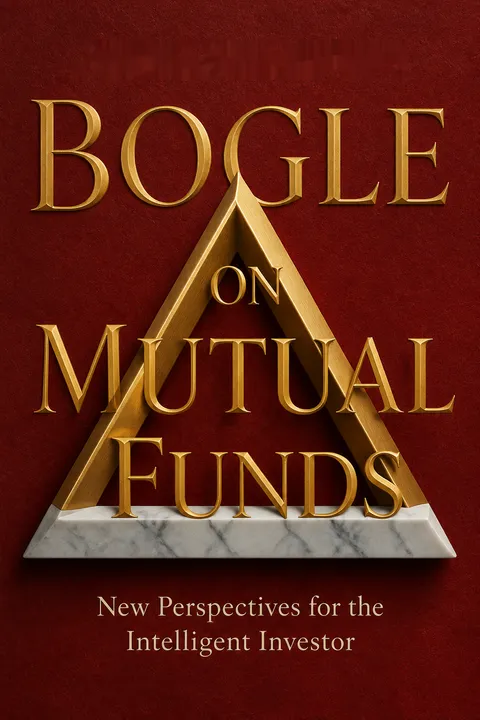

Key Takeaways
1. Investing Rewards Patience and Long-Term Vision
It is the reality of underlying financial forces, not the illusion of superficial emotions—optimism and pessimism, hope and fear, greed and satisfaction—that is at the heart of intelligent investing.
Time is your ally. The book emphasizes that successful investing is a long-term game. Over extended periods, the power of compounding can transform modest returns into substantial wealth. Short-term market fluctuations, driven by emotions and speculation, should be largely ignored by the intelligent investor.
Historical perspective. Bogle uses historical data to illustrate the long-term performance of different asset classes, showing that stocks have consistently outperformed bonds and cash reserves over decades. However, he cautions against relying solely on past performance, as market conditions can change.
Focus on fundamentals. Instead of chasing short-term gains, Bogle advocates focusing on the underlying fundamentals of investing, such as earnings and dividends for stocks, and interest coupons for bonds. By understanding these drivers, investors can make more informed decisions and avoid being swayed by market hype.
2. Risk Management is Paramount
Do what you will, the capital is at hazard.
Inherent risks. Investing inherently involves risk, and there's no way to eliminate it entirely. Even holding cash carries the risk of inflation eroding its purchasing power. The key is to understand the different types of risks and manage them effectively.
Types of risks:
- Inflation risk: The risk that rising prices will reduce the purchasing power of your investments.
- Total return risk: The volatility of returns, which can lead to losses in the short term.
- Principal risk: The risk of losing your initial investment.
- Income risk: The risk that your investment income will decline.
Balancing act. Bogle emphasizes the importance of balancing risk and reward. Higher potential returns typically come with higher risks, and investors need to determine their own risk tolerance and choose investments accordingly.
3. Mutual Funds Offer Diversification and Professional Management
For nearly all investors, mutual funds are the most efficient method of achieving this diversification.
Diversification benefits. Mutual funds provide instant diversification, reducing the risk of owning individual stocks or bonds. This is particularly important for smaller investors who may not have the capital to build a diversified portfolio on their own.
Professional expertise. Mutual funds are managed by professional investment managers who have the knowledge and experience to select and supervise portfolio holdings. While not all managers outperform the market, they provide a valuable service for investors who lack the time or expertise to manage their own investments.
Liquidity and convenience. Mutual funds offer liquidity, allowing investors to buy or sell shares at any time. They also provide convenience, with features such as automatic reinvestment of dividends and capital gains, tax reporting, and checkwriting privileges.
4. Costs Matter: Minimize Fees and Expenses
The cost of an investment program is the third leg of what I would define as the eternal triangle of investing.
Cost impact. Bogle stresses that costs are a critical factor in investment success. High fees and expenses can significantly erode returns over time, especially in a low-return environment.
Types of costs:
- Sales charges (loads): Commissions paid to brokers or financial advisors.
- Expense ratios: Annual operating expenses, including management fees, administrative costs, and other expenses.
- Transaction costs: Costs incurred by the fund in buying and selling securities.
Low-cost advantage. Bogle advocates for low-cost investing, arguing that it's one of the few factors investors can control. By minimizing fees and expenses, investors can maximize their returns and achieve their financial goals more effectively.
5. Taxes Can Erode Returns: Invest Tax-Efficiently
The power to tax involves the power to destroy.
Tax impact. Taxes can significantly reduce investment returns, especially for taxable investors. High portfolio turnover and frequent capital gains distributions can lead to higher tax liabilities.
Tax-efficient strategies:
- Investing in tax-efficient mutual funds, such as index funds with low turnover.
- Utilizing tax-advantaged accounts, such as IRAs, 401(k)s, and variable annuities.
- Investing in municipal bond funds, which provide tax-exempt income.
Tax-aware investing. Bogle emphasizes the importance of being tax-aware and making investment decisions that minimize tax liabilities. By taking steps to reduce taxes, investors can significantly improve their after-tax returns.
6. Asset Allocation is Key to Investment Success
The most fundamental decision of investing is the allocation of your assets.
Strategic importance. Asset allocation, the process of dividing your investments among different asset classes, is the most critical decision in investing. It accounts for the vast majority of the differences in returns achieved by different investors.
Factors to consider:
- Investment objectives: What are you trying to achieve with your investments?
- Risk tolerance: How much risk are you willing to take?
- Time horizon: How long do you have to invest?
- Financial situation: What is your current financial situation?
Balancing act. Bogle recommends a balanced approach to asset allocation, with a mix of stocks, bonds, and cash reserves. The specific allocation will depend on your individual circumstances and preferences.
7. Model Portfolios Provide a Starting Point
The purpose of this book is to guide investors in developing and implementing an intelligent investment program through mutual funds.
Customization needed. While model portfolios can be helpful, they should be viewed as starting points, not rigid prescriptions. Investors need to customize their portfolios to fit their own unique circumstances and preferences.
Life cycle investing. Bogle presents model portfolios for different stages of the investment life cycle, including accumulation, transition, and distribution. These portfolios reflect the changing needs and priorities of investors as they age.
Flexibility is key. The model portfolios are not meant to be followed blindly. Investors should be prepared to adjust their allocations as market conditions change and as their own circumstances evolve.
8. Shareholder Engagement Drives Industry Improvement
If enough investors demand a better mutual fund industry, we will have a better mutual fund industry.
Shareholder power. Bogle believes that mutual fund shareholders have the power to drive positive change in the industry. By demanding better practices and holding fund companies accountable, shareholders can help create a more investor-friendly environment.
Key actions:
- Be canny: Rely on your own common sense and good judgment.
- Be thrifty: Demand low costs and efficient management.
- Be active: Vote fund proxies and express your opinions to management.
- Be skeptical: Question advertising claims and new fund concepts.
Industry responsibility. Bogle challenges the mutual fund industry to put investors' interests first and to provide efficient asset management at the lowest reasonable price. By working together, shareholders and fund companies can create a better future for the industry.
Review Summary
Bogle On Mutual Funds receives mostly positive reviews, with readers appreciating its comprehensive approach to mutual fund investing. Many find it informative and well-researched, though some note its age as a drawback. Readers value Bogle's emphasis on low-cost index funds and long-term investing strategies. The book is praised for its detailed explanations and statistical evidence, making it suitable for both beginners and experienced investors. Some readers find it challenging due to its technical content, while others consider it a timeless classic in investment literature.
FAQ
1. What is Bogle On Mutual Funds by John C. Bogle about?
- Comprehensive mutual fund guide: The book offers a thorough exploration of mutual fund investing, focusing on long-term strategies, cost efficiency, and practical fund selection.
- Author’s expertise: Written by John C. Bogle, founder of The Vanguard Group and pioneer of index funds, the book reflects his decades of experience and reformist philosophy.
- Investor empowerment: It aims to help readers develop intelligent investment programs, emphasizing simplicity, common sense, and understanding of mutual fund structures and risks.
- Core message: The book stresses the importance of balancing risk, return, and cost while avoiding speculative or short-term trading behaviors.
2. Why should I read Bogle On Mutual Funds by John C. Bogle?
- Timeless investment principles: The book distills enduring wisdom on low costs, diversification, and long-term holding, which remain relevant for all investors.
- Expert endorsements: Financial luminaries like Warren Buffett and Paul Samuelson have praised the book for its clarity and practical value.
- Actionable guidance: Readers receive practical advice on fund selection, understanding costs and taxes, and constructing portfolios for various life stages.
- Authoritative insights: Bogle’s real-world experience and advocacy for investor rights make the book a trusted resource for both beginners and seasoned investors.
3. What are the key takeaways from Bogle On Mutual Funds by John C. Bogle?
- Cost control is crucial: Every dollar paid in fees or expenses directly reduces investment returns, making low-cost funds essential for maximizing wealth.
- Index funds outperform: Index funds, due to their low costs and market-matching returns, consistently outperform the average actively managed fund over time.
- Asset allocation matters most: Deciding how to split investments between stocks and bonds is the most important factor in determining long-term returns.
- Shareholder responsibility: Investors must be proactive, informed, and skeptical, demanding transparency and accountability from fund managers and directors.
4. What are the best quotes from Bogle On Mutual Funds and what do they mean?
- “The magic of compounding returns, absent the tyranny of compounding the heavy costs of fund investing.” Highlights the power of compounding when costs are minimized.
- “You rarely, if ever, know something the market does not.” Warns against market timing and overconfidence, emphasizing market efficiency.
- “The fault, dear Brutus, is not in our stars, but in ourselves.” Urges investors to take responsibility for their investment choices and demand better industry practices.
- “Do what you will, the capital is at hazard.” Reminds readers that all investments carry risk, and prudent management is essential.
5. How does John C. Bogle define mutual funds and their benefits in Bogle On Mutual Funds?
- Diversification made easy: Mutual funds allow investors to own a broad range of securities, reducing the risk associated with individual stocks or bonds.
- Professional management: Funds provide access to professional portfolio management, liquidity, and administrative convenience, making investing accessible.
- Cost and tax considerations: Bogle warns that mutual funds vary widely in costs and tax efficiency, urging investors to be selective to maximize net returns.
- Accessibility: Mutual funds simplify recordkeeping, dividend reinvestment, and make it easier for individuals to participate in the markets.
6. What is John C. Bogle’s perspective on index funds in Bogle On Mutual Funds?
- Index fund advocacy: Bogle champions index funds as the most efficient, low-cost way to invest, predicting their rise in popularity and assets.
- Mathematical advantage: Since all investors collectively own the market, active managers as a group cannot outperform it after costs, making index funds superior.
- Lower costs and turnover: Index funds have minimal management fees and portfolio turnover, reducing expenses and capital gains distributions.
- Long-term wealth building: The combination of compounding returns and low costs makes index funds a cornerstone for intelligent investors.
7. How does Bogle On Mutual Funds explain the impact of costs on mutual fund returns?
- Costs erode returns: Expenses such as sales loads, management fees, and transaction costs can consume a significant portion of gross returns.
- Compounding effect: Even small differences in expense ratios compound over time, leading to large disparities in final wealth.
- Low-cost funds attract flows: Investors are increasingly choosing low-cost funds, reflecting growing awareness of cost importance.
- Illustrative examples: The book provides clear examples showing how high costs can reduce returns by 30% or more over a decade.
8. What does Bogle On Mutual Funds say about the impact of taxes on mutual fund returns?
- Taxes reduce real returns: Taxes on dividends and realized capital gains can consume up to 25% or more of nominal returns, especially in high-turnover funds.
- Capital gains realization: Frequent realization and distribution of capital gains by funds can significantly lower after-tax returns.
- Tax-efficient strategies: Bogle recommends maximizing contributions to tax-deferred accounts and considering municipal bond funds for tax-exempt income.
- Buy-and-hold advantage: Funds with low turnover or buy-and-hold strategies tend to be more tax-efficient for investors.
9. How does John C. Bogle recommend investors approach asset allocation in Bogle On Mutual Funds?
- Asset allocation is critical: Studies show that asset allocation decisions explain about 94% of the variation in portfolio returns.
- Age and risk tolerance: Younger investors can afford higher equity exposure, while older or income-dependent investors should shift toward bonds.
- Recommended ranges: Bogle suggests a stock/bond allocation between 60/40 and 80/20, adjusted for individual circumstances.
- Periodic rebalancing: Maintaining target allocations through rebalancing helps control risk and lock in gains.
10. What model portfolios does John C. Bogle propose in Bogle On Mutual Funds for different investor types?
- Accumulation investors (25–50): Recommended to hold about 80% stocks and 20% bonds, focusing on long-term capital growth.
- Transition investors (51–65): Advised to gradually shift to a 65/35 stock/bond mix, increasing bond allocations to reduce risk.
- Distribution investors (retirees): Suggested to hold 50% or less in stocks, emphasizing income-oriented funds and bonds for capital preservation.
- Tailored templates: The book provides practical model portfolios for various life stages and objectives.
11. What advice does Bogle On Mutual Funds give about selecting and monitoring mutual funds?
- Read prospectuses carefully: Understand fund objectives, policies, risks, costs, and historical returns before investing.
- Monitor performance and costs: Watch for sustained underperformance, fee increases, or changes in fund objectives as potential red flags.
- Skepticism of past performance: Past top performance rarely predicts future success; focus on low costs and consistent management instead.
- Compare like with like: Ensure you are comparing funds with similar objectives and risk profiles.
12. What is John C. Bogle’s critique of the mutual fund industry and his “Mandate for Fund Shareholders” in Bogle On Mutual Funds?
- Industry flaws: Bogle criticizes the industry for conflicts of interest, excessive fees, sales loads, and lack of transparency, which harm investors’ returns.
- Shareholder activism: He urges investors to be canny, thrifty, active, and skeptical—reading disclosures, voting proxies, and redeeming shares when necessary.
- Role of independent directors: Directors must oversee management fees and fund expenses to ensure funds are run in shareholders’ best interests.
- Call for reform: Bogle advocates for structural changes that put fund shareholders in control, reversing the dominance of management companies.
About the Author
Other books by John C. Bogle

Download PDF
Download EPUB
.epub digital book format is ideal for reading ebooks on phones, tablets, and e-readers.








































